

L460 · 2022 onward · Dubai
Range Rover L460 Repair and Service Dubai
Suspension or steering warnings, charging problems, multiple electrical messages, cooling faults, camera or driver-assistance errors and Pivi Pro issues can all appear on an L460, but the correct repair depends on the exact year, powertrain and vehicle configuration. We preserve the warning evidence, reproduce the complaint and test the affected system before parts, programming or calibration are approved.
3 layers of an L460 repair decision
Vehicle state
Voltage, software level, communication and recent events.
System evidence
Stored context, live data, physical measurement and component response.
Post-repair needs
Programming, calibration, validation and documented handover.
L460 ownership in Dubai
The useful answer before parts are ordered
The L460 is not simply a newer version of the L405. Its mixed-metal MLA-Flex architecture, connected systems and available electrified powertrains change how faults should be assessed. Repair decisions must follow verified vehicle data, measured evidence and the correct service information for the installed specification.
A dashboard message is evidence that a system has detected an abnormal condition. It is not a complete diagnosis. The first booking should capture when the concern began, whether it is constant or intermittent, what the vehicle was doing, and whether battery, tyre, glass, body, software or mechanical work happened shortly before it. Those details give the diagnostic process a direction without turning an early clue into a parts list.
Bring the exact vehicle identity
Share the VIN or registration, model year, engine if known, mileage, dashboard photographs, recent invoices and a short video when the symptom can be recorded safely. The final repair scope must be confirmed from the installed specification and test results.
What defines this generation
01
Current Range Rover generation introduced for the 2022 model period
02
MLA-Flex mixed-metal vehicle architecture underpins the body and chassis
03
Available configurations can include mild-hybrid or plug-in hybrid systems depending on market and model
04
Pivi Pro, remote software functions and advanced driver-assistance features increase diagnostic interdependence
Equipment can vary between standard and long wheelbase vehicles, different seating arrangements, engine families and PHEV specifications. Software level can also change the behaviour of a reported concern. The booking should include the VIN, exact dashboard message, recent repair history and whether the symptom began after a battery, glass, tyre, body or software event.
If the vehicle is the preceding generation, use the Range Rover L405 repair and common problems guide so the mechanical, electrical and infotainment assumptions match that platform.
One chassis warning can cross several systems
Steering, ride height and body control should be read together
The L460 uses Integrated Chassis Control to coordinate several mechanical and electronic systems. That means a height, steering, roll-control or stability complaint should be tied to the exact operating condition before an air spring, steering component or control module is approved.
Ride height and damping evidence should be compared with pressure behaviour, vehicle position and the condition that triggered the warning. A height message does not automatically prove a compressor or air spring fault.
The rear axle also contributes to low-speed manoeuvrability and high-speed stability. A steering or chassis concern therefore needs front and rear steering information considered together rather than assuming the front steering system is the only source.
Applicable vehicles use a 48V electronic active roll-control system. A body-control warning can require the 48V supply, actuator response and connected chassis information to be separated before parts are selected.
Intelligent all-wheel drive, the active rear differential and Terrain Response share vehicle-state information with the chassis. Tyres, wheel-speed data and drivetrain evidence can therefore change the direction of a stability or traction complaint.
Record the trigger. Note whether the concern appears while parking, changing height, cornering, braking, accelerating, towing or after wheel, tyre, alignment or suspension work. That context helps identify which chassis function should be tested first.
Reported concerns and the correct first direction
Multiple messages after a low-voltage event
Stabilise and test the 12-volt supply, then reassess communication and stored events. Replacing modules before voltage integrity is proven can waste time and money.
Suspension or chassis warning
Read the relevant control systems together. Height data, pressure behaviour, wheel-speed information and chassis communication can all affect the repair route.
Charging or electric-drive concern
Identify whether the vehicle is a PHEV or another powertrain and follow the correct high-voltage safety process. A general workshop check is not a substitute for vehicle-specific isolation and testing.
Infotainment reboot or connectivity loss
Record when the fault occurs, check software status, power supply and network health, then decide whether programming, circuit repair or component work is justified.
Cooling warning or loss of cabin cooling
The exact powertrain matters because thermal management can serve engine, cabin and electrified systems. Confirm which circuit and component is affected.
Camera or assistance feature unavailable
Inspect contamination, glass work, alignment, stored faults and calibration prerequisites. A warning does not automatically identify a failed camera.
Diagnosis should connect the symptom to evidence
Testing should move from the least invasive, most informative checks toward component-level work. That usually means confirming the complaint, stabilising voltage, performing a visual inspection, reading the relevant control systems, reviewing live data, and then carrying out pressure, circuit, mechanical or leak tests that match the fault.
Clearing codes before recording them can remove useful context. Replacing a component because its name appears in a fault description can also miss wiring, power, communication, contamination or another system that caused the event.
If several warnings remain tied to unstable battery supply, voltage drop, power distribution or network communication after the physical system is checked, a focused vehicle electrical diagnosis can then test that circuit path before control modules are approved.
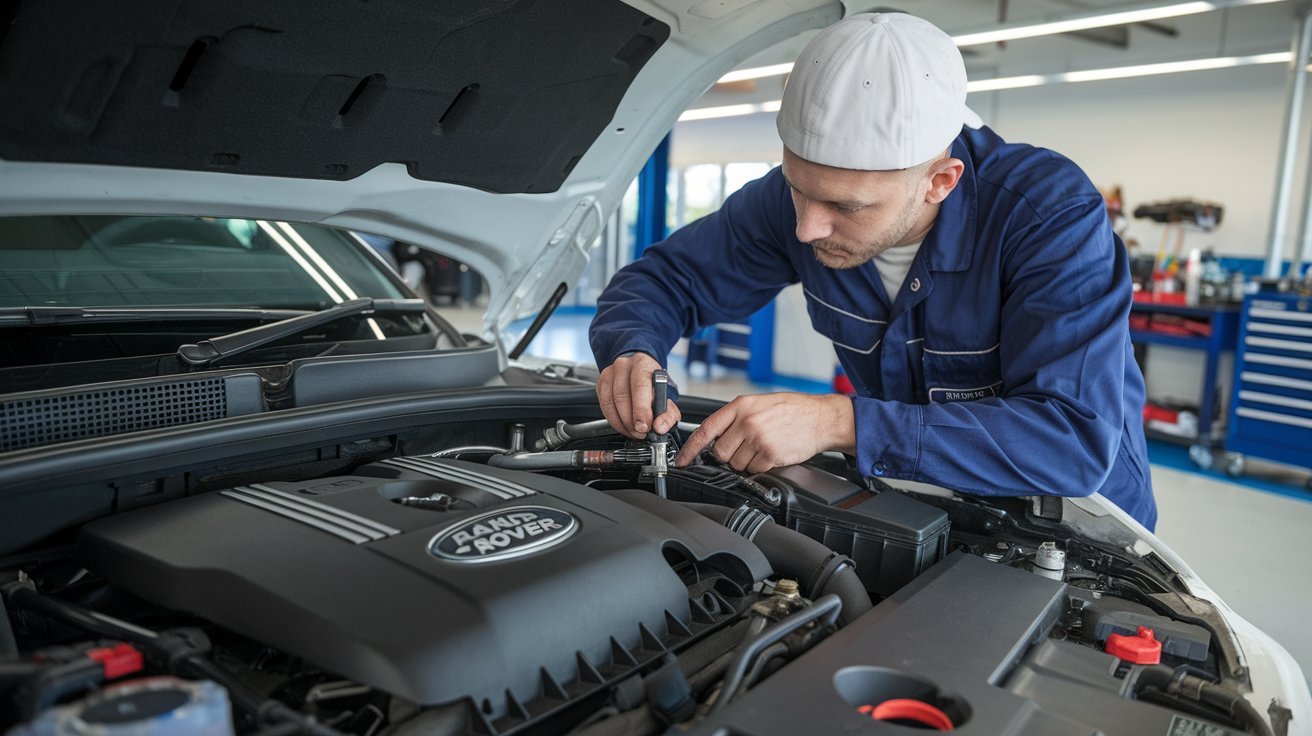
From booking to a repair decision
Identify the exact build
Confirm the generation, model year, VIN, engine, drivetrain, body configuration and important options. A model badge cannot identify every installed component or required procedure. For owner information and fitted-equipment context, Land Rover’s iGuide can be checked using the VIN.
Reproduce and record the concern
Describe the driving condition, temperature, speed, load, warning text, sound or odour. Intermittent behaviour may require a controlled road test or monitoring rather than immediate disassembly.
Check connected fundamentals
Battery voltage, charging response, fluid level, tyre condition, previous repairs, visible damage and communication health can redirect the diagnosis before expensive parts are considered.
Test the suspected system
Use the measurement appropriate to the complaint. This may involve pressure, temperature, current, voltage drop, network data, smoke testing, mechanical play or component command and response.
Define the repair boundary
Explain what is confirmed, what remains uncertain, which connected parts need attention and whether calibration, programming, alignment or further strip-down is part of the proposed scope.
Verify after repair
Repeat the relevant test, check warning status and confirm the symptom under suitable conditions. The invoice should identify the completed work and any remaining recommendation.
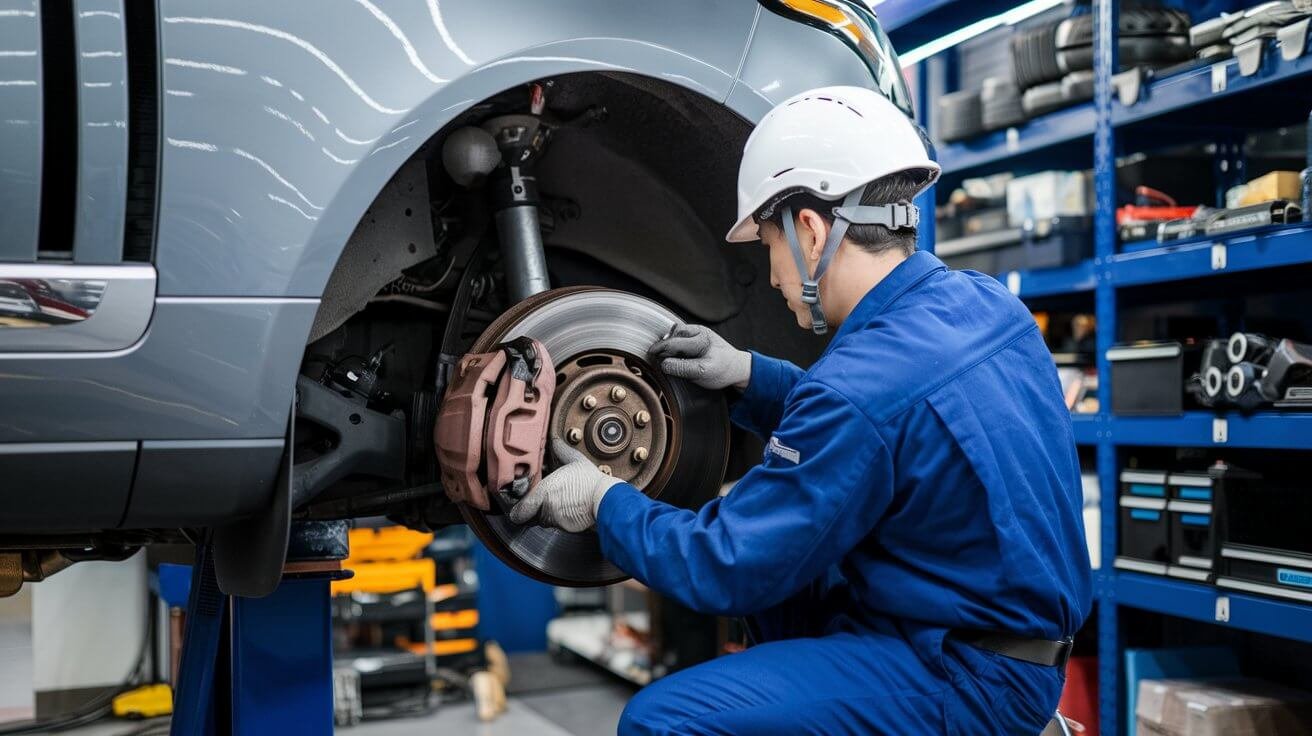
Chassis, steering, brakes and tyres
A noise, pull, vibration or height concern needs a route-based diagnosis. Note whether it changes with road speed, steering angle, braking, ride height, surface or temperature. Inspect tyres and wheels first because impact damage, pressure and wear can alter several symptoms.
Brake work should include the relevant axle condition and the cause of uneven wear. Steering play should be traced through the complete path rather than assigned to the rack by default. Suspension work should consider links, bushes, dampers, air components where fitted, wheel-end condition and stored chassis information.
After component work, alignment or calibration may be relevant depending on what was disturbed and the equipment installed. That requirement must be confirmed for the exact repair.
Engine, cooling and drivetrain decisions
Observe
Record leaks, smoke, odours, noise, temperature behaviour, power loss, shift quality and the exact warning. Check levels only when safe and use the correct procedure.
Measure
Use pressure, temperature, scan data, fluid evidence, circuit tests and mechanical inspection to separate a source from its consequences. One symptom can cross several systems.
Approve
Choose targeted repair, component replacement or further strip-down only after the evidence and limits are explained. A quotation should distinguish confirmed work from optional or conditional items.
Overheating, a red oil-pressure warning, heavy smoke, severe fluid loss, loss of braking, changed steering control or a vehicle resting unsafely low can justify stopping rather than driving to the workshop. Recovery is safer when continued use could multiply the damage or reduce control.
Electrical, software and communication faults
Modern vehicle networks can spread the effect of one power, ground or communication problem across several displays. Start with battery state, charging performance and a complete scan record. Then group faults by time and network rather than treating every entry as a separate failed part.
Software updates, programming and module replacement are different actions. An update may address an applicable software condition. Programming configures a component or vehicle function. Replacement should follow evidence that the component, its supply and its communication path have been tested. If coding or calibration is required, it belongs in the repair plan from the beginning.
- Keep the original scan record before codes are cleared
- Check for water, impact or previous wiring work
- Confirm power and ground under load
- Compare command with actual response
- Review recent battery or jump-start events
- Verify operation after software or hardware work
Dubai conditions change what should be inspected
High ambient temperature, dust, traffic, extended idling, short journeys, long parking periods and off-road use can affect what the owner reports and what deserves closer inspection. They do not create one universal local replacement interval.
Cooling performance should be judged under the conditions that trigger the complaint. Dust and debris can affect heat exchangers, filters, sensors and moving components. Tyres, battery reserve and cabin cooling also need condition-based attention because demand can be high even when annual distance is modest.
Tell the workshop about desert use, towing, water exposure, storage, repeated top-ups or a recent overheating event. That history helps target the inspection without making unsupported assumptions.

Maintenance history and pre-purchase evidence
A service reminder does not prove that every maintenance item has been completed. Keep itemised invoices, mileage records and details of fluids, parts and software work. When history is incomplete, build a staged plan based on verified requirements and current condition rather than replacing everything at once.
For a vehicle being considered for purchase, a model-specific inspection should separate visible condition from systems that require scanning, road testing or deeper access. A clean dashboard at one moment does not prove that no fault is stored or intermittent. Likewise, a long recommendation list is not useful unless each item has evidence, urgency and a clear next step.
| Evidence | Why it matters | Useful next step |
|---|---|---|
| VIN and build information | Identifies the installed specification and compatible procedure | Match parts and service information before approval |
| Itemised invoices | Shows what was actually repaired or maintained | Separate confirmed history from assumptions |
| Dashboard and scan record | Captures warnings and stored context | Investigate relevant systems before clearing data |
| Cold start and road behaviour | Reveals conditions not visible in a static inspection | Reproduce safely and compare live information |
Repair, replacement or continued monitoring
A repair is appropriate when the failed area can be restored with a defined method and acceptable connected condition. Replacement may be more suitable when damage, wear, contamination, internal failure or parts support makes a targeted repair unreliable. Monitoring is reasonable only when the condition is understood, safe and paired with a clear trigger for reassessment.
The decision should include access labour, related seals or fasteners, programming, calibration, alignment, fluid requirements and the risk of leaving a connected fault unresolved. It should not be based only on the price of one component. Ask what test confirmed the recommendation and what will be checked after the work.
Do not approve a whole system from one fault code
Ask for the observation, measurement or test that connects the reported symptom to the proposed part. Where strip-down is required, the quotation should explain what can be known before access and what decision follows once the internal condition is visible.
Questions owners commonly ask
What are the common problems on a Range Rover L460?
Owners may report concerns involving suspension, cooling, electrical supply, infotainment, drivetrain, air conditioning, leaks or warning messages. The useful answer depends on the exact year, engine, equipment and symptom. A list cannot diagnose an individual vehicle.
Can the vehicle be diagnosed from a warning message?
The message identifies an affected function or detected condition, but diagnosis also needs stored context, live data, power and ground checks, visual evidence and the test appropriate to that system.
Should every stored code be repaired?
No. Codes can be historic, secondary or created during a low-voltage event. They should be recorded, grouped and tested against the present complaint before parts are approved.
How is an accurate quotation prepared?
The workshop needs the vehicle identity and diagnostic evidence. The quotation should define confirmed work, related items, parts choice, programming or calibration needs, and any conditional work that can only be decided after access.
Does Dubai heat mean maintenance intervals should be invented locally?
No. Heat and use can justify relevant condition checks, but scheduled requirements must still come from verified information for the exact vehicle and its history.
What should I send before booking?
Send the VIN or registration, mileage, model year, warning photographs, recent invoices and a concise description of when the symptom happens. Mention recent battery, tyre, glass, body or mechanical work.
Why can one L460 chassis warning involve several systems?
Integrated Chassis Control coordinates air suspension, steering, roll control and driveline functions. A warning can therefore require height, pressure, steering, 48V supply, tyre and network evidence to be compared before one component is approved.
Are P440e and P510e the same as P460e and P550e?
No. The later P460e and P550e use an updated plug-in hybrid specification with a more powerful electric motor. Confirm the model year, VIN and installed charging system before parts, software or charging expectations are carried over from an earlier L460 PHEV.
L460 checks after glass, body, wheel or software work
A current-generation Range Rover can require more than a visual check after work near cameras, radar, suspension, steering or networked modules. If an assistance feature becomes unavailable after windscreen replacement, record the exact message and confirm the glass specification, mounting condition and calibration prerequisites. If a chassis warning follows wheel or suspension work, inspect what was disturbed before treating the warning as an unrelated control-unit failure.
Software work also needs a clear before-and-after record. Note the original concern, vehicle voltage support, update or programming action, modules involved and the functions verified afterward. A new message after an intervention deserves a structured comparison with the earlier scan, not repeated code clearing. This evidence helps decide whether the next step is configuration, calibration, circuit testing or a separate mechanical inspection.
Plug-in hybrid specification changed during L460 production
P440e, P510e, P460e and P550e should not share one charging assumption
The L460 plug-in hybrid family evolved after launch. The earlier P440e and P510e and the later P460e and P550e use the same broad extended-range hybrid concept, but later versions received a more powerful electric motor and revised powertrain specification. The model year and VIN therefore belong at the start of any charging, EV-mode or hybrid warning diagnosis.
P440e and P510e
These versions combine a 3.0 litre six-cylinder Ingenium petrol engine with a traction battery and electric motor. They support DC rapid charging, but charging diagnosis still has to separate the external supply, charge interface, vehicle settings, 12V foundation, thermal condition and high-voltage system.
P460e and P550e
Later L460 plug-in hybrids use an updated electric motor and revised hybrid specification. A part number, charging expectation or software assumption from an earlier P440e or P510e should not be carried across without confirming the exact vehicle.
12V and high voltage remain separate test paths
The normal 12V system still supports module wake-up and communication, while the traction system uses high-voltage components and orange cabling. A low-voltage warning cluster and a genuine high-voltage isolation or charging fault require different safety and diagnostic procedures.
Do not disturb orange high-voltage components. If the concern is centred on charging, EV driving, high-voltage warnings or hybrid thermal management after the normal supply and 12V checks are established, a focused Range Rover hybrid diagnosis can then follow the exact PHEV configuration and safe isolation requirements.
Book a L460 assessment with useful evidence
Send the VIN or registration, mileage, dashboard message, recent repair history and a clear description of the concern. We can then identify the correct booking scope without pretending that a model code alone reveals the failed part.