

Land Rover LR4 Repair and Service in Dubai
Diagnosis-led LR4 repair in Dubai for engine, cooling, air suspension, gearbox, electrical, brake, steering and air-conditioning concerns. Our Land Rover repair approach begins with the exact vehicle and confirmed evidence, not a generic parts list or maintenance package applied to every LR4.
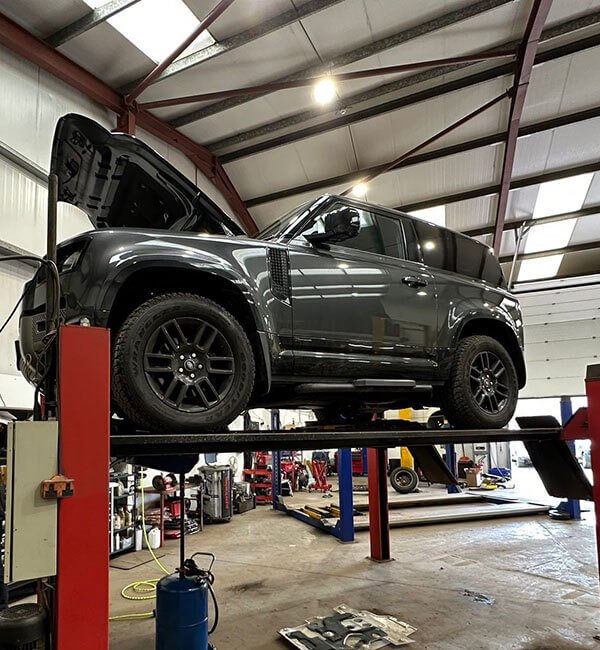
Start with the symptom, not a parts list
Owners often search for one component because a dashboard message, scan code or previous opinion points in that direction. On an LR4, several systems can influence the same symptom. Low voltage can trigger multiple warnings. A ride-height problem can involve an air leak, sensor signal, valve, wiring, compressor performance or system calibration. Coolant loss may be visible only when the system is hot and pressurised.
Tell the workshop what changed, when it happens and what was recently repaired. Note whether the fault appears after a cold start, in traffic, at motorway speed, while turning, after the vehicle has been parked, or when changing suspension height. Photos of messages and a short video of an intermittent noise can be more useful than a vague description.
Temperature or coolant concern
A rising gauge, low-coolant message, sweet smell, steam, heater-temperature change or fluid below the vehicle needs prompt attention. Do not continue driving an overheating engine.
Suspension warning or uneven height
A low corner, slow height change, repeated compressor operation or suspension message needs leak, pressure, sensor, electrical and mechanical checks before a compressor is condemned.
Gearbox or drivetrain behaviour
Harsh shifts, delayed engagement, shudder, vibration, warning messages, fluid leakage or drivetrain noise should be reproduced and separated from engine or mounting faults.
Engine running problem
Misfire, reduced power, rough running, smoke, unusual noise or repeat engine warnings may have mechanical, fuel, ignition, air, exhaust or electrical causes.
Electrical or starting fault
Slow cranking, intermittent starting, battery drain or several warnings appearing together can require battery-condition, charging, connection, network and module checks.
Brake, steering or AC concern
Changes in pedal feel, steering effort, tyre wear, vibration, cabin temperature or compressor noise should be assessed against the exact driving condition.
Can you keep driving your LR4?
Use the guide below as a cautious first decision, not a substitute for inspection. If the vehicle feels unsafe or the condition changes quickly, stop in a safe place.
Stop driving
Stop safely for overheating, steam, a red oil-pressure warning, heavy smoke, a burning smell, major coolant or oil loss, severe braking reduction, unsafe steering, a collapsed corner, or strong mechanical knocking. Continuing may increase damage or remove safe control of the vehicle.
Drive only with caution
If the LR4 remains stable but has a new amber warning, reduced performance, minor leak or unusual noise, avoid hard acceleration, towing, off-road use and unnecessary travel. Arrange diagnosis promptly and stop if temperature, steering, braking or noise worsens.
Book an inspection
For a minor or intermittent symptom with no immediate safety sign, record the conditions in which it appears and arrange an inspection. Intermittent faults are easier to trace when the technician receives precise information.
How an LR4 fault should be investigated
A diagnostic scan is useful, but a code usually describes a detected condition or affected circuit. It is not an instruction to replace the component named in the code. Good Land Rover repair diagnosis connects the driver’s complaint with live data, physical evidence and system-specific testing.
Confirm
Record the symptom, warning text, operating conditions, model year, engine, recent repairs and service history. Reproduce the concern safely when possible.
Inspect
Check fluid levels and condition, visible leaks, hoses, connectors, wiring, mounting points, wear and evidence that another component is affecting the system.
Test
Use the relevant scan data, electrical measurements, pressure tests, leak checks or mechanical measurements. Compare results with information for the exact vehicle.
Explain
Show what was confirmed, what remains uncertain and why repair, rebuild or replacement is recommended. Parts choice and warranty should be stated in the estimate.
Information that improves the diagnosis
- VIN, model year and known engine
- Current odometer reading and available service history
- Exact dashboard wording, not only “warning light”
- Cold, hot, idle, traffic or road-speed conditions
- Whether the fault disappears after restarting
- Recent battery, suspension, cooling or engine work
- Where fluid appears and its colour or smell
- Whether ride height changes after parking
- Photos, video or a scan report if already available
- Any previous diagnosis or parts already replaced
LR4 engine repair, cooling and overheating diagnosis
Cooling complaints need urgency and a methodical inspection. Coolant can escape from several locations, and residue may travel before it becomes visible. A small leak may appear only at operating temperature. The technician should inspect for residue and active leakage, check coolant level and condition when safe, review temperature behaviour, assess relevant hoses and connections, and pressure-test or perform further checks when appropriate.
Overheating is a symptom, not a final diagnosis. The investigation may need to distinguish coolant loss, circulation problems, airflow concerns, inaccurate sensor information, combustion-related pressure or previous repair issues. The correct sequence depends on what the vehicle actually does. Repeated topping-up without identifying where coolant is going is not a repair.
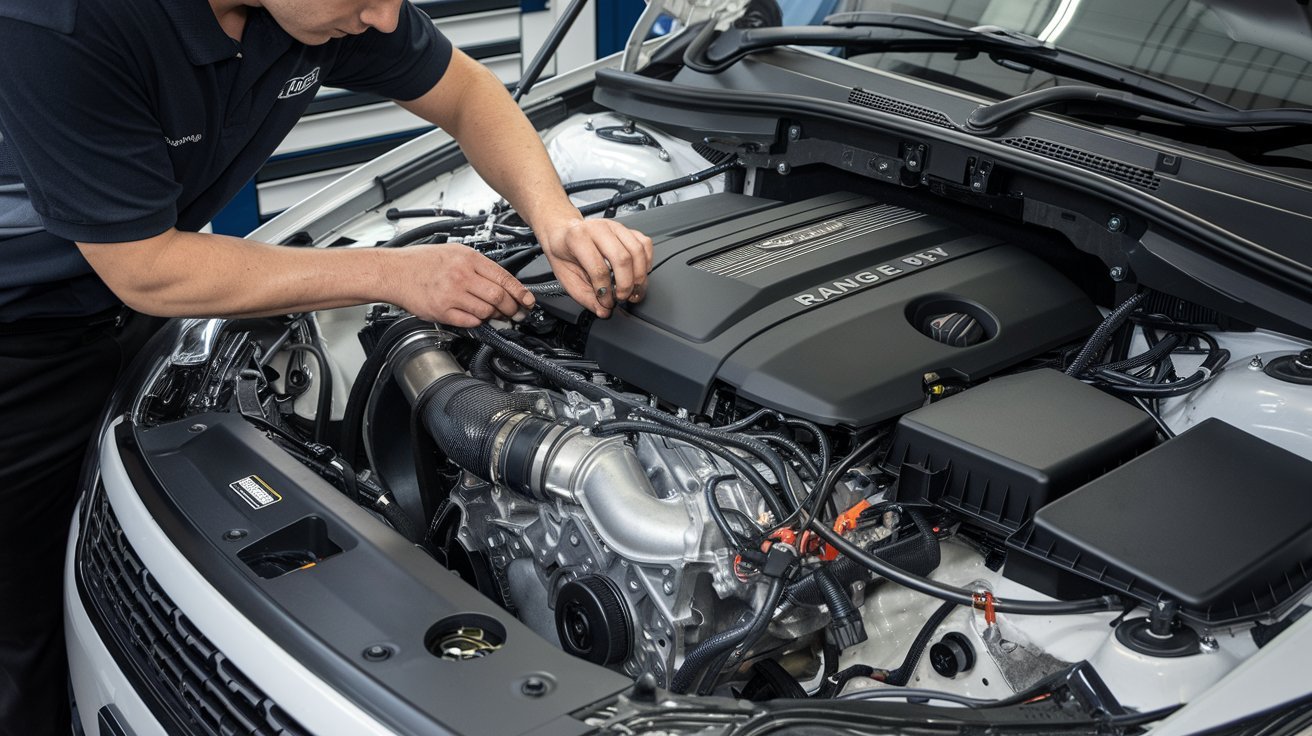
Engine warnings, misfire and reduced power
A rough idle, misfire, hesitation, smoke or reduced-power message should be assessed with the exact engine and operating condition in mind. A scan may identify the affected cylinder or monitored system, but ignition, fuelling, air supply, mechanical condition, wiring and control inputs can overlap. Testing should narrow the cause before multiple components are ordered.
Oil leakage also needs source confirmation. Air movement and gravity can spread oil across covers and undertrays, making the lowest wet point look like the origin. Cleaning the area and tracing fresh leakage is often more useful than selecting a seal from a photograph.
| What the owner notices | What it may indicate | Sensible next step |
|---|---|---|
| Low-coolant message or coolant smell | External leak, pressure-related loss or another cooling-system concern | Check the level only when safe, then arrange leak and pressure diagnosis |
| Temperature rising or steam | Cooling performance has become unsafe | Stop, switch off and arrange recovery if the condition remains |
| Misfire or flashing engine warning | Active combustion fault that may affect drivability or exhaust components | Avoid driving and obtain prompt diagnosis |
| Oil spots or burning-oil smell | Leak location and severity are not yet confirmed | Inspect the source, oil level and affected surrounding components |
LR4 air-suspension repair and ride-height faults
The LR4 uses height-adjustable air suspension, but a suspension message does not automatically mean the compressor has failed. Land Rover technical material for certain LR4 ranges documents compressor-related conditions and required procedures. That evidence supports careful model-specific and VIN-specific diagnosis. It does not make compressor replacement the universal answer.
A useful inspection begins with how the vehicle sits after parking. One low corner can point the investigation differently from an entire vehicle that will not rise. The technician may check for leakage, reservoir or line behaviour, height-sensor information, compressor performance, valves, relays, power supply, wiring and relevant fault data. Physical damage or binding suspension components must not be ignored simply because the system is electronic.
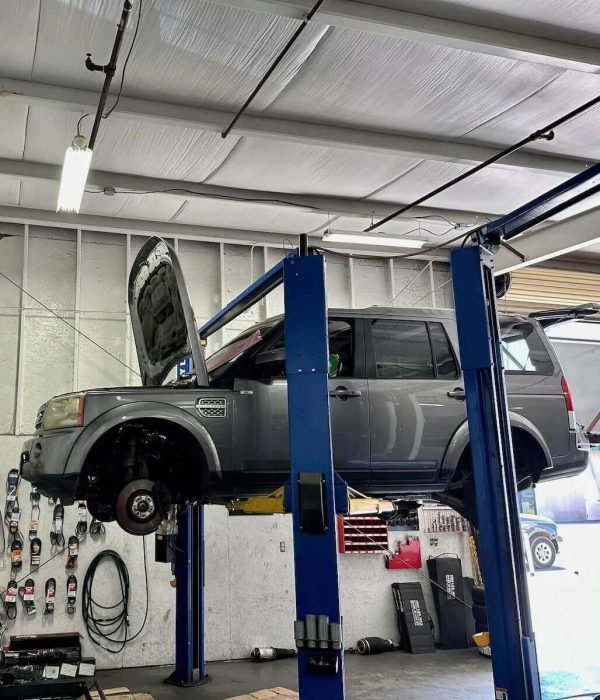
Patterns worth recording
- One corner drops overnight: note which corner and whether temperature or parking surface changes the pattern.
- The whole vehicle is slow to rise: record how long it takes, whether the compressor runs continuously and what message appears.
- The warning appears after driving: note speed, road condition, load and whether a restart clears it.
- Height selection is unavailable: photograph the exact message and avoid repeated cycling that may stress the system.
Common diagnostic shortcut to avoid
A tired compressor can be the result of another fault rather than the starting cause. If an air leak makes the compressor run too frequently, replacing the compressor without correcting the leak can leave the system vulnerable to repeat failure. A vehicle that sits low is also not proof of a leaking air spring. Valve, sensor, electrical and calibration information still need consideration.
LR4 gearbox, transfer case and drivetrain repair
Owners may describe a drivetrain concern as “gearbox jerking,” but the felt movement can come from several connected areas. Diagnosis should separate shift quality from engine hesitation, mount movement, driveline play, wheel-speed information and transfer-case or differential concerns. The exact model year and transmission specification matter.
Useful evidence includes whether the symptom occurs when selecting Drive or Reverse, during a particular upshift or downshift, at steady road speed, under acceleration, while turning, or only when cold. Fluid beneath the vehicle should be traced to its source rather than labelled by colour alone. Undertrays can move fluid away from the original leak.
Checks may include
- Road-test confirmation under safe conditions
- Fault codes and relevant live data
- Fluid leaks and visible condition
- Mounts, shafts, joints and driveline play
- Engine performance that could imitate a shift fault
- Vehicle history and previous transmission work
Questions the estimate should answer
- What fault was actually confirmed?
- Is the proposed work a repair, rebuild or replacement?
- What related cause must be corrected?
- What part type is being supplied?
- What warranty applies to that specific work?
- Is further inspection needed after dismantling?
A warning message or stored code alone is not enough to promise a rebuild or replacement. Internal condition may not be known until the required tests, and sometimes controlled dismantling, have been completed.
LR4 electrical repair, battery and starting problems
Modern vehicle systems share power, grounds and communication networks. When voltage becomes unstable, several warnings may appear even though multiple systems have not failed at once. That is why battery replacement should not be the automatic answer to every starting or warning-light complaint.
The assessment may include battery condition, state of charge, charging performance, terminal and ground integrity, voltage drop, parasitic drain, starting-system behaviour, wiring and relevant module data. If the battery repeatedly becomes flat, the question is not only whether the battery is weak. It is also whether it is being charged correctly and whether the vehicle has an abnormal draw while parked.
Intermittent faults need context
Record whether the no-start or warning occurs after overnight parking, after a short trip, in high ambient heat, following rain or washing, or after accessories were fitted. Do not repeatedly clear fault codes before diagnosis because the stored context may help identify when a failure occurred.
If the vehicle cranks slowly, clicks, loses dashboard power or displays many warnings together, avoid assuming that each warning represents a separate repair. Establish stable power and communication first, then recheck which faults return.
Brakes, steering, suspension wear and air conditioning
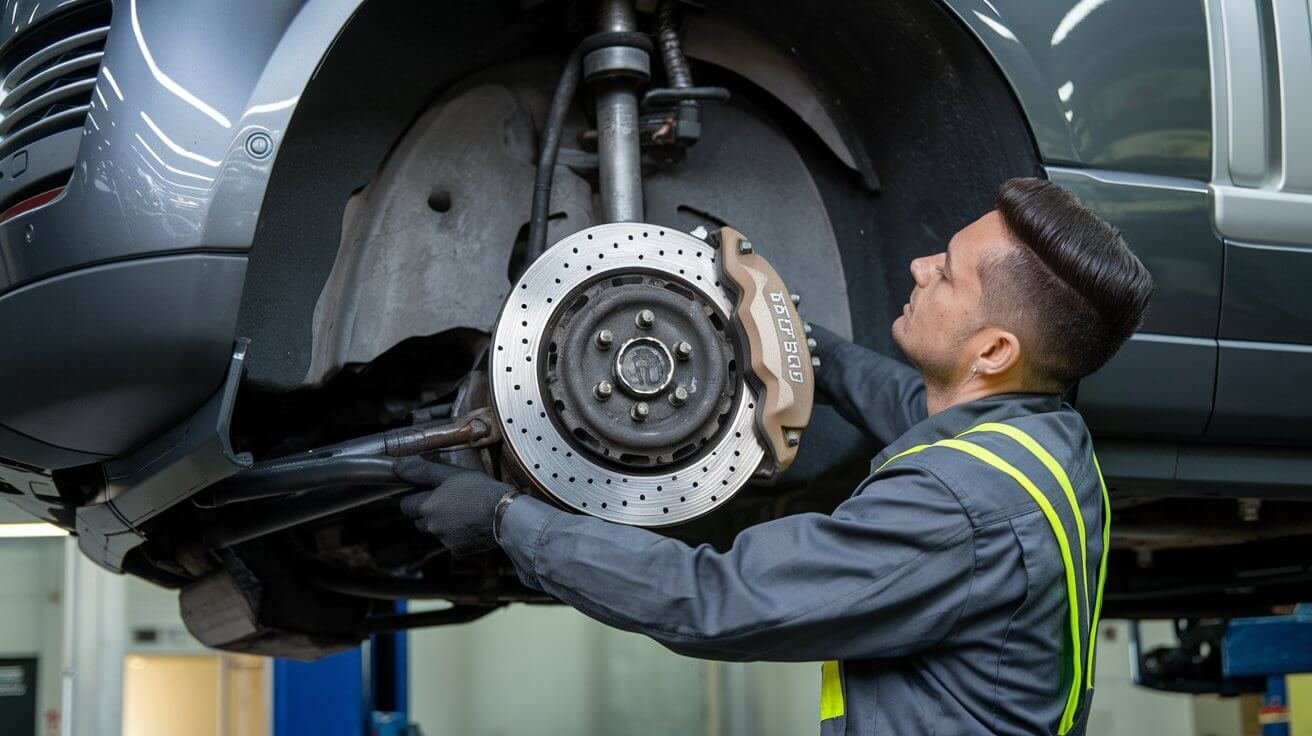
Brake concerns
Squeal, grinding, vibration, pulling, a changing pedal or a warning requires inspection of the relevant friction, hydraulic, electronic and mechanical components. A visual pad check alone may not explain pedal feel or vibration.
Steering and suspension
Knocks, wandering, steering noise, vibration and uneven tyre wear can involve tyres, alignment, joints, bushes, bearings, steering components or ride-height issues. Check for play and damage before alignment is treated as the complete fix.
Air conditioning
Weak cooling in Dubai can result from refrigerant loss, airflow restriction, fan or electrical faults, compressor-control problems or heat-transfer issues. Recharging without leak diagnosis may only provide temporary improvement.
Dubai use changes the inspection priority, not the official schedule
Heat, dust, stop-start traffic and extended idling can affect how quickly a weakness becomes noticeable. These conditions justify checking cooling performance, battery condition, air-conditioning output, filters, fluids, tyres and visible rubber components carefully. They do not justify inventing one universal service interval for every LR4.
Off-road use, towing, water exposure, long storage periods and repeated short trips can also change what deserves attention. Tell the technician how the vehicle is used. Maintenance should combine the applicable Land Rover owner information with service history, current mileage, inspection findings and the vehicle’s real operating conditions.
Plan LR4 service and maintenance with the VIN and history
The LR4/Discovery 4 name covers different model years, engines and market specifications. A responsible service recommendation begins by identifying the vehicle accurately. Land Rover’s owner-information portal allows information to be selected by vehicle and model year, and the VIN can help resolve specification questions.
Bring available records so previous work is not repeated unnecessarily and missing history can be identified honestly. If the history is incomplete, the solution is an inspection-led baseline, not an invented claim that every fluid or component is due at the same mileage.
Bring these details
- VIN, model year and engine information
- Current odometer reading
- Service invoices and previous diagnostic reports
- Dates of battery, tyre and major repair work
- Approved modifications or added accessories
- How the vehicle is normally driven and stored
A useful maintenance review asks
- What does the vehicle-specific owner information require?
- Which scheduled work is documented as complete?
- What is due by time, distance or condition?
- Are there active leaks, warnings or abnormal wear?
- Does severe use justify earlier inspection?
- Which recommendations are urgent, preventative or optional?
Any service interval quoted for your vehicle should be tied to the identified model, engine and authoritative owner information.
For a clear explanation of routine maintenance choices, see our minor and major service guide.
Repair, rebuild or replace: how the choice should be made
The cheapest initial option is not always the lowest-risk option, and replacement is not automatically better than repair. The decision depends on the failed area, condition of the surrounding assembly, availability of a dependable repair process, parts options and the evidence found during diagnosis.
Repair
Appropriate when the fault can be corrected reliably and connected components remain serviceable. The cause of the failure must also be addressed.
Rebuild
Worth considering when the assembly is genuinely rebuildable, internal condition can be assessed and the scope, parts and testing are clearly defined.
Replace
Suitable when testing confirms failure and repair or rebuild is unsafe, unavailable or poor value. Confirm new, used or remanufactured part status in writing.
What approval should include
Before work begins, the estimate should identify the confirmed problem, recommended scope, parts category, labour, additional findings that could change the scope, and the warranty attached to that specific repair. No page can responsibly promise one warranty, turnaround time or price for every LR4 fault.
If dismantling is required before internal damage can be known, that uncertainty should be explained. The initial authorisation can cover diagnosis or strip-down, followed by a revised decision once evidence is available.
Land Rover LR4 repair and service FAQs
Is the Land Rover LR4 the same as the Discovery 4?
LR4 is the name used in some markets for the vehicle known elsewhere as Discovery 4. Specifications can still differ by model year, engine and market, so use the VIN and vehicle details when sourcing information or parts.
What should I do if my LR4 is overheating?
Stop safely and switch off the engine. Do not open a hot cooling system. If there is steam, major coolant loss or the temperature remains high, arrange recovery and diagnosis rather than continuing to drive.
Does a suspension warning mean the compressor has failed?
No. Air leaks, valves, sensors, power supply, wiring, compressor performance and other mechanical or control issues can produce related symptoms. Testing should confirm the cause before replacement.
Why does my LR4 drop on one side overnight?
The pattern can help direct diagnosis, but it does not prove one component has failed. Record which corner drops, how long it takes and whether the vehicle rises normally. Leak, valve, sensor and system checks may be required.
Can an accurate repair price be given from a warning light?
A warning light is not enough to confirm the failed part or labour scope. Share the exact message and symptoms first. A dependable estimate follows vehicle identification, inspection and relevant testing.
How should LR4 maintenance be planned?
Use the identified model year, engine, VIN, authoritative owner information, documented service history, mileage, operating conditions and current inspection findings. Avoid presenting a generic mileage package as the official schedule for every LR4.
Why are several warning lights appearing together?
Several systems may be affected, but shared voltage, ground or communication problems can also trigger multiple warnings. Battery, charging and network checks may be needed before separate component failures are assumed.
How long will an LR4 repair take?
Timing depends on diagnosis, confirmed damage, approved scope and parts availability. A completion estimate should be given for the specific job after these factors are known.
Should I repair, rebuild or replace a failed assembly?
The correct route depends on test findings, internal and surrounding condition, whether a dependable rebuild process exists, parts options and total value. Ask for the reason behind the recommendation and the warranty for that exact work.
Book an LR4 inspection in Dubai
For a Land Rover repair assessment, share the VIN or model year, engine, exact warning message, symptoms, recent work and when the problem occurs. This gives the workshop a clearer starting point and helps determine the appropriate next step.