

Diagnosis before parts
Range Rover Suspension Repair Dubai
Suspension diagnosis and repair for air suspension faults, uneven ride height, compressor problems, leaks, noises, poor ride control and worn mechanical components. The repair scope is based on the vehicle, the evidence and the failed part, not a warning code alone.
Record the exact message, vehicle height and when it appeared. Read the Range Rover suspension fault warning guide if you first need help deciding what to do.
The answer near the start
Suspension repair starts by confirming the cause
A Range Rover can sit low, ride harshly, lean after parking, refuse a height request or display a suspension warning for more than one reason. Air loss is one possibility, but so are weak compressor output, a valve block that does not distribute pressure correctly, inaccurate height data, damaged wiring, low system voltage or mechanical wear.
A diagnostic trouble code identifies the system condition recorded by a control module. It does not automatically prove that the component named in a code description has failed. Codes need to be read with freeze-frame information where available, live height values, physical measurements, pressure behaviour and the vehicle’s recent history.
Vehicle sits low
One low corner after parking may point towards loss of air at that corner, but the air spring, line connection, valve control and measured height all need to be separated before replacement is approved.
Vehicle will not raise
The system may be protecting itself because pressure builds too slowly, a height signal is implausible, voltage is low or another condition prevents operation. Compressor noise alone does not confirm useful pressure.
Knock or unstable ride
Clunks, looseness, bouncing, tyre wear and poor braking stability may relate to bushes, control arms, joints, dampers, mounts or alignment. These are mechanical checks, not only air suspension checks.
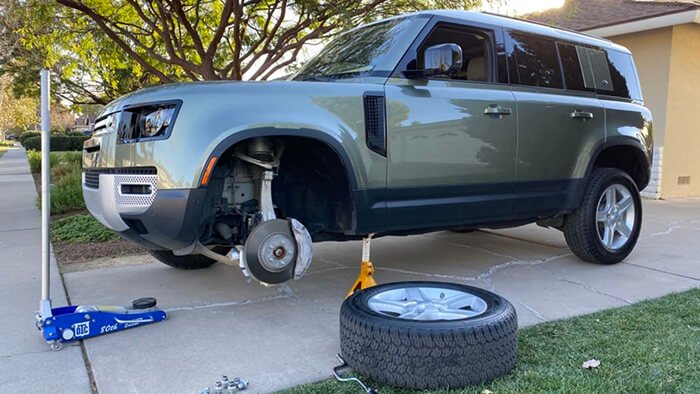
Whole-system view
What a suspension diagnosis can include
The correct test plan depends on the model, generation, suspension type and symptom. It may include a vehicle scan, battery and charging checks, a visual inspection at normal and raised height, ride-height comparison, live sensor data, controlled height commands, leak checks, compressor pressure or fill-time assessment, wiring tests and mechanical play checks.
Not every vehicle needs every test. A visible split bush and a height-control warning are different diagnostic paths. The workshop should first reproduce or verify the complaint, then choose tests that can confirm or eliminate realistic causes.
Service scope
Air and mechanical suspension components
Air springs and struts
Air springs support vehicle weight using controlled air pressure. Checks may look for pressure loss, damaged folds, connection leaks, contamination or a damper concern within an integrated strut assembly.
Compressor and air supply
The compressor, dryer, reservoir, relay, fuse, pressure sensing and air lines work as a supply system. Long run time may be the result of a downstream leak, so the cause of overwork matters before a compressor is condemned.
Valve blocks
Valve blocks route air between the supply and individual corners. A leaking air spring can resemble unwanted valve leakage, and a corner that stays low does not identify which of those is responsible.
Height sensors and wiring
Height sensors and their links report suspension position. Damage, poor connections, wiring faults or implausible readings can restrict height operation even when the air components can hold pressure.
Shock absorbers
Dampers control spring movement. Oil leakage, poor damping, damaged mounts or internal wear can cause bounce, instability and tyre wear without an air leak. For a damper-specific inspection path, see the Range Rover shock absorber guide.
Control arms and bushes
Bushes, arms, ball joints and related mountings control wheel location. Wear can produce clunks, steering movement, alignment changes and uneven tyres. Inspection under the correct load helps locate the movement.
Evidence-led workflow
How the workshop narrows down the fault
Record the complaint
Note the exact warning, which corner appears low, whether the height changes after parking, recent repairs, unusual noises and the conditions when the problem occurs.
Check the complete vehicle state
Confirm current height, tyre condition, visible damage, battery condition and stored faults. A voltage or communication issue can create secondary suspension messages.
Test the relevant system
Use live data, pressure behaviour, isolation or retention tests, controlled activation, wiring measurements and mechanical inspection as the symptom requires.
Separate the first fault from secondary damage
A leak can overwork a compressor. A worn bush can affect alignment. The quotation should distinguish the initiating problem, related damage and optional preventive work.
Repair and verify
After approved work, check height operation, pressure retention, warning status, mechanical security and road behaviour where appropriate. Calibration is carried out only when the repair procedure or measured values require it.
Approve the right scope
Repair versus replacement
| Finding | Decision factors | What should be verified |
|---|---|---|
| Air loss | Leak location, condition of the flexible air spring, line or connector damage, and whether another component has been overworked | The isolated area loses pressure under the test conditions and the repaired system retains it |
| Slow pressure build | Supply voltage, compressor output, dryer restriction, reservoir filling, leaks and duty-cycle history | The cause of slow filling is identified rather than assuming the compressor is the only fault |
| Incorrect ride height | Physical height, sensor linkage, live values, wiring integrity, previous suspension work and calibration status | Measured height and reported height agree after the relevant repair |
| Mechanical play or poor damping | Location and severity of movement, paired component condition, tyre wear and alignment impact | The replaced component removes the confirmed play or damping defect and related settings are checked |
Why there is no universal suspension price
A useful quotation requires the VIN or exact model details, the confirmed failed component, associated damage, chosen part specification and labour scope. A warning message or a photograph of a low corner is not enough to price the final repair accurately. Diagnosis prevents a low headline price from becoming a series of unnecessary replacements.
Vehicle-specific work
The repair scope depends on the model and system
Range Rover, Range Rover Sport, Velar and Evoque do not all share one suspension arrangement across every year and specification. Land Rover vehicles such as Discovery, LR3, LR4 and Defender also vary. Some use air suspension on both axles, some use different layouts, and some specifications use conventional springs or model-specific adaptive damping.
The VIN, model year, generation, engine and fitted suspension equipment should be confirmed before parts are ordered. Software procedures, allowable ride-height measurements, fasteners, alignment requirements and calibration steps can also differ. A model name alone is not a complete parts specification.
If your concern is a general warning rather than a known repair need, use the suspension fault warning guide.
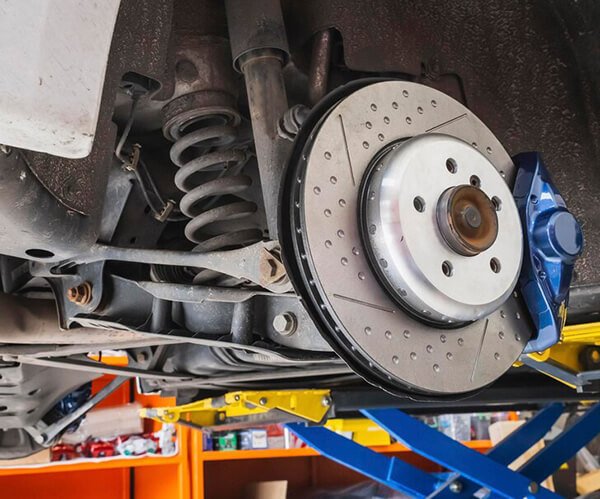
Symptoms and test direction
What different suspension symptoms can tell the technician
One corner drops while parked
The time taken to drop, parking surface, selected height and temperature can help define the test. A technician may compare all four physical heights, isolate part of the pneumatic circuit and monitor retention. The aim is to locate pressure loss rather than replace the most visible air spring by assumption.
Front or rear axle drops
When two corners on one axle change together, the valve arrangement and shared air paths may become relevant. Individual spring condition still matters. System design differs by model, so the observed pattern guides testing but does not provide a final diagnosis.
Compressor runs frequently
Frequent operation can mean the system is replacing lost air or struggling to achieve the requested pressure. A leak, restricted dryer, weak electrical supply or worn compressor may be involved. Output and pressure retention should be considered together because fitting a new compressor without correcting a leak may leave the cause in place.
Height changes slowly
Slow raising can relate to air supply, stored pressure, restricted flow, a small leak or system protection. The selected height, load, door status and warning state may affect operation. A controlled test helps avoid confusing normal operating limits with a component fault.
Clunk over bumps
A clunk is not automatically an air suspension concern. Control-arm bushes, joints, anti-roll-bar links, damper mounts and other wheel-location components can transmit noise. Inspection may need the suspension loaded because some movement is not clear when the wheels hang freely.
Bounce or poor body control
Air springs carry load, while dampers control movement. A vehicle can maintain the correct height but still bounce because damping has weakened. Tyre pressure, tyre condition and mechanical play should also be checked before ride quality is attributed to one component.
Leak testing
How air suspension leaks are investigated
Air loss may occur at a flexible air spring, a pipe connection, a damaged line, a reservoir connection or within the valve system. The vehicle may lose height only at a certain suspension position because folds in an air spring open and close as the body moves. A quick visual check at one height can therefore miss an intermittent leak.
A workshop can begin by measuring the vehicle on a level surface and recording pressure-related faults and live height values. The suspected part of the circuit can then be checked for leakage or isolated where the design and procedure allow it. The time and conditions of the test matter. A vehicle that drops after several hours needs a different observation period from one that loses height immediately.
Leak-detection fluid can reveal accessible external leaks, but it does not prove every internal valve concern and should not be sprayed carelessly onto electrical parts. Pressure behaviour, physical height and controlled isolation provide stronger evidence when used together. After a repair, the same retention check should be repeated so the original symptom is verified as resolved.
A low vehicle should be lifted safely
Air suspension can change height without warning when the system wakes or receives a command. Workshop lifting and depressurisation procedures must account for that movement. Owners should never work beneath a vehicle supported only by its air suspension or a jack.

Mechanical suspension
Shock absorbers, control arms and bushes
A complete suspension service should not treat every complaint as an electronic air suspension problem. Shock absorbers control repeated movement after a bump. Control arms and joints guide the wheel through its travel. Rubber bushes isolate vibration while holding alignment under braking, acceleration and cornering loads.
Worn bushes may allow the wheel position to change under load, producing a knock, vague steering, braking movement or uneven tyre wear. A leaking or weak damper may allow excess bounce even though the vehicle remains level. A damaged ball joint or mounting can create play that requires prompt attention because it affects wheel control. If the main complaint is steering effort, play or assistance rather than suspension movement, the Range Rover steering repair guide provides the more relevant diagnostic route.
The inspection should identify the location and severity of wear, not simply list every aged component. The quotation can then separate required work from advisory work. After repairs that affect wheel position, alignment should be measured and adjusted when required. Tyre condition also needs review because existing wear will not disappear when the suspension part is replaced.
After the repair
Calibration, alignment and final verification
Calibration is the process of teaching or confirming reference values used by the suspension control system. It may be relevant after height-sensor replacement, work that changes sensor geometry, or a repair where measured ride height no longer agrees with specification. It is not a substitute for fixing an air leak or damaged mechanical part.
The vehicle must be prepared correctly for a meaningful calibration. The surface, tyre pressures, vehicle loading, battery support and measurement points can affect the result. The correct procedure depends on the model and diagnostic platform. Entering values merely to remove a warning can leave the vehicle physically uneven.
Alignment is a separate operation. It concerns wheel angles and may be required after control-arm, bush, joint or ride-height work that changes geometry. Final verification can include a fresh scan, physical height measurement, repeated height commands, leak retention, road behaviour and confirmation that no related warning returns.
The handover should state what was confirmed, what was replaced or repaired, which checks were completed and whether any advisory wear remains. This gives the owner a useful record and reduces confusion if another symptom appears later.
Common repair questions
Range Rover suspension repair questions
Does a suspension fault code prove the compressor has failed?
No. A code may record slow pressure build, implausible height, electrical failure or another system condition. The compressor, supply circuit, leaks, reservoir, valves and sensor data may need testing before the failed part is confirmed.
Can one leaking air spring damage the compressor?
A sustained leak can make the compressor run more often as it tries to maintain height. That can add load and heat. Diagnosis should test the leak and assess compressor performance so both the original problem and any secondary damage are understood.
Is suspension calibration always required after repair?
No. It depends on the component replaced, the repair procedure and the measured ride-height values. Height-sensor or geometry-related work may require calibration or checks, while an unrelated mechanical repair may have different verification steps.
Should suspension parts be replaced in pairs?
There is no safe universal answer. Paired replacement may be appropriate for some wear components or when matching performance is important, but the vehicle design, part condition, manufacturer procedure and owner’s approved scope should guide the decision.
What should I send before booking?
Send the model, year, registration or VIN if available, exact dashboard message, photographs showing the vehicle height, when the issue occurs, recent repair history and whether the vehicle can currently raise or lower.
Book suspension diagnosis in Dubai
Share the warning, symptom, model and recent history. The workshop can advise whether to drive in, arrange recovery guidance or begin with a diagnostic booking.