
Control arm, bush and ball-joint diagnosis
Range Rover Control Arm Replacement in Dubai
Clunks over bumps, movement under braking, vague steering, uneven tyre wear or visible bush damage can involve upper or lower control arms, bushes, ball joints and connected suspension parts. Replacement should follow the exact location and severity of wear, not the symptom alone.
The useful answer near the start
A control arm should be replaced only when the arm, bush or joint is confirmed as the fault
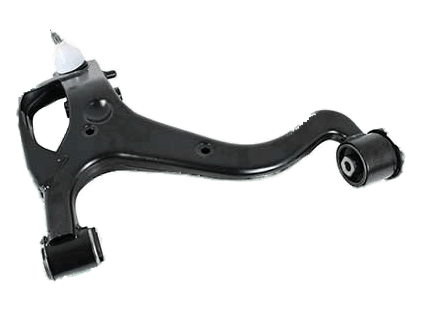
Control arms hold the wheel hub in a controlled path while allowing suspension movement. Bushes isolate noise and permit limited movement. Ball joints or similar pivots allow the wheel to steer and move with the suspension. Wear in any of these areas can change wheel position under braking, acceleration, bumps or cornering.
A clunk does not automatically prove that the complete arm needs replacement. Anti-roll-bar links, strut mounts, wheel bearings, rack mounts, subframe bushes and other joints can make similar noises. Uneven tyre wear can involve alignment, pressure, tyre condition, ride height or several worn components. The inspection should locate the movement and identify which component is serviceable separately on the exact vehicle.
Send the model, year, VIN or registration, which corner makes noise, whether it happens over bumps or during braking, photographs of tyre wear and any recent suspension or alignment work.
Understand the load path
Why control-arm wear changes steering, braking and tyre position
Braking pushes and pulls the wheel through its suspension links. A worn bush can allow the wheel to move, causing a knock, steering correction or unstable pedal-to-road behaviour.
Side load acts through the tyres, hub, joints and arms. Excess movement can reduce steering precision and change alignment while the vehicle is turning.
The suspension must travel without uncontrolled movement or contact. A worn joint, bush or mount may knock only when the wheel is loaded in a particular direction.
Air or coil spring height, vehicle load and alignment angles influence arm position. Measurements should be taken under the correct vehicle condition.
Match the symptom to the next check
Control-arm symptoms and competing causes
| What you notice | What it can involve | Recommended next step |
|---|---|---|
| Clunk over bumps | Control-arm bush, ball joint, anti-roll-bar link, strut mount, damper, subframe mounting or another loaded suspension connection | Reproduce the noise and inspect components under the load condition that creates it |
| Movement or knock while braking | Front or rear arm bush movement, ball-joint play, brake component movement, subframe bush, tyre or steering connection | Observe wheel and arm movement while load is applied and compare both sides |
| Uneven tyre wear | Alignment, bush wear, joint play, ride height, tyre pressure, wheel damage or previous impact | Inspect mechanical security before measuring and adjusting alignment |
| Vague or wandering steering | Control arms, track rods, steering rack, wheel bearings, tyres, alignment or suspension height | Check the full wheel-location and steering path rather than replacing one arm from feel alone |
| Vibration through the body | Tyre or wheel condition, driveshaft, brake variation, bearing wear, bush movement or road surface | Identify speed, braking and load pattern before attributing vibration to a control arm |
| Visible torn bush | Surface ageing, separation, fluid loss from a hydraulic bush where fitted or excessive movement under load | Assess actual movement and whether the bush is serviceable separately or supplied with the arm |
A mild repeatable clunk, visible bush cracking or uneven tyre wear with normal control should be checked before it progresses.
Use caution when the vehicle moves under braking, steering feels vague, play can be felt or tyre wear is becoming rapid.
Do not drive with severe joint play, a loose arm, visible wheel-position change, tyre contact, unpredictable steering or a cracked component.
Record the operating condition
Confirm the affected corner, road surface, speed, braking, acceleration, steering angle, vehicle height, temperature and recent work when the symptom appears.
Inspect tyres and wheel position
Check pressure, wear pattern, wheel condition, ride height and visible impact evidence before interpreting suspension movement.
Load the suspension correctly
Some bushes and joints show movement only with the suspension supporting vehicle weight or while force is applied in a particular direction.
Locate the exact point of movement
Observe the arm, bushes, ball joint, hub, subframe, track rods and connected parts so transmitted movement is not mistaken for the source.
Measure alignment after mechanical security
Alignment results are meaningful only after loose or damaged components are repaired and the vehicle is at the correct ride height with serviceable tyres.
Evidence that supports the recommendation
Quotation scope
- Exact arm, bush or joint
- Opposite-side condition
- Separate part or complete arm
- Fasteners and alignment included
The part name changes the repair
Upper arm, lower arm, bush and ball-joint decisions
An upper arm can control wheel angle and hub position according to the suspension layout. Wear may be in its bushes, joint or arm structure. The exact generation and axle determine the design.
Lower arms often carry substantial braking and cornering loads. One vehicle can have more than one lower link with different jobs, so “lower arm” is not a complete parts description.
A bush may be replaceable separately or supplied only with an arm. Pressing a bush requires the correct orientation, support and assessment of the arm bore and surrounding condition.
A ball joint allows controlled movement while holding the hub. Some are separate service items, while others are integrated into an arm. Severe play can require urgent action.
Paired replacement is not a universal rule. The decision depends on component type, measured wear, matching performance, manufacturer procedure, the opposite side’s condition and the owner’s approved scope.
From diagnosis to road verification
Range Rover control-arm replacement process
Confirm application
Use the VIN, model year, axle and suspension layout to identify the exact arm, bush, joint and fasteners.
Document the fault
Record play, separation, damage, tyre wear and related findings before parts are removed.
Install under the correct procedure
Support components safely, protect connected systems and position bushes or joints according to the exact design.
Set final fastener condition
Some bonded bushes require final tightening at a specified suspension position. The correct vehicle procedure should be used.
Align and verify
Check wheel angles when required, confirm steering and braking behaviour and recheck the original noise or movement.
The repair is not finished at installation
Alignment, tyres and final suspension checks
Control-arm work can change wheel position or disturb an adjustment point. Alignment should be measured when the repair or current readings require it. A printed result is useful only when tyres, ride height and mechanical joints are in a condition that allows the settings to remain stable.
Confirm arm fasteners, joint seating, boots, sensor links, brake hoses, wiring clearances and movement through suspension and steering travel.
Measure relevant angles at the correct vehicle height and loading condition. Record any angle that cannot be corrected because of damage or another worn part.
Existing uneven wear will not disappear after repair. Tyre safety, pressure and the effect of the old wear pattern on road feel should be explained.
Check straight-ahead steering position, return, pull and any warning or angle reference affected by the work.
Confirm that the vehicle remains stable under braking and that no hose, sensor wire or brake component was disturbed.
Repeat the bump, braking or cornering condition that produced the complaint and document any separate noise that remains.
Avoid unnecessary replacement
Control-arm concerns commonly misdiagnosed
Links, strut mounts, dampers, subframe bushes and steering parts can knock under similar conditions. The movement should be observed.
Surface cracking and structural separation are different findings. Actual movement, fluid loss where applicable and load behaviour matter.
Alignment cannot stay correct when a bush or ball joint allows the wheel to move. Mechanical repair comes first.
Pressure, wheel damage, alignment, ride height and driving conditions can contribute. The full pattern should be reviewed.
Noise can travel through the subframe and body. Both sides and connected components should be checked under load.
Separate bush replacement depends on parts availability, arm condition, tooling, orientation and the approved procedure.
An accurate quote needs the exact suspension link
What affects Range Rover control-arm replacement cost
Price depends on the vehicle, axle, upper or lower link, integrated or separate bush and joint design, fastener condition, access, related suspension wear, part status, alignment and any additional damage. A photograph of a bush or a general “front arm” description is not enough to define the complete job.
- VIN, model year, axle and suspension layout
- Exact arm, bush or joint confirmed as faulty
- Condition of the opposite side and connected links
- Separate bush or complete-arm parts route
- Fasteners, sensor links and related items included
- Tyre wear and alignment requirements
- New, remanufactured or other part status where options exist
- Verification and warranty terms for the exact scope
Vehicle details matter
Control-arm layouts vary across Range Rover models
Range Rover, Range Rover Sport, Evoque, Velar and Land Rover models use different front and rear suspension designs across generations. One axle can use several links with different functions. Air suspension height, adaptive damping and wheel or tyre specifications can also change how movement and alignment are assessed.
Use the VIN and exact axle before ordering arms, bushes, ball joints or fasteners. A model name alone does not identify the correct part or installation procedure. Model-specific pages should remain focused on their generation rather than duplicating this broad control-arm service intent.
Do not use another model’s tightening or alignment instruction. Fastener procedures, bush position, ride height and wheel-angle requirements can differ.
Control-arm questions
Frequently asked questions
What are common signs of a worn Range Rover control arm?
Possible signs include clunks over bumps, movement under braking, vague steering, uneven tyre wear and visible bush or joint damage. These symptoms also have competing causes, so the exact movement should be located.
Can I drive with a worn control-arm bush?
It depends on severity. Mild wear still needs inspection. Stop and request recovery guidance when the wheel position changes, play is severe, steering becomes unpredictable, the tyre contacts the body or a component is loose or cracked.
Does a control arm need to be replaced in pairs?
Not always. The decision depends on component design, measured wear, the opposite side’s condition, matching performance and the exact procedure. The quotation should explain the reason.
Is alignment needed after control-arm replacement?
Alignment is often relevant when the repair changes wheel position or an adjustment point. The exact need follows the suspension design, measurements and repair procedure.
How much does Range Rover control-arm replacement cost in Dubai?
Price depends on the exact vehicle, axle, arm, bush or joint design, parts status, access, related wear, fasteners and alignment. Inspection is needed for an accurate scope.
What should I send before booking?
Send the model, year, VIN or registration, which corner makes noise, when it occurs, tyre-wear photographs and details of recent suspension, tyre or alignment work.
Book control-arm diagnosis in Dubai
Locate the worn arm, bush or joint before replacing suspension parts
Share the model, year, corner, symptom pattern, tyre condition and recent repair history. We will advise whether the next step is a control-arm inspection or broader suspension diagnosis.