
Do not work underneath a Range Rover supported only by its air suspension or a jack. The body can change height unexpectedly. If the vehicle is severely low, a tire is rubbing, steering or handling is affected, or the display tells you to stop, stop safely and arrange suitable recovery. Do not repeatedly press the raise button to make an unsafe vehicle driveable.
A Range Rover that sinks overnight or raises slowly needs two questions answered: can the system retain air, and can it produce and distribute air correctly? A leaking spring or connection, valve problem, weak supply, incorrect height information, or an operating restriction can create similar symptoms. The pattern over time helps choose the test; it does not identify a replacement part by itself.
This guide applies to vehicles fitted with air suspension. Range Rover, Sport, Velar, and Evoque badges do not establish one shared suspension design. Confirm the fitted system and generation before applying air-spring advice to a vehicle with conventional springs or a different adaptive suspension arrangement.
Decide whether the vehicle can be moved safely
Look at the stance from outside, keeping clear of the wheel arches and underbody. A suspension warning with normal clearance is different from a vehicle resting very low with little usable suspension travel. A dashboard speed limit is not permission to continue when the physical condition is unsafe.
| What you notice | Action | What to avoid |
|---|---|---|
| Severe lowering, tire contact, unstable handling, restricted steering, or a stop instruction | Stop safely and arrange recovery. Tell the operator the vehicle has low clearance and an air-suspension fault. | Driving to see whether it raises, towing a load, or forcing it over ramps. |
| Repeated sinking or slow raising, with apparently normal clearance | Seek advice before further use and describe the exact warning and stance. Follow the vehicle's handbook. | Assuming a restart or temporary return to height has fixed the fault. |
| A height change that appears to match a selected access setting | Check the applicable operating instructions and record whether the car remains level and responds normally. | Treating every intended lowering event as a leak, or using it to dismiss a persistent lean. |
Recovery must suit the model, drivetrain, and available clearance. Tell the operator about any inability to select neutral or release the parking brake. Loading equipment and towing procedures are professional decisions; a suspension fault is not a reason to improvise with a tow rope.
Raising the suspension does not make the space underneath safe. An open door, removed key, or selected height mode is not a substitute for proper mechanical support. Pressurized lines and suspension parts should only be opened using the applicable workshop procedure.
Separate normal lowering from overnight air loss
Some Range Rovers have access-height or automatic lowering features, and available settings vary. Check what was selected when parking and whether loading or unloading changed the body position. Land Rover documents automatic access height on specific equipped vehicles. That does not mean every Range Rover lowers in the same way.
A repeatable drop after the vehicle has been parked deserves investigation, especially when one corner keeps ending up lower or the next start requires prolonged raising. Parking slope, tire condition, vehicle load, and height mode can distort a casual visual comparison. There is no universal millimeter allowance that diagnoses all models.
Temperature and normal control activity also need context. A workshop should determine whether the observed movement was commanded or reflects pressure loss. Do not accept either “it is just the weather” or “the lowest air spring must be leaking” without checks that support the explanation.
Record the overnight pattern without touching the system
A consistent record helps reproduce an intermittent complaint. If the vehicle is safely parked on level, firm ground, take photographs from the same positions after parking and before the next start. Keep your hands and equipment outside the wheel arches and do not reach underneath.
| Record | Useful detail | Why it helps |
|---|---|---|
| Starting condition | Selected height, passengers or cargo recently removed, parking surface, and visible stance. | Establishes a meaningful comparison. |
| Time parked | Whether the change appeared within minutes, after several hours, or by morning. | Helps choose the observation period. |
| Pattern of lowering | One corner, an axle, or the whole body, using front and rear photographs. | Helps identify which air paths and control actions need testing. |
| Next normal start | Any warning, compressor sound, uneven movement, or failure to reach height. | Separates retained-air concerns from raising performance. |
| Recent changes | Battery work, suspension repairs, tire work, an impact, or changed loading. | Gives the technician a useful starting history. |
This is an observation record, not a home leak test. Do not pull fuses, disconnect the battery, open air lines, or change calibration values to force a diagnostic result. Those actions can alter control behavior, remove useful information, or create another fault.
If the vehicle is already severely low or unsafe, skip further experiments and arrange recovery. A workshop may need to keep it parked long enough to reproduce the complaint. A short visit during which the car rises once may not answer an overnight-retention question.
What different sinking patterns can and cannot prove
One corner repeatedly drops
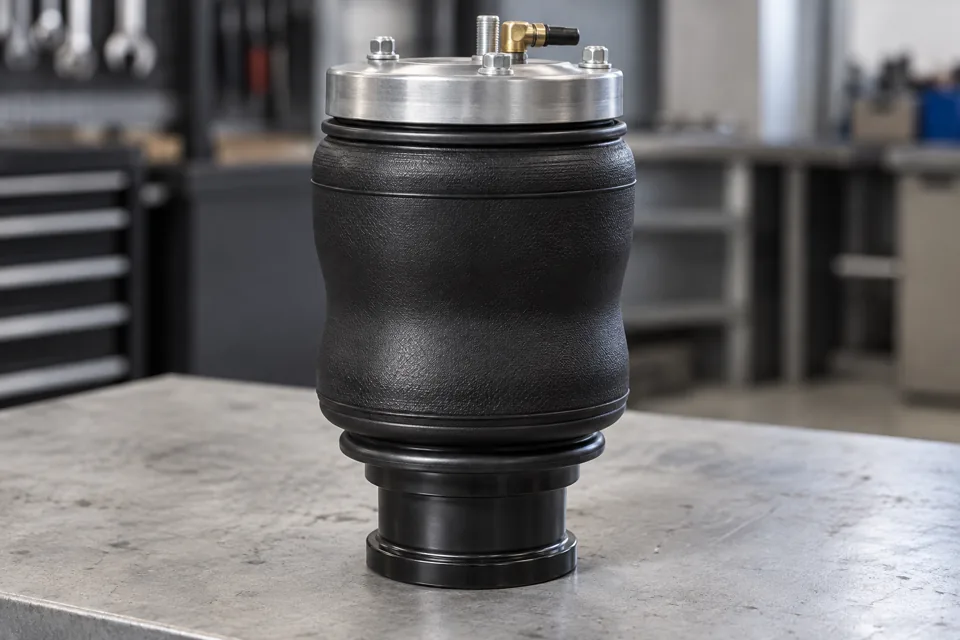
The local air spring or strut, connection, pipe, and relevant valve path need consideration. The corner that looks low is a starting point for testing, not proof of a torn air sleeve. Height information and control actions must also be compared with the actual stance.
Both corners on one axle drop
Shared air routing or valve behavior may become relevant, but the two springs still need assessment. Depending on the system, leveling activity can complicate the final parked pattern. Replacing two springs solely because two corners are low is not a complete diagnosis.
The whole vehicle sits lower by morning
Review height settings, control behavior, retained air, and the full circuit. The compressor supplies air when commanded; a parked height loss does not automatically prove that the compressor caused it. More than one fault is possible, but each proposed repair needs a reason.
If your Range Rover is sitting low or will not rise, assess its stance and warning messages before attempting to move it. The parked timeline and any previous raising attempts then help narrow the investigation.
Why slow raising does not automatically mean a failed compressor
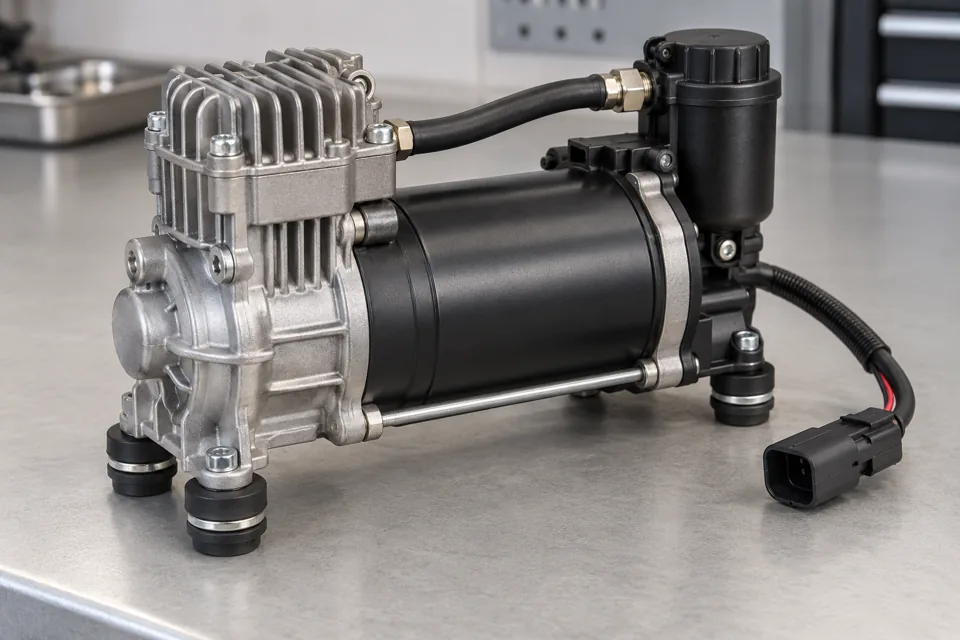
A system may raise slowly because stored air is depleted, air is escaping, supply is weak, flow is restricted, or the controller is limiting operation. Some height requests also depend on door status, selected mode, temperature, or other conditions. The exact operating instructions decide which restrictions apply.
Land Rover's archived air suspension operating instructions explain that repeated height changes can deplete stored air and slow subsequent raising on the covered system. Its height figures and operating rules must not be transferred to other generations.
Compressor noise only establishes that something can be heard. It does not measure useful output. Likewise, silence may involve an absent command, power-supply problem, or protection condition rather than a failed motor. Repeated height requests can add heat and make a marginal system harder to assess.
A technician should compare the request, electrical supply, pressure rise over time, starting conditions, temperature, and downstream demand using vehicle-specific information. There is no single pressure reading that condemns every Range Rover compressor. The point of measurement and whether pressure is being generated, stored, or delivered matter.
Workshop tests should separate air loss from supply and sensor faults
A useful test plan follows the complaint rather than replacing a standard list of parts. Ask what each test can establish and whether the original parked condition was reproduced.
- Confirm the installed system. Identify the VIN, model year, suspension equipment, compressor type, and previous modifications.
- Preserve the baseline. Record warnings, relevant codes and status, actual height, and available operating data before clearing faults.
- Check physical condition and electrical supply. Inspect for damage and compare relevant power, ground, connector, and linkage condition.
- Test air retention. Observe the suspected circuit over an appropriate period, using approved leak-detection and isolation methods where applicable.
- Assess pressure production and distribution. Compare measured behavior with the applicable procedure, including leaks and restrictions that can affect the result.
- Compare height data with physical position. Confirm that sensor information and commanded movement are plausible.
- Repeat the original complaint after repair. Verify both the parked condition and appropriate raising operation.
A visible external leak may be found with suitable leak-detection fluid, but a brief bubble check cannot exclude internal valve leakage or a position-dependent air-spring leak. Testing at different positions requires proper lifting, support, and control of vehicle movement. This is workshop work.
Arnott recommends checking related air springs, lines, fittings, valves, electrical connections and height-sensor linkages when diagnosing an air suspension compressor. Check the connected system before installing another compressor.
Height calibration cannot repair an air leak
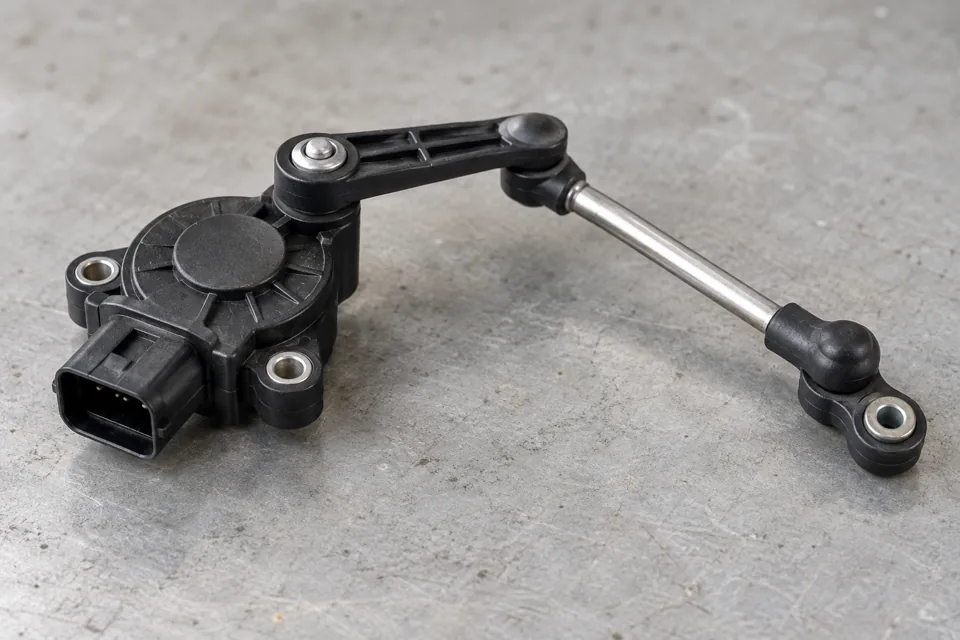
A height sensor reports suspension position. A damaged linkage, incorrect installation, wiring problem, or implausible signal can affect control. The workshop should compare live readings with physical measurements before deciding that the sensor itself has failed.
Measurements need the specified reference points and setup, including suitable ground, tires, and loading. A small difference measured casually between wheel arches is not a universal fault threshold. Do not use calibration to hide a corner that loses height after parking.
Calibration may be required after particular repairs or when the applicable procedure calls for it. It cannot seal a leak, restore compressor output, or repair a damaged arm. Wheel alignment is a separate check and should be considered when the work affects geometry. Arnott explains how ride-height sensors and calibration affect suspension control.
Choose the repair scope from the confirmed findings
A connection, line, or electrical repair may resolve the problem while preserving serviceable components. A leaking air spring, faulty valve unit, or weak compressor may need replacement when testing supports it. Repairability depends on the actual part and approved procedure.
Check for secondary damage without assuming it. A sustained leak can increase compressor workload, but that does not prove both components always need replacement. If the compressor is being replaced, ask what caused the overwork and how the repaired system will be checked.
Multiple fault codes do not justify a complete overhaul by themselves. One electrical or pressure problem can affect several monitored functions. Ask the estimate to distinguish required work, damage caused by the original fault, and optional preventive replacement. Pair replacement should have a component-specific reason.
Parts must match the installed configuration. JLR distinguishes air suspension compressor versions and replacement procedures in a bulletin for specified North American vehicles. The repair applies only to the vehicles listed in that bulletin; confirm current VIN applicability before using it.
A coil conversion is a separate modification decision
Converting to coil springs changes the suspension arrangement rather than repairing the air system. Adjustable height and relevant leveling functions may be lost. The effect on ride, loading, associated systems, and warning behavior depends on the vehicle and kit.
It is incorrect to promise that every conversion eliminates electronics or diagnostics. Many of Arnott's coil spring conversion kits include electronic bypass modules. Fitment, warning integration, installation checks, and future fault diagnosis still need consideration.
Before considering a conversion, establish the cost and scope of a properly diagnosed repair. Then confirm exact kit compatibility, load limits, changed functions, installation requirements, and any applicable approval, inspection, and insurance requirements. A lean overnight is not enough reason to recommend conversion, and “almost no upkeep” is not a sound maintenance promise.
What an air-suspension estimate should include
A useful estimate identifies the failed area and the checks supporting that conclusion. It should state the part manufacturer and number, whether pricing is per corner or assembly, labor, connectors or other hardware, and any required calibration or alignment. Diagnostic work and repair work should be clearly distinguished.
Request the total in AED and an explicit statement of whether VAT is included or added. Ask whether overnight retention testing, recovery, and repeat checks are included. Agree how additional work will be authorized if dismantling reveals another problem.
Before approving Range Rover air suspension repair, ask for the installed system, confirmed fault and required parts to be listed in the estimate. Compare prices only when the repair scope matches.
Verify the parked condition before calling the repair complete
The important result is not simply that the body rises once. If the original complaint was sinking overnight, agree a suitable retention check. If it was slow raising after parking, confirm the raising behavior from comparable starting conditions.
- Physical height and sensor information agree under the specified setup.
- The affected air circuit retains pressure appropriately for the test.
- Permitted height changes complete without unexplained restriction or excessive compressor operation.
- Relevant warnings are reviewed after the repair, rather than merely erased.
- Mechanical security, disturbed connections, and alignment requirements are addressed.
Keep the invoice and findings. If a symptom returns, record whether it is the same corner, time interval, and warning. That makes a follow-up more useful than restarting the parts-replacement process from scratch.
Range Rover Air Suspension FAQs
Is it fixed if the Range Rover rises normally every morning?
Not necessarily. Successful raising can mask a repeatable parked loss. Record the before-start stance and ask for a retention test if sinking continues.
Can a weak battery explain the problem?
Electrical supply can interrupt control or raising. It does not automatically explain a confirmed pneumatic leak. Both concerns may need investigation if the findings support them.
Should all four air springs be replaced together?
Not by default. Condition, the confirmed faults, component guidance, and an agreed repair plan should determine the scope. Ask why each additional part is needed.
Does UAE heat prove that the compressor is worn out?
No. Temperature and usage help reproduce the complaint, but compressor condition needs testing. Claims that every system fails faster in Dubai or after a fixed mileage are not a diagnosis.
Can I drive if there is no suspension warning?
The absence of a warning does not establish safe clearance or handling. Severe lowering, tire contact, or impaired control means stop safely and arrange recovery.
Resolve the cause of the height change
Use the parked timeline to guide air-retention checks and the raising behavior to guide supply and control tests. Keep serviceable parts, repair the confirmed fault, and verify the original condition afterward. Safe support and safe vehicle clearance come before any inspection or journey.
Workshop support
Need help with your Range Rover?
Tell us your model, year and what you have noticed. Speak with the workshop about maintenance, an inspection or a repair.