

A Range Rover tailgate that will not open can have a key or switch problem, low vehicle power, a latch fault, a wiring problem or an operating condition that prevents release. The first useful distinction is whether it fails from every control, or only from the key fob, exterior handle or interior switch. Record the response before buying parts. The correct access and reset procedures depend on the exact model, model year and equipment.
Stop operating an unsafe tailgate. Keep people, fingers and luggage clear of hinges, latches and the entire movement path. Do not stand beneath a gate that drops, twists or cannot hold itself open. A workshop must support it correctly before removing trim, struts or drive units. Do not drive unless every tailgate section is securely latched. If it cannot latch or you cannot establish that it is secure, arrange assistance or recovery.
Identify the tailgate before trying to release it
“Range Rover” and “Range Rover Sport” are different model lines. A procedure for an upper and lower split tailgate must not be applied to a Sport with a single lifting panel. Model registration dates can overlap generation changes, so use the VIN and model year rather than appearance alone.
| Vehicle to identify | Layout distinction | What to record |
|---|---|---|
| Full-size Range Rover, including L322, L405 and L460 generations | Split upper and lower sections; powered functions vary by year and equipment. | Which section fails, whether either section releases, and any mislock message. |
| Range Rover Sport L494 and L461 | Single-piece lifting tailgate, with equipment-dependent powered operation. | Whether the latch releases, whether the panel rises, and where movement stops. |
| Earlier Sport L320 | Check the exact handbook for rear tailgate and separate opening-glass operation where fitted. | Distinguish a glass-release complaint from failure of the main tailgate. |
Do not call the upper section of every split tailgate a separately opening glass hatch. The glass, upper panel and latch arrangement are not interchangeable descriptions. JLR’s VIN-specific owner information is the starting point for the controls fitted to your vehicle.
Compare the fob, exterior handle and interior switch
Park safely, select Park and apply the parking brake before checking the controls. Confirm adequate clearance behind and above the vehicle. Use each fitted control according to the handbook, with the vehicle in the required lock and ignition state. Stop if the panel moves unpredictably, binds or makes a harsh mechanical noise.
| Observed response | What it may narrow down | What it does not prove |
|---|---|---|
| Fob fails, but handle and interior switch work | Key operation, key battery, recognition or the conditions required for a remote request. | That a new tailgate actuator is needed. |
| Exterior handle fails, but other controls work | Handle input, local connector or wiring, or a lock-state restriction. | That the handle switch alone is faulty. |
| Interior switch fails, but the other controls work | Interior input or its permitted operating conditions. | That the rear hinge harness must be broken. |
| Every control is silent | Vehicle power, shared authorization, supply, communication or latch operation. | That the control module has failed. |
| A click occurs, but the gate stays shut | A release attempt without successful unlatching; loading, alignment or electrical problems remain possible. | That the motor, wiring and voltage supply are all healthy. |
| The latch releases, but the panel does not rise | Support or powered-lift operation rather than only the release input. | That forcing the panel upward is safe. |
| The gate reverses or refuses to finish closing | An obstruction, latch feedback, alignment, operating condition or learned-position issue. | That repeated button presses will correct it. |
A working control is useful comparative evidence. An intermittent wire, weak supply or worn mechanism can still work during one attempt and fail during another. Record the conditions rather than repeatedly cycling a faulty gate.
Safe checks you can make without dismantling anything
Check whether the doors unlock normally and whether the dashboard shows a low-key-battery, vehicle-power or tailgate message. Note any recent flat battery, battery work, rear impact, accessory installation or water exposure. These are diagnostic leads, not proof of the cause.
If a spare authorized key is available, compare its normal operation. Follow the handbook for key-battery replacement if indicated. Keep small batteries away from children. Do not assume that a working door-unlock button proves that every key function is working.
From outside the movement path, look for luggage trapped at the opening or an obvious external obstruction. Do not put fingers into the latch, lever against painted panels, pull wiring boots apart or spray electrical contacts. A trapped load may need controlled workshop access.
Review only the operating settings actually described in your handbook. There is no universal “tailgate child lock” switch or glovebox reset shared by all Range Rovers. If the gate worked normally before a height setting was changed, check the relevant opening-height instructions rather than disconnecting the battery.
When the tailgate is stuck closed
There is no safe universal screwdriver-release procedure. Trim access, latch design, electrical isolation and support requirements vary. Use an owner-access method only when the exact handbook describes it and its prerequisites can be met safely. Otherwise, let a trained workshop or roadside provider arrange controlled access.
If you need an item from the loadspace, normal cabin access may be possible through folding seats when permitted by the vehicle instructions. Do not force powered seats, climb into a confined loadspace, trap yourself behind a locked partition or remove trim to search for an unverified release.
A child or animal trapped in a hot vehicle is an emergency. Contact emergency assistance immediately rather than working through a repair checklist. A luggage-access inconvenience and an occupant emergency need different responses.
What a workshop diagnosis should establish
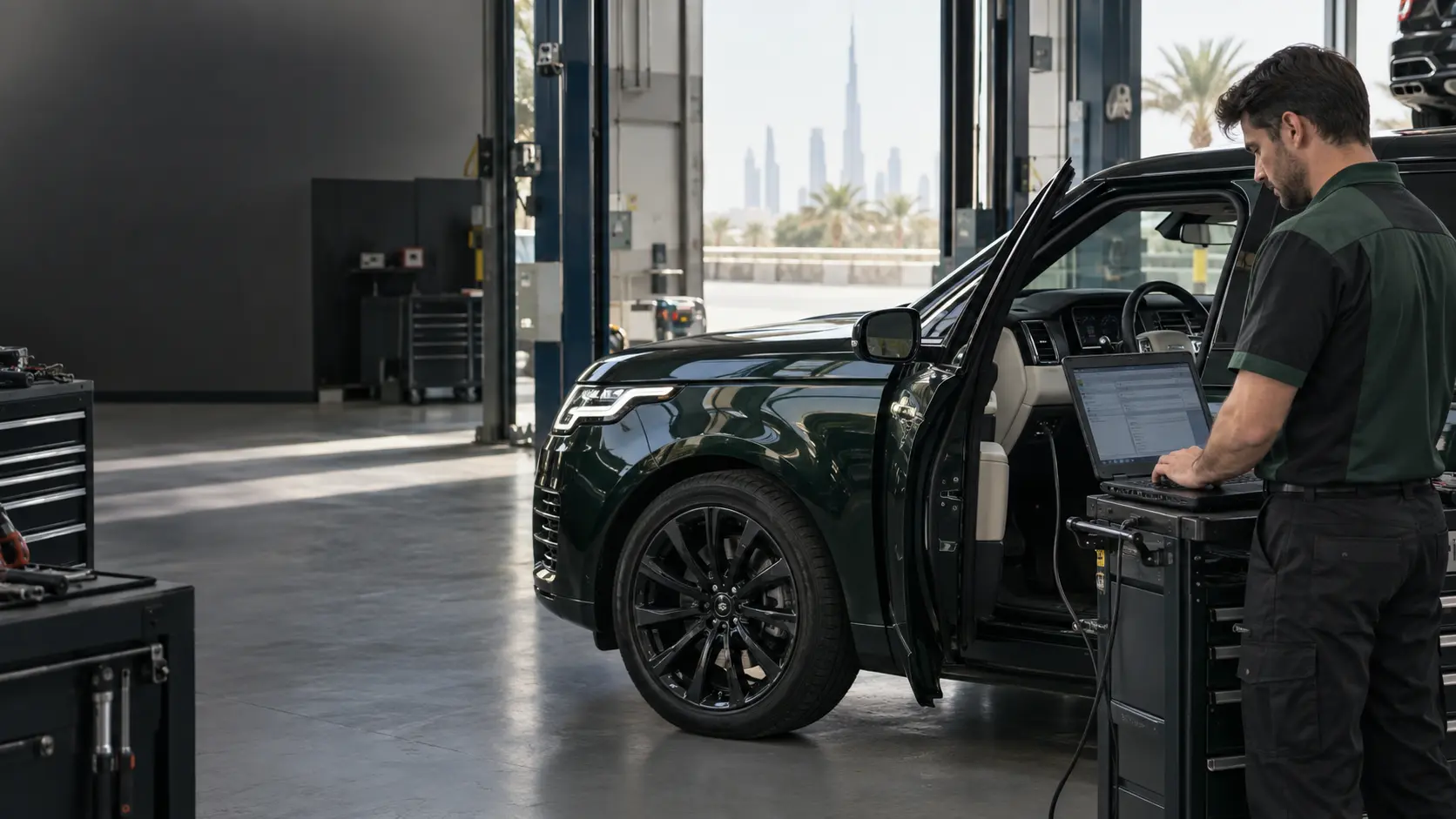
Save the fault report and compare inputs
The diagnostic tool must support the relevant body and tailgate systems, not just generic engine emissions codes. The technician should retain the original codes, status and available event data before clearing anything. Agree on diagnostic checks and repair approval before authorizing replacement parts. Live data can then show whether each opening request is received and whether the reported latch state matches the physical condition.
A display that says “open” while the panel appears closed may indicate latch feedback, adjustment or circuit trouble. It does not identify a failed sensor by itself. The actual latching condition must be checked independently.
Test power, ground and the circuit under the failed condition
Ask whether the battery and relevant supply were checked under load and whether wiring diagrams matched your VIN. A continuity reading alone can miss a connection that fails while carrying current or as the tailgate moves. The inspection should also consider connector condition, harness routing and signs of water entry where relevant.
Do not apply direct 12-volt power to unidentified pins or swap relays between unrelated circuits. Modern drive units may contain electronics or use controlled outputs. Circuit and actuator tests belong within the applicable workshop procedure, with the required isolation and protection.
Separate release, lift and final latching
A successful diagnostic actuator command establishes only that the commanded function responded during that test. It does not prove that every wire, ground, switch or position signal is sound. A repeatable fault may require loaded measurements, feedback checks and inspection of alignment or mechanical resistance.
Replacement should follow an identified failure. A damaged handle input does not justify replacing both lift units; a weak support unit does not automatically justify a control module. Equally, repairing a connector is incomplete if an unresolved leak continues to wet it.
Resets, support and closing checks after repair
A learned-position problem may require a manufacturer initialization or calibration, but battery disconnection for a fixed number of minutes is not a universal remedy. The technician should establish that the specified procedure applies and that supply, obstruction and mechanical faults have been addressed first.
Powered operation and object detection do not remove pinch risks. JLR’s published tailgate instructions warn about trapping and soft-close operation; use your own vehicle’s handbook for its precise functions. Never test object detection with a hand or another body part.
Before handover, ask the workshop to check each fitted control, secure latching, panel alignment, hold-open support and relevant warnings. On a split system, both sections need checking. A panel that looks flush is not sufficient evidence that its latch is secure.
What the repair quote should include
The repair cost depends on the identified component, access difficulty, exact part and whether applicable programming or initialization is needed. This guide does not provide verified vehicle-specific prices. A parts-only advert is not a fitted repair quote.
- VIN, model year, affected section and confirmed fault.
- Diagnostic and access charges, including any charge if repair is declined.
- Part number, brand, new or reconditioned condition, and quantity.
- Labor, consumables, trim clips and any applicable programming.
- Any water-entry or alignment work needed to prevent recurrence.
- Subtotal, VAT amount where applicable, total payable, validity date and written warranty terms.
Do not authorize an actuator or module solely because the symptoms resemble an online example. Ask what test separates the proposed part from an input, supply or mechanical problem. Agree a spending limit before dismantling or additional work.
Reduce avoidable tailgate problems
Keep the closing path clear and avoid packing luggage against the gate. Check the seals and visible opening for debris using the handbook cleaning instructions. Do not hang extra weight from the panel or use a powered gate to compress an overloaded trunk. Arrange inspection after an impact, repeated mislock warning, water entry or loss of hold-open support.
Before spending on parts: confirm the correct operating conditions and compare the fitted controls. A setting or key issue may need no tailgate parts. A proven latch, support, supply or wiring fault needs the appropriate repair, followed by a secure-latching check.
Tailgate questions owners ask
Can I drive if the tailgate will not open?
A gate stuck shut is different from one that will not latch. Do not drive with an open, partially latched or insecure gate. If its security is uncertain, arrange assessment or recovery before driving.
Does a click mean the actuator needs replacement?
No. A click indicates a response somewhere in the system, but binding, alignment, voltage and feedback faults may still explain why release fails.
Should I pull harder if the latch releases?
No. Stop if the gate binds, twists or will not stay supported. Follow only the manual-operation instructions for that vehicle; forced movement can damage the drive or injure someone.
Why does only the lower split section stay closed?
The lower section has its own release and latching requirements. Confirm the correct opening sequence and have the applicable inputs, latch condition and circuits checked. Do not use a Sport procedure.
Can a low battery stop tailgate operation?
It can contribute, but the battery must be tested and the relevant supplies checked. A tailgate fault alone does not establish that a replacement vehicle battery is needed.
Should I keep replacing a blown fuse?
No. A repeat failure needs diagnosis. Use only the specified fuse and handbook procedure; never increase the rating, bridge the fuse or bypass the protection.
Can I lubricate the latch to cure the problem?
Only use the cleaning or lubrication method specified for the component. Lubrication cannot correct a damaged circuit or prove that a latch is safe, and indiscriminate spray can contaminate electrical parts.
What if the fault disappears before the appointment?
Keep the symptom log and any safely recorded warning or video. Intermittent operation still warrants investigation if the gate has moved unexpectedly, failed to latch or lost support.
Workshop support
Need help with your Range Rover?
Tell us your model, year and what you have noticed. Speak with the workshop about maintenance, an inspection or a repair.