
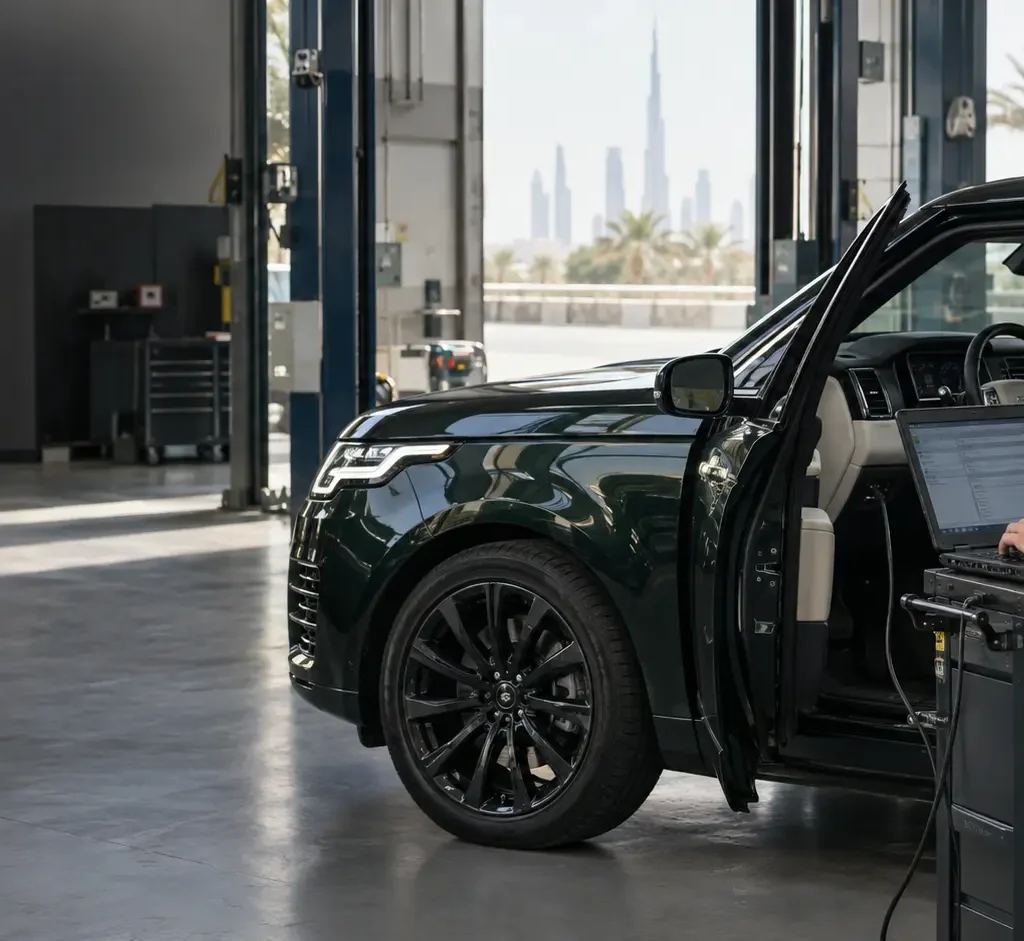
A Range Rover oil-leak quote depends on the confirmed source and the work needed to reach it. A small seal can involve substantial labor if other assemblies must be removed. A large wet area can also come from a relatively accessible connection. Before comparing prices, ask the workshop to identify the first fresh leak, explain the access required, and separate essential repair from optional work.
Stop safely, switch off the engine, and arrange recovery for an oil-pressure warning while running, rapid oil loss, or oil reaching a hot exhaust surface. Do not restart to demonstrate the leak. Smoke, a growing puddle, or new mechanical noise needs urgent assessment. If fire is suspected, move people away and contact emergency services.
Oil level and oil pressure mean different things
Oil level describes the quantity in the engine, measured using the correct dipstick or electronic procedure. Oil pressure concerns the lubrication system while the engine operates. A normal level does not prove adequate pressure, and a pressure warning is not permission to add oil and continue driving.
A leak can reduce the level over time. Severe loss can affect lubrication, but a small stain does not establish that oil pressure is low. Conversely, a lubrication fault can exist without a visible external leak. Follow the exact dashboard instruction and the handbook for your engine.
Land Rover's archived maintenance guidance includes both a stop-engine instruction for an oil-pressure warning in the covered application and a warning against driving when leaked fluid may reach the exhaust. Use the current vehicle handbook for the correct warning symbols and level-check conditions.
| What you notice | What it does not prove | Next step |
|---|---|---|
| Old damp residue, stable level, no warning or smoke | An active leak or a failed gasket has not yet been confirmed. | Arrange inspection and document the area before cleaning. |
| Fresh drops or a falling level | The lowest wet component is not necessarily the source. | Seek prompt advice about transport and leak tracing. Do not assume a safe driving distance. |
| Pressure warning, rapid loss, abnormal noise, or oil near hot exhaust | A top-up or routine oil change has not made it safe. | Stop safely, switch off, and arrange recovery. |
Why the puddle location can mislead the quote
Gravity carries oil downward, airflow moves it along the underbody, and an undertray can store it before releasing it after parking. Oil beside the transmission may have traveled from above. Oil around a turbocharger does not by itself prove a failed turbocharger.
A useful manufacturer example is JLR bulletin SSM72381, covering specified 3.0 TDV6 applications. It describes apparent secondary-turbo oil leaks that required cleaning and tracing, including oil traveling from a camshaft-cover gasket or a return-hose source. It supports checking the source before replacing an expensive assembly. It does not establish the cause on every diesel or gasoline Range Rover.
Ask for a photograph of the first fresh trace after the area is cleaned, not just a photograph of an oil-covered engine. If access prevents a firm diagnosis, the quote should distinguish diagnostic dismantling from an already-confirmed repair.
How leak location changes repair access
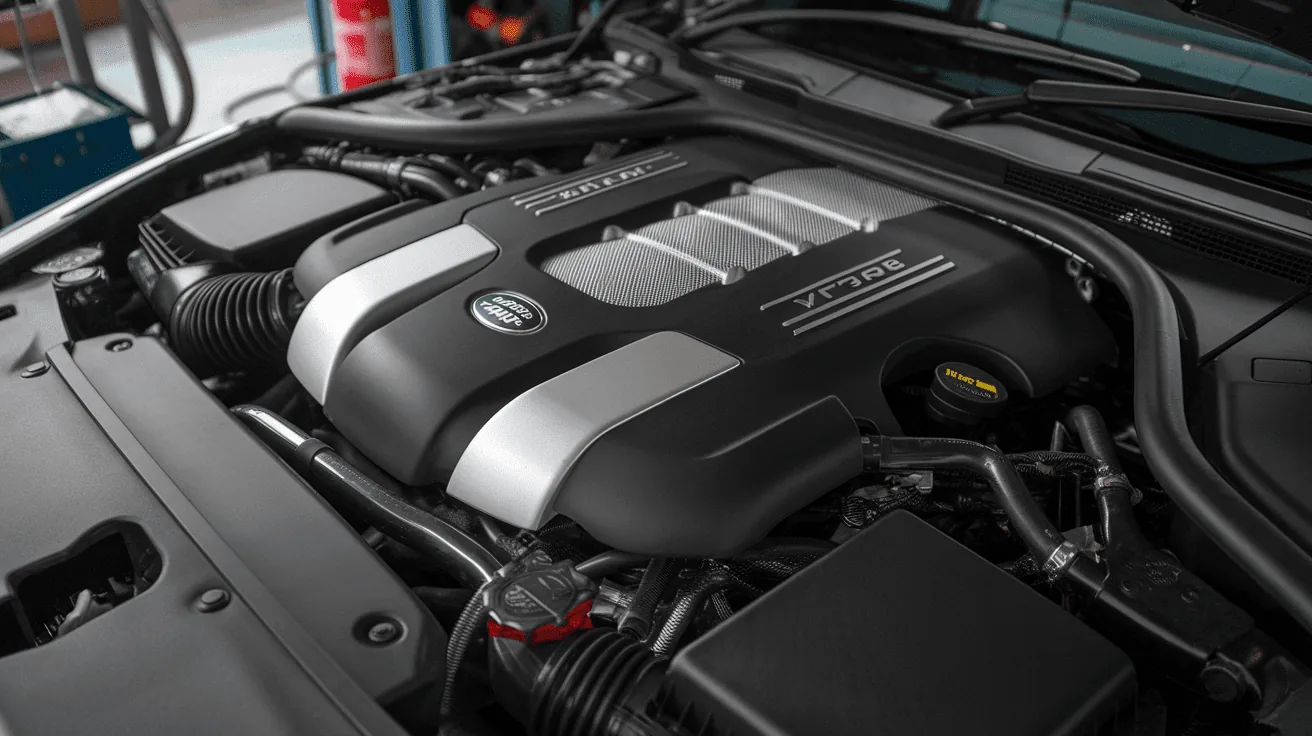
Range Rover, Sport, Evoque and Velar span different generations and gasoline, diesel and hybrid powertrains. Confirm the VIN, engine and fitted equipment. Trim names such as HSE or Autobiography do not identify one sealing layout or predict a particular failure.
| Confirmed source | What can change the scope | Question before approval |
|---|---|---|
| Filter cap, drain seal or service connection | Access, damaged threads, incorrect seal installation or housing damage. | Is a seal correction sufficient, or is the surrounding part damaged? |
| Camshaft or valve-cover area | Intake components, wiring, breather equipment, cover distortion and engine packaging. | Why does this need a gasket, a complete cover, or related ventilation work? |
| Oil-filter or cooler housing | Housing location, separate seals, coolant connections where fitted, and related fluid handling. | Which interface is leaking, and which fluids must be drained? |
| Timing-cover or lower-engine joint | Cover arrangement, nearby mounts or drive components, sealing materials and access sequence. | What must be removed, and is the quoted joint actually the first fresh source? |
| Rear crankshaft sealing area | Potential transmission removal, adjacent sealing points and required installation tools. | Has upper-engine runoff been excluded before major access is approved? |
| Turbo oil pipe or connection, where fitted | Heat shields, pipe routing, feed versus return connection and component condition. | Is the pipe or seal faulty, or is oil arriving from elsewhere? |
These are scope comparisons, not a diagnosis or a fixed labor schedule. An engine may use formed gaskets, sealing rings, specified liquid sealant, or a combination. Applying generic sealant around an external joint is not a substitute for the correct repair procedure.
One workshop process from tracing to verification
Record the condition before cleaning
Document the oil-level result, exact warning, leak pattern and recent service history. Establish that the fluid is engine oil. Transmission, steering or other hydraulic fluid, coolant and ordinary AC condensate require different investigations. Color alone is insufficient.
Owners can photograph the parking spot and describe when it appeared without touching the fluid or crawling underneath. Do not work under a vehicle supported only by its jack, reach near moving parts, or wash the engine to prepare it for inspection. On hybrids, high-voltage equipment and possible engine operation require the matching safety procedure.
Clean selected areas and look for fresh evidence
A technician should remove old residue from appropriate areas with suitable materials, protect sensitive equipment, and recheck under conditions that are safe for the vehicle. Some leaks appear only when warm or after shutdown. An unsafe engine should not be run merely to make a leak visible.
An approved tracer dye or another manufacturer-specified method may help when appropriate. Dye compatibility, dose and test conditions matter. A thermal camera records temperature differences; it does not see through a heat shield or independently prove the source of a hidden oil leak.
Check the failed part and contributing conditions
A leaking gasket does not automatically raise pressure throughout the lubrication system. Crankcase ventilation and pressurized oil galleries are different systems. A ventilation restriction or other abnormal crankcase condition can contribute to leakage, but it needs the appropriate engine-specific test. A stain alone does not justify a breather replacement.
Once access is approved, inspect the sealing surface and surrounding component. A cracked or distorted cover may need replacement. An intact serviceable assembly may need only its correct seal. Do not replace every nearby seal unless its condition, required procedure or shared access justifies the additional work.
Repair, clean residual oil and repeat the relevant check
Follow the specified preparation, parts, fasteners, sealant locations and curing requirements. Restore the correct oil level and any other fluids disturbed by the repair. Clean trapped oil from appropriate shields and trays so it does not create a false repeat leak.
Oil inside the engine is not automatically contaminated because an external leak exists. An oil and filter change may be required by the repair, contamination findings or service schedule. Oil collected from the ground or a dirty drain container must not be poured back into the engine.
The final checks should address the original leak condition and any pressure warning separately. A dry engine at one brief idle check does not establish that a warm, load-related or after-shutdown leak has been resolved.
Compare quotes by included work, not the gasket price
When arranging oil-leak diagnosis in Al Quoz 4, Dubai, provide the engine or VIN, current mileage, warning details and recent work. Include the confirmed leak source if another workshop has inspected it so the estimate addresses the same findings.
No AED range or repair-hour promise is published here because dated, engine-specific estimates were not available to support the previous figures. Ask for a dated quote stating parts, labor, tax treatment and the assumptions behind the scope.
- Diagnosis: inspection, cleaning, tracing and any initial access charge.
- Access labor: removal and refitting of the assemblies needed for this engine.
- Repair materials: identified part numbers or specifications, seals, required fasteners and sealant.
- Related work: fluids, filters, contaminated components and any condition-based additions.
- Verification: final level check, leak recheck and any separate lubrication-system tests.
- Total and approval: VAT included or excluded, exclusions, spending limit and the next approval point.
Compare the same repair route. A quote for a gasket is not equivalent to a quote for a damaged housing plus access and fluids. Shared access may reduce duplicated labor, but it does not make unnecessary replacement worthwhile. Ask the workshop to show the incremental cost and reason for optional work.
Labor hours also differ from elapsed workshop time. Parts availability, diagnosis, sealant curing and a warm or after-shutdown recheck can affect collection time. Agree on an update point instead of treating a generic same-day promise as a technical requirement.
If oil appears again after repair
Record the location, timing and oil-level trend, and contact the repairing workshop. Residual oil trapped in a tray, a second source and an unresolved original leak are different possibilities. Recleaning and a documented recheck can distinguish them. A fresh pressure warning or rapid loss still requires stopping, even if the previous invoice says the leak was repaired.
If a proposed repair expands into major engine work, agree on the engine repair scope and alternatives before authorizing dismantling. Ask which findings justify the additional work.
Key takeaway: the first fresh source and the access required explain an oil-leak quote better than the puddle size. Confirm those findings, agree on the included work, and keep pressure warnings and fire risks outside routine maintenance decisions.
Oil-leak quote questions
Does a small gasket mean a small bill?
No. The part may be inexpensive while access, surface inspection and reassembly require substantial labor. Ask for an explanation of the access work for your engine.
Can I just top up and drive to the workshop?
A top-up does not repair the leak or establish safe oil pressure. Stop for a pressure warning, rapid loss or oil near hot exhaust. For a minor concern, ask for transport advice based on the actual symptoms and handbook.
Does oil beside the gearbox prove a rear main seal leak?
No. Oil can travel from higher sealing points and collect there. Source tracing should precede major transmission access.
Should every oil leak include an oil change?
The repair procedure, drained fluids, contamination and service needs determine that scope. An external leak alone does not prove that all oil remaining inside the engine is contaminated.
Should I use a stop-leak additive before inspection?
Do not use an additive as a substitute for diagnosis. It does not correct damaged components or confirm the source, and its suitability must be established against the engine's lubricant requirements.
Technical references reviewed September 26, 2026. Historical bulletins are examples of diagnostic reasoning, not blanket vehicle applicability.
Workshop support
Need help with your Range Rover?
Tell us your model, year and what you have noticed. Speak with the workshop about maintenance, an inspection or a repair.