
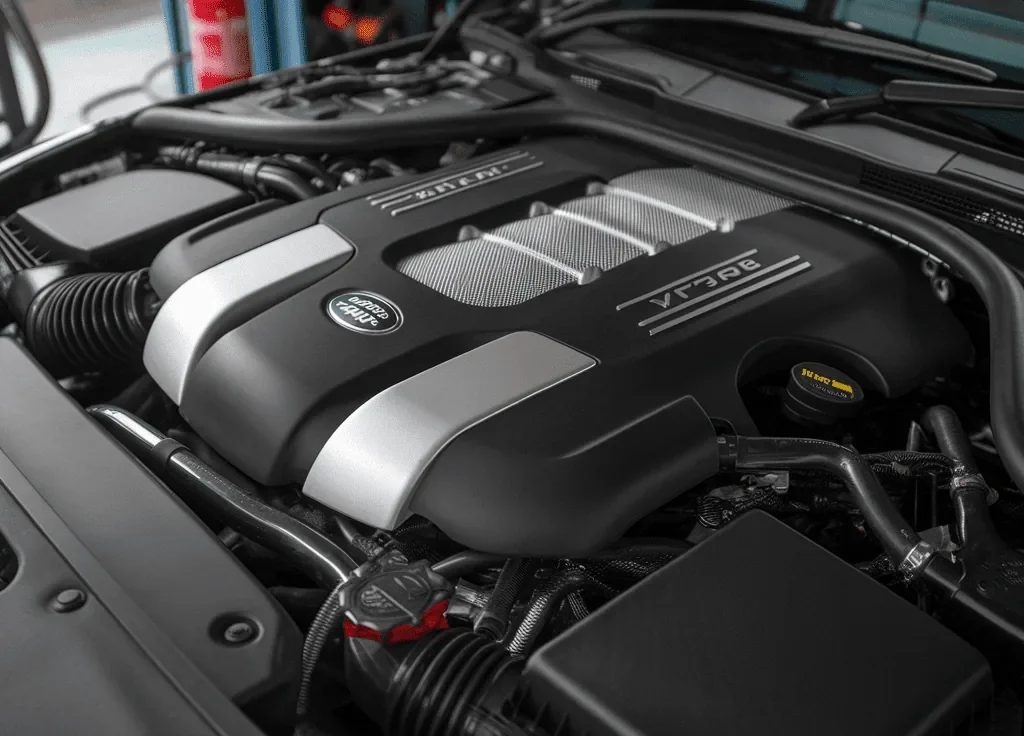
Before authorizing a Range Rover engine repair, ask the workshop to identify the engine, explain the test evidence, and separate the confirmed fault from possible additional damage. A warning light, oil leak, misfire, or loss of power does not automatically justify an overhaul. Routine servicing is not a universal repair for those symptoms.
This guide helps owners prepare for diagnosis and compare a targeted repair, internal engine work, or replacement. It is not a do-it-yourself engine dismantling sequence. Gasoline, diesel, and hybrid versions require different tests and safety procedures.
Stop safely and arrange assistance for an oil-pressure warning, overheating or steam, severe knocking, suspected timing failure, a flashing engine warning with severe shaking, or sudden major power loss. Switch off when safe and avoid repeated restarts. Visible fuel leakage or a strong raw-fuel smell suggesting a leak also means do not restart; keep people away from ignition sources. Move away and contact emergency services if there is fire or smoke suggesting fire.
Do not remove a hot coolant cap or run the engine to record a dangerous symptom. Tell the recovery operator the exact model and powertrain so loading and transport follow the vehicle's instructions.
Identify the engine before choosing a test
Model year, engine code, fuel type, original market, and relevant repair history matter more than the badge alone. Confirm these from the vehicle records and VIN, shared privately with the workshop. If an engine has been replaced, establish what is actually installed.
The Land Rover owner-information portal lets you select the vehicle or use its VIN for applicable handbook information. Maintenance, fluid specifications, warnings, and recovery instructions must match that configuration.
| Configuration | What changes the diagnosis | What not to assume |
|---|---|---|
| Gasoline engine | Spark ignition, the fitted port or direct injection system, and any turbocharger or supercharger. | A misfire code proves a coil has failed or all plugs and coils need replacement. |
| Diesel engine | Compression ignition, fuel-pressure control, injection, air supply, and fitted exhaust aftertreatment. | Gasoline spark-plug tests apply. Diesel glow plugs are not spark plugs. |
| Hybrid powertrain | The combustion engine plus motor, battery, control, and cooling arrangements specific to that version. | A stopped combustion engine means the vehicle is safe to work on. It may start automatically. |
High-voltage access and isolation belong to appropriately trained technicians using the exact procedure. Owners should not disconnect orange cables, open battery enclosures, or remove components to investigate a warning.
Record useful observations without reproducing the fault
A concise symptom history can prevent an unfocused parts list. Note what happened during normal use; do not deliberately repeat hard acceleration, overheating, severe misfire, or a mechanical noise.
- The exact warning text, whether it flashed, and any photograph already taken safely.
- Whether the symptom appeared at first start, when warm, at idle, under load, or after a recent repair.
- Any fluid-level change, visible puddle, unusual smell, smoke, or change in starting behavior.
- The last documented service, fluid specifications if recorded, recent refueling, and existing modifications.
- Whether the engine stopped itself, was switched off, or has been restarted since the event.
With the vehicle safely parked, switched off, and cool, observations from outside the vehicle may include where a puddle sits and what the reservoir level looks like, if the handbook permits that check. Keep clear of moving parts and fans that may operate unexpectedly. Do not crawl under an unsupported vehicle, touch leaked fluid to identify it, or loosen fuel connections.
A steady amber warning with otherwise normal running still needs prompt assessment. This article cannot approve a driving distance. Explain the exact warning and symptoms to the workshop before deciding whether to drive there.
Match the symptom to evidence, not a replacement part
| Observation | Useful diagnostic direction | Evidence to request |
|---|---|---|
| Oil spots or falling oil level | External leakage, consumption, or another loss mechanism. | The identified source, fluid identity, and whether more than one leak is present. |
| Rough idle or misfire | Combustion contribution, air/fuel delivery, ignition on gasoline engines, and mechanical condition where indicated. | Which cylinders and conditions are affected, plus tests that support the proposed cause. |
| Overheating or coolant loss | Leakage, circulation, heat rejection, controls, or internal leakage if evidence supports it. | Results from the selected cooling-system checks, with test limits and any damage assessment. |
| Rattle, knock, or timing code | Oil supply, timing drive, variable valve timing, accessories, or other mechanical sources. | Noise location and the relevant signal or mechanical checks, performed only when safe. |
| No start or reduced power | Electrical supply, starting system, fuel, air, engine controls, or mechanical condition. | A test sequence separating possible causes instead of an immediate engine-replacement quote. |
Smoke color is a clue, not a complete diagnosis. Duration, temperature, fluid consumption, fuel type, and accompanying warnings matter. Brief condensation and persistent smoke need different explanations; severe smoke with poor running calls for stopping and assistance.
An oil change does not repair every oil leak
First locate the source. A leak can travel across a cover or undertray and appear far from the failed seal or connection. A workshop may clean and reinspect the area or use an approved tracing method, but it should explain how the source was confirmed.
A damaged filter seal or an incorrectly fitted filter may require correction at that location. That does not make a routine oil and filter change the first repair for every leak. Nor does topping up establish that oil pressure is satisfactory. Use the required oil approval and the exact level-check method, and never overfill.
Distinguish an oil-service reminder, low oil level and low oil pressure before deciding what action to take. Archived Land Rover maintenance instructions distinguish oil-pressure warnings from fluid-level checks. Follow the current handbook for your vehicle rather than copying another model's sequence.
A misfire needs cylinder and operating-condition evidence
Ask whether the fault occurs on one cylinder, several cylinders, one bank, or only during a defined condition. Codes and cylinder counters help direct testing but do not prove a particular part has failed. Gasoline ignition checks, injector testing, and cylinder-sealing checks are selected from the findings rather than prescribed to every engine.
Diagnose engine misfires and rough running according to the fuel type. Diesel engines need their own fuel, air, control and mechanical investigation, with the relevant stop-driving warnings assessed first.
Overheating requires a cause and a damage assessment
Replacing coolant alone does not explain why temperature control was lost. Ask whether a leak, airflow problem, circulation issue, control fault, or internal leakage was established. The test sequence and pressure limits must match the cooling circuit.
After a severe overheat, the workshop should assess whether related engine damage is suspected and why any further tests are needed. A single episode does not automatically prove the engine needs rebuilding. Use the symptoms to distinguish possible causes of Range Rover overheating before approving internal engine work.
Ask what the workshop's tests can establish
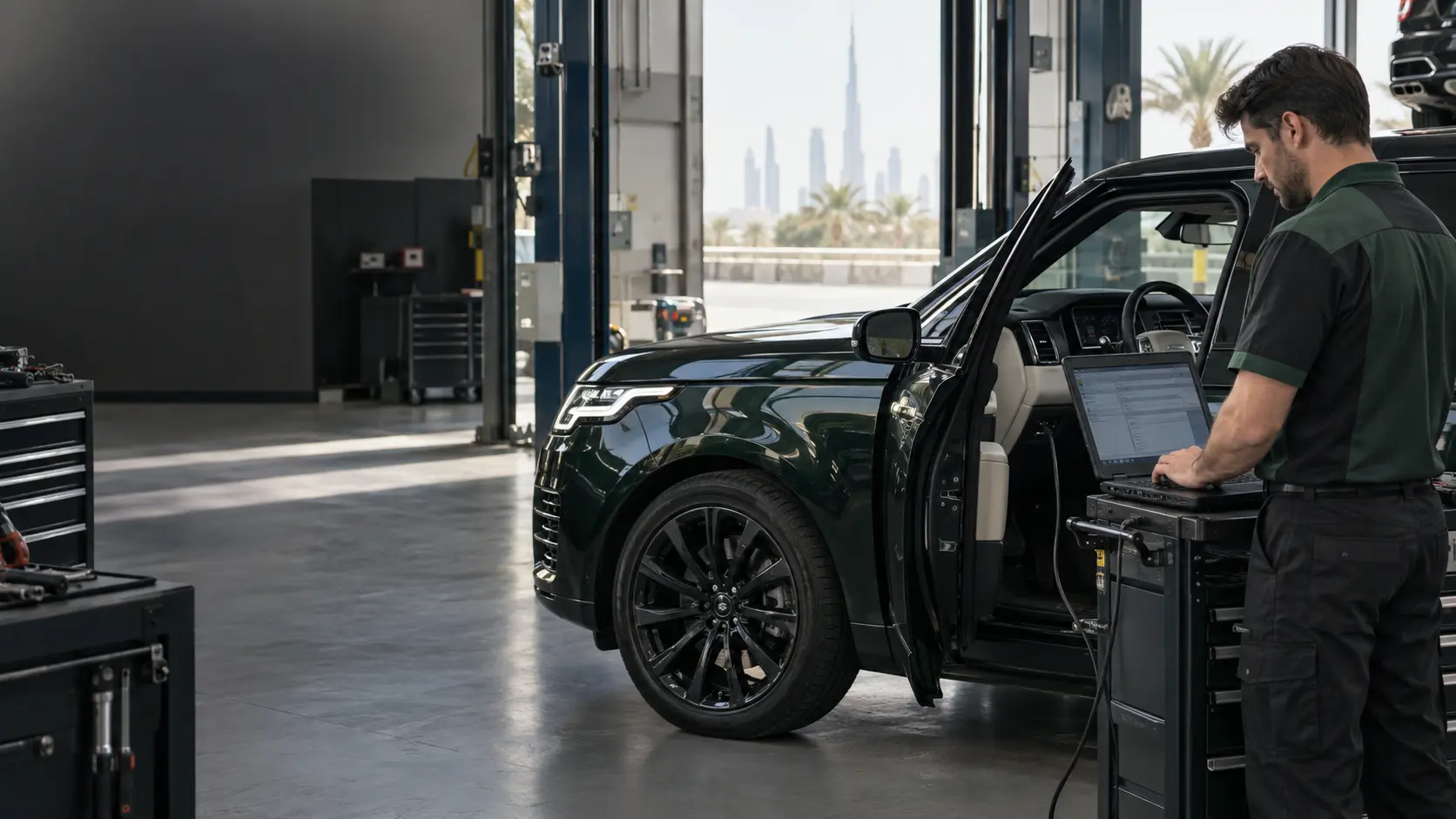
Request the original scan and relevant recorded operating conditions before codes are cleared. The tool must support the actual vehicle and function being used. Reading a generic emissions code is different from accessing all required manufacturer-specific data and tests.
Further testing should answer a defined question. An electrical measurement can investigate supply or signal quality. A pressure test can assess a particular fluid system under specified conditions. A compression or leakage test can help assess cylinder sealing when appropriate and safe, but it does not replace the rest of the diagnosis. Results need engine-specific reference information and an explanation of their limits.
A borescope image shows only the accessible view; it is not a complete measurement of every internal surface. A code referring to a sensor or circuit can arise from wiring, supply, mechanical conditions, or the component itself. Ask how the workshop distinguished those possibilities.
The useful equipment list is therefore short: suitable diagnostic coverage, the relevant measuring equipment, and the engine-specific service information. A general socket-set shopping list cannot make a complex repair safe or complete. Timing work, loaded tests, high-pressure fuel testing, and engine support require trained workshop procedures.
Choose the repair scope before approving the total
The right scope follows the evidence. Ask what the proposed work will correct and what remains uncertain. If access is required to establish internal damage, authorize that stage separately with an agreed spending limit and a stop point for further approval.
| Route | When it may fit | What the quotation should explain |
|---|---|---|
| Targeted component repair | A localized cause is confirmed and the rest of the relevant system is serviceable. | The failed component, supporting evidence, compatible parts, and verification of the original complaint. |
| Internal repair or rebuild | Measured internal damage justifies machining or component renewal. | Inspection findings, measurements, machining scope, reusable parts, contamination control, and assembly checks. |
| Replacement engine | Damage or practical repair constraints justify a compatible replacement. | Engine identity and condition, included accessories, installation work, compatibility requirements, and coverage terms. |
Repeated misfire, oil consumption, or overheating alone does not settle the rebuild question. A second opinion can be useful when major work is proposed without measurements or a clear fault explanation.
Compare quotations on the same scope: diagnosis, parts and their condition, labor, machining, seals, fluids, required fasteners, applicable setup, and final testing. Confirm VAT treatment, exclusions, warranty terms, and who authorizes newly discovered work. A replacement engine also needs the original failure cause addressed so a cooling or lubrication fault is not carried over.
Separate future maintenance from the repair
After repair, follow the schedule for the exact engine and market. Range Rover UAE's current general service guidance states 13,000 km or 12 months, whichever comes first. Confirm the applicable VIN-specific schedule and any earlier service indication, especially for older or imported vehicles. This is not a universal interval for every fluid, belt, plug, or filter.
Oil must meet the required approval as well as the specified viscosity. A premium or synthetic label alone is insufficient. Any additional maintenance proposed because of operating conditions should have a stated basis, rather than a generic miles-based rule or a promise to prevent all future faults.
At handover, request the diagnosis, actual work completed, parts identification, relevant test results, and remaining recommendations. Verification should address the original complaint under safe conditions. Clearing codes or replacing several routine service items is not by itself proof that the fault was repaired.
Write down the next approval point
Before agreeing to major work, ask for a short written record with five answers:
- What fault has been confirmed, and by which test?
- What further inspection is needed, and what is its spending limit?
- What happens if dismantling shows that the proposed repair is unsuitable?
- What reassembly, transport or storage charges apply if you decline further work?
- What result will be checked at handover, and what remains outside the agreed scope?
This record helps compare a targeted repair with a rebuild or replacement without treating an initial diagnostic estimate as permission for every later expense.
Questions before authorizing engine repair
Should I authorize an oil change before diagnosis?
Not automatically. If evidence such as contamination, leakage, or a pressure concern is relevant, the workshop may need to record it before changing fluids. Routine maintenance and fault diagnosis can be planned together without assuming one cures the other.
Does an engine code prove I need a new engine?
No. A code identifies a monitored condition. Major internal repair or replacement needs additional evidence about the actual fault and damage.
Can I check the timing belt myself?
Do not remove timing covers or rotate the engine to investigate a suspected failure. First identify whether the fitted engine uses a belt, chain, or a combination of drives. Its service and inspection requirements are specific.
What is the most useful question to ask about a large quote?
Ask which findings justify each part of the work, what alternatives were considered, and what additional findings would change the total. Agree on the next approval point before dismantling starts.
Should I compare engine replacement quotes by the engine price alone?
No. Compare assembly identity and condition, included accessories, installation, fluids, compatible setup, correction of the original failure cause and written coverage. Confirm the final total and VAT treatment on the same scope.
Key takeaway: approve a repair because the evidence connects a fault to a defined solution. Keep owner observations, workshop diagnosis, and scheduled maintenance separate in the decision.
Reviewed September 26, 2026. Vehicle-specific service information takes priority over general examples.
Workshop support
Need help with your Range Rover?
Tell us your model, year and what you have noticed. Speak with the workshop about maintenance, an inspection or a repair.