
If your Range Rover has a flashing engine warning, severe shaking or sudden loss of power, ease off the accelerator, stop as soon as it is safe, switch off and arrange recovery. Do not keep driving to see whether it clears. A strong raw-fuel smell or visible fuel leakage also means stop, switch off and do not restart. Keep people away from the vehicle and ignition sources; if there is fire or smoke suggesting fire, move to a safe distance and contact emergency services.
Fixing an engine misfire starts with identifying the affected cylinder and the conditions in which combustion fails. A spark plug, coil, injector, air leak or mechanical fault can produce similar symptoms. A fault code helps direct testing; it does not, by itself, tell you which part to buy.
When to stop driving and arrange recovery
An active misfire can send unburned fuel into the exhaust and damage the catalytic converter. Avoid repeated restarts, prolonged idling and hard acceleration while the engine is running badly. Stop for an overheating message, red oil-pressure warning or heavy knocking as well, even if the engine warning is steady or absent.
A steady amber engine light with otherwise normal running still needs prompt assessment. Follow the message and handbook for your exact vehicle, and ask whether a workshop trip is appropriate before setting off. This guide cannot establish a safe driving distance remotely.
Tell the recovery operator the model, year and powertrain, including whether it is a hybrid. Recovery and loading must follow that vehicle's instructions; do not assume a rope tow or leaving two wheels on the road is suitable.
Land Rover's archived Range Rover handbook calls for immediate assistance for a flashing petrol-engine warning and explains the catalyst risk from misfiring. Warning wording varies by model and market. The stop-and-recovery advice here is a precaution for the symptoms above, not a claim that every handbook uses identical wording. The archived handbook explains engine warning lights and catalytic converter precautions for the vehicles it covers.
Which Range Rover engines this guide covers
The ignition checks below apply to gasoline (petrol) engines, including the combustion engine in a gasoline hybrid. Diesel engines use compression ignition, so they do not follow the spark-plug and ignition-coil diagnostic route. Their rough-running checks are explained separately below.
Range Rover, Range Rover Sport, Velar and Evoque badges do not identify one common engine. The workshop needs the model year, engine specification and market configuration, confirmed privately from the VIN when necessary. Cylinder numbering, fuel pressures, plug specifications, software and test procedures must match that engine. On hybrids, the engine can start automatically; owners should not disconnect components or touch high-voltage equipment.
What the symptom pattern tells you
A misfire is incomplete or missing combustion in a cylinder. You may notice uneven idle, hesitation, shaking or reduced power. Vibration alone is not proof: mounts, exhaust contact and drivetrain faults can also cause shaking. Record what you notice without deliberately reproducing a dangerous fault.
| Observed pattern | Useful workshop checks | What it does not prove |
|---|---|---|
| Rough only on the first start after standing | Cold-start data, ignition condition, fuel delivery and cylinder sealing as indicated | That every cold-start misfire needs injectors |
| Hesitation mainly under acceleration | Ignition performance, fuel supply and air or boost data under controlled conditions | That a smooth idle rules out a fault |
| Repeated faults on one cylinder | That cylinder's ignition, wiring, injector and mechanical contribution | That the cylinder code identifies a failed coil |
| Several cylinders or one bank affected | Shared air, fuel, electrical supply and timing causes as well as individual faults | That all coils or injectors must be replaced together |
| Shaking without recorded misfire activity | Whether monitoring was active, followed by engine and non-combustion vibration checks | That no fault exists or that engine mounts are definitely responsible |
The stop-driving conditions above take priority over every row. Dubai heat, a recent wash or refueling may be useful history, but none confirms the cause.
How a gasoline-engine misfire should be diagnosed
The following is an explanation of professional testing, not an instruction to work on a running engine. The technician should choose tests from the evidence and stop running the engine if doing so risks damage.
1. Save the codes and fault conditions
Before clearing anything, record current, pending and stored faults and available freeze-frame data. Freeze frame is a snapshot of operating conditions when a fault was recorded, such as engine temperature, speed and load. Include related fuel-pressure, mixture, ignition-circuit and timing codes.
P0300 describes random or multiple-cylinder misfire detection. P0301 and similar cylinder-specific codes identify the reported cylinder, subject to the manufacturer's numbering. They do not distinguish a coil fault from an injector, wiring or compression problem. An inexpensive code reader may lack the manufacturer data needed for the next step.
2. Compare cylinder counters under the right conditions
Where the engine controller and diagnostic tool support them, live misfire counters show which cylinders accumulate detected events. Record whether the figures are current, historic or tied to a particular monitoring window. Check that the monitor is enabled before interpreting zero counts.
Compare the pattern with the complaint and freeze frame: cold start, warm idle, hot restart or load. A quiet warm idle cannot exclude an intermittent cold-start fault. A technician may need a supervised repeat test, but severe misfire or a flashing warning is a reason to stop the test, not demand more acceleration. There is no single acceptable counter value for every Range Rover engine.
Why the conditions matter: JLR bulletin LTB00409NAS4 used temperature records to separate cold and hot misfire cases for specified North American vehicles. It specifically excluded injector replacement for a cold-only condition within that procedure. This historical example is not a repair instruction for every UAE vehicle; current applicability and any superseding guidance must be checked by VIN.
3. Test ignition before authorizing replacement
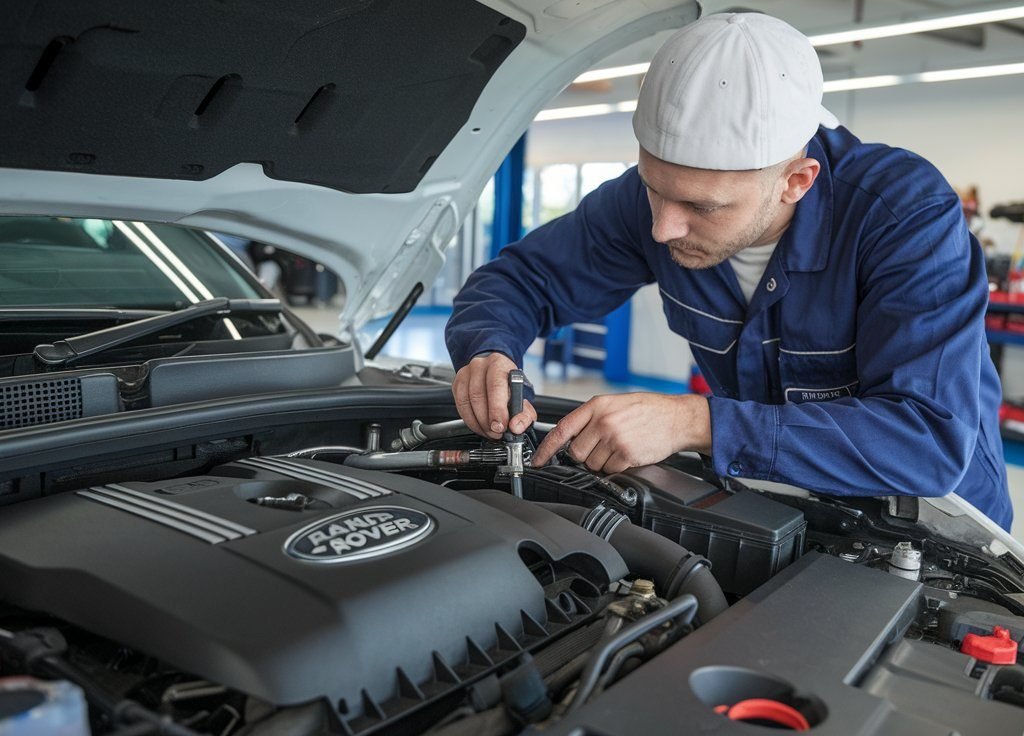
On a gasoline engine, inspect the relevant plug, coil boot, connector and wiring. Look for damage, poor connections, carbon tracking and oil or water in the plug well. Verify the installed plug specification and condition. Fouling can be an effect of another fault, so replacing a dirty plug may leave the cause unresolved.
If the engine design permits, a technician can move a compatible suspect coil to another cylinder, with the engine switched off and the manufacturer's precautions followed. Change one variable at a time, document the positions and repeat only a safe, relevant test. If the misfire repeatedly follows the coil, that supports the diagnosis. If it stays put, the original cylinder still needs investigation. If the fault does not recur, the comparison is inconclusive.
Some layouts need electrical supply, control-signal or ignition-waveform testing instead. Do not unplug coils on a running engine or create an exposed spark. DENSO recommends checking contamination, wiring and the underlying cause when diagnosing ignition coil faults.
4. Separate air leaks from fuel-delivery faults
Mixture corrections, often called fuel trims, help show how the controller is adjusting fueling. They need context: a misfire can itself affect exhaust oxygen readings. A lean-related code is not proof of a vacuum leak or a failed oxygen sensor.
Depending on the findings, the workshop may use an appropriate smoke test for intake or crankcase-ventilation leaks and compare requested with measured fuel pressure under the fault conditions. Direct-injection systems have low- and high-pressure sides; a normal idle reading does not establish correct delivery under load.
Injector testing should distinguish electrical operation, fuel delivery and leakage using procedures suitable for that system. An electrical signal does not prove correct spray or sealing, and rail-pressure loss alone does not identify one leaking injector. A normal-looking injector exterior cannot rule out an internal fault. High-pressure fuel testing and depressurization are professional work; never loosen a fuel line to check for flow.
5. Check compression or timing when indicated
Mechanical testing becomes useful when the evidence points to weak cylinder contribution, the same cylinder remains affected after appropriate ignition and fuel checks, or symptoms and related codes suggest a mechanical problem. It need not wait until parts have been replaced.
A relative-compression test screens for differences between cylinders. It does not measure every cylinder's absolute pressure or identify whether a valve, ring or another component is responsible. Pico Technology explains the limits of relative-compression testing and warns against replacing parts based on that screening result alone.
A confirmed concern may justify measured compression, a cylinder leak-down test, borescope inspection or timing checks. Results must be compared under the prescribed test conditions and against the correct engine data. Low compression alone is not proof that piston rings need replacement. Before approving dismantling, ask which findings support targeted engine repair, rebuilding or replacement. The recommended scope should follow the confirmed damage.
How diesel rough-running diagnosis differs
A diesel with uneven combustion needs fuel-system and mechanical investigation rather than gasoline ignition tests. Glow plugs assist cold operation; a rough-running complaint does not by itself prove a glow-plug fault.
Depending on the codes and operating conditions, relevant checks include fuel quality and supply, commanded versus actual rail pressure, injector electrical integrity, cylinder contribution and specified injector return-flow testing. Injector correction or balance data should be interpreted alongside these checks, not used as a standalone replacement order. Air-management and compression checks may also be needed.
Delphi separates fault-code reading, injector back-leakage measurement, pump checks and electrical testing when diagnosing common-rail injector faults. Its general advice does not establish a Range Rover-specific pressure or repair procedure. Injector coding, seals and replacement-pipe requirements must be checked for the fitted system.
What to approve and how to confirm the repair
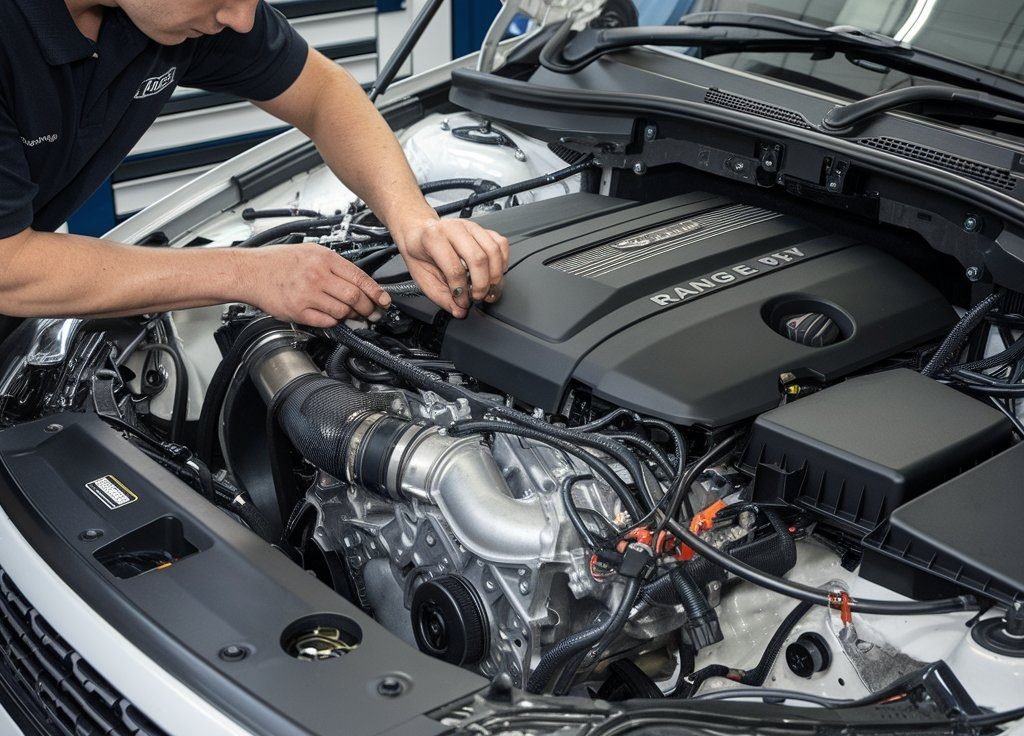
Ask for a diagnosis that connects the symptom, test finding and proposed work. A useful estimate identifies the engine, affected cylinder or system, evidence, parts and labor, required seals or related work, and post-repair checks.
- Confirmed ignition fault: identify the failed component and address any contamination or connection problem contributing to it.
- Confirmed air or fuel fault: repair the demonstrated leak or delivery problem, then reassess the original symptoms.
- Confirmed mechanical concern: agree on the next inspection and a spending limit before committing to extensive internal work.
Misfire repair has no reliable flat price without this scope. Ask for an itemized AED quotation stating diagnostic charges, parts choice, labor, VAT treatment and exclusions. If access reveals additional damage, request the evidence and revised authorization first. A cylinder code alone cannot justify an injector set or engine overhaul.
After repair, the workshop should safely reassess the original operating condition, review relevant live data and rescan. A cleared warning or a smooth idle immediately after repair is not enough to verify an intermittent fault. If the symptom cannot be reproduced, the report should say what was tested and what remains uncertain.
Maintenance that helps without unnecessary treatments
Follow the Range Rover maintenance schedule for your model year, engine and market. Apply the specified time and kilometer limits, including any adjustments for operating conditions.
Use the specified fuel, oil and replacement parts, keep service records, and investigate new leaks or recurring warnings. Spark-plug replacement applies to gasoline engines at the appropriate interval. Fuel-filter servicing depends on the fitted system. Do not treat regular injector cleaner, ignition upgrades or scheduled compression tests as a universal misfire-prevention package.
The useful takeaway: act on the severity first, preserve the fault evidence and approve repairs that follow a demonstrated cause.
Questions about Range Rover engine misfires
Does P0302 mean cylinder 2 needs a new ignition coil?
No. It reports detected misfiring associated with cylinder 2. Ignition, fuel delivery, wiring and mechanical condition still need to be distinguished. Confirm the engine's cylinder numbering before testing.
What if the warning goes away after restarting?
The fault may be intermittent and stored data can still be useful. A restart does not establish that it is repaired. Do not keep restarting after severe shaking, a flashing warning or a fuel smell.
Should every coil or injector be replaced together?
Only if the test findings, applicable repair instructions or a separately justified maintenance requirement support that scope. Ask for the reason and cost for each proposed part rather than assuming one failed cylinder condemns the whole set.
Can a misfire happen without a check-engine light?
Yes. Detection depends on the fault and monitoring conditions. Equally, vibration may have another cause. Describe when it happens and have it assessed rather than using the absence of a warning as proof of normal operation.
Arrange Range Rover engine diagnosis in Dubai
For engine diagnosis in Al Quoz 4, send the model year, engine or fuel type if known, mileage in kilometers, exact warning and whether the symptom occurs cold, warm or under acceleration. Mention recent service or refueling and any fuel smell. Share VIN details privately if requested. These details help plan the inspection; they do not provide a remote diagnosis. Arrange recovery for the stop-driving conditions at the start of this guide.