

Range Rover 3.0 Supercharged V6 Common Problems
Misfire, coolant loss, supercharger noise, oil leakage, difficult starting and reduced performance can overlap on the Range Rover 3.0 Supercharged V6. The useful diagnosis starts with the operating condition, then compares ignition, fuel, airflow, cooling, lubrication, timing control and electrical evidence before parts are approved.
Start with the condition that triggers the fault
A 3.0 litre supercharged V6 that hesitates only during a cold start needs a different test from one that misfires under load, loses response after heat soak, or idles roughly with the air conditioning engaged. Record engine temperature, road speed, throttle demand, fuel level, warning order, and whether a restart changes the behaviour. This operating pattern is the first diagnostic map.
Stop driving if the engine has a heavy knock, a flashing warning with severe shaking, abnormal temperature, a red oil pressure message, rapid fluid loss, or dense continuing smoke. A reduced performance message without those signs may allow a careful move to safety, but normal driving should not continue until the risk is understood.
Confirm the exact 3.0 V6 application before interpreting the fault
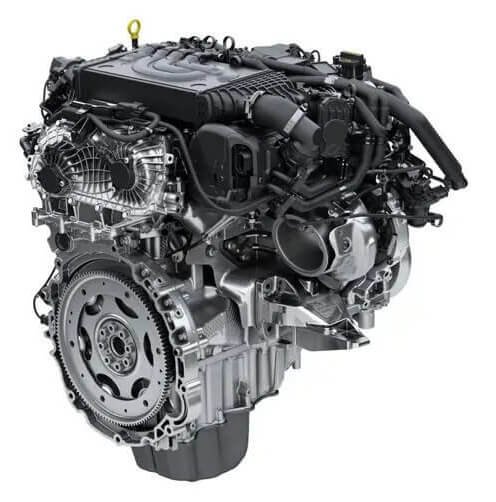
Land Rover used the 3.0 litre supercharged petrol V6 across different Range Rover applications and model-year configurations. Its supercharger, direct injection and variable cam timing mean that airflow, fuelling, ignition and timing-control evidence can overlap when the engine hesitates, misfires or loses response.
Use the VIN, model year and installed assembly identity before parts are ordered or calibration data is compared. This is especially important after an engine, supercharger, control module or major cooling component has previously been replaced.
3 complaints that owners often combine
Hesitation, noise and coolant smell can arrive together, but they do not start from the same diagnostic path. Separating them first makes the later testing more useful.
Hesitation or uneven response
Ignition quality, fuel delivery, airflow, throttle response, sensor plausibility and control strategy can all affect acceleration. The operating condition matters more than a generic symptom label.
Whine, chirp or rattle
Supercharger drive, accessory pulleys, air leakage, exhaust leakage and nearby mechanical components can overlap acoustically. Location, temperature and engine speed help separate them.
Coolant smell or visible trace
An old spill can leave residue, while an active leak may appear only after pressure and heat build. Cold inspection, pressure evidence and a complete heat cycle are more useful than the smell alone.
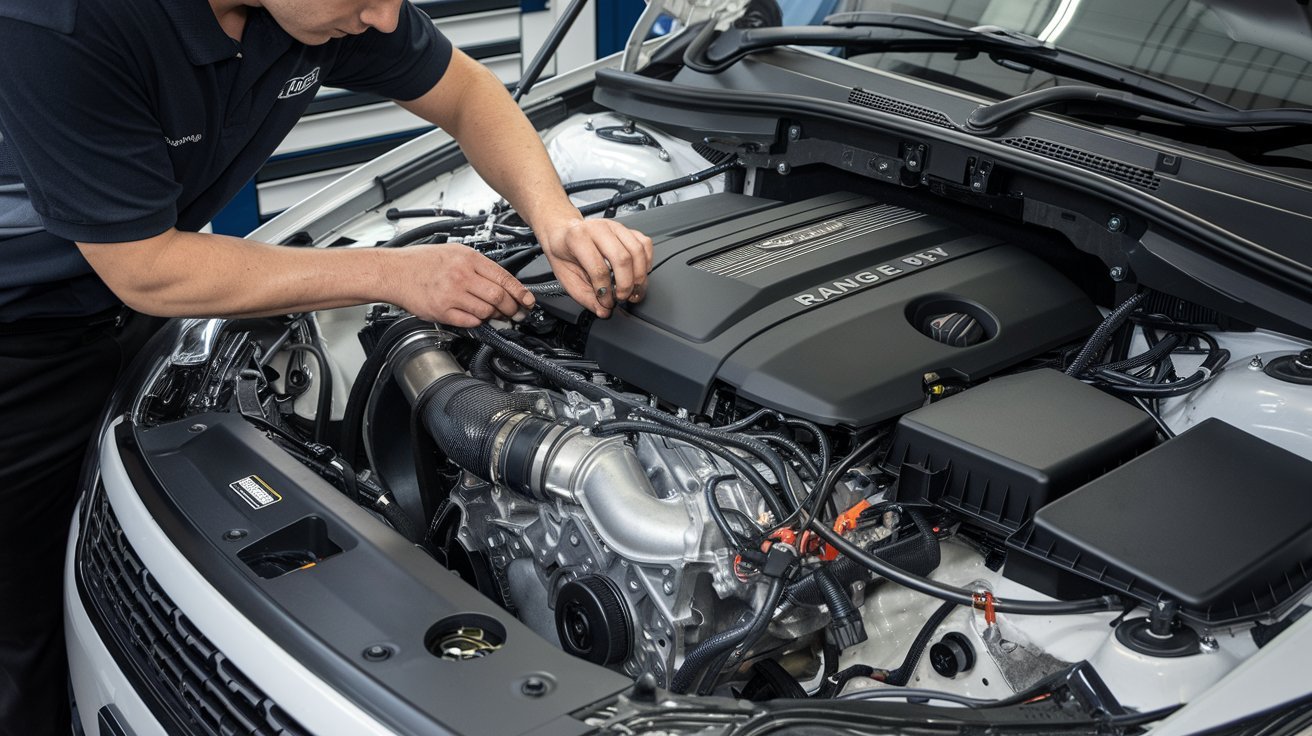
Misfire evidence should be captured before parts are moved
The useful questions are which cylinder or cylinders show activity, whether it appears cold or hot, at idle or under load, and whether fuel trim or airflow evidence changes at the same time. Spark plugs and coils are reasonable inspection points, but injector behaviour, compression, leakage, wiring, fuel pressure, and contamination can create similar symptoms.
Component substitution can be helpful only when it is controlled and documented. Moving several coils and plugs at once destroys the original pattern. If the engine is shaking, hesitating or repeatedly logging cylinder-specific faults, an engine misfire diagnosis can separate ignition, injection, air leakage and compression before coils or injectors are approved. A severe ongoing misfire can increase exhaust temperature, so do not continue driving merely to collect more occurrences.
Cooling diagnosis must survive a complete heat cycle
Dubai traffic can expose marginal airflow and circulation. The workshop should inspect the system cold, pressure test where appropriate, observe fan command and response, evaluate pump and thermostat behaviour, and look for traces around joints, housings, hoses, radiator surfaces, and concealed areas. Ambient heat increases demand but does not prove one particular component has failed.
After repair, correct filling and bleeding matter. Verification should include warm up, idle with realistic electrical and air conditioning load, a controlled road test, and a cold recheck. A reservoir level that looks stable immediately after filling is not the entire handover.
Airflow and supercharger control must agree
The supercharger is one part of an airflow system that includes filters, ducts, throttle, bypass operation, seals, pressure and temperature sensing, and engine control. A loss of torque can be caused by a leak or implausible measurement even when the rotating assembly is sound.
Compare requested and actual values under the condition that creates the concern. Smoke testing and close inspection can locate leakage that is invisible at idle. Belt condition, tension, alignment, and nearby pulleys should be considered when the owner reports a changing whine or chirp.
When airflow data and noise location point to the supercharger system, the Range Rover supercharger repair guide explains how supporting causes are separated before a repair is approved.

Oil leaks need a clean starting point
Oil can spread across covers, housings, wiring, engine mounts, and undertrays. The lowest drop is rarely enough to approve a seal. Photograph the area, clean it, run a controlled heat cycle, and trace the fresh path. Crankcase ventilation and pressure may matter when several areas become wet.
Oil level, correct specification, filter quality, contamination, and hot pressure behaviour answer different questions. A normal level does not rule out a pressure concern. If a red oil pressure warning stays on, stop the engine and arrange recovery.
Battery voltage can distort the first minutes of diagnosis
A slow crank is easy to notice, but a battery can also crank while voltage falls low enough to affect modules, sensors, throttle control, and network communication. Test state of charge, capacity, terminals, grounds, and voltage drop. If the battery is discharged, identify why rather than treating replacement as the full diagnosis.
A cluster of unrelated warnings after a difficult start may be secondary to unstable supply, but that should be proven. Record all modules before codes are cleared, then repeat testing with stable voltage and compare which faults return.
Recent work changes the priority list
If the symptom began after cooling, intake, ignition, fuel, belt, timing, or engine work, inspect the disturbed area and the verification record first. Check connector seating, hose routing, trapped air, fluid specification, calibration or adaptation needs, fastener procedure, and any parts transferred from an earlier assembly.
This timeline does not blame the previous repair. It prevents the workshop from treating the vehicle as though nothing changed. Bring invoices, part numbers, dates, odometer readings, and any before and after diagnostic reports.
Approve the repair depth only after measurement
The right repair is the smallest one that resolves the proven fault and protects the surrounding systems. Major engine work should never be approved from a warning code or symptom description alone.
Targeted component repair
Use a focused repair when testing identifies a specific ignition, fuel, airflow, cooling, sensor, wiring or sealing fault and the surrounding mechanical evidence remains healthy.
Deeper mechanical repair
Pressure, leakage, oil and filter findings, overheating history, timing evidence or direct inspection should support any recommendation for internal work. If those checks point beyond a targeted repair, a deeper engine repair assessment can establish what is actually damaged before a rebuild or replacement is approved. The scope should state what will be measured and replaced.
Engine replacement
Replacement requires a separate compatibility and condition decision. Confirm the proposed assembly identity, transferred ancillaries and the cooling, lubrication, intake and electrical checks that will protect it after installation.
Fuel quality and refuelling history deserve a controlled check
A symptom that begins after refuelling is useful timing evidence, but it is not proof of contaminated fuel. The diagnosis should preserve the timeline and then compare it with measured fuel and engine behaviour.
What changed after refuelling?
Keep the receipt, fuel level, station and the first point at which hesitation, difficult starting or misfire appeared. That gives the workshop a clean before-and-after reference.
Compare pressure and combustion evidence
A sample, commanded and measured pressure, injector behaviour, misfire activity and the relevant fuel path should be checked. Low voltage, air leakage or ignition faults can create a similar driver impression.
Pressure, leakage and response
After repair, confirm stable pressure, no leakage and clean response under the original load. The invoice should identify any fuel removed, parts replaced and the evidence that separated the complaint from unrelated stored faults.
Repair history can expose a second unfinished problem
A recently replaced component may have failed because another system was never corrected. A damaged belt can reflect alignment or pulley condition. A cooling repair can leave trapped air or an undiscovered pressure source. A supercharger or intake repair can leave a loose joint, damaged seal, or adaptation issue. The question is not only whether the new part works. It is whether the reason for the first failure was understood.
Compare the vehicle before and after the earlier work. Ask what symptoms disappeared, what remained, and what changed. Review part numbers, fluid specification, connector and hose routing, transferred ancillaries, and the original test results. A replacement assembly without an identity or measurement record makes later diagnosis harder.
Where the same warning returns, preserve the new freeze frame rather than assuming the same cause. A repeated code can be triggered by a different condition, and a different code can result from the same unresolved air, voltage, temperature, or mechanical problem.
A workshop report should link the complaint to the repair
A useful report should show why the workshop moved from the owner’s symptom to a specific repair. It should preserve the operating condition, identify the measurement that changed the diagnosis, and then prove the same complaint no longer returns after the work.
Reproduce the complaint
Record the exact cold start, hot idle, traffic load, acceleration or restart condition that exposes the fault. The report should state what the vehicle actually did rather than reducing the visit to a fault-code description.
Record the evidence that proved the cause
Show the measurement or physical finding that changed the repair decision, such as voltage drop, pressure, smoke-test leakage, misfire activity, temperature response, airflow data, mechanical leakage or a fresh fluid path.
Verify the same operating condition
Repeat the relevant start, heat-soak, idle or road-load condition after repair. Confirm stable fluids, normal measured response and the new fault status before the original complaint is marked resolved.
What the handover should make clear: what symptom was reproduced, what measurement proved the cause, what was repaired, and what repeat test confirmed the result. Advisory findings should be separated from the fault the owner originally booked for.
Safe owner checks stop before disassembly
When the engine is cold, an owner can record fluid levels, look for fresh stains, note warning wording, check whether the battery appears weak, and photograph visible hose or connector changes without touching them. Tyre or road noise should also be considered when a sound is reported only while moving.
Do not open a hot cooling system, work around a running belt, disconnect ignition parts, clear codes repeatedly, or add sealants and cleaners as a diagnostic shortcut. Those actions can create injury risk, hide evidence, or introduce a second problem.
If the vehicle is unsafe to drive, provide the workshop with the location, warning sequence, and whether the engine is currently running. Recovery is part of diagnosis when further operation could change the damage.
Noise location should be checked with the engine cold and hot
A sound at the front drive can change as belts, pulleys, tensioners and bearings warm. A rushing sound under load can involve air leakage. A tick near the upper engine, an exhaust leak, injector operation and a mechanical rattle can overlap in a phone recording.
Record the side, height, duration and exact engine state. Controlled listening, accessory-drive isolation where appropriate, smoke testing, scan correlation and oil-pressure evidence can separate a brief cold-start sound from a continuous warm knock.
After repair, repeat the same temperature and load state. The handover should explain what produced the sound and which test proves that it is no longer present.

Dubai heat can reveal weak electrical and cooling margins together
Extended idle with fans, air conditioning, pumps, and control modules active can expose charging weakness at the same time as marginal cooling airflow. One warning may follow another even though the systems are not all mechanically failed. Capture the event order and preserve faults from every module.
The workshop can observe charging voltage, fan command, coolant temperature, intake temperature, idle control, and misfire activity as load increases. The first value to depart from expectation is more useful than the loudest dashboard message. High ambient temperature is the test context, not the diagnosis.
Verification should include a comparable hot idle and controlled road test, followed by a fluid and fault recheck. A cold workshop start cannot close a heat related complaint.
Parts identity prevents a second diagnostic problem
Use the VIN, exact engine derivative, fitted assembly identity, and part revision when ordering ignition, fuel, cooling, supercharger, sensor, or control components. A visually similar part can have a different calibration or operating range.
Record removed and installed part numbers on the invoice. If a used or remanufactured assembly is fitted, document its source, condition evidence, transferred ancillaries, and the final setup and road test. This gives later technicians a reliable baseline.
Frequently asked questions about Range Rover 3.0 Supercharged V6 problems
Which Range Rover models used the 3.0 Supercharged V6?
The engine appeared in Range Rover and Range Rover Sport applications, with output and equipment varying by model year and market. Use the VIN and vehicle-specific information before applying parts or calibration assumptions from another version.
Can I drive with a coolant warning?
Stop safely if temperature is rising, coolant is being expelled, the heater suddenly turns cold while the engine is hot, or the level is falling quickly. Rapid loss or a red temperature warning is a recovery situation rather than a reason to keep testing the vehicle on the road.
Does a whine mean the supercharger has failed?
No. Belt condition, pulleys, nearby bearings, air leakage, bypass operation and requested versus actual airflow response can overlap with supercharger noise. The sound and measured response should be separated before replacement is approved.
Why can the engine misfire only when cold?
A cold start can expose ignition weakness, injector behaviour, air leakage or a mechanical sealing issue that changes as the engine warms. Preserve the cylinder pattern and live data before plugs or coils are moved.
Can a weak battery cause several engine warnings at once?
Yes, low cranking voltage can create secondary network and sensor faults. Battery condition, connections, grounds and voltage drop should be stabilised first, then the vehicle should be rescanned to see which faults return.
Can poor fuel cause a misfire after refuelling?
The timing is useful evidence but does not prove fuel contamination. Keep the receipt and record the fuel level, then compare a fuel sample, pressure behaviour, injector evidence and combustion data before the fuel itself is blamed.
When is an engine rebuild justified?
A rebuild should follow measured internal evidence such as abnormal pressure, cylinder leakage, oil or filter debris, overheating damage or direct component findings. Mileage, one warning code or a noise description alone is not enough.
What should I send before booking diagnosis?
Send the VIN, model and year, exact warning wording, whether the symptom is cold or hot, the load or road condition, any coolant or oil loss, a safe recording where useful, and details of recent engine, cooling, ignition or supercharger work.
Book a 3.0 Supercharged V6 diagnosis in Dubai
If your Range Rover is misfiring, losing coolant, making an unusual supercharger noise, leaking oil or showing reduced performance, send the VIN, warning message and when the symptom appears. That gives the workshop a better starting point before parts are approved.