

Engine running and diagnostic help in Dubai
Range Rover Engine Misfire in Dubai
Rough running, hesitation, a flashing engine warning or loss of power can involve ignition, air, fuel, wiring, sensor data or mechanical condition. The right repair starts by proving what is causing the combustion fault, not by guessing which part to replace.
Start with the risk
Do not treat every engine shake as the same problem
A misfire means one or more cylinders are not contributing as expected. It can feel like a vibration, but vibration alone does not prove incomplete combustion. An engine mount, exhaust contact, driveline concern or wheel issue can create a similar sensation without an engine misfire.
Pay attention to the pattern. Does it happen at idle, only when accelerating, after a hot restart, from cold, or after refuelling? Is the warning flashing or simply stored? Those details help narrow the first checks, but they do not identify a failed coil, injector or other component by themselves.
What the first diagnosis needs to separate
| What you notice | Possible direction for testing | What should not be assumed |
|---|---|---|
| Rough idle with no warning | Ignition, intake air, fuel delivery, sensor data, mounts or mechanical condition | That every cabin shake is a coil or spark plug fault |
| Hesitation under acceleration | Ignition under load, boost or air control, fuel delivery, wiring or engine condition | That a stored cylinder code names the failed part |
| Flashing warning and severe rough running | An active combustion fault or a related engine issue | That clearing the warning has repaired the vehicle |
| Concern after previous work | Connections, disturbed hoses, parts specification, fluid contamination or an unrelated fault | That the most recently changed part is automatically wrong |
Evidence before parts
How a Range Rover misfire is narrowed to the real cause
The useful question is not only which cylinder has a code. It is when the concern appears, what changes with the fault and what the engine data and physical tests show together. Stored, pending and current fault information can direct testing, but it is not a repair instruction.
Keep the original evidence
Record the exact dashboard message, warning behaviour, temperature state, fuel level and operating condition. Disconnecting the battery, repeatedly clearing codes or swapping several parts can remove evidence from an intermittent fault.
Test the likely systems
Ignition parts, wiring, injector operation, fuel supply, intake air, sensor plausibility and boost control may be relevant. The correct order follows the engine and the pattern, not a generic parts list.
Escalate only when justified
Compression, cylinder sealing, valve operation, timing or internal inspection become relevant when earlier findings point there. A persistent misfire does not automatically mean an engine rebuild.
The test path changes with the driving condition
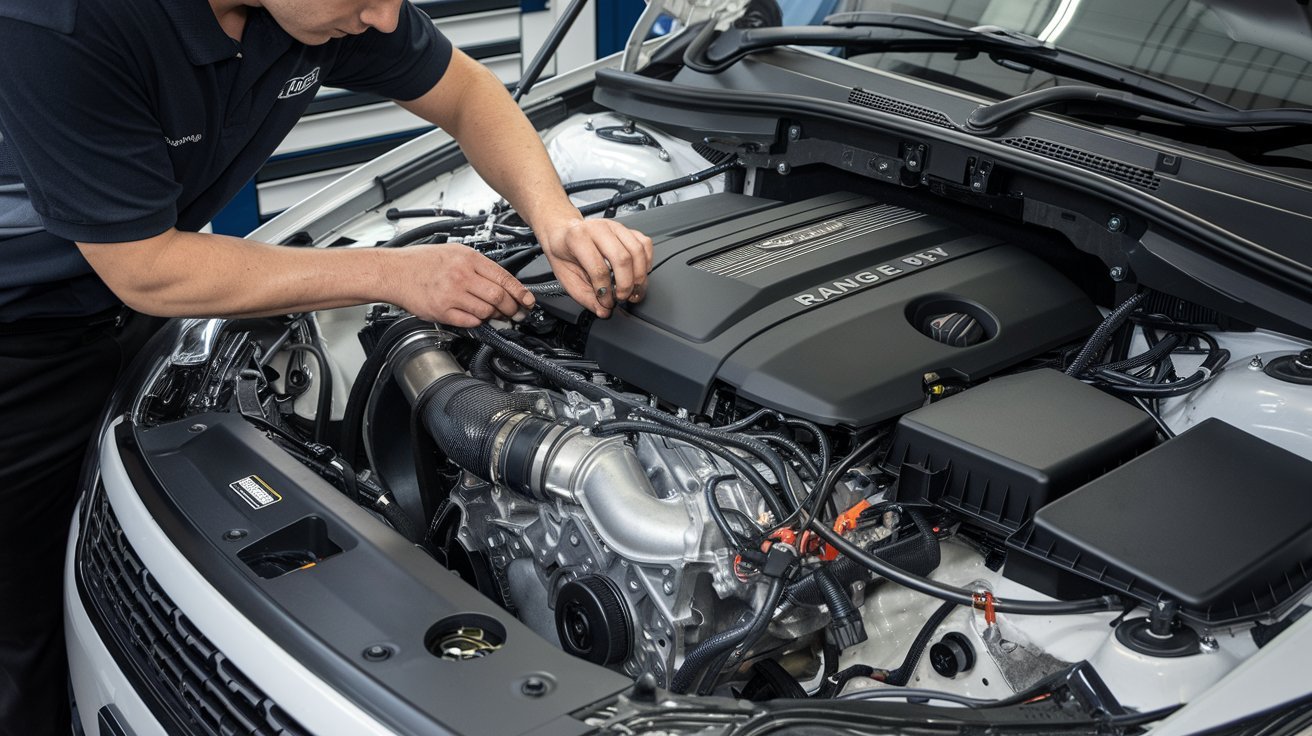
A cold-start misfire can require a different test plan from a concern that appears after heat soak, at idle with the air conditioning operating or only when the engine is under load. A shared air or metering problem can affect more than one cylinder. A cylinder-specific pattern can still be caused by wiring, fuel delivery or a mechanical condition.
Where appropriate, the technician may compare live data with physical checks, inspect accessible ignition components, assess fuel supply and injector control, check for air leaks and review relevant sensor information. Mechanical tests are considered when the evidence makes them necessary. This avoids selling a repair based on a code alone.
If combustion is stable but the cabin still shakes, the next question is whether movement is being transmitted through the engine supports. A separate Range Rover engine-mount assessment can then make sense because the vibration is no longer being treated as proof of a combustion fault.
Fault codes need context
What P0300 and cylinder-specific misfire codes actually tell you
P0300 means the pattern is not limited to one cylinder
A P0300 random or multiple-cylinder misfire code means the control system has detected uneven combustion across more than one cylinder or a pattern that is not consistently assigned to a single cylinder. It can point toward a shared air, fuel, electrical, control or mechanical condition, but it does not identify the failed part.
The useful next step is to compare which cylinders are affected, when the counts increase and whether fuel correction, airflow, pressure, temperature or other engine data changes at the same time.
P0301, P0302 and similar codes identify the affected cylinder, not the failed component
A cylinder-specific code narrows the location of the combustion problem. It does not prove that the coil, spark plug or injector on that cylinder is defective. Wiring, connector condition, fuel delivery, air leakage, compression and mechanical timing can still produce a cylinder-specific pattern.
Parts should be approved only after the test results connect the code to a component or mechanical condition that actually fails inspection.
What a clear misfire quotation should explain
A useful quotation identifies the confirmed cause or the defined diagnostic stage, rather than using a broad label such as misfire repair. It should explain the proposed parts specification, labour, related seals or fluids where relevant, and how the result will be checked.
Some faults have more than one layer. An ignition part may have failed, while oil contamination, coolant entry, wiring damage or another condition explains why it failed. Replacing only the final failed part can allow the same concern to return. Ask whether an underlying cause has been found and whether it is included in the repair scope.
Misfire repair cost in Dubai cannot be reduced to one number. A plug or connection repair is a different job from injector, wiring, timing or internal engine work. The quotation should therefore follow the confirmed cause, the parts actually required and any underlying condition that must be corrected to prevent the same fault returning.
Different systems need different proof
Common misfire causes and the evidence that matters
| Area | Evidence that may direct testing | Why a shortcut can be costly |
|---|---|---|
| Spark plugs and coils | Cylinder pattern, plug condition, controlled component testing and any change in the recorded fault | A cylinder code can be associated with a coil without proving it has failed |
| Fuel delivery and injectors | Relevant pressure, injector control, delivery pattern and mixture evidence | A fuel smell or rough running does not identify the source without inspection |
| Air leaks and metering | Leak tests, airflow and correction data, throttle operation and the condition under which the concern appears | A lean reading does not name the component allowing unmetered air |
| Wiring and electrical control | Connection condition, electrical measurements and repeatable signal loss | Replacing the controlled component does not repair a damaged circuit |
| Mechanical condition | Compression, cylinder sealing, timing or inspection evidence | Major engine work should not be proposed because a single cylinder has a fault code |
The model, year, engine and operating condition change the sensible test order. A good diagnosis protects the owner from a long list of parts being fitted in the hope that one changes the symptom.
How the repair should be checked before handover
The original operating condition matters. If the fault appeared from cold, after a hot restart or under acceleration, a warm idle alone is not a meaningful final check. Where safe and appropriate, the final check should reproduce the condition that first produced the problem.
Relevant warning information and engine data can then be reviewed after the repair. Any disturbed fuel, air, cooling or electrical connection should be checked before the vehicle is handed back. Simply clearing a code is not evidence that the underlying cause has been corrected.
Why the history is useful in Dubai
High under-bonnet temperatures, prolonged idling and repeated short journeys can expose a marginal electrical connection, ignition weakness or mixture-control concern. Recent refuelling and long storage can also be relevant details. None of them proves a particular repair.
If the engine becomes smooth after a restart, do not assume the problem has disappeared. Photograph the dashboard message if it is safe, note when it occurred and avoid disconnecting the battery before an inspection. That history can make an intermittent fault easier to reproduce.
Avoid losing the evidence
What not to do before the vehicle is checked
Do not repeatedly clear the warning to see if it returns. Do not disconnect the battery, wash fluid away from the engine bay or change several ignition and fuel parts at once. Each of those actions can remove a useful pattern or create a new variable that makes diagnosis slower.
A safe owner check is limited to observing the message, looking for obvious smoke, steam or a strong fuel smell from a safe distance, and noting when the fault happens. Do not touch hot engine components, open a cooling-system cap or work around fuel leaks. If the vehicle is shaking severely or does not feel safe to move, ask whether collection is suitable rather than driving it to the workshop.
The exact Range Rover configuration matters
Range Rover is not one engine layout. Petrol, diesel, supercharged and turbocharged engines, as well as different generations and control systems, can use different components and diagnostic procedures. The VIN, engine type, model year, fault history and recent work help prevent the wrong procedure or parts specification being applied.
That is also why a social-media fix or a repair for another generation may not transfer to your vehicle. A good booking message gives the workshop a starting point, but it does not replace the live vehicle checks.
After the repair, keep the right record
Keep the final invoice, confirmed repair scope and any advice given at handover with the vehicle service history. If the original concern returns, the recorded operating condition, test findings and parts fitted give the next inspection a clearer starting point. Report any new warning message, rough running, smell or power change promptly rather than waiting for the next planned service.
For many owners, the best outcome is not merely a warning light being switched off. It is a documented diagnosis, a defined repair approval and a vehicle that has been checked against the symptom that caused the booking. That distinction can prevent repeat spending on parts that were never proven to be the cause, and helps the next inspection begin from evidence rather than assumption when the vehicle returns.
Useful booking details
What to send before an engine diagnostic inspection
Send the model, year, exact dashboard message and whether the warning flashes. Explain when the concern occurs, whether the vehicle is safe to drive and whether there has been recent engine, ignition, injector or cooling-system work. A short video can help if it is safe to take one.
Heat, traffic and short journeys can make an existing fault easier to notice. They are not a diagnosis. The vehicle evidence remains the deciding factor.
Range Rover misfire questions
Can I drive with a misfire?
Do not continue if the engine is severely rough, the warning is flashing, power is falling, smoke or a fuel smell is present, or the vehicle feels unsafe. Arrange a suitable assessment.
Does a misfire code mean I need a coil?
No. The code can identify a cylinder or system that needs attention. Testing is still needed before a coil, injector, plug or another part is named as the repair.
Can an engine mount cause a misfire?
A mount can make engine movement or vibration more noticeable, but it does not create incomplete combustion. The running condition and the vibration source should be tested separately.
Will clearing the warning fix the misfire?
No. It can remove a dashboard alert while leaving the cause present, and it can make an intermittent fault harder to confirm.
What does P0300 mean on a Range Rover?
P0300 indicates a random or multiple-cylinder misfire pattern. It can involve a shared ignition, air, fuel, electrical or mechanical condition. The code narrows the test plan but does not name the failed part.
Can worn spark plugs cause a Range Rover misfire?
Yes, worn or incorrectly specified spark plugs can contribute to a misfire, especially under load. Plug condition still needs to be considered with coil output, wiring, fuel delivery, air control and mechanical condition before the repair is finalised.