

Supercharged engine diagnosis in Dubai
Range Rover Supercharger Repair in Dubai
Changed supercharger noise, weak acceleration, reduced performance, smoke or a warning can point toward the forced induction system, but none of those symptoms proves that the supercharger assembly has failed. The repair should follow evidence from the drive system, intake path, charge cooling where fitted, control data and the base engine.
Start with the fault pattern
A supercharger should be condemned only when the symptom and the failed system agree
The useful first answer is simple. A louder whine, power loss or a related fault code is a reason to test the complete supercharged engine system. It is not a complete diagnosis. The same complaint can come from a belt or pulley, an intake leak, a sensor signal, charge cooling, ignition, fuelling, exhaust restriction or internal engine condition.
The first job is to identify the exact engine and reproduce the complaint safely. A noise that appears only at cold start needs a different path from a noise that rises under load. A vehicle that feels flat but runs smoothly needs different checks from one that shakes, misfires or displays a flashing engine warning.
That distinction protects the owner from an expensive assembly replacement that leaves the actual cause untouched.
Trace the system in the order the fault travels
What must be separated before the supercharger itself is blamed
A changed whine or loss of power does not identify one failed component. The workshop should follow the systems that create usable airflow and engine output, then identify where the first real mismatch appears.
Can the supercharger be driven correctly?
The belt, tensioner, pulleys, couplings and nearby rotating components are checked for noise, instability and loss of drive. A fault here can imitate internal supercharger damage.
Can the engine receive and measure the expected airflow?
Intake connections, seals, restrictions, throttle operation and relevant sensor information are checked against the complaint. An air leak can change both sound and performance.
Does the fault appear only after temperature rises?
Where charge cooling is fitted, coolant condition, circulation and heat rejection can affect power under load. Hot-only performance loss should be separated from a mechanical supercharger fault.
Can the engine itself produce the requested result?
Ignition, fuelling, compression, exhaust flow and protection strategies can all limit output. A supercharger should not be replaced to cover a separate engine problem.
Move to supercharger-specific repair only when the drive system, air path, temperature behaviour and base engine no longer provide the stronger explanation for the complaint.
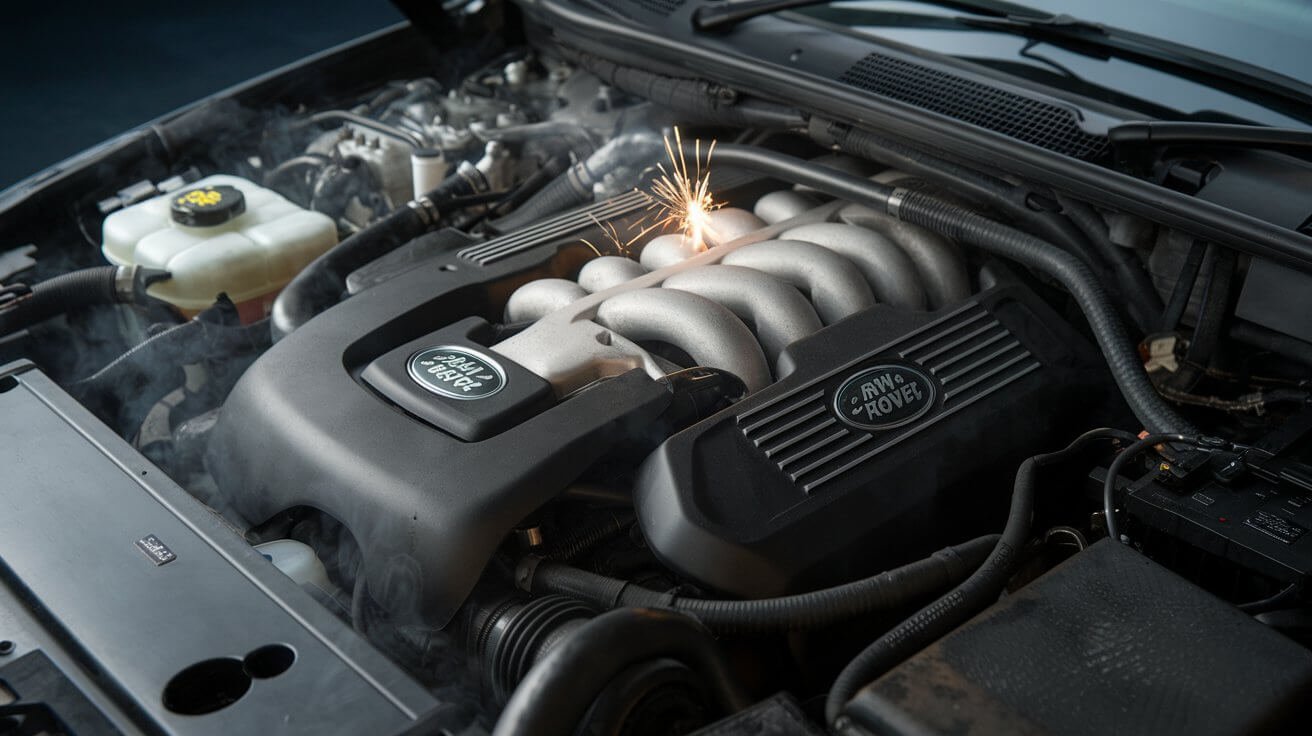
What the visual check contributes
Visible belt condition, loose connections, damaged hardware or contamination can direct the next test. The image is kept deliberately small because the inspection is supporting evidence, not the diagnosis itself.
Internal supercharger failure still needs operating evidence that agrees with the noise, airflow response and vehicle-specific test results.
Decide whether to drive, limit use or stop
When a supercharger complaint becomes a safety or engine protection decision
Many supercharger concerns begin as a change in sound or performance, but the correct next step depends on severity. Do not use repeated hard acceleration as a test. A fault that is mild at first can become harder to diagnose after the belt, cooling circuit or engine condition changes further.
A mild change in sound or performance with no warning, no smoke, no visible leak and normal engine behaviour still deserves inspection. Record when it happens and avoid deliberately provoking the symptom.
A persistent warning, noticeable power loss, new belt area noise or a concern that appears only once the engine is hot needs prompt advice. Ask the workshop whether careful travel is appropriate for the exact symptoms.
Severe grinding, smoke, a damaged or displaced belt, major coolant loss, violent rough running, overheating, a red warning or a vehicle that no longer accelerates predictably can justify stopping rather than continuing to test it on the road.
Confirm the failed layer before choosing the part
How a Range Rover supercharger fault is confirmed
A credible diagnosis should connect the original symptom to a repeatable operating condition, rule out stronger connected causes and then show evidence that points back to the supercharger or its serviceable drive interface. The process below keeps those decisions separate.
Capture the exact complaint
Record the warning, sound, engine temperature, rpm, load and whether the symptom appears at cold start, idle, light acceleration, heavy acceleration or only when fully hot.
Why it matters
A fault that appears only at one operating point has a more useful diagnostic pattern than a general description such as noisy or low power. This defines the condition that later testing must reproduce.
Check the connected systems first
Inspect the belt drive, pulleys, intake path, accessible hoses and connections, charge cooling where fitted, and the engine conditions that can imitate a forced induction fault.
Why it matters
If a connected fault fully explains the symptom, the correct repair belongs there. A supercharger replacement should not be used to cover a leak, drive fault, cooling weakness or separate engine problem.
Match control data to physical behaviour
Relevant fault information and operating data are compared with what the engine is physically doing. The technician looks for agreement between the requested condition, airflow response, temperature behaviour and the observed symptom.
Why it matters
A stored code becomes useful when it agrees with the real event. A code by itself does not identify the failed part, and clearing it does not prove a repair.
Look for unit-specific evidence
Physical condition, abnormal operation, confirmed drive-interface wear or other vehicle-specific findings must point back to the supercharger itself after stronger lookalikes have been excluded.
Why it matters
This is the stage that supports a contained service, a replacement assembly or a different repair route. If the evidence does not reach this point, the major component should stay off the quotation.
Evidence supports supercharger work
The symptom is repeatable, connected causes do not provide the stronger explanation and the unit or its serviceable drive interface shows matching evidence. The quotation can now state the exact repair scope and how it will be verified.
Hold supercharger approval
Stop the major-part decision when the symptom cannot be reproduced, a connected system still explains the complaint, or the available data and physical findings do not agree. Continue diagnosis at the unresolved layer instead.
The supercharger should be repaired or replaced only when the complaint, the connected-system checks and the unit-specific evidence point to the same failed layer.
Three findings should agree
What supports a genuine supercharger repair decision
A credible recommendation does not rest on one symptom. The strongest diagnosis combines the operating complaint, the connected system checks and the condition of the supercharger itself.
The symptom is repeatable
The noise, low power or warning can be reproduced under a defined condition. The technician knows whether it is cold, hot, at idle, during acceleration or under sustained load.
Connected causes were separated
The belt drive, intake path, charge cooling where fitted, relevant control data and base engine condition do not provide a stronger explanation for the complaint.
The unit shows matching evidence
Physical condition, abnormal operation or other vehicle-specific test findings support the supercharger itself as the failed layer and justify the proposed repair route.
| Observed complaint | What should be separated | What would strengthen a supercharger decision |
|---|---|---|
| Whine, rattle or grinding | Belt drive, pulley, tensioner, adjacent bearings, intake noise and engine-front accessories | The sound is located to the supercharger or its serviceable drive interface and the nearby rotating sources have been checked |
| Reduced acceleration | Air leaks, throttle operation, sensors, ignition, fuelling, exhaust flow and engine protection | Measured or observed air delivery does not match the requested condition and the connected causes do not explain the loss |
| Warning or restricted performance | Fault history, voltage stability, sensor plausibility, temperature, misfire and airflow behaviour | The warning is repeatable and the relevant supercharger or control evidence agrees with the physical condition |
| Smoke or oil concern | Engine ventilation, seals, internal engine condition, external leaks and exhaust path | The source is traced rather than assumed from where smoke appears in the engine bay or exhaust |
| Hot weather power drop | Charge cooling where fitted, engine cooling, intake temperature, ignition correction and other protection strategies | The affected circuit is identified and the supercharger itself is shown to be the failed part rather than the surrounding thermal system |
Choose the smallest repair that solves the confirmed fault
Related system repair, targeted supercharger work or replacement
The repair route should be based on the first failed layer. A large assembly should not be used to cover an intake leak, belt fault or internal engine problem. Equally, a confirmed mechanical supercharger fault should not be hidden behind repeated sensor replacement or software resets.
Drive or intake repair
Use this route when the confirmed cause is outside the supercharger assembly, such as a serviceable drive component, intake connection, seal or control issue. The final check should reproduce the original complaint after the related fault is corrected.
Contained supercharger service
Some assemblies may have a suitable repair or specialist service route depending on design, damage and parts availability. The quotation should name what is being serviced and what remains outside that scope. A rebuild should never be promised before the assembly condition is known.
Replacement assembly
Replacement becomes reasonable when the confirmed condition is not suited to a contained repair or when the available service route does not provide an appropriate outcome. Compatibility, included parts, seals, fluids and any related drive work should be written into the estimate.
Broader engine diagnosis
If compression, internal wear, persistent smoke or other mechanical evidence becomes the stronger finding, the decision moves beyond the supercharger. Confirmed internal damage may need an engine rebuild assessment rather than a forced induction repair.
Cost depends on the proven scope
What changes a Range Rover supercharger repair quotation in Dubai
The exact engine, access, confirmed failed area, parts classification, belt and pulley condition, intake seals, charge cooling work, fluids and the amount of verification required can all change the final scope. A responsible estimate should separate diagnosis from repair and should not present one fixed price for every Range Rover supercharger complaint.
If removal is necessary before the full condition is visible, the quotation should state what is already confirmed and which findings could change the next step. Additional work should have a reason and a price before it is approved.
The owner should also know whether the proposed assembly is new, remanufactured, repaired or used, what related parts are included and how the original symptom will be checked after the repair.
Dubai conditions change the test environment, not the diagnosis
Heat and traffic can reveal weaknesses without proving a failed supercharger
High ambient temperature and slow traffic can make a cooling or air temperature problem easier to notice, particularly once the engine and charge system are fully warm. That context matters when the complaint appears only after time in traffic or repeated acceleration.
It does not justify replacing the supercharger from climate alone. The technician still needs to identify whether the vehicle is reducing performance because of charge cooling, engine cooling, sensor information, ignition correction, another protection strategy or a mechanical fault in the forced induction system.
Hot only
If the fault appears after the vehicle is fully warm, record how long it takes, whether traffic or load changes it and whether power returns after cooling down.
Cold only
A start-up rattle or brief changed noise should be assessed in that cold condition. A warm workshop check may not reproduce it.
After recent work
Belt, intake, cooling or engine work can change the first inspection route. The timing is useful evidence, but recent work should not be blamed without confirming the connection.
The final test should match the original complaint
What should happen after supercharger work
A repair is not finished because the engine starts and no immediate warning is visible. The post-repair check should return to the condition that led to the repair in the first place.
Drive system recheck
Belt routing, tensioning, pulley condition and any disturbed connections should be reviewed after assembly. A new noise after repair should be investigated rather than accepted as normal.
Air path recheck
Intake connections, seals and relevant hoses should be secure. Any opened charge cooling circuit should be handled according to the exact application and checked for leakage or circulation concerns where relevant.
Data and warning review
Current fault information and relevant operating data should be reviewed under suitable conditions. A code should not simply be cleared and treated as proof of repair.
Complaint comparison
The original noise, power loss, warning or hot condition should be compared before and after the repair where it is safe and practical to do so. Any remaining concern belongs in the handover notes.
Useful information before arrival
What to send when booking a supercharger assessment
Send the model, year and VIN if available. Describe the sound in plain language and say whether it happens at cold start, idle, light acceleration, heavy acceleration or only when the engine is hot. Include the exact dashboard warning and whether power returns after restarting.
Mention recent belt, intake, cooling, battery or engine work. If coolant or oil level is changing, say which fluid and how quickly the change was noticed. A safe video can help with an intermittent sound, but do not place a phone, hand or clothing near moving belts or hot engine components.
Do not spray belt dressing or lubricant around the drive system before diagnosis. Do not erase fault information simply to see whether it returns. Preserving the original evidence can make the inspection more efficient.
Supercharger repair questions
Frequently asked questions
Does a louder supercharger whine mean the unit needs replacement?
No. A changed whine is a useful symptom, but belt drive components, intake leaks and nearby rotating parts can create similar sounds. The source and operating condition should be confirmed first.
Can I drive a Range Rover with a supercharger warning?
That depends on the warning and vehicle behaviour. Severe noise, smoke, overheating, major coolant loss, a damaged belt or unpredictable power delivery can justify stopping and arranging recovery. A mild stable symptom still needs prompt diagnosis.
Can a supercharger be repaired instead of replaced?
Possibly. The answer depends on the exact assembly, confirmed damage, available service parts and the repair route that can be supported for that application. Suitability should be decided after inspection rather than promised in advance.
Can an intake leak cause supercharger noise and low power?
Yes. A leak can change airflow, sound and performance. That is why the intake path and related controls should be checked before the complete supercharger assembly is condemned.
Is supercharger repair the same as turbo repair?
No. Both systems increase air delivery, but a supercharger is mechanically driven and the inspection follows a different drive, air and control path. The correct diagnosis depends on the engine actually fitted to the vehicle.
How much does Range Rover supercharger repair cost in Dubai?
The price depends on the exact engine, confirmed fault, access, parts route, related drive or intake work, charge cooling requirements and the verification needed after repair. A diagnosis-based quotation is more reliable than a fixed remote price.
Diagnosis before major parts
Book Range Rover supercharger diagnosis in Dubai
Send the model, year, VIN if available, exact warning, when the noise or power loss occurs, whether the engine is cold or hot, and details of recent belt, cooling, intake or engine work. We can use that information to plan the correct inspection route before a repair is approved.