
Collision and exterior repair planning in Dubai
Range Rover Body Shop Dubai
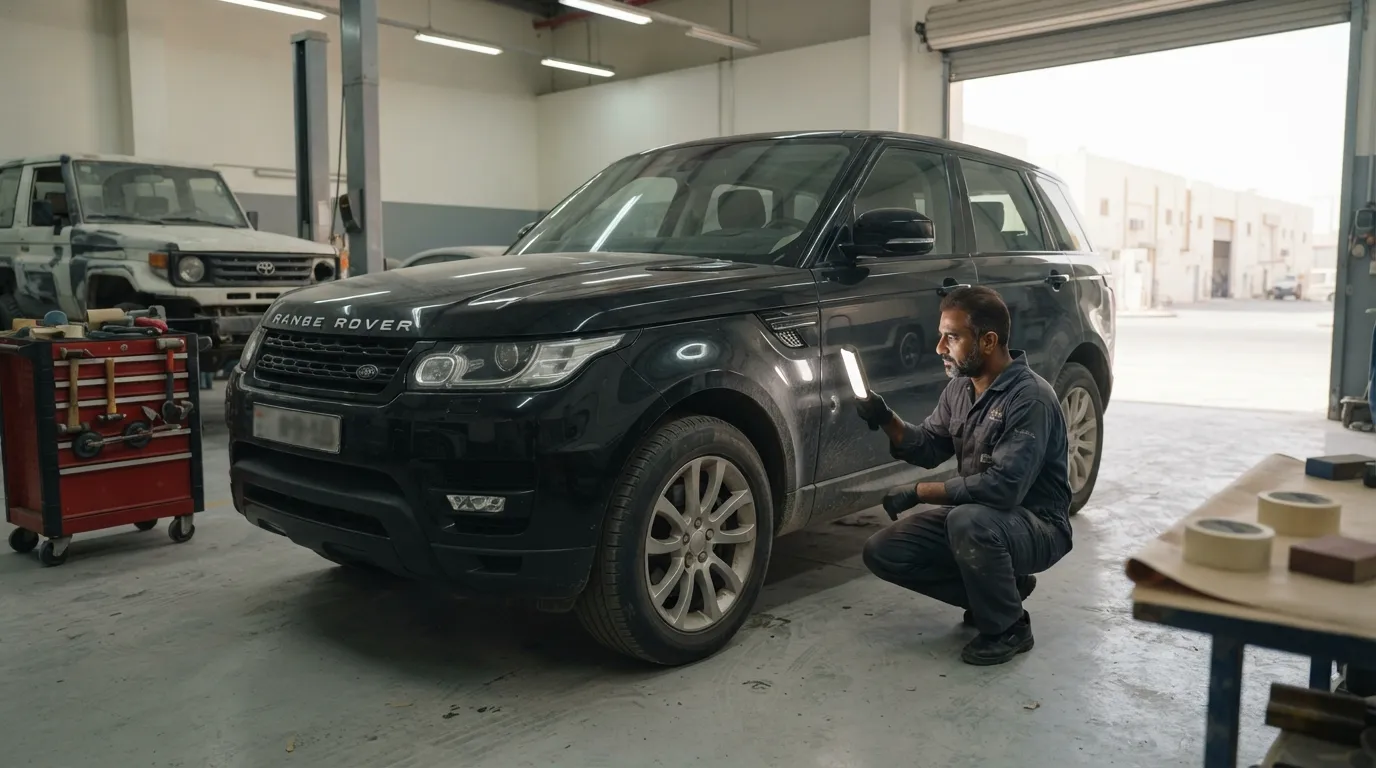
Collision damage is not only a paint problem. A proper body-shop assessment checks panel shape, hidden mounting points, closures, lamps, sensors, wheel position, structural reference points and the finish required after repair. The repair plan should explain what can be restored, what must be replaced and how the final fit and colour will be verified.
A useful answer near the start
The visible dent may be only the outer layer of the repair
A bumper corner, wing, door or tailgate can look repairable while the brackets, reinforcement, hinges, lamp mounts or adjacent panel edges are also affected. The assessment must follow the impact path.
What this body-shop page covers
- Collision and accident damage assessment
- Panel repair or replacement decisions
- Paint preparation, colour matching and refinishing
- Panel-gap, closure and exterior-function checks
- Structural or geometry checks when impact evidence requires them
- Coordination with bumper, wheel, alignment and electrical work
Small paintless dents, isolated bumper damage and rim repair have their own service pages so each URL keeps one clear search intent.
FINISH
Paint transfer, scratches and clear-coat damage
Some marks are transferred material that can be removed without repainting. Others penetrate the clear coat, colour layer or primer. The panel is cleaned and inspected under suitable light before polishing, local repair or refinishing is recommended. A dark line does not automatically mean the metal is exposed.
SHAPE
Dents, creases and damaged body lines
Repairability depends on depth, location, metal stretch, access behind the panel and whether the paint remains flexible. A shallow dent on an open panel is different from a sharp crease across an edge, reinforcement or styling line. Paintless dent repair may be suitable only when the paint and panel structure allow it.
FIT
Doors, bonnet, tailgate and adjacent panels no longer align
Uneven gaps can come from a bent panel, hinge movement, latch position, damaged mounts or distortion in the surrounding structure. The closure should open, close and seal correctly before paint finish is treated as complete. Repeated adjustment without finding the moved part can hide rather than solve the problem.
IMPACT
Wheel position, structural reference or safety systems may be involved
A stronger impact can affect reinforcement, mounting points, suspension location, lamps, parking sensors, cameras or wiring. The vehicle may need measurement, mechanical inspection, wheel-alignment checks or electrical diagnosis before the exterior repair scope is finalised.
Prevent page overlap
Choose the service that matches the primary damage
These related services can be part of one vehicle repair, but each page owns a different decision. Clear separation reduces duplicate content and helps the owner reach the right workshop process.
Body shop
Collision assessment, panels, paint, gaps and hidden impact damage.
Paintless dent repair
Selected dents where paint and panel condition allow a non-paint route. For suitable damage, the Range Rover PDR guide explains how paint condition, dent depth and access decide whether this route is realistic.
Bumper repair
Bumper cover, mounts, absorber, reinforcement, lamps and sensors.
Rim repair
Wheel bends, cracks, bead leaks, kerb damage and refinishing.
Wheel alignment
Measured steering and suspension geometry after mechanical pre-checks.
From impact evidence to final inspection
A body repair plan should show the complete journey
1. Record the damage before dismantling
Wide and close photographs, affected panel gaps, warning messages, wheel position, glass, lamps and closure operation are recorded. Dirt and transferred material are removed where needed so scratches and paint depth can be judged accurately.
2. Inspect behind the visible panel
When the damage pattern suggests hidden involvement, trims or assemblies are removed carefully enough to inspect brackets, guides, reinforcement, wiring and mounting points. The scope is updated before paint work begins.
3. Decide between repair and replacement
Panel material, metal stretch, crease position, corrosion, previous filler, access and the effect on adjacent panels determine whether repair is sensible. Replacement may be required when a panel cannot be restored to stable shape or when critical mounting areas are damaged.
4. Restore shape, fit and reference points
Panel shape and mounting points are corrected before final finishing. Doors, bonnet, tailgate, bumper, lamps and adjacent panels are trial fitted where needed. Structural or suspension reference checks are added when the impact path supports them.
5. Prepare and refinish the approved area
Surface preparation depends on the substrate and repair. Colour information, test panels and the neighbouring finish help determine the paint approach. Blending may be needed where a local edge would be visible, but the scope should be explained rather than assumed.
6. Reassemble and verify the complete vehicle
Lamps, handles, glass, trim, sensors, cameras, seals and closures are checked after assembly. The vehicle is reviewed in more than one lighting condition. If wheel or suspension involvement was found, mechanical and alignment results are included in the final check.

Colour and finish are separate quality checks
Paint matching starts before the spray stage
The paint code is a starting point, not a guarantee that one formula will visually match every vehicle. Age, previous refinishing, sun exposure, substrate colour and metallic or pearl orientation can change the appearance. The technician should compare the vehicle, prepare a test sample where needed and select the repair boundary that gives a natural result.
Quality control after body and paint work
What should be checked before collection
A final body-shop inspection should be systematic. Looking only at the freshly painted panel can miss closure, electrical or alignment concerns caused by the original impact or the repair process.
Panel shape
Reflections should flow without an obvious low spot, high spot or repair edge.
Panel gaps
Adjacent gaps should be consistent and appropriate for the vehicle.
Closures and seals
Doors, bonnet and tailgate should open, latch and seal without unusual force.
Lamps and exterior functions
Lighting, washers, handles, mirrors and fitted exterior equipment should operate.
Parking aids and cameras
Systems disturbed by the repair should be checked for operation and relevant warnings.
Wheels and road behaviour
Any impact near a wheel should include the mechanical or alignment checks supported by the damage.
The repair method changes with the body construction
Model, panel material and previous repair history affect the body-shop plan
A full-size Range Rover, Range Rover Sport, Evoque and Velar can differ in panel shape, fasteners, trim access, sensor locations and material use. The workshop should identify the exact vehicle from the VIN before ordering a panel or choosing a repair method. A visually similar door, bonnet, tailgate or quarter panel may use different brackets, mouldings or preparation requirements.
Aluminium and steel need different decisions
The damaged panel and surrounding structure should be identified before straightening, welding or replacement is discussed. The repair plan must account for the material actually fitted to the vehicle rather than assuming the whole body uses one construction.
Previous filler or paint can change the result
A panel may already contain filler, blended colour, repaired edges or non-standard fasteners. Those findings affect preparation, colour matching and whether another repair is sensible. They should be recorded before the new estimate is finalised.
Trim level changes the parts around the panel
Wheel-arch mouldings, badges, cameras, lamps, parking sensors and appearance-package trims can alter removal and reassembly. The estimate should identify which adjacent items must be transferred, calibrated, refinished or replaced.
Panel gaps must be judged across the complete vehicle
One repaired edge can look acceptable alone and still disagree with the bonnet, lamp, door or tailgate beside it. Final inspection should compare height, gap, flushness and opening operation across all neighbouring panels.
No generic body-shop price fits every impact
What changes the Range Rover body repair quotation
The scope depends on the damaged panels, hidden mounting points, material type, paint system, colour, required dismantling, replacement trim, lamps, sensors, structural checks and any mechanical or electrical work. A shallow parking dent and a corner impact can affect the same outer panel but require very different work.
A clear quotation should separate panel repair, replacement parts, paint materials, dismantling, alignment or measurement checks and optional cosmetic work. It should also explain what may change after dismantling and how additional damage will be approved. Prices and completion times should be confirmed only after the exact vehicle and repair scope are known.
Range Rover body-shop questions
Answers before booking an assessment
Can body-shop damage be quoted accurately from photos?
Photos can help identify the affected area and prepare an initial discussion. They may not show broken mounts, reinforcement, stretched metal, previous filler or damage behind trim. A final repair scope often requires vehicle inspection and sometimes approved dismantling.
When is panel repair better than panel replacement?
Repair can be suitable when shape, material, access and critical mounting areas can be restored reliably. Replacement may be more appropriate when the panel is severely stretched, torn, corroded, previously repaired badly or damaged at important mounting or structural areas.
Does every dent need repainting?
No. Selected dents may be suitable for paintless dent repair when the paint is intact, access is possible and the panel is not excessively stretched. Sharp creases, edge damage, cracked paint and previous filler often need a different method.
Why can a small impact affect parking sensors or cameras?
The bumper or adjacent panel can move a sensor, break a mount, damage wiring or alter the view of a camera. The exterior may look minor while the component position or electrical connection has changed.
How is paint colour matched?
The paint code, available variants, vehicle condition, test samples and surrounding panel appearance are considered. Metallic and pearl colours also depend on application and viewing angle, so matching is more than selecting a code.
Should wheel alignment be included after an accident?
It should be considered when the impact involved a wheel, suspension area or changed steering, tire wear or vehicle tracking. Mechanical damage must be checked before geometry is adjusted.
What should I send before the appointment?
Send the VIN, wide photos of the vehicle side, close photos of each damaged area, any dashboard warnings and a description of changes to steering, closures, lamps, sensors or cameras.
Book a Range Rover body-shop assessment in Dubai
Start with the impact path, not only the visible paint damage
Send the VIN, wide and close photographs, the affected side and any warning messages. The workshop can then plan the right inspection for panels, mounts, paint, closures, sensors and wheel-related damage.