

Range Rover Paintless Dent Removal in Dubai
Restore suitable dents without automatically sanding or repainting the panel. We first inspect the dent depth, paint condition, panel access, body line and panel material, then explain whether PDR or conventional body repair is the safer route.
Is PDR right for your Range Rover?
Quick answer: Paintless dent removal is usually considered when a dent has not split the paint, the metal is not severely stretched and a technician can reach or safely work the affected area. A photo can help with initial triage, but the final method should follow a physical inspection.
Dubai parking spaces, trolley contact, door impacts and falling objects can leave shallow dents that interrupt a Range Rover panel’s clean reflections. The visible diameter alone does not decide repairability. A small sharp dent on a body line can be more demanding than a broad shallow dent on an open section.
Our page focuses only on paintless dent removal. Damage that needs refinishing, structural correction or panel replacement belongs to a broader body repair decision. This separation protects the established intent of this URL and avoids competing with other bodywork services.
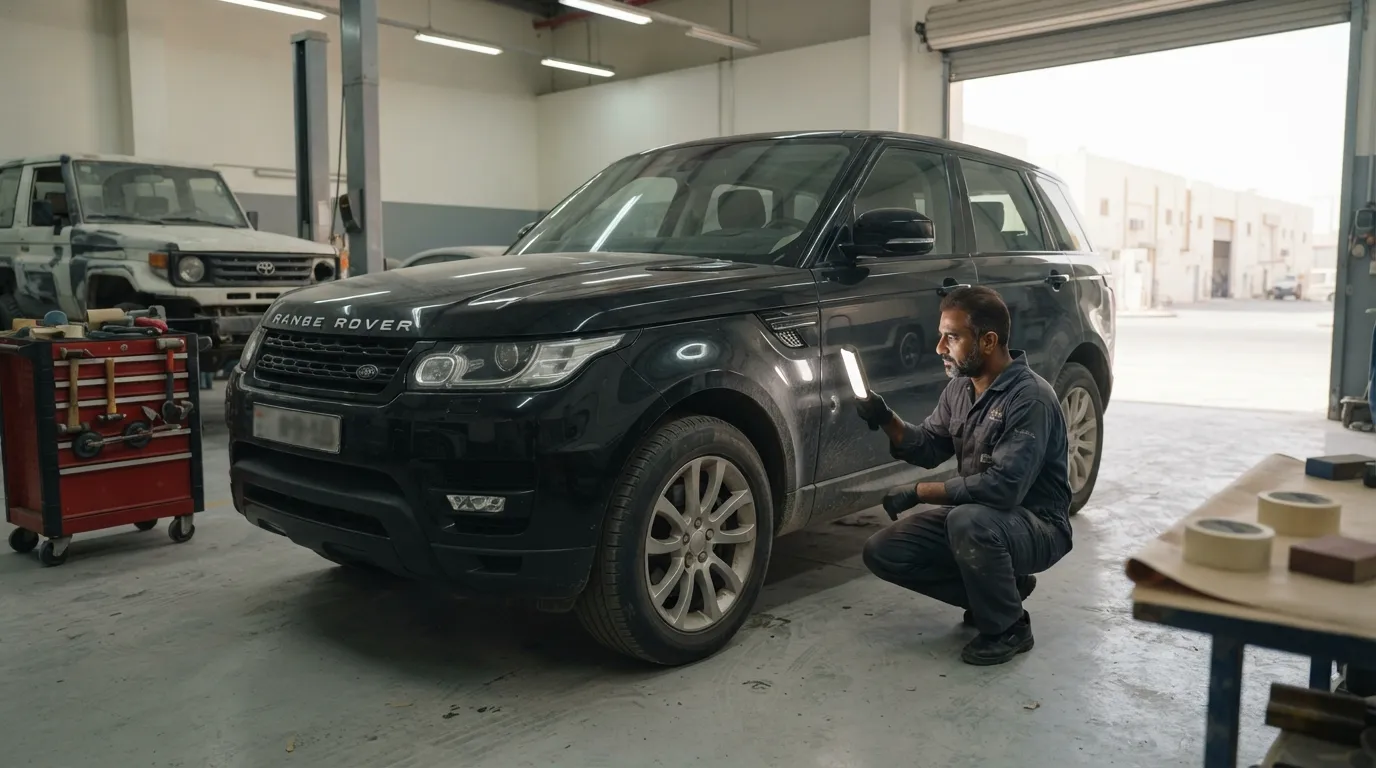
4 checks decide the repair path
Paint and repair history
Cracks, chips, previous filler and an earlier repaint can change the risk. PDR aims to retain sound paint, but it cannot restore missing or fractured paint. Paint thickness, visible edges and surface behaviour also help the technician identify prior work.
Dent shape and finish expectation
Soft dings, tight impact points, creases and dents across styling lines react differently. Controlled lighting reveals highs, lows and texture, helping the workshop assess the achievable cosmetic result before work begins.
Tool access
Doors, bonnets, tailgates and quarter panels have bracing, wiring, trim and bonded areas behind them. Access must be planned without careless dismantling.
Panel material
Material and construction vary by model, year and panel. The technician should identify what is present before choosing pressure, leverage or an alternative method.
Dents that may suit PDR and those that often do not
| Damage seen | PDR outlook | Sensible next step |
|---|---|---|
| Shallow door ding with intact paint | Often a suitable candidate if access is practical | Send clear photos, then book an in-person inspection |
| Broad smooth dent away from an edge | May respond well when the metal is not stretched | Inspect reflections and the back of the panel |
| Sharp crease on a body line | Possible in some cases, but more complex | Assess paint stress, depth and technician access |
| Cracked, chipped or flaking paint | PDR alone cannot restore the coating | Consider dent correction with refinishing |
| Torn metal, severe fold or collision distortion | Generally outside pure PDR scope | Arrange a full body and structural assessment |
| Dent over a previous filler repair | Higher risk of coating or filler failure | Verify repair history and choose method cautiously |
What happens during a proper PDR assessment
The vehicle is viewed under controlled reflections so the technician can read the true shape rather than only the obvious center. The surrounding crown, panel edge and styling line matter because moving one area can influence another.
Next comes access planning. Door cards, liners or trim may need careful removal, but dismantling is not automatic. The technician checks for intrusion beams, adhesive, wiring, airbags, glass mechanisms and reinforcement. If rear access is restricted, an alternative technique may be evaluated according to the paint and panel condition.
The finish is checked before work begins. Existing stone chips, scratches, refinishing and paint defects should be recorded so that PDR is not presented as a solution for unrelated surface damage. Only after these checks can the workshop confirm suitability and scope.

How a dent is refined without repainting
Map the impact
Reflection lines help identify the low area, surrounding tension and any sharp impact point. This map guides the direction and sequence of correction.
Prepare safe access
Where appropriate, trim is protected or removed methodically. Nearby wiring, clips, glass and sound insulation must remain undamaged.
Make controlled adjustments
The panel is gradually refined using a method chosen for its construction and access. Repeated small corrections reduce the risk created by excessive force.
Balance highs and lows
Correction is not simply pushing the deepest point outward. The technician works with the full shape and monitors how the surface responds.
Inspect from several angles
Workshop lighting and different viewing positions reveal waves or pressure marks that a single photograph may miss.
Reassemble and verify
Any removed trim is refitted and its nearby functions are checked. The repaired zone is reviewed with the owner’s agreed expectations in mind.
PDR versus conventional dent repair
PDR is a technique, not a promise that every dent can remain paint free. Its main advantage is retaining an intact finish when the damage allows it. Conventional repair becomes relevant when paint is broken, metal is excessively stretched, access makes paintless correction unsafe or collision damage affects more than surface appearance.
A conventional route can include panel reshaping, surface preparation and refinishing. That does not make it inferior. It makes it appropriate for a different damage condition. A trustworthy estimate should explain why the selected route matches your panel rather than selling PDR for every dent.
If the affected area is aluminium or if several panels are involved, see our Range Rover body repair service service for the broader repair context.
Dubai conditions and practical owner decisions
After a parking impact
Photograph the whole panel and a close view from two angles. Do not polish the mark before inspection because residue and paint transfer can help explain what happened.
After falling objects or storm debris
Check the roof, bonnet, glass and adjacent trims in good light. Multiple shallow dents need a complete panel map, not isolated spot estimates.
Before a lease return or sale
Ask for a condition based assessment. Whether repair makes sense depends on paint condition, repair history and the standards applied by the inspecting party.
What affects a PDR quotation?
The quotation depends on the number of dents, their depth and sharpness, the affected styling line, panel location, material, rear access, trim removal, paint condition and previous repairs. Photos help the workshop prepare, but reflections and access are difficult to judge remotely. For that reason, a final quote should follow inspection rather than a generic price list.
Ask the workshop what is included, whether trim removal is expected and what finish is realistically achievable. If paint damage is present, request the alternative repair route at the same time so you can compare like with like.
Panel location changes the PDR decision
A Range Rover is not a collection of identical flat sheets. Each location presents different access, reinforcement and finishing concerns. A door dent may sit close to an intrusion beam, window mechanism, wiring harness or folded edge. The bonnet may have a bonded inner frame. A tailgate combines trim, electrical parts, glass and reinforcement. Quarter panels can restrict rear access. These differences explain why two dents that look similar in a photograph can require very different plans.
Doors
Technicians consider the window, latch, wiring, side impact protection and the location of the folded door edge. Work near a sharp edge can be less forgiving than a shallow mark in an open central area. Any trim removal must protect clips and electrical connections.
Bonnet and tailgate
Inner framing can block direct tool paths. The exterior shape may also include strong styling lines. Access and heat exposure from the vehicle environment are reviewed before choosing a technique.
Roof and quarter panels
Headlining, airbags, bonded structures and limited rear access make planning important. Multiple roof dents need a complete map so correction is sequenced across the panel rather than treated as unrelated spots.
How to photograph a dent for initial triage
Clean only loose dust with a safe method and park in open shade. Take one photograph showing the entire side or panel, then take medium views from the front and rear angles. Reflections from straight lines, such as a building edge or workshop light, help reveal the dent shape. Include a close view of any chipped paint, scratch or transferred material. Do not place a coin directly against damaged paint and do not edit contrast so heavily that the surface condition becomes misleading.
Tell the workshop where the impact occurred and whether the panel has previous paintwork. If you know that a door, bonnet or tailgate has been repaired before, share that detail. A remote review can then separate likely PDR candidates from damage that clearly needs a broader body repair inspection. It still cannot confirm hidden access, filler or metal stretch.
Common reasons a dent is misjudged
Paint transfer can look worse than it is. Material from another object may sit on top of the clear coat while the underlying paint remains intact. The opposite is also possible. A mark that looks superficial in a photo may hide a split coating at the sharp center.
A wide dent is not automatically severe. Broad, shallow movement may be more manageable than a tiny, needle sharp impact. Diameter should be considered with depth, crown tension and panel location.
Aluminium should not be assumed. Range Rover construction varies by vehicle and component. The actual affected panel should be identified. Repair technique must follow the material present rather than a general statement about the brand.
Polishing cannot remove a shape change. Machine polishing may improve light surface marks, but it does not level stretched or displaced metal. Aggressive polishing can also reduce coating thickness and make later refinishing harder.
Cheap suction tools are not a diagnosis. They may move a broad low spot while leaving a ring, high point or sharp center. Once the surface has been distorted by an attempted repair, professional correction can become more complicated.
Aftercare and realistic expectations
Once the work is complete, inspect the panel in daylight and under reflected lines. Look from several angles rather than staring only at the former center. PDR is intended to improve suitable damage while retaining sound paint, but the achievable result depends on how the metal and coating were affected before repair. A severe impact, stretched section or old refinishing can limit what is sensible without repainting.
Wash the area normally with paint safe products after following any workshop guidance. There is no special filler to cure in a pure paintless correction, but removed trim and connected parts should still be checked. If you notice a rattle, window issue, loose liner or warning after collection, report it promptly so the workshop can review the relevant access area.
Preventing every parking ding is impossible. Leaving more space beside long doors, avoiding trolley return zones and checking overhead conditions during severe weather can reduce exposure. Paint protection film can help with some surface impacts, but it cannot prevent the metal beneath it from denting. Treat protection products and dent correction as separate decisions.
Frequently asked questions
Can every Range Rover dent be removed with PDR?
No. Suitability depends on paint integrity, metal stretch, dent geometry, panel construction and access. An inspection is necessary.
Does PDR include scratch repair?
PDR changes panel shape. It does not replace missing paint or remove a scratch that has cut through the coating. Light transfer marks may be separate from the dent.
Can a dent on a body line be repaired?
Some can. Body line dents can carry concentrated tension, so depth, sharpness and paint condition matter more than a simple yes or no.
Can you quote from a WhatsApp photo?
Photos can support initial guidance. A final method and quotation should follow physical inspection because access and metal stretch are hard to confirm remotely.
Will trim need to be removed?
Sometimes. The need depends on where the dent sits and what lies behind the panel. The aim is controlled access with appropriate protection.
Is PDR the same as body filler repair?
No. PDR reshapes suitable metal while retaining sound paint. Conventional repair may use surface preparation and refinishing when damage falls outside PDR limits.
Get a condition based dent assessment
Send clear photographs of the full panel and the dent from several angles. We can provide initial guidance, then confirm the correct repair method after inspecting the vehicle in Dubai.