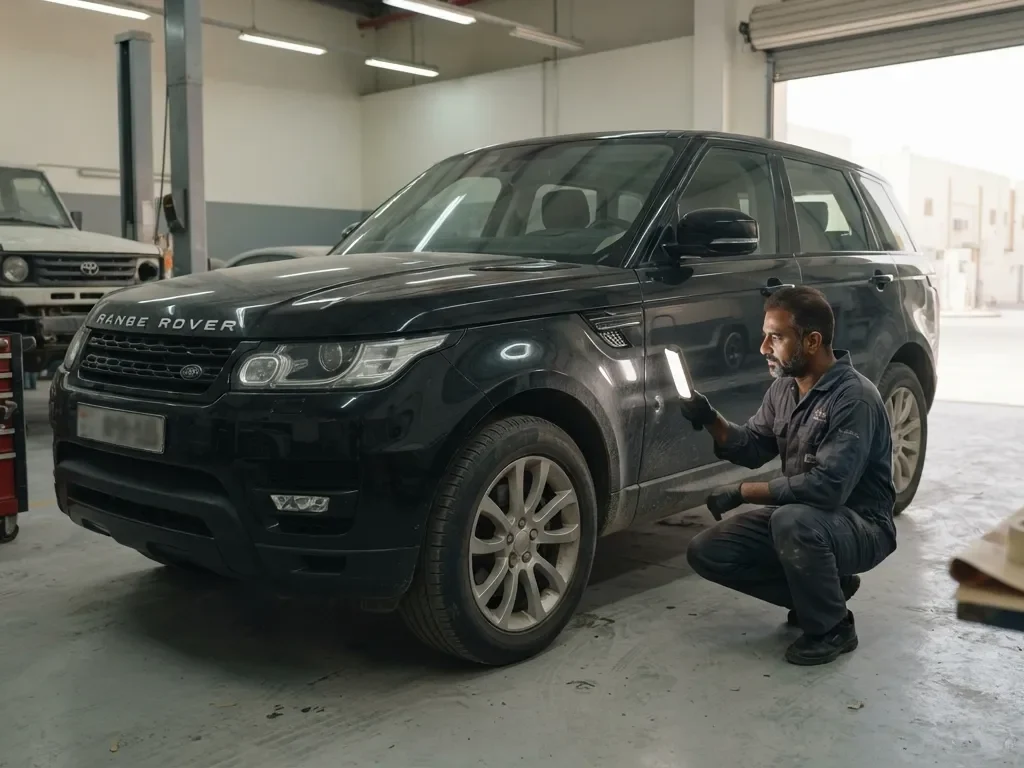
The choice between paintless dent removal, refinishing and panel replacement depends on the damaged panel, the condition of its paint, access, previous repairs and the manufacturer’s permitted repair method. A shallow dent with sound paint may suit paintless dent removal. Broken paint needs a finish repair as well as any shape correction. Distorted structure or damage in a restricted repair area needs a wider assessment before a cosmetic method is chosen.
This guide helps you compare the proposed repair for a Range Rover in Dubai. A photograph can start the discussion, but it cannot establish hidden damage, remaining coating thickness or whether a sensor mount is correctly positioned.
Deal with safety and collision damage first
Do not treat every impact as a paint problem. Stop using the vehicle if damage affects safe steering or braking, a wheel or tire, a door or tailgate latch, or leaves loose panels or sharp projections. Fluid leaks, airbag deployment, damaged lights or underbody impact need assessment. Arrange appropriate recovery when roadworthiness is uncertain. On a hybrid, stay clear of damaged high-voltage components and let qualified personnel assess the vehicle.
Record the damaged area and any dashboard messages from a safe position. For an accident or insurance claim, follow the applicable reporting and insurer instructions before authorizing repairs. Do not remove parts or attempt to conceal damage before it has been documented.
A small mark can be cosmetic. A similar-looking mark beside a displaced lamp, changed panel gap or damaged wheel may need a different inspection. Describe how the impact happened, not just where the paint is scratched.
Compare the repair options
| Possible route | When to consider it | What must be checked |
|---|---|---|
| Cleaning or limited paint correction | Transfer marks or shallow surface defects without a dent. | Whether the defect is in the coating and whether correction can be done without excessive removal. |
| Paintless dent removal, or PDR | A suitable dent where preserving the existing paint is feasible. | Panel material, access, stretching, crease shape and paint condition, including previous refinishing. |
| Panel repair and refinishing | Repairable shape damage with coating damage or a finish that cannot be preserved. | Permitted metal or plastic repair method, substrate preparation, coating system and blend scope. |
| Panel or bumper-cover replacement | Damage that cannot be restored by an approved method or falls within a replacement requirement. | Exact part, adjacent damage, attachment method, protection, paint and relevant system checks. |
| Structural assessment | Impact may have moved structural reference points or affected mounting geometry. | Measurement against the correct vehicle data before any correction is proposed. |
Choose the least extensive method that meets the required repair standard, not simply the method with the smallest invoice. Equally, a dent does not automatically justify replacement. Ask the repairer to identify the finding that makes the proposed route appropriate.
A scratch test cannot identify the damaged paint layer
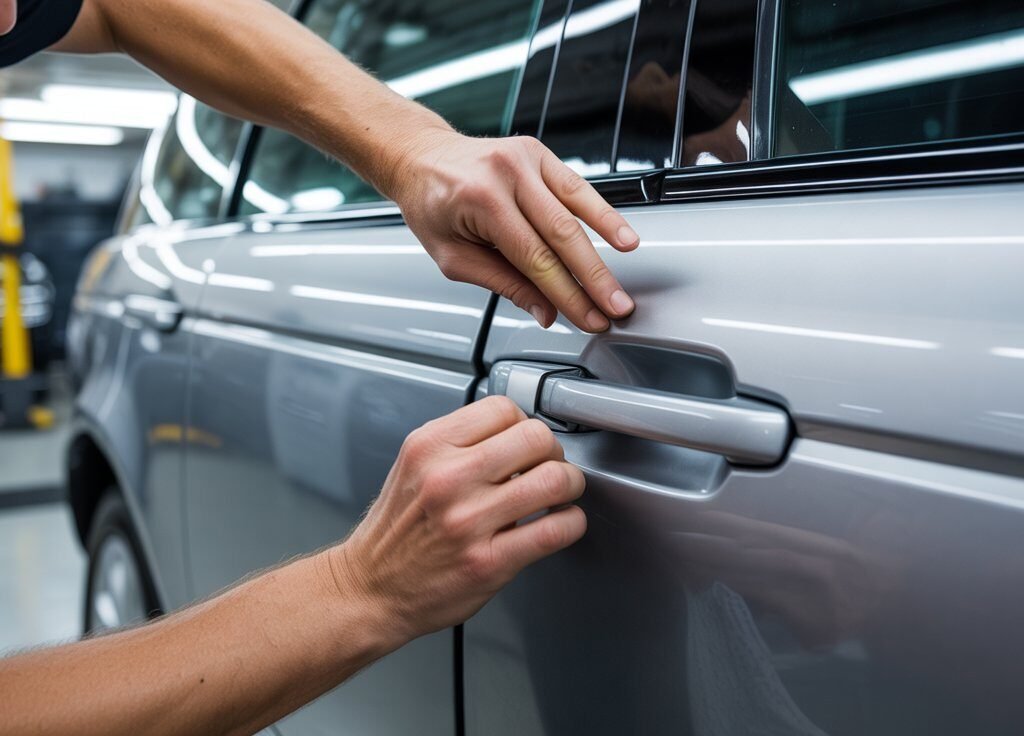
The fingernail test is only a rough tactile clue. A scratch that catches a nail is not proof that it has reached the color layer or primer. A mark that does not catch is not guaranteed to polish out safely. Coating condition, previous repairs and remaining film matter.
Gently remove loose contamination using the appropriate wash method before inspection, without rubbing dry grit across the finish. Do not attack a mark with aggressive compound, sandpaper or solvent to see whether it disappears. Paint correction removes material, and the available margin is not the same on every panel.
Ask whether the apparent scratch is transferred material, a clearcoat defect, coating failure or exposed substrate. The repairer can then explain whether cleaning, restrained correction, a touch-up or refinishing is proportionate. Measurements need equipment suitable for the panel material and must be interpreted with the visual findings.
For a small chip, a touch-up may prioritize protection over an invisible cosmetic result. For widespread failing clearcoat, more polishing is not a substitute for an appropriate refinish. Agree the intended finish standard before work begins.
When paintless dent removal is worth assessing
PDR aims to restore panel shape while retaining the existing finish. Smooth dents with intact paint can be candidates, but size alone is not a reliable yes-or-no rule. Depth, sharpness, location, stretching and the condition of any previous paint repair all affect feasibility.
A bodyline dent does not automatically rule out PDR, and an apparently simple dent does not guarantee success. Access behind the panel, reinforcement, edges and nearby components may change the method or make a different repair preferable. Glue-based pulling can carry additional risks on previously refinished or weakened coatings.
Ask what outcome is realistic before paying: complete cosmetic restoration, a stated improvement, or preparation for later paintwork. An honest limitation is more useful than a promise that every dent will disappear in every light.
Do not drill access holes, lever against hidden wiring or apply heat as a generic owner repair. Trim, adhesives, corrosion protection and nearby components need the correct procedure. Have the dent assessed for paintless dent removal before choosing a repair method.
When paintwork or panel replacement is justified
Repairable panel deformation and damaged paint may need shape correction followed by preparation and refinishing. Filler is not a substitute for structural integrity or a method for hiding damage that requires replacement. Its use must fit the permitted repair and the coating manufacturer’s instructions.
Aluminum, steel and plastic do not share one repair method. A model name does not tell you the material of every panel. Before approving a replacement, ask which panel or assembly is being replaced and whether adjacent brackets, hinges, reinforcement or bonding surfaces are affected.
A torn edge or severe crease warrants investigation, but there is no universal rule that every crease requires a new panel or that every intact panel can be reshaped. The decision needs the component-specific repair information and measured condition.
For a replacement involving bonded, riveted or welded construction, the repair scope should identify the applicable joining, curing and protection requirements. This is a trained body-repair task. Confirm the panel material before specifying aluminum body repairs; not all Range Rover panels are aluminum.
Bumpers, parking sensors and ADAS need separate decisions
A plastic scuff, cracked cover, damaged bracket and displaced radar mount are different findings. A crack away from an obvious sensor is not automatically safe to weld, and a sensor-adjacent mark does not establish a universal replacement rule. The exact component and permitted repair zone decide what is allowed.
Ask the workshop to consult the VIN-specific JLR workshop and body-repair information in TOPIx. That is where the applicable repair methods and technical information should be checked. Generic internet rules cannot establish permitted filler, paint layers, repair zones or sensor treatment for your vehicle. JLR’s bumper repair position statement specifically directs repairers to its published methods and VIN-specific information for bumper covers and associated safety components.
Do not apply one masking or coating-thickness instruction to every radar cover or parking sensor. The correct treatment may differ by part, fitted system and whether it is new or previously refinished. The quote should identify any component that cannot be repaired under the applicable instructions.
Calibration is required when the relevant JLR procedure calls for it because of the damage, removal, replacement, adjustment or other work performed. It is not established merely by listing a windshield, bumper or mirror. Ask which fitted system is affected, what triggered the requirement and what completion record will be supplied.
A successful parking maneuver, a cleared dashboard or a scan with no current codes does not substitute for a required calibration. Appearance, mounting security, electrical checks and calibration each answer different questions.
Structural replacement parts have a separate boundary. JLR’s January 2025 structural body components statement approves new genuine JLR structural collision parts and rejects aftermarket, remanufactured and collision-salvaged alternatives for structural replacement. Do not treat a cheaper used structural section as equivalent to an approved replacement.
Measurement is not structural correction
Body or chassis measurement compares relevant points with the specified geometry. It is an assessment operation. Pulling, sectioning, joining or replacing structure is a separate repair decision with its own procedure, authorization and cost.
Do not accept “chassis measurement including basic pulls” as an unexplained package. Ask for the measured findings, the proposed correction and the applicable JLR method before authorizing structural work. A wheel alignment report also does not replace a structural measurement when structural damage is suspected.
Not every door ding needs a full structural measurement. The impact path, disturbed gaps, mounting movement and other findings determine the necessary inspection depth. The workshop should explain why that additional assessment is warranted.
Agree the color, blend and finish scope
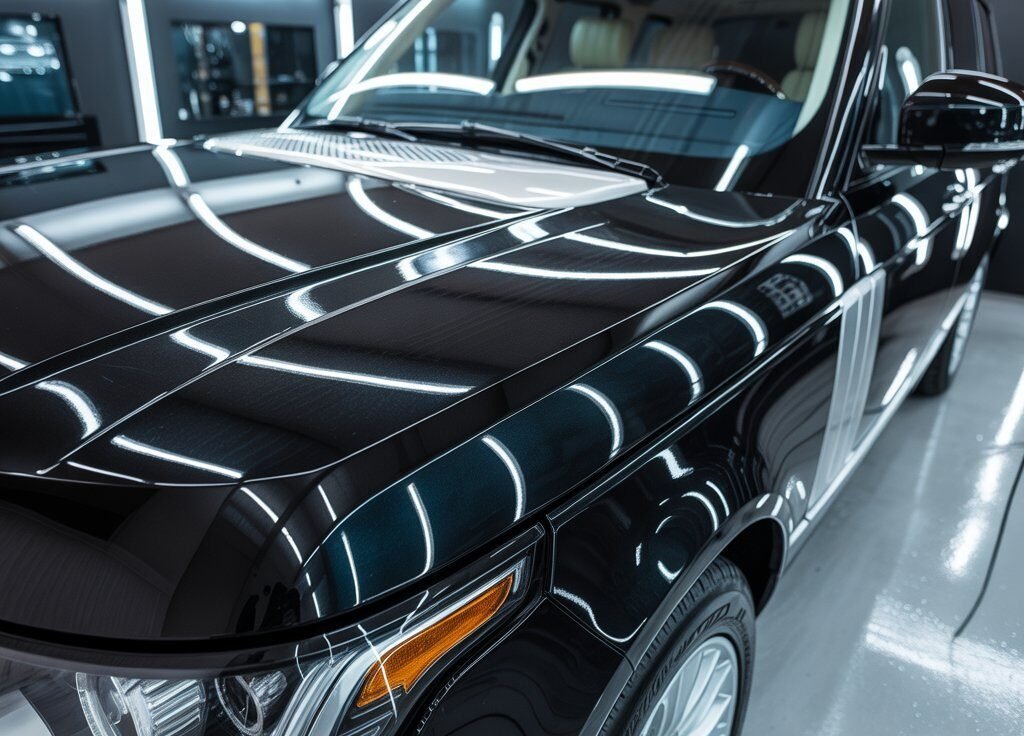
A paint code is a starting point, not a guarantee that the finished panel will look identical to its neighbors. Existing coating condition, previous refinishing, paint variation and application affect the comparison. Metallic and pearl finishes can look different as the viewing angle changes.
Ask how the paint will be matched and whether a test spray-out is needed. If blending into an adjacent panel is proposed, have that panel named in the quotation. Blending should have a reason; it is not an automatic charge for every paint repair.
Inspect the finished surface in suitable daylight and workshop lighting from several angles. Look at color, gloss, texture, edges, overspray and panel gaps. Good paint appearance does not establish correct sensor function or structural repair, so review the relevant technical records separately.
What a useful body-repair quote includes
No verified fixed prices or local average ranges are stated in this guide. Request an inspection-led quote that separates the following items.
| Work item | Scope to identify |
|---|---|
| PDR | Panel, number and location of dents, access work and agreed finish limitations. |
| Refinishing | Repair and blend panels, preparation, coating system and removal/refitting. |
| Parts | Exact replacement panels, brackets, clips, seals or other necessary components. |
| Structural work | Measurement separately from any authorized correction or replacement. |
| Electronic systems | Applicable scans, sensor checks and specifically required calibration. |
| Commercial terms | Labor, materials, exclusions, completion estimate, warranty and quote validity. |
VAT basis for the quote: request a subtotal excluding VAT, the applicable VAT amount and the total including VAT. Compare quotations using that same basis. This table contains scope items, not monetary estimates.
Photographs may support an initial estimate, but dismantling can reveal additional damage. Agree how revised findings will be documented and approved before extra work starts. For an insurance repair, confirm the authorized scope and any owner contribution with the insurer and repairer.
Reduce avoidable paint damage in Dubai
Covered parking can reduce exposure, but it does not prevent all paint aging or parking damage. Choose space around doors where practical and avoid resting bags or tools on painted surfaces. Take care around trolley routes and tight columns.
Remove dust with a suitable wash process rather than a dry wipe. Use clean, appropriate wash materials and follow the vehicle and product instructions. A protective coating or film cannot guarantee scratch prevention or eliminate normal washing.
After refinishing, obtain written instructions for washing, polishing and applying wax, coating or protection film. The timing depends on the coating system and cure process, not a universal number of days. Repeated polishing is not harmless, especially on edges or previously corrected paint.
At handover, check closures, seals, lamps and relevant systems as well as the finish. Keep the approved scope, invoice, applicable calibration or measurement reports, warranty and aftercare instructions.
Before approving work: confirm the damaged material, the permitted repair method, the finish you are paying for, and the safety-system checks required by that exact job. Request measurement and correction as separate line items where both are needed.
Dent and paint repair questions
Does an intact paint surface guarantee PDR will work?
No. It is one favorable feature. Access, panel material, stretching, dent shape and prior refinishing still affect the method and achievable result.
Can a scratch that catches a fingernail be polished out?
The fingernail test cannot decide that safely. A repairer must assess the defect and the available coating before choosing correction or refinishing.
Does every bumper scratch require ADAS calibration?
No universal rule applies. The fitted system and exact repair procedure determine whether calibration is needed. Ask for the reason and applicable completion record.
Can a cracked bumper always be welded?
No. Material, location, safety features and JLR’s permitted repair method matter. Some areas or conditions may require replacement.
Is a new panel always better than repair?
No. A suitable approved repair may preserve more original material and finish. Replacement is justified when the condition or applicable procedure requires it, not simply because a panel has a dent.
Why do two quotes name different numbers of paint panels?
One may include adjacent blending, trim removal or hidden damage that the other excludes. Ask both repairers to mark the actual repair and blend areas before comparing totals.
Can I postpone a cosmetic repair?
Sometimes, after confirming it is cosmetic and the finish is adequately protected. Exposed substrate, damaged closures, loose components or safety-system concerns need assessment rather than an appearance-only decision.
What proves the repair is complete?
The answer depends on the work: acceptable finish and fit, secure closures, required protection, and the relevant measurement, scan, function or calibration checks. A glossy panel alone is not complete evidence.
Workshop support
Need help with your Range Rover?
Tell us your model, year and what you have noticed. Speak with the workshop about maintenance, an inspection or a repair.