
A timing-chain replacement can correct a confirmed chain, guide, or tensioner fault. It is not a general cure for a Range Rover that feels slow, rattles, or shows a timing code. Oil supply, variable valve timing, sensor signals, ignition, fuel, and other mechanical problems can produce overlapping symptoms. Identify the installed engine and test the suspected cause before approving a chain kit.
Stop safely and arrange recovery if timing failure is suspected, especially with harsh mechanical noise, sudden shutdown, severe shaking, abnormal cranking, or an oil-pressure warning. Do not repeatedly restart the engine to reproduce the noise.
When does a Range Rover need timing chain replacement?
Replacement is justified when inspection and the applicable tests support a fault in the chain drive, or when the exact manufacturer repair procedure specifies the work. A repair decision should explain the affected component, the evidence, and whether another problem caused or accompanied the damage.
A worn chain drive can disturb valve timing. Restoring correct operation may recover performance lost because of that fault, but it cannot guarantee a power increase, better economy, or the repair of unrelated problems. If the original complaint comes from low fuel pressure or an air leak, replacing a sound chain will not address it.
- Confirmed mechanical wear or damage: define the required chain, guide, tensioner, sprocket, or actuator scope.
- Oil-supply problem: establish and correct the cause rather than fitting timing parts into the same damaging conditions.
- Variable valve timing fault: distinguish actuator or control problems from chain wear.
- No confirmed timing-drive fault: continue targeted diagnosis instead of replacing parts because of mileage alone.
Ask the workshop to show how its findings connect to the recommended repair. A second opinion can be useful when a large quotation is based only on a sound description or a code screenshot.
Confirm the engine before discussing chain work
Range Rover is a model family, not a single engine design. The VIN, model year, market, fuel type, engine code, and any replacement-engine history determine the relevant information. A 2.0 engine badge does not distinguish every gasoline and diesel family.
| Example | What to establish | Wrong assumption to avoid |
|---|---|---|
| 2.0 Ingenium gasoline | Chain-drive configuration, exact installation, and applicable diagnostic procedure. | A camshaft-belt service interval applies to an Ingenium gasoline Evoque. |
| 2.0 Ingenium diesel | Chain-drive version, oil history, installation, and relevant test results. | Every 2.0 diesel has the same access requirements or fails at one mileage. |
| Other gasoline, diesel or hybrid applications | Identify the fitted engine and whether the relevant drive uses chains, belts, or a combination. Check the applicable maintenance schedule separately. | A chain reference for one engine establishes the timing layout or maintenance requirements of another. |
Sealey's Ingenium tooling information covers gasoline and diesel Ingenium chain-drive tooling. The vehicle's current JLR information must still determine the repair procedure. Tool listings are not failure-rate studies or replacement schedules.
For engines outside these examples, obtain the matching JLR engine description before applying this guide. The test sequence, component locations, fasteners, access, and installation checks are not interchangeable across the range.
Timing noise and warning signs that need prompt action
Timing systems do not always provide a gradual warning. A symptom that disappears can still need investigation, while a sound near the timing cover can come from another component. The useful record is when it happens and what else changes.
| Observation | Possible test direction | Limit of the observation |
|---|---|---|
| Rattle after a cold start | Noise location, oil supply, tensioning, actuator operation, and accessory sources. | It does not prove chain elongation. |
| Persistent harsh rattling or knocking | Serious mechanical or lubrication concern. | Do not keep running it to establish the source. |
| Reduced power or rough running | Timing, ignition, fuel, airflow, compression, or other system checks. | It does not identify a chain fault. |
| Camshaft correlation codes | Complete code definition, signals, oil/VVT operation, and mechanical timing where indicated. | The code is not a parts order. |
| Debris in the oil or filter | Identify material, source, and the extent of contamination. | Metal fragments do not automatically identify timing-guide damage. |
For severe misfire with a flashing warning, overheating, low oil pressure, sudden shutdown, or suspected timing loss, stop safely and seek recovery. Mild symptoms still deserve prompt assessment, but this article cannot clear a specific vehicle to drive. Describe the warning and noise before deciding how to transport it.
Owners should not remove covers, touch moving components, rev the engine for a sound test, or repeatedly start it for videos. Collect existing records and describe the circumstances. Let the technician decide which tests can be performed without worsening damage.
What P0016 and P0017 actually tell the workshop
P0016 and P0017 concern crankshaft-to-camshaft correlation. Keep the full code, suffix where provided, recording module, status, and any event data. The definition and test path must match the installed engine and software.
A correlation fault can lead to inspection of mechanical timing, but it can also involve variable valve timing, sensor signals, wiring, or other conditions covered by the diagnostic procedure. A steady or intermittent warning is not proof that the chain has stretched. A flashing engine warning with severe poor running needs an immediate safety decision, not a routine booking pitch.
JLR bulletin LTB00916NAS3 describes a variable cam timing actuator concern associated with codes including P0016 and P0017 on selected GTDi 2.0 gasoline vehicles. The historical North American application is narrow, but it demonstrates why a code alone cannot justify chain replacement.
Preserve the original scan before clearing codes. A clear dashboard afterward does not prove correct mechanical timing. Diagnosis should produce a supported explanation, not only an erased warning.
The checks that should come before dismantling
History and a safe test plan
The workshop should document cold or warm conditions, noise duration, recent oil or engine work, oil-level changes, starting behavior, and when the warning first appeared. An engine that stopped with a harsh noise needs a different approach from a routine maintenance inquiry.
Before any running test, decide whether the evidence suggests an immediate mechanical risk. If timing may be lost, the next step may require a static inspection using the exact procedure. Starting the engine to “see what happens” can increase damage.
Oil supply and control checks
Check oil level and the required specification, service history, filter application, and any indication of contamination or dilution. Where the complaint calls for it, measure oil pressure using the applicable conditions and specification. A normal level alone does not establish suitable pressure or flow.
Hydraulic tensioning and variable valve timing can depend on the lubrication system. A pressure or control problem should not be hidden by thicker oil, a general-purpose additive, or a routine engine flush. Investigate the cause and use the engine-specific repair plan.
Signals and mechanical evidence
Where safe and relevant, compare commanded and actual camshaft behavior, inspect electrical connections, and evaluate crankshaft/camshaft signals. Live-data labels and reference values differ between tools and engines. A comparison needs known conditions and the correct reference.
If mechanical inspection is indicated, use the specified setting and locking tools, wear checks, and component assessment. There is no universal scan-tool “chain stretch” number for every Range Rover. Diagnostic coverage and mechanical findings should agree before a broad replacement scope is approved.
A rattle can involve a tensioner or VCT actuator
JLR's LTB01145NAS3 covers a rattle concern on selected 2018 Ingenium 2.0 gasoline Evoque, Velar, and Discovery Sport vehicles. It identifies a possible variable cam timing unit issue and directs an applicable repair. It is not a statement that every noisy Ingenium needs a complete chain set.
The VIN, symptoms, codes, market, and current bulletin revision must be checked before using a bulletin. Historical technical information establishes that a fault can occur in an identified application, not how frequently it occurs across Dubai.
No general failure-mileage table is provided here. A claimed “usual” failure point is not an inspection result. Neither a young vehicle nor a high-mileage vehicle should be judged by the odometer alone.
Repair the confirmed fault and assess the rest of the engine
A supported repair may involve a specific actuator, a tensioner and related components, a matched timing-drive repair, or wider engine work. The workshop should assess the complete affected system without automatically replacing every part it can access.
- Localized fault with a serviceable engine: follow the defined component repair and check the associated parts.
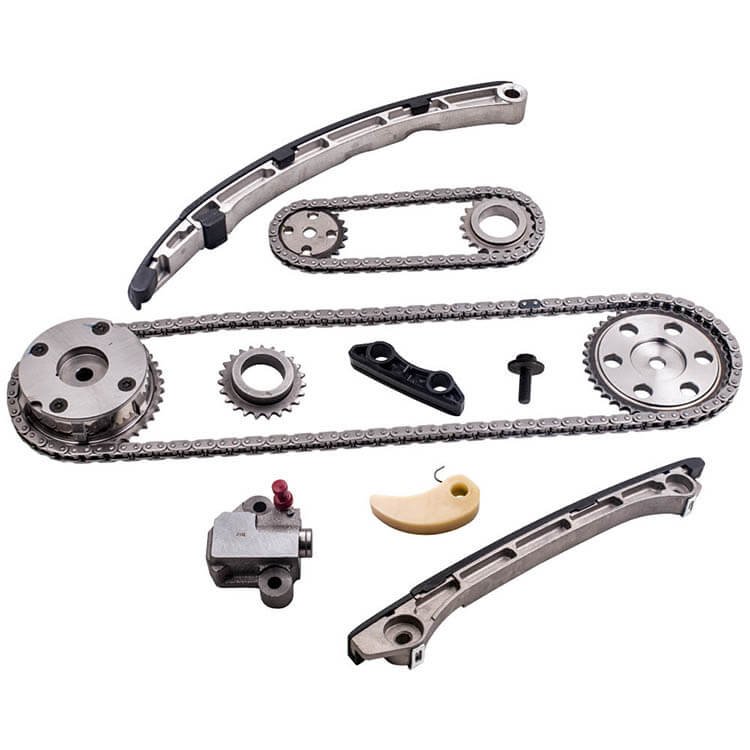
- Confirmed chain-drive wear or damage: establish the required chains, guides, tensioners, sprockets, actuators, and one-time fasteners under the exact procedure.
- Loss of timing: assess internal damage before promising that timing parts alone will restore operation.
- Widespread damage or contamination: compare a documented internal repair with a compatible replacement engine, including the cause of the original failure.
A rebuild decision needs measurements and a defined scope. Depending on findings, a technician may use internal inspection, cylinder-sealing tests, or other checks after determining that the proposed testing is safe. Do not assume every timing fault destroys the engine, or that every engine can be saved by a chain kit.
Compatibility matters more than a broad packaging claim. Ask for the exact part numbers, revisions, included components, supplier, and written warranty. “OEM,” “uprated,” or “heavy-duty” does not by itself establish suitability or a guaranteed lifespan.
What careful installation and verification should include
Timing-chain work requires the specific access, isolation, setting, tensioning, tightening, and sealing instructions for that engine. A generic sequence that removes the same covers and accessories on every model is unreliable. Hybrid systems also require the appropriate isolation boundaries where the work affects them.
Mechanical timing is set and verified physically using the specified procedure. An ECU reset or software operation does not repair incorrect mechanical installation. Adaptation or programming steps belong in the job only when the applicable procedure requires them.
- Record the confirmed fault and approved parts scope.
- Address the identified lubrication, contamination, or related mechanical cause.
- Install compatible components and specified new fasteners, seals, and fluids.
- Complete the engine's mechanical timing and assembly checks before starting.
- Confirm lubrication and safe initial operation under the repair instructions.
- Recheck the original symptom, relevant data, leakage, and fault status.
- Perform a controlled road test only when the engine is safe to run and the procedure calls for it.
Flushing the engine is not an automatic finishing step. If debris is present, its location and source need a repair-specific cleaning and inspection plan. Fresh oil cannot guarantee that debris has been removed from all affected areas.
When a timing warning returns after a repair
Keep the original invoice, parts list and before-and-after scan reports. Tell the workshop whether the same noise or code returned immediately, only from cold, or after other work. A returning correlation fault does not automatically prove another stretched chain, but it also should not be dismissed as an adaptation issue without checking the installation and diagnostic evidence.
Ask whether mechanical timing was verified, the specified oil and pressure checks were completed, and the original cause was addressed. If there is harsh noise, abnormal cranking or an oil-pressure warning, avoid further starts and arrange recovery. An electronic reset cannot correct incorrectly fitted timing components.
How to compare timing chain repair quotations
Ask whether the estimate is for diagnosis, a timing-drive repair, or internal engine damage. Those are different scopes. A low kit price says little about the access work, parts completeness, or repair verification. Agree on the engine inspection and repair scope before authorizing dismantling.
- Engine identity and evidence supporting the repair.
- Parts included, brand and status, revisions, and components being reused.
- Access labor, seals, fluids, fasteners, and any necessary additional inspection.
- Excluded damage, approval stages, VAT treatment, and final testing.
- Written warranty terms and the process if the original complaint remains.
Compare the kit contents with every separately priced line. If guides or tensioners are included in the kit, the estimate should not charge for the same components again unless it clearly identifies additional parts and explains why they are needed. Ask whether the total includes VAT, access labor, fluids, seals, required fasteners, and final verification. Obtain a written, engine-specific scope before authorizing dismantling, and approve a revised estimate if new damage is found. No universal AED allowance is quoted here because the engine and repair scope have not been established.
Key takeaway: A timing-chain repair should solve a confirmed timing-system fault. It should not be sold as a guaranteed performance upgrade or prescribed solely by a code, a noise, or a mileage figure.
Range Rover timing chain questions
Will a new timing chain make my Range Rover faster?
It may restore performance lost because of a confirmed timing-drive fault. It is not a performance upgrade and will not correct unrelated airflow, fuel, ignition, transmission, or other engine problems.
Is every startup rattle a stretched chain?
No. Noise can involve tensioning, oil supply, variable valve timing, accessories, or other mechanisms. Have it assessed without repeatedly starting the engine to reproduce it.
Can a chain last for the life of the engine?
There is no individual-vehicle guarantee. Follow the applicable maintenance schedule and investigate symptoms. Absence of a routine replacement interval does not establish that a chain drive is fault-free.
Can thicker oil hide a timing-chain problem?
Changing viscosity to quiet a noise is not a diagnosis or repair. Use the specified oil and investigate lubrication, tensioning, and mechanical condition as appropriate.
Does P0016 mean I should order a chain kit?
No. Preserve the full scan and have the engine-specific correlation fault investigated. Mechanical timing is one possible direction, but the code alone does not identify the failed component.
Must the engine always be removed?
No single access rule covers all Range Rover engines and repairs. The workshop should identify the actual procedure and explain why engine, transmission, or other component removal is required for that job.
Can I drive gently until my chain appointment?
If timing failure is suspected, do not continue driving. Stop safely, switch off, avoid further starts, and arrange recovery. Discuss the actual symptoms before moving the vehicle.
Reviewed September 26, 2026. Historical JLR bulletins are examples of diagnostic distinctions, not current repair instructions for every vehicle.
Workshop support
Need help with your Range Rover?
Tell us your model, year and what you have noticed. Speak with the workshop about maintenance, an inspection or a repair.