

Petrol engine ignition service in Dubai
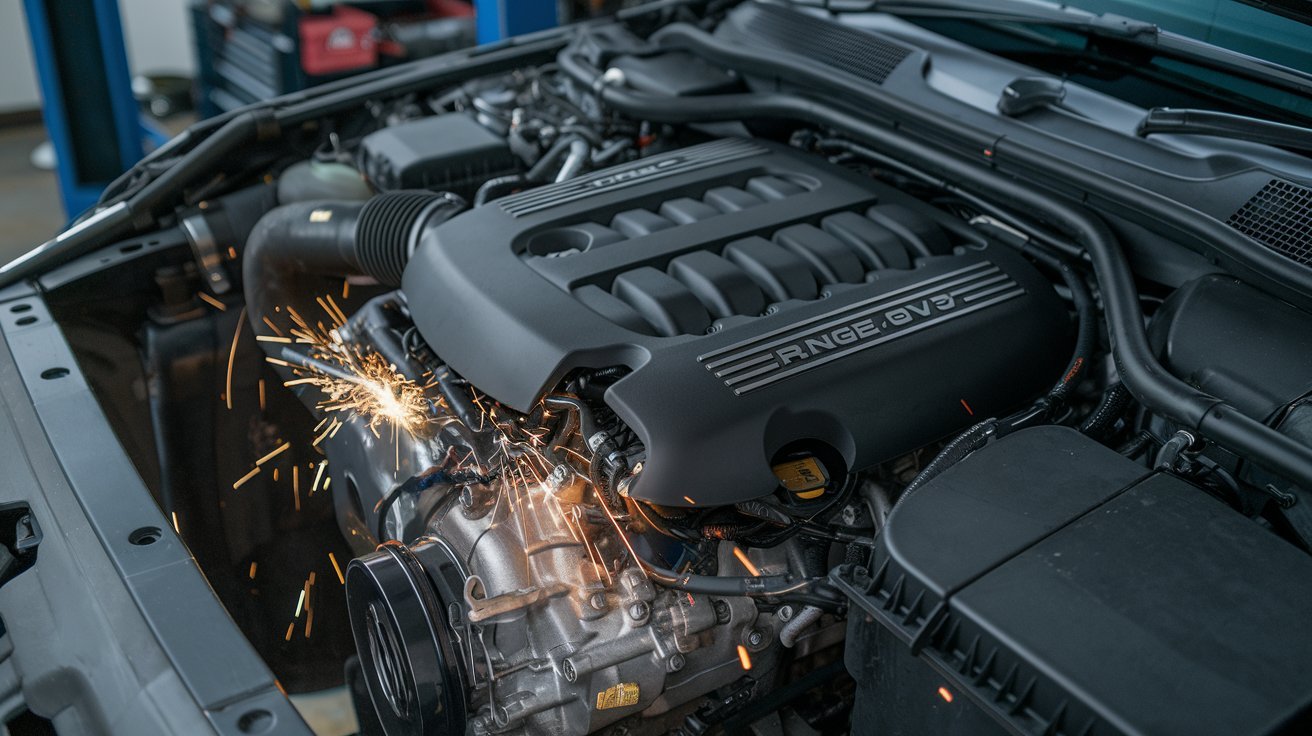
Range Rover Spark Plug Replacement in Dubai
Misfires, rough idle, difficult starting, hesitation, poor acceleration, or a check engine warning can involve worn or fouled spark plugs. They can also come from ignition coils, injectors, air leaks, fuel delivery, oil contamination, or mechanical faults, so the correct repair starts with the exact petrol engine and diagnostic evidence.
The answer near the start
Replace spark plugs when the vehicle specification or diagnosis supports it
Spark plugs ignite the air and fuel mixture in a petrol engine. A worn electrode, excessive gap, deposit, crack, oil fouling, incorrect application, or installation problem can weaken the spark and contribute to misfire. Replacement may be due as part of vehicle-specific maintenance or because inspection shows a plug-related fault.
A fault code does not automatically prove that the plug is the cause. It identifies where the engine control system detected a problem. The plug, coil, connector, injector, air and fuel conditions, and engine mechanical condition may all need to be considered before parts are approved.
The best booking information is the model, year, petrol engine, VIN or registration, dashboard warning, when the symptom occurs, recent service history, and whether oil or coolant has been found near the ignition components.
Petrol, diesel, hybrid, and electric are not the same
Petrol engines use spark plugs. Diesel engines use compression ignition and may use glow plugs for starting and combustion support. A petrol plug service should not be described as a diesel glow plug service.
Plug-in hybrid vehicles with a petrol engine still have spark plugs for that engine. Fully electric vehicles do not use spark plugs. The vehicle and powertrain must be identified before the page, part, or service is applied.
Match the symptom to the next check
When a spark plug inspection is reasonable
These symptoms can support an ignition inspection, but none of them should be treated as a plug diagnosis by itself.
| What you notice | What it could involve | Recommended next step |
|---|---|---|
| Intermittent misfire with no flashing warning | Plug wear, coil weakness, deposit, injector concern, air leak, or another cylinder-specific fault | Book diagnosis and note whether it occurs cold, hot, at idle, or under acceleration |
| Flashing engine warning and severe shaking | An active misfire that can require immediate attention | Reduce load, stop when safe, and ask the workshop whether recovery is appropriate |
| Oil found in a plug well | Upper engine sealing leak plus possible plug or coil contamination | Diagnose the oil source and ignition condition together rather than replacing plugs alone |
| Poor acceleration after recent plug work | Incorrect application, installation issue, damaged coil connector, disturbed component, or unrelated fault | Return for verification of the fitted parts, installation, and current fault data |
| No symptoms but service is due | Vehicle-specific maintenance requirement | Confirm the schedule from the exact VIN, model year, engine, and service history |
Narrow the cause before replacing parts
The diagnostic funnel before spark plug replacement
A misfire diagnosis should become more specific at each stage. The process starts with the symptom and operating condition, narrows to the affected cylinder, then separates spark plug wear from coil, injector, air, fuel, contamination, electrical, and mechanical causes.
Each stage should remove uncertainty. Spark plugs should be approved because the maintenance requirement or component condition supports replacement, not because one code names a cylinder.
Capture the exact symptom
Record the warning, starting behaviour, idle quality, acceleration concern, engine temperature, recent work, and whether the engine warning is steady or flashing.
Locate the fault pattern
Use fault data and live behaviour to determine whether the concern affects one cylinder, several cylinders, engine load, temperature, or another repeatable operating condition.
Inspect the plug and coil area
Check the plug, coil, connector, plug well, oil or water contamination, visible damage, and the application of any parts fitted during previous work.
Test competing causes
When the evidence points beyond the plug, assess injector operation, intake leaks, fuel delivery, wiring, voltage, compression, timing, or another mechanical condition.
Approve the repair and verify it
Replace plugs when the exact vehicle schedule or component condition supports it. After repair, compare the original warning, idle, acceleration, and cylinder behaviour under the conditions that produced the fault.
Common misdiagnosis
Plug, coil, injector, or engine fault: why the distinction matters
Replacing plugs can be correct maintenance and can solve a plug-related misfire. It cannot repair every fault that produces the same symptom. The decision should follow the condition of the parts and the evidence from the vehicle.
Spark plug concern
Wear, deposits, oil fouling, damaged insulation, excessive gap, an incorrect application, or an installation issue may affect the spark.
- Inspect the full set and compare cylinders
- Confirm the correct part for the engine
- Address the cause of unusual deposits
- Use the specified installation procedure
Ignition coil or electrical concern
A coil, connector, wiring issue, power supply problem, or moisture in the plug well can create a similar cylinder-specific misfire.
- Do not replace all coils without evidence
- Check contamination and connector condition
- Review whether the fault moves or remains
- Verify the repair under the original conditions
Fuel, air, or mechanical concern
An injector, intake leak, fuel pressure issue, compression concern, timing problem, or another engine fault can continue after new plugs are fitted.
- Use the fault pattern to guide further checks
- Do not hide a mechanical fault with repeated parts
- Investigate oil or coolant on the plug
- Explain what remains unconfirmed
Oil on a spark plug needs a source diagnosis. Oil inside the plug well may come from an upper sealing leak. Oil on the firing end can indicate a different internal or ventilation concern. The oil source and the ignition fault should be assessed together.
Replacement procedure
What the workshop should confirm during spark plug service
The exact access, plug type, quantity, tightening information, and additional steps depend on the engine. A service page should not give one universal installation instruction for every Range Rover.
Confirm application
Use the VIN, model year, engine, and parts information to confirm the correct spark plug application.
Prepare the area
Access is created without allowing dirt or loose material to enter the plug opening. Coils and connectors are handled carefully.
Read the old plugs
Wear, deposits, oil, damage, and differences between cylinders are recorded because the old plug condition can guide further diagnosis.
Fit correctly
The correct plug is installed using the procedure and tightening information for the engine. Generic torque values are not used.
Check the result
The engine is checked for the original symptom, warning behavior, smooth running, and any remaining fault that needs separate diagnosis.
The removed parts are diagnostic evidence
What the old spark plugs can reveal
When access permits, the removed plugs should be kept in cylinder order and compared rather than mixed together. Differences between cylinders can be more useful than the appearance of one plug by itself. The findings still need to be interpreted with fault data, engine behavior, and the service history.
Similar condition across the set may support scheduled replacement without pointing to one abnormal cylinder. The correct application and service requirement still need confirmation.
Deposits can accompany poor combustion, repeated short running, incorrect application, fuelling concerns, or another operating condition. Fitting a new plug without correcting the cause can allow the problem to return.
Oil inside the plug well and oil on the firing end are different findings. The first can involve an upper sealing leak. The second may justify a wider engine or ventilation assessment.
A cracked insulator, damaged thread, abnormal electrode, excessive gap, or one plug that looks unlike the others should be documented before the repair route is chosen.
NGK explains that carbon, fuel, or oil fouling can contribute to misfire or failure to start, and that correct application and installation matter. See the official NGK spark plug technical information. The source helps interpret plug condition but does not diagnose an individual Range Rover.
Maintenance without a guessed interval
When should Range Rover spark plugs be replaced?
There is no responsible single mileage interval for every Range Rover petrol engine. Plug material, engine family, model year, market specification, service programme, operating conditions, previous parts, and vehicle history can change the requirement.
Use the vehicle’s service history, service indicator, official owner information, and the exact engine specification. A workshop should confirm whether replacement is due, already completed, or recommended because of a diagnosed condition.
Replace when the exact vehicle’s maintenance information requires it. Record the date, mileage, plug application, and work completed.
Replace when inspection shows wear, damage, fouling, or another plug-related issue. Correct the reason for abnormal deposits where possible.
Do not assume new plugs alone are enough. Identify why the plug or well is contaminated and whether the coil or engine needs further checks.
Confirm which plugs were fitted, whether they match the engine, and whether the original symptom changed after the work.
Land Rover’s official iGuide provides vehicle-specific owner information. The service requirement should be confirmed from the exact vehicle and engine rather than a generic online interval.

Before you approve the quotation
Questions that make the repair decision clearer
- Is replacement due by the exact vehicle schedule, or is it recommended because of a fault
- Which cylinder or operating condition produced the concern
- What does the removed plug condition show
- Have coil, connector, oil contamination, injector, air, and mechanical causes been considered where relevant
- Which plug application is being fitted and how was it confirmed
- Does the quotation include all plugs, access items, diagnosis, and verification
- What should happen if the misfire remains after plug replacement
Key takeaway
New spark plugs are not a substitute for diagnosis, and diagnosis is not a reason to ignore scheduled maintenance. The right route depends on why the vehicle is being inspected.
For a maintenance visit, confirm the exact vehicle requirement and service history. For a misfire, confirm whether the plug is worn or fouled and whether another ignition, fuel, air, electrical, or mechanical fault is present.
Send the model, year, engine, warning photo, and a short description of when the symptom occurs. This helps the workshop plan the first check without promising a part before the evidence is known.
Spark plug questions
Frequently asked questions
Do all Range Rover models have spark plugs?
No. Petrol engines use spark plugs. Diesel engines do not use petrol spark plugs and may use glow plugs. Plug-in hybrid vehicles with a petrol engine still use spark plugs for that engine. Fully electric vehicles do not use spark plugs.
Can worn spark plugs cause a Range Rover misfire?
Yes, worn, fouled, damaged, incorrectly specified, or incorrectly installed plugs can contribute to misfire. Coils, injectors, air leaks, fuel delivery, wiring, oil contamination, and mechanical faults can create the same symptom, so the cause should be confirmed.
Should all spark plugs be replaced together?
For scheduled maintenance, the service plan commonly treats the set for that engine as one service item. Fault diagnosis can reveal a cylinder-specific issue, but the quotation should explain whether the full set or individual components are recommended and why.
Can I drive with a flashing engine warning and misfire?
A flashing warning with severe shaking can indicate an active misfire. Reduce load, stop when safe, and contact the workshop. Continuing can worsen the fault and may affect the exhaust aftertreatment system. Recovery may be the safer route.
How much does Range Rover spark plug replacement cost in Dubai?
The price depends on the exact engine, number and type of plugs, access, related parts, diagnosis, contamination, and work included. The vehicle and service requirement must be confirmed before an accurate quotation is given.
Will new spark plugs fix poor fuel economy?
They may help when worn or fouled plugs are contributing to inefficient combustion. Fuel economy can also change because of driving conditions, tyres, air and fuel faults, sensors, engine condition, or other systems. The full symptom should be assessed.
Book maintenance or diagnosis
Tell us whether this is a scheduled plug service or an active engine problem
Send the Range Rover model, year, petrol engine, registration or VIN, warning message, symptom pattern, and recent service history. We will advise the appropriate booking for spark plug replacement or further misfire diagnosis at our Dubai workshop.