

Independent Land Rover workshop in Dubai
Land Rover Discovery Repair Dubai
Diagnosis, repair and maintenance planning for Discovery 3, Discovery 4 and Discovery 5. We start with the exact generation, warning, symptom and operating condition, then test the system before recommending parts.

Which Discovery do you drive?
The Discovery name spans several generations with different engines, electrical architectures, suspension systems and control strategies. A useful diagnosis starts by identifying the vehicle correctly.
LR3 and Discovery 3
Older Discovery 3 vehicles can present mechanical wear, air suspension concerns, cooling faults, electrical warnings and driveline symptoms that need generation-appropriate testing. The engine and market specification still matter before parts are selected.
LR4 and Discovery 4
Discovery 4 adds its own combinations of engine, gearbox, chassis and electrical systems. A ride-height warning, harsh shift, coolant loss or multi-module fault should be mapped to the exact vehicle rather than treated as a generic Land Rover problem.
L462 and later Discovery
Later Discovery models add newer electronics, driver-assistance features, software dependencies and powertrain variations. For generation-specific guidance, use the Discovery 5 L462 repair guide.
Start with the symptom, not the part name
If your Discovery is leaning, overheating, losing power, shifting harshly, showing several warnings or taking on water, the symptom tells us where to begin. It does not prove which component has failed. The same warning can be caused by a failed component, wiring, power supply, leakage, a mechanical condition, previous repair work or a control issue.
That is why we do not recommend a compressor only because the suspension is low, a gearbox only because a shift feels harsh, or a pump only because the engine has a fuel-related fault code. The vehicle, symptom and evidence must agree before the repair scope is approved.
A useful enquiry includes the model year, engine if known, exact dashboard message, when the problem appears and whether anything was recently repaired. If the Discovery was recovered, driven through standing water, used off road, heavily loaded or recently had battery, tyre, windscreen, suspension or body work, include that information too.
Discovery problems we investigate
These are diagnostic starting points, not remote conclusions. Each symptom can involve more than one system, and the correct test path depends on the generation and evidence found on the vehicle.
Engine and cooling
Overheating warnings, coolant loss, oil leaks, rough running, smoke, reduced power, unusual fan activity or mechanical noise require the engine and cooling system to be checked together rather than guessing from the visible leak alone.
Air suspension and ride height
A low corner, slow rise, suspension warning or repeated compressor operation can involve leakage, compressor performance, valve control, height information, wiring, power supply or mechanical wear.
Gearbox and driveline
Delayed engagement, harsh shifts, shudder, clunks or vibration may involve the transmission, engine operation, mounts, transfer case, shafts, joints, differentials, tyres or software. Road testing must be done only when safe.
Electrical and warning messages
Several warnings at once can come from more than one genuine fault, but battery condition, charging, grounds, network communication, moisture or recent work can also disturb several modules together.
Braking, steering and wheel behaviour
Pulling, vibration, grinding, steering heaviness, uneven tyre wear or stability warnings need a safety-led inspection of tyres, brakes, steering, suspension, wheel-speed information and alignment-related evidence.
Water ingress and cabin systems
Damp carpets, roof staining, condensation, tailgate faults or intermittent rear electronics require the water entry path to be found. Drying the cabin or replacing a wet module without correcting the source leaves recurrence likely.
Can you keep driving the Discovery?
The answer depends on the warning, vehicle behaviour and what can be checked safely. Use this as a risk guide, not as a substitute for inspection.
A minor non-safety convenience fault, isolated trim issue or warning with no change in steering, braking, temperature, fluid level or vehicle stability may allow a normal workshop booking. Record the warning before restarting if possible.
An intermittent suspension message, mild vibration, weak AC, small visible seepage or warning that has changed vehicle behaviour needs individual assessment. Avoid long journeys, towing, heavy loading or off-road use until the cause is understood.
Do not continue normal driving with an oil-pressure warning, severe overheating, smoke, rapid fluid loss, strong fuel smell, serious brake or steering difficulty, major suspension collapse or harsh mechanical noise that is getting worse.
A code is evidence, not a parts order
Discovery diagnostics should connect the owner complaint, stored information, live data or measurements and the physical condition of the vehicle. A diagnostic trouble code describes a condition detected by a control module. It does not automatically identify the component that must be replaced.
For an electrical concern, useful evidence can include battery capacity, charging behaviour, voltage drop, grounds, connector condition and network communication. For air suspension, it can include parked height, leak evidence, compressor duty, pressure behaviour and sensor information. For cooling faults, the test may require a cold visual baseline, pressure checks, temperature data, fan response and evidence of circulation.
When a fault is intermittent, a single workshop restart may not reproduce it. The next step can be controlled reproduction, data recording or a staged test plan. If one confirmed fault prevents further diagnosis, that limitation should be explained before additional work is approved.
- Confirm the exact vehicleGeneration, model year, engine, drivetrain and relevant equipment.
- Record the original complaintWarning, noise, leak, vibration or behaviour and the conditions that trigger it.
- Inspect and scan the relevant systemsUse physical checks and data together rather than relying on codes alone.
- Test the most likely causesMeasure, pressure-test, leak-test or electrically test the circuit supported by the evidence.
- Verify the repair against the original symptomRepeat the relevant functional, scan, leak or road check when safe.

What the first useful checks may look like
This table shows how the starting evidence changes the diagnostic route. It is deliberately broad because Discovery 3, Discovery 4 and Discovery 5 do not share one universal component list.
| What you notice | What may be involved | A sensible first direction |
|---|---|---|
| One corner sits low after parking | Air leakage, strut or spring condition, valve control, height sensor information, compressor duty, wiring or power supply | Record parked height on level ground, inspect for leakage, scan suspension data and evaluate compressor operation before choosing a part. |
| Coolant smell or rising temperature | External leak, reservoir or hose connection, radiator, pump, thermostat, fan control, circulation or internal engine condition | Allow the engine to cool safely, establish a cold baseline, inspect for residue and use pressure and temperature evidence where appropriate. |
| Several warnings at start-up | Battery capacity, charging response, grounds, network faults, moisture, wiring or several genuine system faults | Check power supply and network evidence before assuming multiple expensive control units failed at the same time. |
| Harsh shift or driveline vibration | Engine performance, mounts, transmission control, fluid leakage, transfer case, shafts, joints, differentials, wheels or tyres | Confirm when the symptom occurs, scan related modules and inspect mechanical play or leakage before deciding the gearbox is responsible. |
| Steering pull or braking vibration | Tyres, wheel condition, brake friction parts, hydraulics, steering, suspension, wheel-speed data or geometry | Treat safety first. Inspect mechanical condition and tyre evidence, then measure or scan the systems supported by the complaint. |
| Damp carpet or intermittent cabin electronics | Roof, glass, body seams, drains, door or tailgate sealing, wiring, connectors or modules exposed to moisture | Find the water path, document affected areas and dry or repair electrical components only after the source is controlled. |

Heat, dust and traffic change the evidence
Dubai conditions can make existing weaknesses easier to notice. Extended idling can increase cooling and electrical load. Dust can affect filters and airflow. Repeated short journeys and long parking periods can influence battery state. Heat can make marginal seals, hoses and cooling components more obvious. Off-road use can add underbody, suspension and tyre evidence that a city-only vehicle may not show.
These conditions do not justify inventing a universal shorter service interval for every Discovery. Maintenance should follow the exact vehicle, its history and the information applicable to that model year. Land Rover states that vehicles from 2013 onward can use its Online Service History to keep a permanent maintenance record and view upcoming service needs.
When service history is incomplete, establish a baseline instead of guessing what has already been done. Record mileage, scan status, fluid evidence, tyre condition, brake wear, battery health, cooling performance, suspension stance and any signs of previous repair or water entry. That baseline helps separate current maintenance needs from an active fault that requires diagnosis.
Do not keep restarting the vehicle simply because the warning clears after a key cycle. An overheating event, heavy oil or coolant loss, smoke or strong fuel smell can turn a contained fault into more serious damage if the vehicle continues to be driven.
Repair, rebuild or replace only after the fault is confirmed
The right option depends on what failed, the condition of the complete assembly, secondary damage, serviceability, parts availability and whether the finished work can be tested reliably.
Repair
A focused repair can make sense when the failure is local and the rest of the system remains serviceable. Examples can include a confirmed hose, connector, wiring section, seal, mount or replaceable subcomponent, provided the root cause has been identified.
Rebuild
A rebuild can be considered when the assembly can be disassembled, wear and damage can be measured, suitable internal parts and technical information are available and the completed unit can be verified before return to service.
Replacement
Replacement may be more appropriate when damage is extensive, structural, outside a reliable repair limit, or when previous work has compromised the assembly. The chosen part still needs correct matching and any required programming or calibration.
What should be clear before you approve major work
Common diagnostic shortcuts that can cost more
A leak or incorrect height information can increase compressor duty. Test why the system cannot maintain height before treating the compressor as the only fault.
Engine output, mounts, driveline play, tyres, voltage and control faults can change how a shift feels. The complaint needs to be reproduced and separated from connected systems.
A control module can report a circuit or communication problem without being the failed part. Power, ground, wiring, connectors and network evidence should be checked where relevant.
Water can travel behind trim and appear far from the source. The leak path must be controlled before affected connectors or modules are treated as a completed repair.
What a useful Discovery inspection should document
A Discovery can drive normally during a short test and still have information worth documenting. This is especially important after buying a used vehicle, before a long UAE trip or when repair history is incomplete.
Start with the vehicle on level ground. Compare ride height, tyre specification and wear, visible fluid evidence and underbody condition. With the engine cold when appropriate, note fluid levels and obvious residue. Record dashboard messages before clearing anything. Test the functions that matter to how the vehicle is used, including tailgate, cameras, climate control, seat functions and parking systems where fitted.
During a safe road test, observe steering, braking, vibration, engine temperature, shift behaviour and suspension response. After the drive, check again for new leakage, changed ride height, unusual fan behaviour or warnings that appeared only under load.
The objective is not to predict every future repair. It is to create a reliable starting point so the next change can be compared with known evidence. Keep invoices, diagnostic findings, alignment or calibration records and useful photographs with the service history.
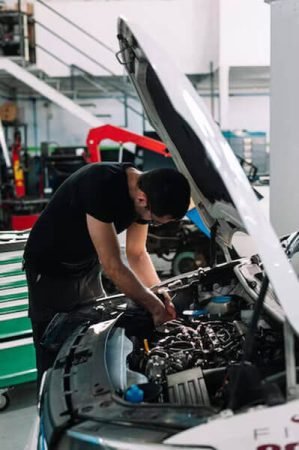
What we need to know before the workshop visit
You do not need to diagnose the vehicle yourself. The most useful information is a clear record of what changed and when. Send the details below so the first inspection can be planned around the actual complaint.
If you are unsure whether the vehicle is safe to move, describe the warning and vehicle behaviour before driving it. The broader Land Rover repair hub can also help identify the correct model path when the vehicle designation is unclear.
Land Rover Discovery repair FAQs
Why is my Discovery sitting low on one side?
An air leak, valve issue, height-sensor information, compressor performance, wiring or mechanical suspension condition may be involved. Record which corner changes and how long the vehicle was parked. Test the system before replacing a compressor or air spring.
Can a weak battery cause several Discovery warnings?
Low-voltage instability can affect start-up and module communication, so battery capacity, connections, grounds and charging behaviour are useful early checks. Persistent warnings or physical symptoms still need their own diagnosis.
Does a transmission warning mean the gearbox needs replacement?
No. The warning needs to be considered with shift behaviour, engine performance, voltage, stored data, fluid leakage and driveline condition. A gearbox decision should follow testing, not the warning message alone.
What should I do if my Discovery overheats?
Stop safely and allow the vehicle to cool. Do not open a hot cooling system. If the warning is severe, coolant is rapidly escaping, there is smoke or the engine sounds abnormal, arrange recovery rather than continuing to drive.
Why does water keep returning inside the cabin?
The visible damp area may not be the entry point. Water can travel behind roof, pillar, door or load-space trim. The repair needs to identify and control the source before drying or replacing affected electrical parts.
Is Discovery Sport the same vehicle as Discovery?
No. Discovery and Discovery Sport are separate Land Rover model lines with different platforms, systems and specifications. This page is intended for Discovery 3, Discovery 4 and Discovery 5 owners rather than Discovery Sport repair intent.
How often should my Discovery be serviced in Dubai?
Use the maintenance information for the exact model year, engine and market rather than a universal mileage figure copied across every Discovery generation. Service history, vehicle condition and current maintenance information should be reviewed together.
Can you quote a major Discovery repair from a fault-code photo?
A photo is useful for preserving the exact message, but it cannot confirm the failed component or the full repair scope. A responsible quote for major work should follow vehicle identification and the level of testing needed to establish the fault.
Send the warning, model year and what the vehicle is doing
We will use the symptom and generation to plan the first inspection, then separate the confirmed fault from related wear and optional work before major parts are approved.