

5.0 V8 Supercharged AJ133 Common Problems
The AJ133 5.0 V8 Supercharged can present with coolant loss, cold-start rattle, misfire, oil leakage, supercharger noise or reduced performance. The useful diagnosis is to separate cooling, lubrication, combustion, air-path and mechanical evidence before parts are approved, especially when Dubai heat or recent repair work changes when the symptom appears.
When a 5.0 V8 Supercharged symptom needs recovery
The AJ133 can produce several complaints that feel similar from the driver seat, but urgency changes when a warning is paired with fluid loss, temperature rise or a mechanical noise. A red oil pressure warning, abnormal temperature rise, heavy mechanical knock, rapid coolant loss, dense continuing smoke or a sudden severe misfire should be treated as a stop driving condition. Switch off safely and arrange recovery. Repeated restarts can remove useful evidence and can increase damage when lubrication or cooling is uncertain.
A reduced performance message without noise, overheating, fluid loss, or unsafe response may permit a cautious move to a safe location. That is not permission to continue normal use. Record the warning order, engine temperature, road speed, fuel level, and whether the concern appeared after a cold start, traffic idle, or acceleration. The sequence helps separate protection strategy from the component that first moved outside its expected range.
Heat changes the diagnostic picture in Dubai
High ambient temperature, slow traffic and repeated heat soak can expose a system that is already close to its limit. Heat is useful context, but the first repair decision should still follow measured response rather than assumptions.
Fan and radiator performance under load
The workshop should compare fan command, actual response, radiator condition and airflow when the engine bay is fully warm. A temperature rise in traffic can follow a different path from one that appears at road speed.
Pressure, pump and thermostat behaviour
Cold pressure evidence, hose and joint condition, pump circulation, thermostat behaviour and coolant quality help separate a leak from a circulation or control problem.
Heat can expose a weak supply margin
Fans, pumps, air conditioning and control modules add electrical load at the same time. Charging voltage and grounds should be considered when several warnings appear together during hot idle.
A rattle is not a timing-chain diagnosis
Owners often describe a brief cold start rattle, a warm idle tick, a dull knock, a belt area chatter, or a supercharger related whine using the same word. Location, duration, engine speed, oil temperature, and load make the description useful. A recording from outside the vehicle may help, but it cannot replace controlled listening and mechanical checks.
Before major timing work is approved, the evidence should distinguish valve train, timing drive, accessory drive, exhaust leakage, injector sound, supercharger drive, and lower engine noise. Oil condition and pressure, recent service history, stored correlation faults, and inspection findings need to agree. Parts should not be selected from a noise description alone.

Cooling loss and visible leaks follow different paths
Coolant odour after parking, residue near a joint, a falling reservoir level, or a temperature warning are related clues, not the same diagnosis. Pressure testing when cold, inspection after heat cycling, and examination of the valley and surrounding components may be required. Never remove the cap from a hot pressurised system.
Oil can also travel across covers, housings, wiring, undertrays, and airflow paths. The lowest wet point is not automatically the source. The useful process is photograph, clean, trace, observe, and verify. Crankcase ventilation and pressure may matter when more than one seal area appears wet. After repair, the engine should be rechecked hot and again after cooling.
Supercharger response must be tested as a system
A loss of response or a new whine should be traced through the full air and drive path. The supercharger is only one part of the system that creates and controls airflow.
Filters, ducting, throttle operation, joints and charge-path sealing should be checked for restriction or leakage before the rotating assembly is blamed.
Belt condition, nearby pulleys, bypass operation and control strategy can change response or noise. A workshop should reproduce the symptom without repeatedly forcing the engine under unsafe load.
Pressure, temperature, throttle and related operating data under a controlled load show whether the system is delivering what the control module is asking for.
Misfire diagnosis begins with the pattern
A flashing engine warning, shaking under load, rough cold start, or isolated warm idle disturbance should be documented by cylinder, operating state, and recurrence. Ignition coils and spark plugs are possible contributors, but injector operation, air leakage, compression, wiring, voltage stability, fuel quality, and mechanical condition can create similar evidence.
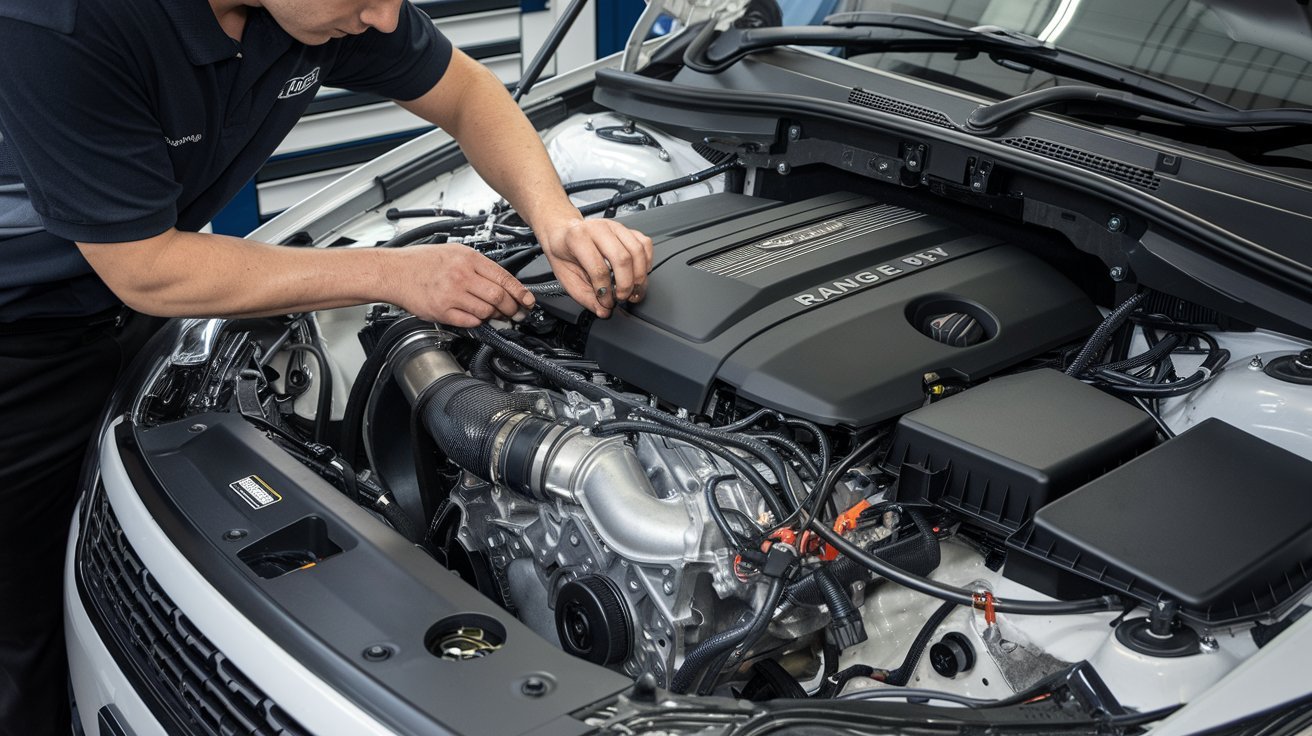
Replacing a full set of parts because one cylinder logged a misfire can hide the original pattern. A defensible test may include code freeze frame review, live misfire counters, ignition component inspection, careful component substitution where appropriate, injector and fuel pressure evidence, leak testing and mechanical assessment. If the engine is shaking, hesitating or repeatedly logging cylinder-specific faults, an engine misfire diagnosis can establish whether ignition, injection, air leakage or compression is responsible before coils or injectors are approved. The final repair should then be verified in the condition that originally caused the fault.
Oil level, oil quality, and oil pressure answer different questions
The displayed or measured level shows quantity under a defined checking procedure. It does not prove that the correct oil is present, that it is uncontaminated, or that pressure and flow remain suitable when hot. Service invoices should identify specification, filter, date, and odometer reading. Unknown history increases the value of a baseline rather than justifying an immediate conclusion.
If a pressure warning appears, the priority is to stop the engine and establish whether the indication reflects actual pressure, a sensing or wiring issue, or another operating condition. Mechanical measurement, filter inspection, oil examination, and controlled listening may be needed. Continuing to drive while waiting for a second warning is not a safe diagnostic method.
Previous work can be the strongest clue
A symptom that begins after cooling, supercharger, ignition, injector, timing, or engine work deserves a careful review of what was disturbed. Connector seating, hose routing, trapped air, fluid specification, fastener procedure, software adaptation, and retained debris can change the outcome. This does not prove workmanship error. It tells the technician where the timeline became different.
Bring invoices, part numbers, photographs, old diagnostic reports, and the date the behaviour changed. If a replacement engine or major assembly was fitted, VIN based vehicle identity is not enough on its own. The installed component identity, transferred ancillaries, calibration state, and supporting cooling and lubrication systems should be recorded.

Repair, rebuild, or replacement needs measured evidence
The repair depth should match the evidence, not the size of the symptom. Before major work is approved, ask what measurement supports the recommendation and what will be verified after the work.
Targeted repair
Use a focused repair when the failed component or circuit is clearly identified and surrounding engine evidence remains sound. The quotation should state what is being repaired and how the original complaint will be rechecked.
Engine rebuild
A rebuild discussion becomes reasonable when pressure, leakage, oil, filter, overheating or component inspection demonstrates internal damage. At that point, a deeper engine repair assessment can confirm whether the damage is suitable for a defined machining and parts scope or whether another route is safer.
Engine replacement
Replacement needs its own evidence around engine condition, compatibility, donor or remanufactured identity, transferred parts and the supporting cooling and lubrication systems that will protect the replacement.
The handover should prove the complaint is resolved
Clearing codes and seeing a quiet idle is not a complete verification. The final check should return the engine to the temperature, load, and road condition that originally exposed the concern, provided it is safe to do so. Cooling stability, leaks, pressure evidence, misfire counts, requested and actual airflow or boost values, and warning history may all be relevant.
The invoice should identify parts and fluids, explain any remaining advisory findings, and record the verification performed. Photographs before and after work create a useful baseline. Where the repair changes learned values or configuration, the required setup and confirmation should be completed before handover.
Starting behaviour separates supply, ignition, and mechanical evidence
The first few seconds after a start can point the workshop toward very different tests. Treat the starting pattern as evidence before parts are moved.
Battery capacity, terminals, grounds, voltage drop and starter load move to the front of the test plan.
Fuel pressure build, injector sealing, ignition quality, air leakage and mechanical compression may need comparison.
Preserve cylinder misfire activity, fuel and ignition evidence, airflow information and the conditions present immediately after firing.
Record how long the engine was parked hot and whether the behaviour changed after refuelling or recent repair work.
Stable voltage is required before scan data is interpreted. Low cranking voltage can add network and sensor codes that are secondary to the event, so supply should be stabilised before control modules are blamed.
If the engine starts with a strong fuel odour, severe shaking or a flashing warning, switch it off. Repeated attempts can increase exhaust temperature and remove useful evidence.
Air conditioning load and traffic idle are useful test conditions
Some complaints appear only after the engine bay is heat soaked and electrical and cooling loads are high. Note whether the idle changes when the compressor engages, whether fan operation is audible, whether temperature remains stable, and whether the warning occurs after moving away from traffic. These observations help reproduce the symptom without assuming that the air conditioning system caused it.
The workshop can compare idle control, throttle response, misfire activity, charging voltage, fan command, coolant temperature, and intake temperature as load changes. A marginal ground, weak charging system, cooling airflow issue, or existing misfire may become visible at this point. The correct repair follows the measurement that departs first.
Final verification should include a comparable hot idle period and a controlled drive. A repair that passes only on a cold engine has not addressed a heat related complaint. Record the conditions used so the owner understands what was actually tested.
Safe owner checks end before components are disturbed
Useful evidence can be collected without opening, disconnecting or repeatedly stressing the engine.
Useful checks with the engine cold
- Record coolant and oil level using the vehicle procedure.
- Photograph fresh stains or visible residue.
- Note starting behaviour and the exact dashboard warning.
- Capture a safe recording of the sound and whether air conditioning or traffic load was present.
Leave these checks to the workshop
- Do not open a hot cooling system.
- Do not work around moving belts or fans.
- Do not disconnect ignition parts on a running engine.
- Do not repeatedly clear faults or hold the engine at speed to make a knock easier to hear.
If recovery is needed: tell the workshop whether the engine is still running, which red warnings are present and whether coolant or oil is actively escaping. That helps plan the first inspection without increasing the risk.
Parts provenance matters after major V8 work
Record the identity, part number, revision, and condition of engines, superchargers, control modules, injectors, and major cooling components. Physical fit alone does not prove compatibility. Transferred sensors, pumps, wiring, and intake parts can carry the earlier fault into a replacement assembly.
Ask which supporting systems were cleaned, tested, or replaced and why. After installation, confirm software or configuration needs, oil pressure, cooling stability, fuel and ignition balance, leak-free operation, and the road conditions used for verification. This record protects the next ownership decision.
Frequently asked questions about 5.0 V8 Supercharged problems
Can I drive with a coolant warning on an AJ133 V8?
Stop safely if temperature is rising, coolant is being expelled, the heater suddenly turns cold while the engine is hot, or the level is dropping quickly. A stable amber message still deserves diagnosis, but red temperature warnings or rapid coolant loss should be treated as recovery situations.
Does a cold-start rattle mean the timing chains have failed?
No. The sound needs location, duration, oil condition, pressure context, stored correlation faults and mechanical inspection. Accessory drive, exhaust leakage, valvetrain and supercharger drive noise can overlap with timing-related complaints.
Can an AJ133 misfire damage the catalytic converters?
A severe continuing misfire can send unburned fuel into the exhaust and raise catalyst temperature. If the engine is shaking heavily or the warning is flashing, stop repeated driving and arrange diagnosis. Cylinder-specific evidence should identify whether ignition, injection, air leakage or compression is responsible.
Does a new supercharger whine mean the supercharger needs replacement?
Not automatically. Belt condition, pulleys, bypass operation, air-path restriction, sealing and the requested versus actual response should be checked before the rotating assembly is condemned.
Why can an oil leak return after a seal has been replaced?
The original source may have been higher than the wet area that was repaired, or crankcase pressure may be encouraging leakage at more than one point. The useful process is to document the pattern, clean it, trace it through a heat cycle and confirm the source before another seal is approved.
When does an AJ133 need a rebuild instead of a targeted repair?
A rebuild discussion should follow measured internal evidence such as abnormal pressure, cylinder leakage, metal or debris findings, overheating damage or direct component inspection. Mileage, noise or one fault code alone are not enough to justify a rebuild.
Can Dubai heat cause AJ133 cooling or electrical faults?
Heat can expose a marginal cooling, charging or connection problem because fan, pump and air-conditioning demand rise together. Ambient temperature is useful reproduction context, but the failed measurement still needs to be identified before parts are approved.
What should I send before booking AJ133 diagnosis?
Send the VIN, model and year, exact warning wording, whether the symptom is cold or hot, any coolant or oil loss, a safe recording of the noise or misfire, and details of recent cooling, ignition, supercharger or engine work.
Book diagnosis from the symptom timeline
Share the VIN, warning sequence, temperature, noise or smoke conditions, and recent work. The next step should be based on evidence, not a guessed parts list.