

3.0 SDV6 and TDV6 Common Problems
A warning light, smoke, oil leak or new engine noise does not identify the failed part. This guide explains how to separate urgent symptoms from clues that can be diagnosed methodically on Range Rover and Land Rover 3.0 litre V6 diesel vehicles.
What should you do when the diesel changes?
Start with the operating pattern and the risk level. The same warning can mean something very different when it appears with a heavy knock, overheating, smoke or rapid fluid loss.
Red warnings or severe mechanical symptoms
Arrange recovery if oil pressure remains low, temperature rises abnormally, coolant or oil is being lost quickly, the engine develops a heavy knock, or dense smoke continues.
Reduced performance without severe warning signs
If there is no harsh noise, overheating or rapid fluid loss, a cautious move to a safe place may be possible. Normal driving should not continue until the cause is understood.
Record what changed before the visit
Note cold or hot operation, idle or load, smoke colour, warning wording, fluid levels and whether the noise follows engine speed. That timeline often narrows the first test.
Read smoke by colour, timing and engine load
Smoke becomes useful when colour is combined with when it appears, how long it lasts and what the engine is doing at the time. The goal is to narrow the system that needs testing rather than jump straight to an injector, turbo or internal-engine conclusion.
Black or dark smoke
Dark smoke can reflect too much fuel for the available air. Intake restriction, boost leakage, airflow measurement, turbo control, exhaust recirculation behaviour and injector operation may all influence the result. Requested and measured air and boost data should be compared before a major part is named.
Blue-grey smoke
Blue-grey smoke can point toward oil entering the combustion or intake path, but the entry route matters. Turbo sealing, crankcase ventilation, oil level, cylinder condition and oil retained in pipework after earlier work need separate checks.
White vapour or smoke
Brief condensation differs from persistent white exhaust output. Coolant loss, incomplete combustion, injector behaviour and low-temperature operation can create different patterns. Persistent output with overheating, misfire or fluid loss needs prompt inspection.
Do not remove the coolant cap when the system is hot. If the vehicle overheats, switch off safely and arrange recovery.
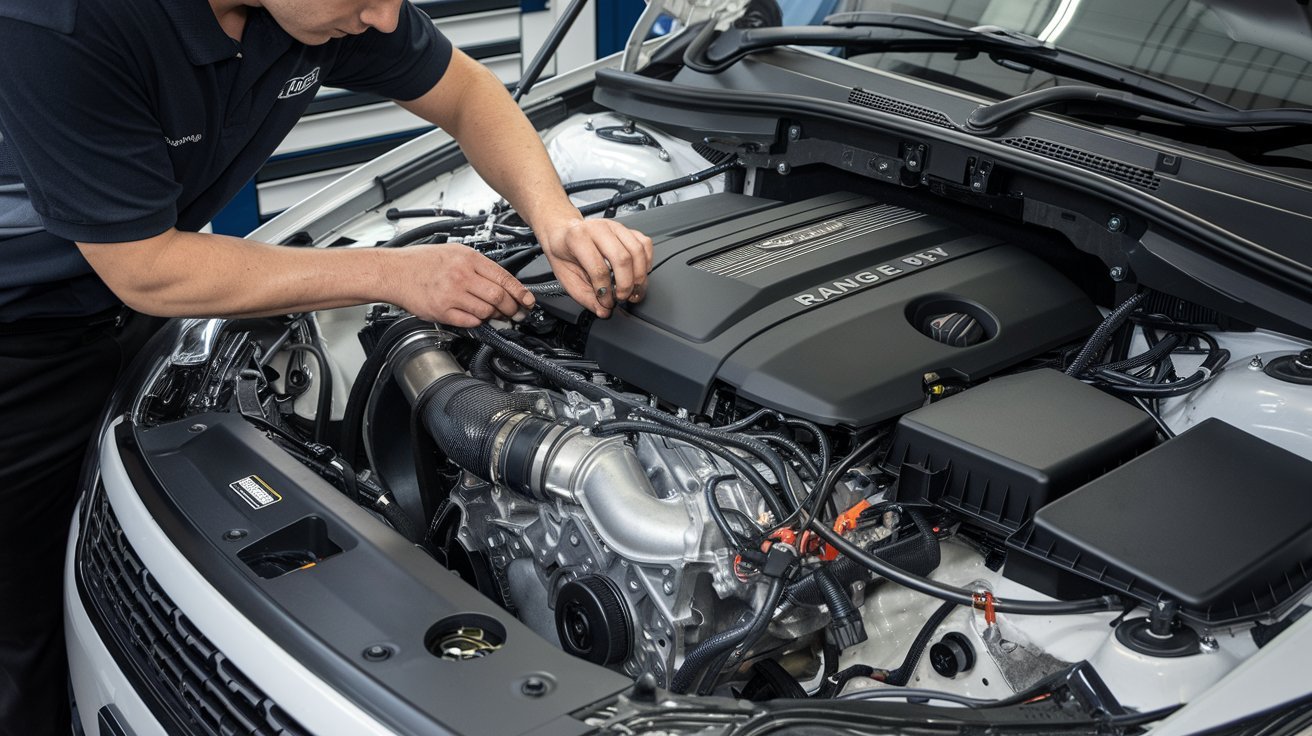
Oil condition is evidence, not merely a level
The dipstick level is only one part of lubrication assessment. Correct oil specification, service history, filter quality, pressure behaviour, contamination, external leakage and the condition of removed components can change the diagnostic route. An engine can display an acceptable level yet still have a pressure, circulation or dilution concern.
A rising level may require investigation as seriously as a low level. Fuel dilution or another contaminant can alter viscosity. An unexplained drop may reflect leakage or consumption. The first task is to confirm the reading on level ground using the procedure appropriate to the vehicle, then compare it with history rather than repeatedly topping up without finding the reason.
Where a serious internal concern is suspected, diagnosis may include mechanical pressure measurement, inspection of the oil and filter for debris, assessment of noises at controlled speeds and review of stored data. Findings must be interpreted together. A single code rarely proves bearing, crankshaft or oil-pump condition.
Five systems can create one loss-of-power complaint
Air intake and metering
Air filters, ducting, mass-airflow measurement and restrictions affect calculated engine load. Loose connections or contaminated readings can imitate a more expensive fault. Visual inspection and live-data comparison should come before assumptions.
Boost production and control
Turbocharger condition is only part of the circuit. Actuation, vacuum or electronic control, charge-air hoses, intercooler connections and pressure sensors influence delivered boost. Requested-versus-actual data under a controlled load helps locate the deviation.
Fuel delivery and combustion balance
Fuel quality, rail-pressure behaviour, injector correction information and leak-off testing may be relevant. Correction values are clues, not automatic instructions to replace injectors. Mechanical condition and electrical integrity must be considered.
Exhaust flow and emissions control
Backpressure, exhaust-gas recirculation and diesel particulate filter state can influence response. Regeneration history and sensor plausibility matter. Cleaning or forcing a regeneration without confirming safe operating conditions can miss the cause.
Cooling and protection strategy
Temperature information can cause the control system to limit performance. Coolant level, leaks, fan operation, thermostat behaviour and sensor accuracy should be checked before treating reduced power as an isolated boost problem.
A new knock, rattle or whistle needs location evidence
Describe a noise by operating condition rather than by a guessed component. Does it appear only during a cold start, at warm idle, during light acceleration, under sustained load, or as the engine returns to idle? Does it change when the air-conditioning load changes? Is it heard at the front drive, top of the engine, bellhousing area, intake path or beneath the vehicle?
A sharp combustion-related knock, a dull mechanical knock, belt-drive rattle and air leak can sound similar in a phone recording. Inspection may use controlled listening, belt-drive isolation where appropriate, scan data, oil-pressure evidence and checks for exhaust or intake leakage. The vehicle should not be repeatedly revved to reproduce a heavy or unfamiliar knock.
The 3.0-litre TDV6 and SDV6 labels cover vehicles with different calibrations, model years and installations. Parts selection and technical procedures must follow the VIN and exact build information. Output badges alone are not a safe parts catalogue.
If timing service history is missing or unclear, use the Range Rover timing belt guide to understand the records and vehicle details needed before parts or intervals are assumed.
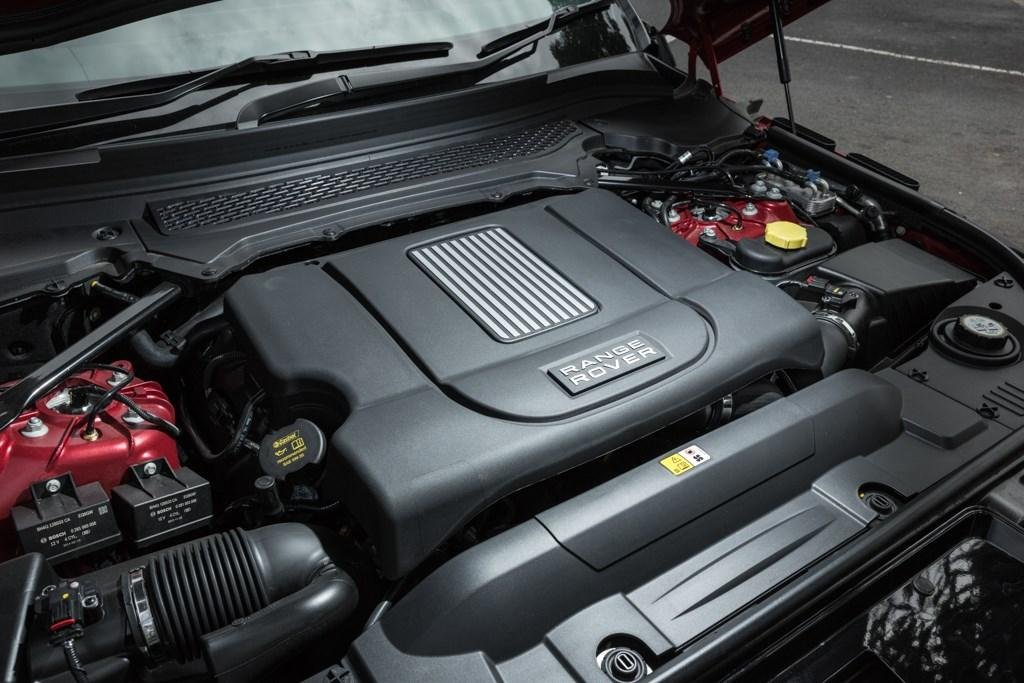
Cooling faults should be traced before parts are approved
Dubai heat raises the consequence of weak cooling performance, but ambient temperature alone is not a diagnosis. The inspection should look for pressure loss, hose and connection condition, radiator airflow, fan command and response, thermostat behaviour, pump circulation, coolant contamination and evidence of combustion pressure where justified.
A dried coolant trace may identify where fluid travelled, not necessarily where it began. Pressure testing on a cold system and careful observation during warm-up can reveal a different source. After a repair, the system requires correct filling and bleeding, then verification under the operating conditions that originally triggered the symptom.
If the temperature display rises, a red warning appears, the heater suddenly blows cold while the engine is hot, or coolant is expelled, stop safely. Do not continue merely because the gauge later returns to normal.

Separate an external leak from its root pressure condition
Oil on an undertray can travel far from its source. Cleaning the area, using appropriate tracing methods and observing the engine through a controlled heat cycle are more reliable than replacing the lowest wet seal. Crankcase pressure and ventilation condition may need assessment because excessive pressure can encourage leakage at more than one point.
The same principle applies to coolant and diesel fuel. A repair should identify the originating joint, hose, housing or component and verify nearby materials affected by contamination. Rubber mounts, belts and electrical connectors may require inspection if they have been exposed.
Photographs before cleaning and after verification help create a useful handover record. They also make it easier to distinguish an old stain from a current leak at a later visit.
What a defensible diesel diagnosis should contain
Identity
VIN, engine derivative, software and service history establish what is fitted. Previous engine, turbo, injector or cooling work changes the evidence.
Measurements
Fault codes are combined with live values, physical inspection, pressure or leak tests and a controlled road test where safe.
Verification
The repaired system is rechecked after warm-up and under the triggering condition. Codes are not simply cleared and returned.
Cold-start behaviour can separate electrical, fuel and mechanical clues
A long crank after an overnight stop is different from a slow crank, an immediate start followed by rough running, or a warm restart concern. Record the cranking speed, ambient conditions, fuel level, warning lamps and how long the engine takes to settle. Do not keep repeating long start attempts because low system voltage can add communication faults and overheat starting components.
Battery condition and voltage drop matter even when the starter turns. The engine and transmission controllers, fuel-pressure regulation, sensors and network modules need stable voltage during cranking. A battery test should consider state of charge, capacity, terminals, grounds and voltage at the relevant circuits. Replacing a battery without checking why it is discharged may only postpone the problem.
On the fuel side, diagnosis can include low-pressure supply, rail-pressure build-up, contamination checks and injector leak-off where justified. Fuel filter history and the exact specification used matter. If poor running began soon after refuelling, preserve the timeline and receipt, but do not assume contaminated fuel until a sample and system evidence support it.

Service history changes the meaning of today’s symptom
A stamped book alone may not show which oil, filter, coolant or replacement parts were used. Useful records include invoice dates, odometer readings, exact product specifications, part numbers and the reason each repair was authorised. Gaps do not prove neglect, but they increase the need for a measured baseline.
After recent turbo work, the intake and charge-air path may need inspection for retained oil, loose connections and correct control operation. After cooling work, check filling, bleeding and pressure stability. After injector or fuel work, verify coding or configuration where applicable and examine live balance evidence. After engine work, confirm oil pressure, contamination control and the method used to verify the repair.
A used vehicle deserves a baseline before symptoms become severe. Scan all relevant modules, record current and historic faults, inspect fluid condition and leaks, examine cooling and intake paths, check battery health and road-test under controlled conditions. This does not guarantee future reliability. It creates a reference that makes later changes easier to identify.
Repair depth should follow what the measurements can prove
The size of the symptom does not decide the size of the repair. The next step should match what pressure, leakage, oil, timing and inspection evidence can actually prove.
Targeted repair
A confirmed external leak, sensor circuit fault, split charge hose or other isolated problem may only need focused work when the surrounding engine evidence remains sound.
Deeper mechanical assessment
Metal in the filter, abnormal mechanical pressure, continuing heavy knock, cylinder leakage or direct internal evidence justifies a deeper engine repair assessment before rebuild work is approved.
Replacement
Replacement should only follow a separate condition and compatibility decision covering assembly identity, transferred ancillaries, cooling, lubrication and the checks that will protect the replacement.
Before major work is approved, ask which measurement supports the recommendation, what will be reused, and how oil pressure, cooling stability, combustion balance and leak-free operation will be verified after the repair.
Post-repair verification should repeat the original operating state
A short idle after clearing codes is not enough. Verification should return to the condition that exposed the fault when it is safe to do so.
Cold start, hot motorway exit, slow traffic, towing load or regeneration context should guide the final test.
Pressure, airflow, boost, injector balance and temperature evidence should be compared with the original complaint.
Fluid levels, leakage and warning history should be reviewed after the relevant heat cycle rather than only immediately after assembly.
The handover should distinguish what is resolved, what is advisory and what still needs monitoring.
Where exhaust aftertreatment was involved, the condition that prevented normal operation should be corrected before the filter result is treated as complete.
Questions owners ask before booking diagnosis
Can I drive with restricted performance?
Only if there is no oil-pressure warning, overheating, heavy knock, rapid fluid loss, dense smoke or unsafe response. Move cautiously to a safe location and arrange diagnosis. Recover the vehicle when any severe sign is present.
Does oil in a boost hose mean the turbo has failed?
Not by itself. Some oil mist can enter the intake path through crankcase ventilation. Quantity, turbo condition, shaft and sealing evidence, crankcase pressure, smoke and oil consumption must be assessed together.
Will a fault code tell me which part to replace?
Usually not. A code identifies the circuit or operating condition detected by the control module. Wiring, sensors, airflow, mechanical condition and software context can produce related codes.
Why did the warning disappear after restarting?
The control system may leave a protection mode when conditions change, while storing history or pending evidence. Record the exact message and arrange a scan before repeated clearing erases useful context.
Should I approve an engine rebuild immediately?
A rebuild or replacement decision should follow documented evidence such as pressure results, oil and filter findings, mechanical inspection and repair economics. Ask what measurement supports the recommendation and what will be verified afterward.
Bring the symptom timeline, not a guessed parts list
Share the VIN, warning sequence, smoke or noise conditions and recent work. We can plan an evidence-led inspection for your SDV6 or TDV6 in Dubai and explain the next decision before parts are approved.