

Range Rover Sport L320 · 2005 to 2013 · Dubai
Range Rover Sport L320 Repair Dubai
Air suspension warnings, coolant loss, harsh shifting, driveline vibration, battery-related warning clusters and steering or brake concerns can all appear on an L320. A 2006 V8 and a 2013 diesel do not share the same engine, chassis or gearbox assumptions, so we identify the exact model year and powertrain, reproduce the symptom and test the connected system before parts are approved.
Start with the vehicle, not a generic list
An L320 repair plan begins with age and intervention history
The L320 is now an established older-generation performance SUV. Two vehicles showing the same warning can need different repair paths because one is largely original and the other has already had suspension, cooling, transmission or electrical work. The useful first question is not only what failed today. It is what has been changed, what remains original and which symptoms appeared together.
Dubai conditions add another layer. Repeated heat cycles can expose weak seals, ageing plastic, tired wiring protection and cooling-system margins. Long periods parked in high temperatures can also reveal battery and low-voltage sensitivity. None of those observations proves a failed component by itself. They explain why a visual inspection, battery assessment, scan evidence and a road-test pattern should be considered together.
Original-condition vehicle
Prioritise deterioration, fluid condition, hoses, bushes, mounts and evidence of age-related wear.
Recently repaired vehicle
Check workmanship, part compatibility, disturbed connectors, calibration needs and whether the original cause was resolved.
Unknown-history vehicle
Create a baseline before approving major work. Record warning messages, fluid leaks, tyre condition, stored faults and road behaviour.
Production changes matter
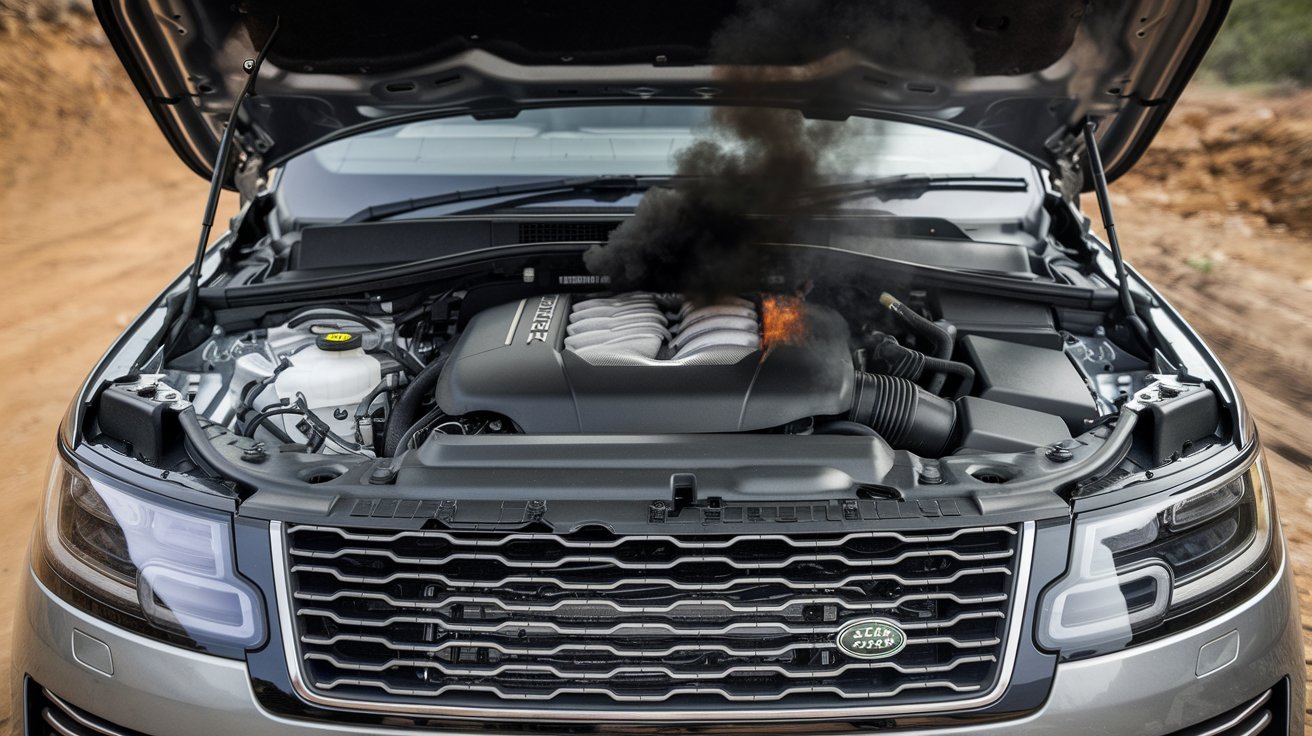
An early L320 and a late L320 should not share one diagnostic assumption
The first-generation Range Rover Sport changed materially during production. Engine family, damping technology and transmission hardware can alter the first test, the correct part and the meaning of the same owner complaint. Model year helps, but VIN, engine and the components actually fitted should decide the repair route.
Launch-era chassis and powertrains
The L320 launched with four-corner air suspension and Terrain Response as core systems. Dynamic Response was standard on supercharged models and available on other specifications. Engine choices varied by market and included supercharged and naturally aspirated V8 petrol engines plus V6 diesel applications.
New engines and more active damping
The 2010 update introduced the 5.0 litre supercharged V8 and 3.0 litre TDV6 sequential-turbo diesel. Applicable higher-output versions also combined Adaptive Dynamics with Dynamic Response, so a ride or handling complaint may involve more than the air springs alone.
Transmission specification becomes especially important
EU5 3.0 litre diesel versions moved to the ZF 8HP70 8-speed automatic, while some market-specific diesel versions retained a 6-speed and the petrol V8s continued with a 6-speed automatic for 2013. A gearbox diagnosis therefore needs the installed transmission identified before fluid, control or internal assumptions are carried across from another L320.
Do not order by year alone. If delayed engagement, harsh shifting or shudder remains repeatable after engine output, mounts and connected driveline causes are separated, a focused Range Rover Sport gearbox assessment can then follow the transmission actually fitted to the vehicle.
The 4 evidence streams
What separates a useful diagnosis from parts swapping
What the driver notices
Record when the concern occurs, whether the vehicle is cold or hot, road speed, steering position, selected height, load and warning sequence. A vibration only under braking points in a different direction from one present at a steady cruise.
What the vehicle stores
Diagnostic trouble codes are evidence, not automatic part orders. Module communication, code status, freeze-frame information and repeated versus historic faults help determine which findings deserve testing.
What can be measured
Battery condition, charging behaviour, fluid level and condition, pressure, temperature, wheel movement, ride-height data and physical play can confirm or challenge the initial theory.
What previous work changed
New parts can still be incorrect, poorly installed or unrelated to the cause. Dates, invoices and the timing of symptoms help reveal whether a fault began before or after intervention.
Connected systems
5 L320 areas that should be read together
The first-generation Sport combined strong road performance with integrated chassis and all-terrain control. That means a complaint felt in one area may be influenced by another. The following rows are a diagnostic map, not a claim that every L320 develops every fault.
Owner clues
Slow height changes, an uneven stance after parking, repeated suspension messages, compressor noise or a vehicle that will not reach the requested height.
Evidence path
Inspect for leaks and height-sensor plausibility, assess compressor performance and confirm valve or reservoir behaviour before deciding which component is responsible. If the vehicle repeatedly settles low, rises slowly or cannot hold a commanded height, a focused Range Rover air-suspension diagnosis can separate leakage, pressure supply, valve control and height-sensor evidence before pneumatic parts are approved.
Owner clues
Coolant odour, level loss, temperature warnings, fan behaviour, oil contamination, rough running or reduced performance.
Evidence path
Do not assume one visible residue explains the whole issue. Pressure testing, leak tracing, fluid assessment and engine-specific inspection should determine whether the concern is local or part of a wider cooling problem.
Owner clues
Delayed engagement, harsh changes, shudder, vibration under load, clunks on direction change or transfer-related messages.
Evidence path
Separate engine performance, mounts, propeller-shaft behaviour, differentials, transfer case and transmission control. Road-test conditions and scan data help avoid blaming the gearbox for every driveline symptom.
Owner clues
Pulling, steering shake, uneven tyre wear, brake vibration, noises over rough surfaces or instability during lane changes.
Evidence path
Check tyre construction and pressure first, then wheel condition, alignment evidence, bushes, joints, bearings, dampers and braking surfaces. The complete corner matters more than one isolated part.
Owner clues
Multiple warnings after start-up, intermittent infotainment behaviour, central-locking concerns, parking-aid faults or symptoms after a weak battery.
Evidence path
Confirm battery and charging health, module communication and water-ingress evidence. Low voltage can create secondary codes, while a persistent network fault needs circuit-level diagnosis.
Air suspension is only one part of the chassis
Dynamic Response, Terrain Response and ride height share the driving picture
The L320 was designed with four-corner air suspension, Terrain Response and, on applicable specifications, Dynamic Response active roll control. A body-control or handling complaint should therefore be tied to the road condition, selected terrain program and ride-height state before one chassis component is blamed.
Confirm whether the vehicle holds height while parked, responds to commands and produces the expected pressure. Leakage, compressor output, valve behaviour and height inputs should be separated before replacement.
This active roll-control system changes body control during cornering and can decouple for greater wheel articulation off road. A roll-control warning, fluid concern or handling change should not automatically be treated as an air-spring fault.
Terrain Response changes several vehicle settings together, including ride height, engine response, traction aids and transmission behaviour. Record which program was selected and whether the concern appears only in one operating mode.
Use the trigger to narrow the system. Note whether the concern appears while changing height, cornering, braking, accelerating, driving off road or immediately after wheel, tyre, alignment or suspension work. The same warning can require a different first test depending on what the vehicle was doing.

Repair scope
Repair one fault or restore a neglected system
A focused repair is appropriate when the cause is isolated, surrounding components remain serviceable and the system can be verified after the work. A broader restoration plan becomes more sensible when several age-related weaknesses interact, previous repairs are inconsistent or access overlaps.
That does not mean replacing everything nearby. It means distinguishing failed items, worn supporting parts and optional preventive work. The estimate should state what is confirmed, what is advisory and what can reasonably wait. Owners can then prioritise safety, reliability and budget without confusing evidence with speculation.
Repair can stay focused when
- The fault is repeatable and supported by test results
- Related wiring, mounts, hoses or connectors remain sound
- No conflicting warning or road-test symptom remains unexplained
- The completed work can be verified under the conditions that produced the complaint
A staged plan is better when
- Several systems show age-related deterioration
- The history is incomplete and a baseline is still being established
- Safety-critical work should be completed before comfort or cosmetic items
- One repair requires later calibration, alignment or follow-up monitoring
Previous work changes the diagnosis
4 records worth bringing with an L320
Recent invoices
Part numbers, brands and dates help establish what was changed and whether symptoms pre-date the work.
Warning photos
A clear dashboard photo captures the exact wording and warning sequence before it disappears after restart.
Fluid top-up history
Repeated coolant, oil or other fluid additions can reveal a pattern that one workshop visit may not reproduce.
Tyre and alignment history
Recent tyre replacement, wheel impact or alignment work matters when diagnosing pull, vibration or uneven wear.
Vehicle identification is equally important. Engine, market specification, build details and fitted options can change parts and procedures. Registration year alone is not enough for confident parts approval on a generation produced across several years and configurations.
Stop driving when the symptom changes the vehicle’s basic safety
Arrange recovery rather than continuing if there is an overheating warning, rapidly falling suspension, severe steering change, brake-performance concern, heavy fluid loss, smoke, a strong fuel smell or a mechanical noise that escalates with engine speed. A warning that clears after restart does not prove the condition is safe.
What a useful handover should confirm
Completion is more than clearing codes. The vehicle should be checked under the conditions relevant to the original complaint. Depending on the repair, that can include a cold start, operating-temperature assessment, height change, road test, leak recheck, braking verification, steering-centre check, calibration or a post-repair scan.
The owner should understand the confirmed cause, work completed, remaining advisories and any follow-up observation. If a historic code remains stored but inactive, that distinction should be clear. If an issue could not be reproduced, the next diagnostic condition should be defined rather than hidden behind a vague no-fault-found result.
A sound is a location clue
Map the noise before replacing the loudest-looking part
Older vehicles often carry several harmless background sounds alongside one developing fault. Useful diagnosis describes the sound, location, load and road condition. A single knock over a sharp edge differs from a repeated rattle on broken surfaces. A hum that rises with road speed differs from a whine that follows engine speed. A clunk on drive take-up differs from a thud during braking.
Record whether the steering is straight or turned, whether the brakes are applied, whether the suspension is at normal height and whether passengers or luggage change the symptom. A short phone recording can help, but the road test must still confirm the source safely.
Heat shields, exhaust mounts, undertrays, bushes, joints, bearings, tyres, propeller-shaft components and engine or transmission mounts can transmit sound through the body. The point of the map is to inspect the correct zone and avoid treating every front-end knock as the same control-arm problem.
4 useful descriptions
- Speed linked: frequency changes with vehicle speed even when engine speed changes
- Load linked: appears under acceleration, deceleration or direction change
- Surface linked: appears over one-wheel bumps, ripples or sharp edges
- Temperature linked: present only cold, fully warm or after heat soak
Parts provenance matters
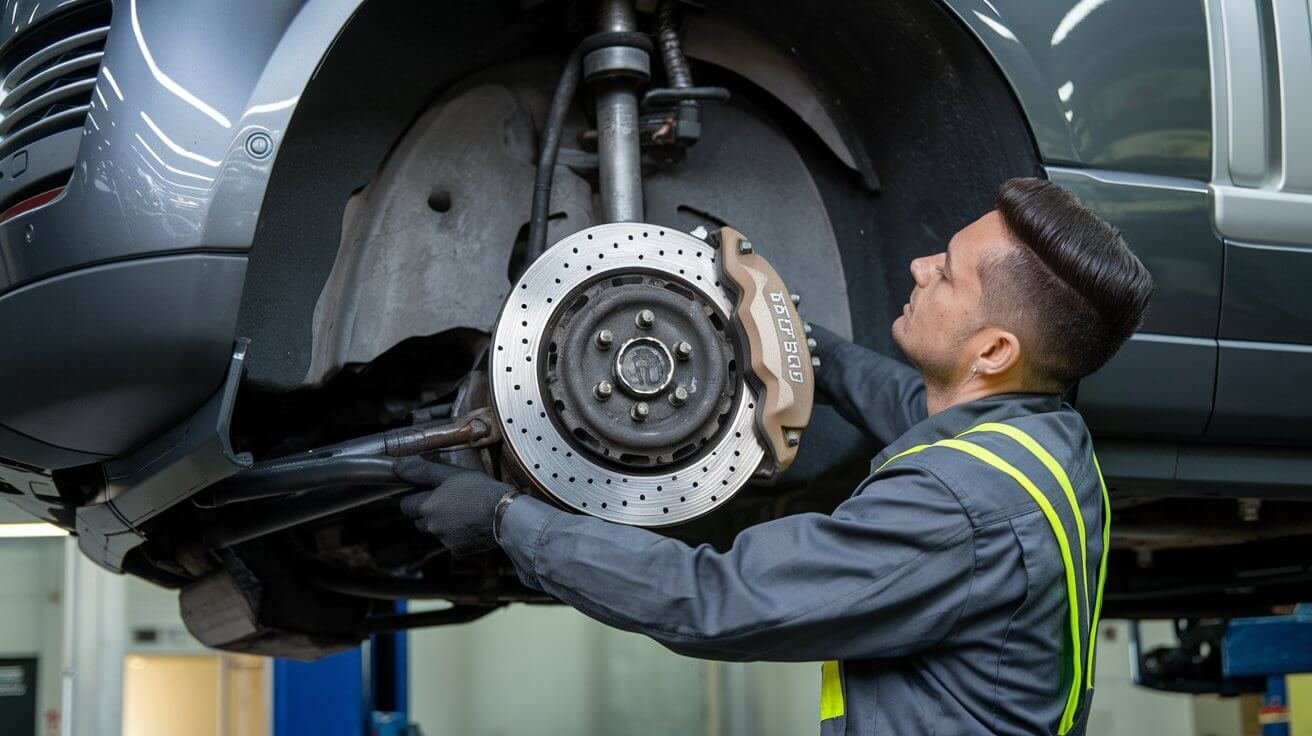
Compatibility is more than finding a part with the same description
L320 production covered multiple engines, model years and specifications. A component that looks similar may differ by connector, calibration, mounting, software expectation or supersession. Before approval, the workshop should match the VIN and build details, inspect what is currently fitted and understand whether an earlier repair changed the original configuration.
Used, rebuilt, aftermarket and new genuine components can carry different risks depending on the system. The right discussion is not a blanket claim that one category is always best. It is whether the component is suitable for the exact vehicle, whether its condition can be verified, whether supporting parts are sound and whether the completed system can be tested.
Electrical modules deserve special caution. Compatibility, coding and configuration may matter in addition to physical installation. Suspension components should be considered with height control and geometry. Cooling parts should be assessed with hose condition, sealing surfaces and the cause of the original leak. Driveline work should not ignore mounts, joints or fluid contamination.
Ask the estimate to distinguish
- The confirmed failed component
- Supporting items required for correct installation
- Related wear that can be monitored
- Optional restoration work
- Calibration, alignment or programming that follows installation
This separation keeps an older Sport manageable. It also prevents a low initial quote from hiding essential completion work or a broad quote from presenting every age-related observation as urgent.
Look beneath the headline fault
Underbody, sealing and corrosion evidence should shape the plan
Dubai vehicles are not exposed to the same conditions as cars from every other market, yet history can include coastal air, off-road use, imported operation, water exposure, poor lifting or previous accident repair. Inspect the actual vehicle. Check undertrays, fasteners, brackets, lines, mounts, wiring protection, jacking points and evidence of fluid travel.
Surface appearance alone does not establish structural severity. The technician should distinguish cosmetic oxidation, damaged coatings, active leakage, weakened hardware and repair-related distortion. Any safety or structural concern needs an appropriate specialist assessment rather than an unsupported conclusion from a photograph.
Sealing evidence also matters inside. Damp carpets, staining, corrosion at connectors or repeated condensation can influence electrical diagnosis. Water entry should be traced to its path and source before affected modules are replaced. Drying the visible area without correcting the entry point does not close the repair.
For an owner planning several years of use, a documented baseline is valuable. Photograph notable areas, record fluid leaks and separate urgent defects from preservation work. Future inspections can then compare change over time instead of restarting from zero.
Plan the first 30 days after an L320 repair
Monitor the original symptom under the same safe conditions, check for fresh fluid marks where relevant and keep warning photos if anything returns. Do not judge a repair only by one quiet journey. A clear follow-up window helps distinguish normal settling, an unrelated age issue and a symptom that was not fully resolved.
Keep the final invoice with part identification, measurements and advisories. That record becomes the starting point for the next service and protects the vehicle from repeated diagnosis without history.
Dubai ownership questions
Practical answers for Range Rover Sport L320 owners
Is every suspension warning caused by the compressor?
No. Leaks, sensors, valves, reservoir behaviour, wiring, low voltage and compressor performance can create different patterns. Test the system before selecting a part.
Can a weak battery create several warnings?
Low voltage can contribute to multiple stored faults or start-up warnings, but persistent warnings still need proper diagnosis. Replacing a battery should not be used to dismiss repeatable system evidence.
Should an old L320 receive every suggested repair at once?
Not automatically. Separate safety-critical work, confirmed faults, reliability priorities and optional preventive items. A staged plan is often more useful than an undifferentiated list.
Why does vehicle history matter so much?
Age alone does not describe condition. Previous parts, workmanship, fluid use, heat exposure, accident repairs and periods of storage can all change the likely repair route.
Can a scan alone identify the failed part?
A scan can identify affected modules and stored conditions. Physical inspection, measurement and a symptom-led test are normally needed before a responsible repair decision.
Did the L320 change significantly between 2005 and 2013?
Yes. The generation received major powertrain and chassis updates during production. The 2010 model update introduced new 5.0 litre supercharged V8 and 3.0 litre TDV6 engines, and later diesel versions gained an 8-speed automatic in applicable specifications. Confirm the VIN, engine and transmission before parts or procedures are carried across from another L320.
Does every Range Rover Sport L320 use the same gearbox?
No. Transmission specification varies by model year, engine and market. For 2012 and 2013, EU5 3.0 litre diesels used the ZF 8HP70 8-speed, while some market-specific diesels retained a 6-speed and petrol V8 versions continued with a 6-speed automatic. Identify the fitted transmission before diagnosis or fluid decisions are made.
Are Dynamic Response and air suspension the same system?
No. Air suspension controls ride height and spring pressure, while Dynamic Response is an active roll-control system on applicable specifications. They influence the same chassis behaviour, so a handling or body-control complaint may require both systems and the selected Terrain Response mode to be considered.
Book an evidence-led L320 assessment in Dubai
Share the model year, engine, warning message, current symptom and any recent repair history. The first goal is to identify the correct system and testing route, then approve work that matches the vehicle’s actual condition.