

Friction brake inspection and replacement in Dubai
Range Rover Brake Pads and Discs Replacement in Dubai
Brake pads and discs should be approved from measured wear, surface condition, axle balance and caliper operation, not from noise alone. We inspect both sides of the axle and define whether pads, discs, sensors, hardware or caliper work is actually required.
The service decision
Brake pad and disc replacement should begin with an axle report
Brake pads create friction against the discs to slow the vehicle. The replacement decision should consider the condition of both sides of the axle, the inner and outer pads, the disc surfaces, the caliper movement, the wear sensor and the owner’s original complaint. A warning message or squeal can indicate wear, but it does not automatically define every part that should be replaced.
Uneven wear matters as much as total thickness. One thin inner pad can point toward a sticking piston, guide or contact point. A heavily scored disc can affect contact with a new pad. A disc that looks rusty after storage may clean during normal use, while corrosion that has damaged the working surface needs a different assessment. Vibration can involve disc variation, hub mounting, wheel fastening, bearings, tyres or suspension movement.
If the complaint includes a soft or sinking pedal, brake-fluid loss, an ABS warning, a parking-brake failure or a caliper that will not release, the vehicle needs a broader Range Rover brake-system diagnosis rather than a friction-parts quotation alone.
Measure each side, not only the visible pad
A front or rear axle needs four evidence groups
Brake work is normally assessed by axle because the left and right wheels must provide stable and predictable braking. The report below shows the categories that should be compared before the work is approved.
Compare inner and outer material, contact pattern, cracking, contamination and sensor relationship.
Review the working faces, edge, scoring, corrosion, heat marks and any relevant measurement.
Check piston action, guide movement, boots, carrier and whether the brake releases correctly.
Inspect hub cleanliness, wheel fastening, bearing condition and temperature compared with the other side.
A difference from the left side can reveal a caliper, hardware or hydraulic issue rather than normal even wear.
Differences in surface, thickness or temperature help explain pull, vibration and uneven friction.
Both sides should apply and release without abnormal resistance, leakage or damaged contact points.
Check the fitted wear-sensor design, connector security and any warning that remains after physical inspection.
The complaint changes the inspection
Noise, vibration and warnings do not all mean the same repair
Squeal or light scraping
Possible causes include friction material, wear indicators, corrosion, debris, hardware, shield contact or the disc surface. Pad thickness and contact pattern should be checked before the sound is treated as proof of replacement.
Vibration while braking
Disc thickness variation, hub mounting, wheel fastening, bearings, tyres and suspension movement can influence the symptom. Measuring the wheel end is more reliable than describing every vibration as a warped disc.
Grinding or poor response
Severe friction wear, disc damage, a seized component or another urgent fault may be present. Stop driving and request recovery guidance when grinding is strong or braking control has changed.
Pads only, pads and discs, or more investigation
Should Range Rover brake pads and discs be replaced together?
There is no universal rule. The correct route follows disc condition, relevant measurements, pad wear pattern, caliper movement, axle balance and the exact brake package fitted to the vehicle.
Pads can be the approved scope
This route may be suitable when the discs remain appropriate for continued use, the surfaces are compatible with the new pads, both calipers apply and release correctly and the remaining disc condition is documented.
Pads and discs are justified together
This route is supported when disc condition, measurements, cracking, severe scoring, unsuitable surfaces or another verified finding means new pads should not be fitted to the existing discs.
The friction parts are not the whole fault
A binding caliper, hydraulic issue, hub mounting problem, wheel bearing, tyre or suspension concern may need attention before or with friction replacement. New pads alone will not correct the cause of heat, pull or uneven wear.
The quotation should identify the axle, inner and outer pad findings, disc condition, caliper movement, sensor status and the evidence supporting every part included in the repair.
Read the wear pattern before disposal
What the old pads and discs can reveal before they are discarded
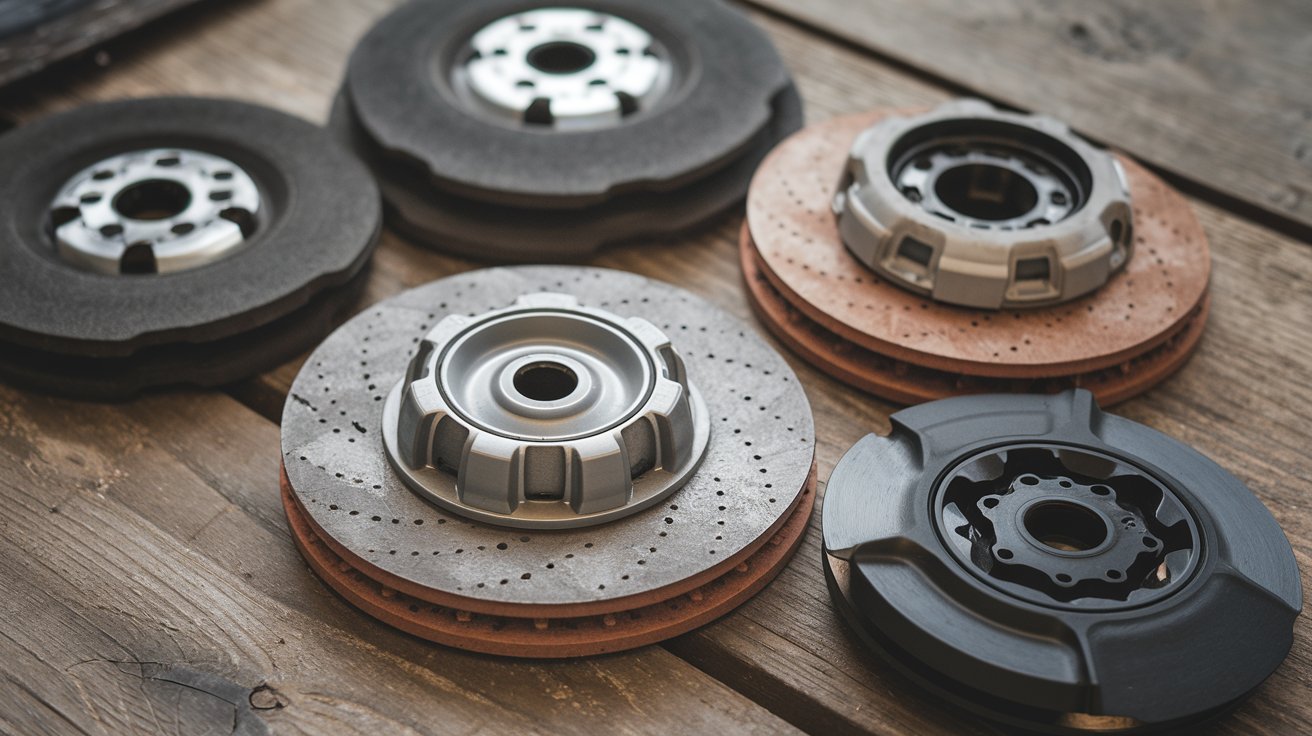
Removed friction parts are diagnostic evidence. Their left-to-right, inner-to-outer and surface patterns can show whether the axle wore normally or whether a caliper, mounting, sensor or hydraulic concern contributed to the repair.
Even wear across both sides
Similar inner and outer wear can support normal service wear, but disc surfaces, sensor condition, hardware and caliper release still need confirmation.
Inner pad is significantly thinner
The hidden pad may have been carrying more load. Piston action, guide movement, contact points and hose condition should be checked before new pads are fitted.
One wheel is hotter or more worn
A side-to-side difference can indicate binding, restricted release, contamination or another wheel-end condition rather than normal balanced wear.
Disc face shows patches, scoring or heat marks
Irregular contact can involve pad transfer, corrosion, hub mounting, wheel fastening or caliper movement. The surface pattern should be linked to measurements.
A warning sensor disagrees with the visible wear
Check the fitted sensor location, connector, wiring and exact axle. Resetting the warning without confirming the physical pad condition does not restore friction material or repair the circuit.
Workshop bay sequence
From inspection to controlled brake verification
Identify the brake package
Use the VIN, model year, axle, wheel and fitted brake equipment before ordering pads, discs, sensors or hardware.
Inspect both sides
Compare inner and outer pads, disc surfaces, caliper movement, hoses, sensor wiring and wheel-end condition.
Record the approved scope
Explain the evidence for pads, discs, sensors, hardware or caliper work and note anything that remains serviceable.
Install to the correct procedure
Prepare contact and mounting surfaces, use the required service mode where applicable and protect hoses and wiring.
Verify the axle
Check pedal condition, brake release, warning status, wheel temperatures and stable braking under safe conditions.
Do not rely on a universal pad-life interval. Wear depends on the exact vehicle, axle, brake package, driving pattern, load, environment and current brake condition. Use the physical inspection to decide the repair, and check Land Rover iGuide by VIN for the warning wording and owner information that applies to the vehicle.
Match the repair to the actual brake fault
When friction service is enough and when the problem goes beyond pads and discs
Friction wear is the confirmed concern
Pad and disc service is appropriate when the inspection shows normal friction wear, the calipers apply and release correctly, the wheel end is secure and the quotation explains the condition of both sides of the axle.
The scope may include pads, discs, wear sensors and fitting hardware, but every item should be supported by the axle report rather than added as a standard package.
The braking system needs wider diagnosis
A changing pedal, hydraulic leakage, severe pull, wheel overheating, ABS warnings or a parking brake that will not release point beyond ordinary friction wear. These symptoms need complete brake-system diagnosis before pads or discs are treated as the main repair.
This distinction prevents new friction parts from being fitted while a hydraulic, electronic or mechanical fault remains.
A price needs the axle and measured condition
What affects Range Rover brake pad and disc replacement cost
The quotation depends on the model, axle, fitted brake package, pad and disc specification, wear sensor, hardware, caliper condition and whether the hub or mounting surfaces need attention. Performance brake packages and wheel sizes can change the parts even within the same model year.
A clear quotation should identify the front or rear axle, explain why each part is included, state the parts status and show whether sensors, hardware, fluid work, electronic service mode or additional repairs are separate.
- VIN, model year, axle and fitted brake package
- Inner and outer pad condition on both sides
- Disc condition and relevant measurements
- Wear sensor and wiring condition
- Caliper piston, guide and carrier movement
- Hub, wheel and bearing observations
- Part status and compatibility
- Final warning, pedal and road verification
The VIN and axle identify the correct brake package
Pad shape, disc size and sensor arrangement vary across models
Range Rover, Range Rover Sport, Evoque, Velar and Land Rover vehicles use different pad shapes, disc dimensions, calipers, wear-sensor arrangements and electronic parking brake designs. Performance packages, wheel sizes, towing equipment and market specification can also change the parts fitted to the same model year.
The quotation should identify the VIN, front or rear axle and the brake package already on the vehicle before parts are ordered. A visual match is not enough because two discs can look similar while using different dimensions, offsets or sensor arrangements.
If an ABS or stability warning remains after the physical brake wear is checked, the wheel-speed signal needs a separate Range Rover ABS diagnosis. Replacing pads or discs does not repair a sensor, encoder, wiring or control fault.
After the vehicle is collected
What should be explained after new brake pads or discs are fitted
The handover should identify the axle repaired, the parts fitted, the condition of the removed components and any separate concern that remains. The pedal should feel consistent, the vehicle should stop in a stable direction and the warning status should match the completed work. The owner should also be told if existing tyre wear, suspension play or another axle condition can still affect road feel.
Listen for the original complaint
The road check should focus on the same noise, vibration or pull that led to the booking. A different minor sound should not be presented as proof that the original fault remains.
Monitor warning messages
A wear warning or service message should be checked only after the physical brake condition is confirmed. A warning that returns may involve the sensor, wiring or another system.
Return if behaviour changes
Ask for prompt inspection if the pedal changes, one wheel becomes hot, the vehicle pulls strongly, fluid appears or the braking response becomes inconsistent.
Brake pad and disc questions
Frequently asked questions
Should Range Rover brake pads and discs always be replaced together?
No. The decision depends on the disc condition, relevant measurements, surface compatibility, pad wear pattern and the exact repair procedure. The quotation should explain why each part is included.
Can I drive with a brake pad warning?
A wear message requires prompt inspection. Stop and request recovery guidance when the warning is accompanied by reduced braking, a soft or sinking pedal, fluid loss, severe grinding, smoke or a locked wheel.
Why is one brake pad thinner than the others?
Uneven wear can involve caliper piston or guide movement, contact points, hose restriction, parking brake influence or another wheel-end issue. The cause should be corrected before new pads are fitted.
Does brake vibration always mean the discs are warped?
No. Disc variation, hub mounting, wheel fastening, bearings, tyres and suspension movement can all influence vibration. Measurements should support the repair.
Do front and rear pads use the same wear sensor?
Not necessarily. Sensor location and design vary by model, axle and brake package. The exact vehicle information should be checked.
How much does Range Rover brake pad and disc replacement cost in Dubai?
The price depends on the vehicle, axle, brake package, pad and disc specification, sensors, caliper condition and related wheel-end findings. Inspection is needed for an accurate quotation.
Book a brake wear inspection in Dubai
Approve pads and discs from an axle report, not noise alone
Send the model, year, warning photo, affected axle, noise or vibration pattern and recent brake history. We will advise whether the next step is a friction inspection or a broader brake-system diagnosis.