

Range Rover ride height diagnosis in Dubai
Range Rover Sitting Low on One Side or Not Rising
A Range Rover that leans after parking, drops at one corner, sits low at one axle or refuses to return to normal height needs the stance to be treated as evidence. The useful diagnosis compares how the vehicle settles, how it responds to a height request, what the compressor does and what the suspension control system reports before any air spring, valve or compressor is approved.
Start with what changed
The position of the body tells you where the first test should begin
If one corner is lower after the vehicle has been parked, a local pressure-loss path becomes more relevant, but the air spring is not the only possible cause. A pipe connection, local valve route, height-sensor information or previous suspension work can change the same corner. If the whole front or rear axle settles together, a shared pneumatic path or valve-control issue deserves more attention.
A vehicle that stays level while parked but will not rise when commanded tells a different story. Pressure supply, compressor output, reservoir condition, electrical permission, valve operation and height-sensor data all move higher on the list. Repeatedly pressing the height button can make the evidence worse by heating a compressor that is already working too hard.
The most useful owner observation is the timeline. Note whether the vehicle looks normal when parked and becomes low overnight, whether it rises after the engine starts, whether one side returns faster than the other, and whether the warning appeared before or after the body changed height. Those details help the workshop decide whether to start with air retention, pressure generation, height data or electrical control.

Three patterns change the diagnostic route
Read the settling pattern before replacing suspension parts
One corner drops after parking
A local loss of stored air is possible. The spring or strut, nearby line connection, valve path and the physical height at that corner need to be compared. A height sensor can report the wrong position, but sensor data alone does not prove that air is leaking.
Front or rear axle sits low together
A shared path becomes more important. The workshop should compare both sides, determine whether the axle loses height at the same rate and see whether it returns evenly when pressure becomes available. A single corner part should not be approved simply because the axle looks low.
The vehicle will not rise
Pressure supply and control become the priority. Compressor sound, current demand, pressure build, stored faults, battery condition, valve commands and live height values help separate a weak supply from a leak or a control restriction.
Decide whether the vehicle should move
Low ride height can be inconvenient, damaging or unsafe depending on clearance and control
Do not judge safety only from the dashboard wording. Look at tyre clearance, body position, steering freedom and ride quality. An amber suspension message with a stable vehicle near normal height is different from a vehicle sitting on a bump stop or with a tyre close to the arch.
Use recovery when the body is severely low, a tyre can contact the arch, steering movement is restricted, the ride is extremely harsh, the vehicle changes height unpredictably or the display gives a red stop instruction.
A persistent lean, slow raising, repeated compressor operation or an amber warning deserves advice before normal driving continues. Avoid speed, heavy loads, towing, rough ground and repeated height changes until the cause is known.
A mild repeatable lean with normal clearance and normal steering can usually be documented and inspected without repeated roadside testing. Photograph the stance on level ground and preserve the exact warning.
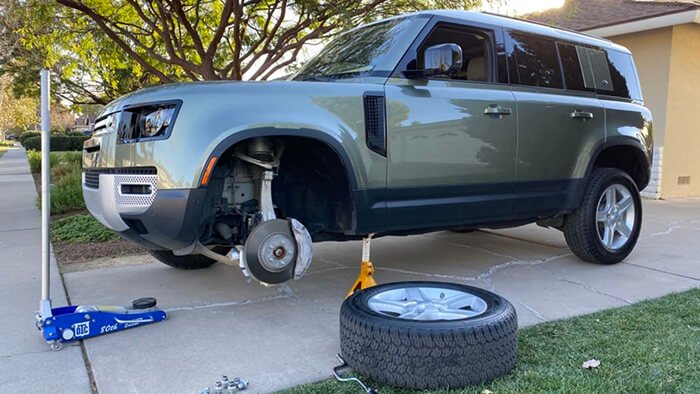
Never work underneath a vehicle supported only by air suspension. The system can change height when it wakes, receives a command or loses pressure. Proper lifting and mechanical support are required before anyone checks underbody pipes, valves or suspension components.

Bring the original fault story
5 observations make a low-suspension diagnosis more useful
These five details help the workshop decide whether the first test should focus on air retention, pressure supply, height information or an event that changed the suspension state.
Which corner or axle is low
Photograph the vehicle from the front and rear on level ground. Include all four wheel arches so the stance can be compared rather than judging only the lowest corner.
How long it takes to settle
Minutes, several hours and overnight changes lead to different pressure-retention tests. Record how long the vehicle was parked before it was started again.
What happens after starting
Note whether the compressor runs, whether the body rises evenly and whether one side reaches height earlier. Silence and a long ineffective run point to different checks.
The exact dashboard message
Photograph the complete display before cycling the ignition. Include battery, stability, ABS or other chassis warnings shown at the same time.
Recent work or events
Battery replacement, wheel alignment, suspension work, kerb impact, towing, water exposure and long storage can change the starting point for diagnosis without proving the cause.
The same lean can come from different layers
What can make one side of a Range Rover sit low
A low corner can begin in the pneumatic system, height information, electrical supply or the mechanical suspension itself. These six areas help separate what supports each route from what still has to be proven before a part is approved.
Air spring, strut or connection
The corner settles while parked and the loss can be reproduced or isolated around the local air circuit.
The exact leak point, whether the pipe or valve route contributes and whether the compressor has been overworked by the loss.
Height sensor or linkage
Live height data disagrees with the physical stance, or the issue began after work around the wheel or suspension.
Sensor output, linkage condition, wiring and whether the reference is wrong only because another physical fault is present.
Valve block or distribution
One axle or a group of corners changes together, or pressure does not move through the expected circuit.
Valve command, sealing, isolation and whether a leak elsewhere is making the valve path look faulty.
Compressor or pressure supply
The vehicle raises slowly, pressure build is weak, running time is excessive or the system repeatedly enters protection.
Voltage supply, current demand, actual pressure output, stored-pressure behaviour and downstream leak load.
Electrical supply or communication
The fault appears around a weak start, several modules log related events or height commands become intermittent.
Battery condition, charging recovery, voltage drop, grounds, connectors and whether the electrical event is primary or secondary.
Calibration or mechanical geometry
The system holds air but the body reference remains uneven, or the complaint began after suspension, alignment or wheel-area work.
Physical setup, sensor reference, suspension condition and whether model-specific calibration is actually required.
Workshop confirmation
Diagnosis should prove whether the vehicle is losing air, lacking pressure or receiving bad height information
A model-appropriate scan should preserve suspension fault codes and related module events before anything is cleared. Live height values are then compared with the physical body position. If the data says a corner is high while the body is visibly low, the workshop has a different problem from a corner that physically loses pressure while the sensor remains plausible.
Record physical height, battery condition, warnings, current and historic codes, recent work and the parking timeline before commanding repeated movement.
Check each sensor value against the actual stance and observe commanded versus actual movement. Inspect the sensor arm and wiring where the data is implausible.
Assess compressor operation, pressure build, retained pressure and the suspected leak circuit using a method suitable for the exact model and symptom.
Repeat the parking or height-change condition that originally exposed the problem and confirm stable stance, sensible compressor duty and no returning relevant warning.
A hard-working compressor may be reporting another fault
The compressor can be the cause, the victim or both
A leak can force the compressor to replenish lost air more often. If the system runs longer every time the vehicle wakes, the compressor may eventually become slow or enter thermal protection. Replacing the compressor without addressing the leak can leave the new unit working against the same load.
The opposite can happen too. A weak compressor may fail to build usable pressure even when the air springs, pipes and valves retain air. That is why noise alone is not a verdict. A changed pitch, long run, repeated cycling or silence when a command is present each needs direct electrical and pressure evidence.
If the vehicle will not rise and testing shows inadequate pressure supply, the air suspension compressor needs its output checked alongside downstream leakage, electrical supply and control conditions before replacement is considered.
Battery and charging condition also matter. Air-suspension modules, valves and the compressor all depend on stable electrical supply. A low-voltage event can interrupt a height change, but it should not be used to dismiss clear evidence that the vehicle is also losing air.
Repair depth should follow the failed test
Repair the cause, then prove the vehicle can hold and change height normally
A correct repair does not stop when the body returns to level. The original fault needs to be reproduced safely after the work so the workshop can show that the system now retains pressure, follows valid height information and completes appropriate commands without excessive compressor activity.
Correct the failed area
Repair the confirmed leak, electrical fault, sensor problem, valve issue, pressure-supply fault or mechanical damage rather than replacing a group of related parts.
Recheck the connected system
Inspect the parts that may have been overworked or disturbed by the original problem, especially compressor duty, pipe connections and height references.
Use calibration only when justified
Calibration cannot seal an air leak or restore a weak pressure supply. It belongs after physical and electrical integrity is established and only when the vehicle procedure requires it.
Repeat the original trigger
Park the vehicle for the relevant period, complete appropriate height changes and verify that the stance remains stable with no returning relevant warning.
When the low stance needs a broader pneumatic and chassis assessment, air suspension diagnosis should connect physical height, scan data, pressure performance and mechanical suspension condition before the repair scope is approved.
Dubai conditions change when the fault appears
Heat, parking time, dust and loading help reproduce the complaint
Dubai conditions can expose a marginal suspension system without identifying the failed part. High ambient temperature can reduce the margin of a compressor that is already working hard. Long parking periods make a slow leak easier to see. Dust, water exposure and previous underbody cleaning can change connector evidence. Heavy loading and repeated access-height use can reveal a pressure or levelling weakness that is not obvious during one short workshop movement.
Hot-day behaviour
Tell the workshop whether the vehicle raises normally when cold but becomes slow after a long drive or after repeated height changes. The pattern can help distinguish heat-related protection from a constant pressure problem.
Overnight settling
Photographs taken after several hours can be more useful than repeated height commands. Record how long the vehicle was parked and whether the surface was level.
Load and recent work
Passengers, luggage, towing, alignment, wheel work, battery replacement and prior suspension repairs belong in the fault history because they can change the starting point for diagnosis.
Ride-height logic and available height modes vary across Range Rover generations and specifications. Use the VIN and the official Land Rover iGuide for the exact owner information rather than applying one model’s figures to every vehicle.
Questions owners ask about a low Range Rover
Frequently asked questions
Why is my Range Rover lower on one side after parking?
A slow local air loss is one possibility, but the spring, pipe connection, valve route, sensor information and previous suspension work all need to be compared. The timing of the drop and whether the corner rises normally after start are useful evidence.
Does one low corner always mean the air spring is leaking?
No. A leaking air spring or strut is common enough to test, but a low corner can also involve a pipe connection, local valve control, incorrect height information or a mechanical issue. The exact source should be proven before the part is approved.
Why does the vehicle rise after I start it and then drop again later?
The active system may be replacing air that was lost while parked. That pattern makes time-based pressure retention important. It can also overwork the compressor, so leak evidence and compressor performance should be assessed together.
Can I drive if the Range Rover is sitting low?
Safety depends on body height, tyre clearance, steering, braking, ride quality and the dashboard instruction. Stop and arrange recovery if the vehicle is severely low, a tyre can contact the body, steering is restricted or a red stop warning is displayed.
Can a weak battery cause a suspension warning or slow height change?
Low or unstable voltage can interrupt module and actuator operation, so battery and charging condition can be relevant. It should not be used as the only explanation when the vehicle also shows repeatable pressure loss or an uneven stance.
Should I keep pressing the height button to make it rise?
No. Repeated requests can overwork a compressor and remove useful timing evidence. Record the stance and warning, make only the checks allowed by the owner information and move to diagnosis if the vehicle does not respond normally.
Will wheel alignment fix a Range Rover that leans?
Alignment adjusts wheel geometry. It does not seal an air leak, repair a damaged height sensor or restore pressure supply. Physical suspension condition and valid ride-height information should be established before alignment is treated as the answer.
How is a low suspension fault confirmed in the workshop?
The workshop should compare the physical stance with live height data, preserve fault information, inspect relevant linkages and wiring, measure pressure supply and retention where justified, and repeat the original parking or height-change condition after repair.
Send the stance before the vehicle is moved
Book Range Rover low-suspension diagnosis in Dubai
Send the model, year, a front and rear photo on level ground, the exact dashboard message, how long the vehicle was parked and whether it rises after starting. If the body is extremely low, a tyre is close to the arch or steering movement is restricted, mention that first so the transport decision can be made before the repair decision.