

First-generation Evoque · L538 · 2011 to 2018 · Dubai
Range Rover Evoque L538 Repair Dubai
Age-aware Evoque diagnosis built around the exact model year, engine, drivetrain, body style, warning pattern and repair history, so an older L538 is assessed as one vehicle rather than as a generic list of faults.
The owner’s real starting point
Do not diagnose an L538 from the badge alone
The first Range Rover Evoque was produced across years in which engines, transmissions, infotainment, driver-assistance features and body configurations changed. Official Land Rover material confirms that the range included three-door and five-door forms, later added the Convertible, and received Ingenium petrol engines for the 2018 model year. That breadth makes vehicle identification part of diagnosis, not an administrative detail.
An owner usually arrives with a symptom, a dashboard message or a repair recommendation. The useful first step is to connect that concern to the exact vehicle. A harsh change on one powertrain cannot automatically be treated like the same sensation on another. A water mark in a fixed-roof car needs a different access plan from a Convertible. A late vehicle with newer equipment may store and communicate evidence differently from an early example.
Record the symptom in conditions
Note cold or hot operation, road speed, steering position, gear selection, air-conditioning load, recent refuelling, rainfall or washing, and whether the warning disappears after restart. “It happens sometimes” becomes useful when the conditions are attached.
Read the history before clearing it
Scan all relevant modules and preserve current, pending, historic and communication faults before they are erased. Codes identify affected circuits or operating conditions. They do not automatically name the part that must be purchased.
Inspect what earlier work disturbed
Connectors, grounds, hoses, clips, seals, fasteners, coding and calibration can matter after repair. A new component does not prove the system is healthy or that the original cause was found.
Three ownership lenses
The same symptom means something different in each context
An original older vehicle
Age, heat cycles and accumulated wear raise questions around seals, hoses, mounts, bushes, wiring protection, connectors, fluid condition and previous maintenance. Inspect deterioration before blaming an electronic module.
A recently purchased vehicle
Create a baseline. Confirm tyre specification and condition, fluid evidence, battery state, stored faults, warning history, body repairs and signs of water entry. A quiet test drive alone does not establish condition.
A recently repaired vehicle
Compare the timing of the new symptom with the work completed. Verify part compatibility, installation, configuration, alignment and whether supporting components were assessed. Do not assume coincidence or workmanship without evidence.
When the message and the feeling disagree
Separate powertrain, driveline and chassis evidence
An L538 that hesitates, shudders, clunks or feels slow to respond may direct an owner immediately toward the gearbox. The experience can also be influenced by engine output, mounts, wheel and tyre condition, driveshaft components, rear driveline hardware, brake drag or control inputs. Diagnosis should reproduce the concern and observe what changes with engine speed, vehicle speed, load and gear request.
For a shift concern, record whether it occurs during initial engagement, a particular change, steady-speed cruising, deceleration or after the vehicle is fully warm. Scan evidence, fluid leakage, software or adaptation context and mechanical checks should support the repair decision. If the concern remains tied to gear selection or shift behaviour after engine, voltage and driveline causes are separated, a focused Evoque gearbox diagnosis can then test transmission-specific evidence before repair is approved.
A humming sound that follows road speed may begin at a tyre or wheel end. A vibration under acceleration may require mount and driveline inspection. A clunk as direction changes can travel through several connected components. Naming the symptom accurately is more valuable than choosing the most expensive possible cause.

Four evidence routes
What should be tested before parts are approved
Engine and cooling behaviour
Coolant loss, temperature warnings, fan behaviour, oil evidence, smoke, rough running and reduced power need engine-specific testing. Inspect for visible leakage and contamination, then use pressure, temperature, scan and mechanical evidence as appropriate. Do not publish a universal failure interval or assume every stain identifies its source.
Battery and network stability
A weak battery or unstable charging state can contribute to start-up warnings and communication faults. Battery capacity, terminals, grounds, charging response and module communication should be assessed before electronic parts are condemned. Persistent faults still require circuit-level diagnosis.
Steering, brakes and wheel ends
Pulling, steering vibration, brake pulsation, wheel noise and uneven tyre wear should be mapped to speed, braking force and surface. Inspect tyres first, then wheels, bearings, joints, bushes, dampers, braking surfaces and alignment evidence as the symptom requires.
Water, roof and cabin systems
Damp carpets, roof staining, camera faults, parking-aid concerns, door-lock issues or intermittent cabin electronics need a path-based inspection. Trace water to its entry point, check affected connectors and confirm drainage or sealing before replacing wet modules or simply drying trim.
Preserve the warning sequence
Photograph what appeared first
Several Evoque warnings can appear together because modules share voltage, network communication, wheel-speed information and other inputs. The useful clue is the sequence. Capture the first message, the condition that triggered it and what changed after restart before the evidence is cleared.
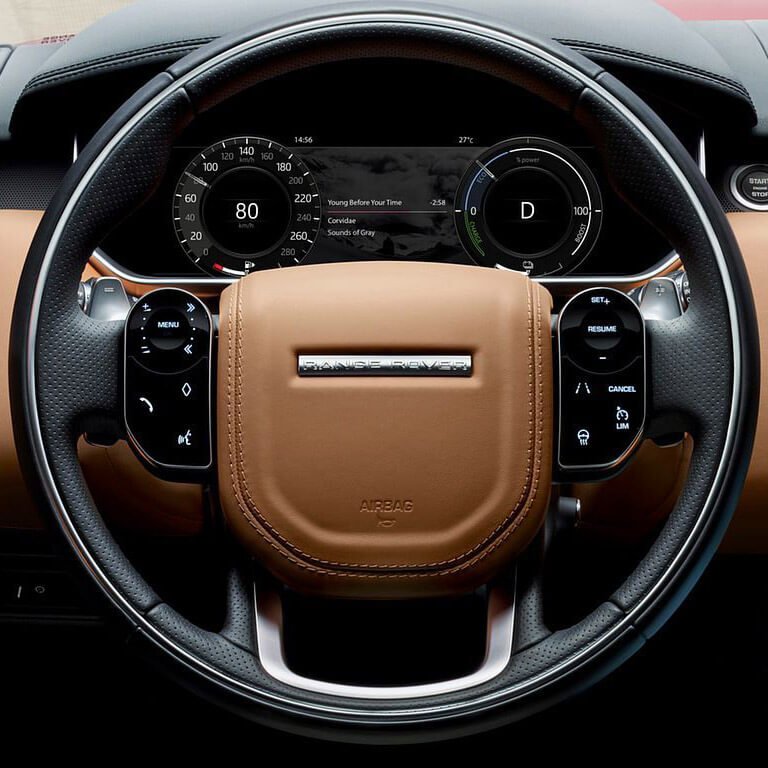
The first warning
Photograph the exact wording, colour and any warning light before switching the vehicle off. The first message can be more useful than the later cluster of secondary alerts.
The trigger condition
Record whether the event followed a difficult start, battery replacement, wheel impact, heavy rain, washing, body work or a particular speed, steering or braking condition.
What changed after restart
Note which messages cleared and which remained. A reset can change the display without repairing the cause, while stored faults may still preserve useful timing and communication evidence.
A technician should then compare code status, network availability and live data with the physical vehicle. When several modules report low voltage, battery capacity, terminals, grounds and charging behaviour should be established before individual control units are blamed. If one sensor signal is implausible, the signal path and related mechanical condition still need to be tested.
Choose recovery when basic safety or engine protection changes
Stop driving and arrange transport for an overheating warning, heavy coolant or oil loss, smoke, a strong fuel smell, a major steering change, reduced brake performance, a wheel or tyre concern affecting control, or a mechanical noise that rapidly worsens. A warning disappearing after restart is not proof that continued driving is safe.
Repair, replace or plan the work in stages
A focused repair fits an isolated and tested fault when surrounding parts remain serviceable. Replacement may be appropriate when a component cannot be repaired responsibly, its condition cannot be verified or the correct complete unit is required. A staged plan helps when the vehicle has several age-related needs that differ in urgency.
The estimate should separate confirmed failure, supporting items required for correct installation, related wear that can be monitored and optional preventive work. It should also identify follow-on needs such as programming, calibration, alignment, fluid verification or a road test. This protects the owner from both parts swapping and an undifferentiated list that treats every observation as urgent.
Parts must be matched to the VIN, build details and what is actually installed. Used, rebuilt, aftermarket and new genuine components carry different considerations depending on the system. Suitability, condition, compatibility and the ability to verify the completed repair matter more than a blanket claim that one category is always best.
Close the repair with evidence
A handover should answer four practical questions
Ask for measurements, code status and test conditions where they materially support the conclusion. A useful record should identify the exact vehicle configuration and parts fitted, especially when a later owner or workshop may need to understand why a particular repair route was chosen. Keep that record with the vehicle’s service history.
What caused the concern?
The explanation should distinguish the confirmed cause from related wear and historic codes.
What was changed or corrected?
Record parts, repairs, programming, calibration, fluid work and any disturbed supporting items.
How was it verified?
Repeat the relevant cold start, operating-temperature check, road condition, leak check, scan or functional test.
What still needs watching?
List genuine advisories and the condition that should trigger follow-up, without turning every age observation into an emergency.
During the first days after repair, monitor the original symptom under the same safe conditions. Keep new warning photos and note fresh fluid marks, changed sounds or a returning pattern. One quiet journey is encouraging, but it is not the only verification for an intermittent concern.
Body history changes the test route
Roof, doors and previous body work belong in the diagnostic history
The L538 was sold in three-door, five-door and later Convertible forms, so roof hardware, sealing, trim access and door systems do not all follow one layout. Before dismantling, identify the body style and connect the complaint to any windscreen, roof, door, mirror, accident or paint work that happened before it appeared.

Roof and glass
Trace staining, wind noise and water entry from the highest credible source. Inspect seals, drainage paths, glass interfaces and disturbed trim before wet modules are replaced.
Doors, mirrors and locks
A slow window, central-locking concern, mirror fault or camera issue can follow work in the same area. Check alignment, harness routing, connectors, grounds and clips before choosing a component.
Previous accident or paint work
Repair history can change panel alignment, sealing surfaces, wiring routes and sensor mounting. The timing of the symptom is evidence, but the actual installation still needs inspection.
Convertible roof operation
Record the exact stage where movement stops, reverses or produces a warning. Do not force repeated cycles when the mechanism moves unevenly. Power, sensing, latches and mechanical movement should be separated.
Bring useful evidence. Photos before and after the symptom, relevant body-repair invoices, the weather or washing condition that reproduces water entry, and which door, window, lock, camera or cabin function fails at the same time can shorten the first inspection.
Questions L538 owners actually ask
Dubai heat and short-trip use change the evidence
An L538 that spends most of its time in dense traffic can present a different evidence pattern from one used mainly on longer roads. High ambient temperature increases the importance of cooling performance, fan operation, clean airflow through the heat exchangers and stable battery voltage. Frequent short trips can also leave an owner with several weak symptoms that appear unrelated, such as slower starting, intermittent messages and inconsistent stop-start behaviour.
The useful approach is to record when the concern appears. Note whether it follows a hot soak, a cold start, extended idling, parking on an incline or a recent battery event. That context helps separate a repeatable mechanical concern from a voltage or communication problem. It also prevents a workshop from treating an old stored code as proof of the current fault.
After inspection, the vehicle should be checked in the conditions that originally exposed the problem where it is safe to do so. Cooling, charging, transmission response and warning behaviour should be assessed together. The final record should state what was observed before work, what changed, and what remained normal during verification. This gives an L538 owner a practical baseline for the next service rather than another isolated invoice.

Range Rover Evoque L538 repair FAQs
Why does my Evoque show several warnings after start-up?
Low voltage, communication interruption or one shared input can affect several systems, but the warnings can also be unrelated. Preserve their sequence, test battery and charging condition, scan all involved modules and verify the physical system before selecting parts.
Does a gearbox warning mean the complete transmission has failed?
No. Control, voltage, wiring, fluid leakage, engine performance and driveline conditions can influence the message or sensation. The exact vehicle and evidence determine whether the route is electrical, hydraulic, mechanical or external to the gearbox.
What information should I send before booking?
Share the model year, engine if known, dashboard message, when the symptom happens, whether it is safe to drive and any recent battery, cooling, gearbox, tyre, accident or body work.
Can water entry cause intermittent electrical problems?
Yes, moisture can affect connectors, wiring and modules. The entry path must be traced and corrected, then affected circuits assessed. Replacing a module without addressing water entry can leave the cause unresolved.
Should every age-related item be repaired at once?
No. Prioritise safety concerns and confirmed faults, then reliability items and optional preservation work. A documented staged plan is often clearer for an older L538.
Book an L538 assessment based on your vehicle’s evidence
Send the year, engine or VIN details, exact warning, symptom conditions and recent repair history. The workshop can then identify the appropriate inspection and testing route before work is approved.