

4.4 SDV8 Diesel Problems
Warning lights, smoke, oil loss, cooling concerns and changing engine noise need evidence, not a parts list. This guide helps Range Rover owners decide what to record, when to stop driving, and how a workshop should separate an external fault from deeper engine risk.
The pattern matters more than one warning
A 4.4 SDV8 complaint should be read as a sequence. Note whether it started cold or fully warm, under steady cruising or acceleration, after a service, after a coolant top-up, or after another repair. A fault code identifies the system that noticed a problem. It does not automatically identify the failed part.
Stop and arrange recovery
Stop for a red oil-pressure warning, rapid overheating, heavy smoke that does not clear, a sudden mechanical knock, major fluid loss, or an engine that runs unevenly with severe noise. Continuing can remove useful evidence and increase damage.
Drive only for assessment
A stable amber warning, mild loss of performance or an intermittent message may permit cautious movement, but only if temperature and fluid levels remain stable and there is no smoke, harsh noise or strong burning smell.
Record before restarting
Photograph the cluster, note ambient temperature, fuel level, journey length, speed and recent work. Do not repeatedly clear warnings or disconnect the battery before diagnosis because freeze-frame and event-order evidence may be lost.
First identify the vehicle and the event
The 4.4 litre twin-turbo diesel V8 appeared in later L322 and L405 applications, but calibration, emissions equipment, cooling layout and surrounding systems vary by model year and market. The VIN, engine identification, current software state and fitted equipment should be confirmed before parts or procedures are selected.
An owner description such as “it lost power” is useful only when tied to conditions. Did the gearbox downshift normally? Did engine speed rise without vehicle speed? Did the message appear before or after the power reduction? Was the engine cold, heat soaked, towing, climbing or idling with the air conditioning working hard? These details separate an engine-management response from a gearbox, fuel, air, electrical or mechanical concern.
Dubai use adds repeatable context. Long idle periods, high under-bonnet temperature, short journeys, dust exposure and sustained air-conditioning load can change when a marginal seal, hose, sensor connection or cooling fault becomes visible. Climate is evidence, not a diagnosis.
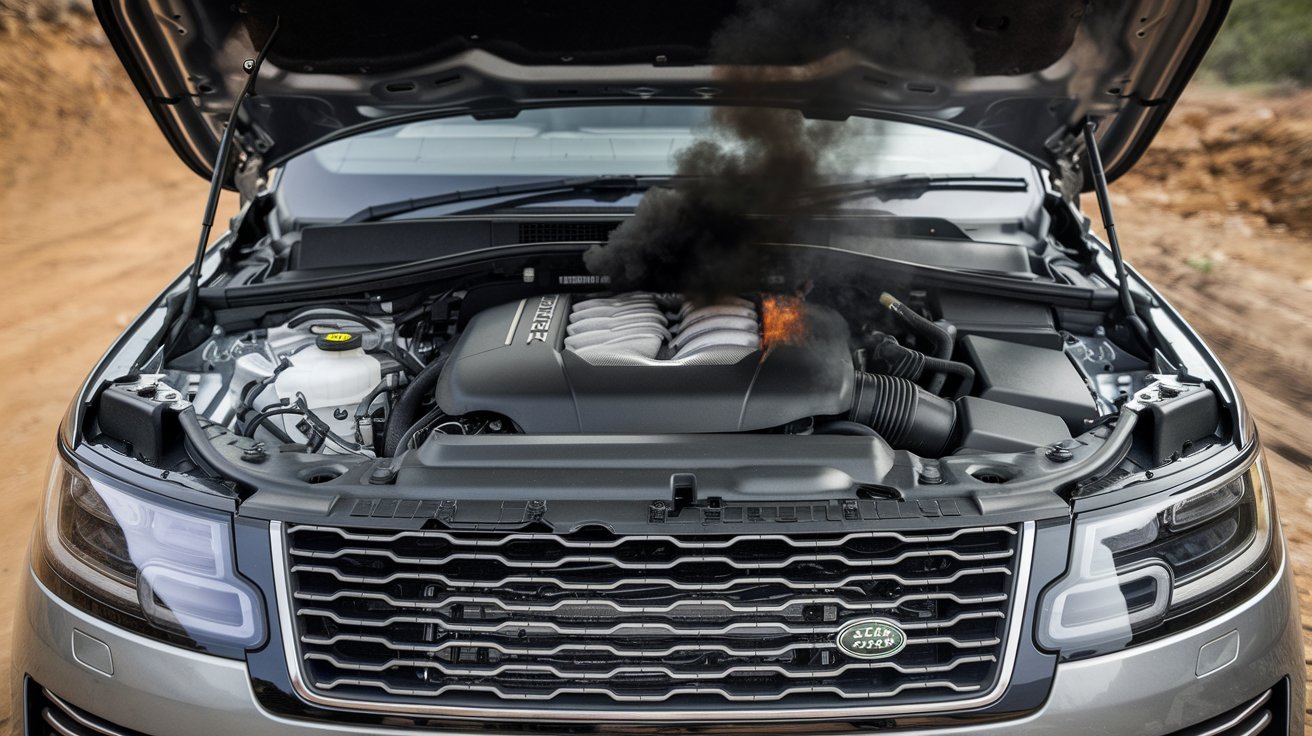
Read smoke by timing, colour and operating condition
| What the owner sees | Useful questions | What diagnosis must separate |
|---|---|---|
| Dark smoke under load | Only during acceleration, or also at idle? Did power reduce at the same moment? | Air metering, boost delivery, charge-air leakage, exhaust restriction, fuelling control and commanded torque. |
| Blue-grey smoke | Cold start, long idle, overrun or sustained load? Is oil level falling? | External oil loss versus oil entering intake or combustion, turbocharger condition, crankcase pressure and mechanical wear. |
| White vapour or smoke | Does it clear as the engine warms? Is coolant level changing? Is there a sweet smell? | Normal condensation, incomplete combustion, fuel delivery, coolant entry and temperature-related control. |
| No visible smoke but poor response | Was there a warning first? Does it recover after restart? | Protective torque reduction, sensor plausibility, boost control, fuel pressure, network events and transmission interaction. |
Colour alone cannot confirm a failed turbocharger, injector or internal engine fault. Lighting, exhaust temperature and accumulated residue can change appearance. A workshop should compare the observation with oil consumption, coolant behaviour, scan data and measured pressure or leakage evidence.

Oil condition is evidence, not merely a level
Check the level only by the vehicle’s approved procedure and on suitable ground. Overfilling is not a safe response to uncertainty. Record how much was added, when it was added and whether the level changed after a specific journey. A falling level can result from an external leak, oil entering the intake path, combustion-related consumption or an earlier incorrect fill.
Fresh oil spread by airflow can appear far from its source. Cleaning without documenting the original pattern may make diagnosis harder. Technicians should inspect from the highest wet point, consider crankcase pressure, check relevant hoses and joints, and verify the repair after a controlled road test. Replacing a lower seal simply because it is wet may leave the pressure condition or higher leak untouched.
Oil quality also gives context. Fuel dilution, contamination, an unsuitable lubricant or an overdue service history may affect lubrication and control systems. A laboratory result can be useful in selected cases, but it must be interpreted alongside engine condition and the sample method.
Cooling faults need pressure, temperature and circulation evidence
Loss without a puddle
Residue, evaporation on hot surfaces, cap behaviour, internal heater-circuit loss and pressure-only leakage must be considered. A clean parking space does not prove the system is sealed.
Temperature that moves
Compare commanded fan activity, measured temperature, hose behaviour, coolant circulation and load. A dashboard gauge may be damped and should not be the only evidence used.
After recent work
Confirm the fill and bleeding procedure, the correct coolant specification, connector security and whether trapped air or a disturbed hose explains the timing. Do not assume every post-repair symptom has the same cause.
A starting complaint begins before the starter turns
Cold-start behaviour can separate electrical, fuel and mechanical clues. Record whether the starter turns at normal speed, whether the engine fires then stalls, whether smoke appears, and whether the same fault occurs after a hot soak. Battery voltage under load, terminal condition and network stability should be checked before fuel-system parts are condemned.
Long cranking can involve low supply pressure, air entering the fuel path, injector control, rail-pressure build, temperature inputs or compression-related conditions. Repeated use of starting aids is unsafe and can mask the actual pattern. Technicians should use live data during the event, not only stored codes after the engine eventually starts.
If the problem began after refuelling, note the station, fuel quantity and time to first symptom. Do not state that fuel is contaminated without sampling and evidence. If it began after filter or engine-bay work, inspect disturbed connections and sealing before expanding the repair scope.
Noise location changes the decision
A brief cold rattle, steady tick, belt-driven chirp, turbo-related whistle and deep load-sensitive knock are not interchangeable. Record the first seconds of a cold start from a safe position, but keep hands and clothing away from moving components. Note whether the sound follows engine speed, vehicle speed or road load.
The diagnostic path may include auxiliary-drive isolation where appropriate, oil-pressure measurement, listening at controlled points, inspection for exhaust leakage, boost-path testing and review of metal or debris in drained fluid or filters. The order matters because dismantling too early can destroy the operating evidence.
A deep knock, sudden increase in noise or oil-pressure warning requires the engine to remain off. For a lighter intermittent noise, a technician may reproduce the exact cold, hot or loaded condition while monitoring data. A recording helps with triage but cannot replace physical localisation.
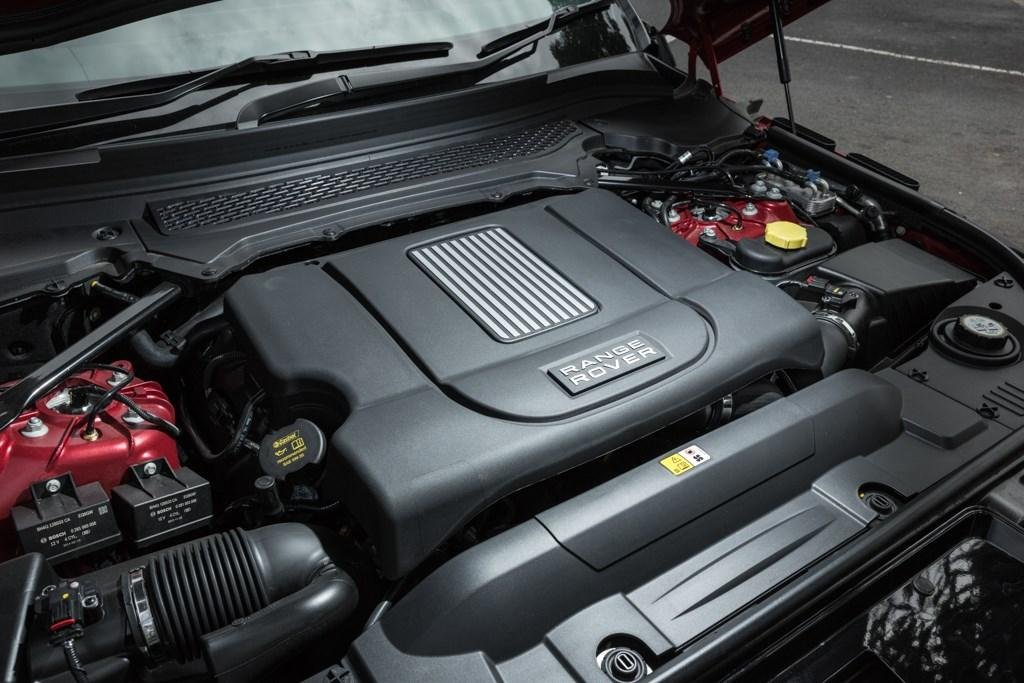
How an evidence-led SDV8 inspection should progress
Preserve the complaint
Record warning order, operating condition, recent work, fluid changes and owner observations before clearing anything.
Confirm the exact configuration
Use VIN and physical identification to confirm model year, engine, emissions equipment, software context and correct specifications.
Inspect before commanding tests
Look for fluid tracks, loose connections, damaged ducts, disturbed wiring, residue and signs of earlier repair. Check battery and charging stability.
Compare commanded and measured values
Review boost, air mass, fuel pressure, temperature, exhaust and torque data under the condition that produces the symptom.
Measure the suspected system
Use pressure, vacuum, leakage, electrical or mechanical tests appropriate to the evidence. A code alone is not a measurement.
Verify after repair
Repeat the original operating condition, check for returning faults and confirm levels, temperatures, shift quality and warning status.
Targeted repair, wider strip-down or engine assessment
A targeted repair is reasonable when the fault is isolated, the surrounding system is healthy and post-repair testing can reproduce a normal result. Examples may include a confirmed external leak, failed hose, wiring defect or measured control-component fault. The decision must come from the vehicle, not a generic problem list.
A wider strip-down may be justified when access overlaps, contamination has spread, several related seals or components show deterioration, or the first failure has damaged connected parts. The workshop should show what was measured, what remains serviceable and what additional work changes the risk.
Deeper engine assessment becomes relevant when oil pressure, compression, leak-down, debris, coolant entry or mechanical noise indicates internal risk. Rebuild or replacement should never be proposed only because of mileage or one fault code. Ask for the evidence, scope, parts basis, machining requirements if any, and the verification plan.
For measured internal damage or a repair that requires deeper mechanical work, the findings can be carried into a structured Range Rover engine repair assessment without repeating the initial diagnosis.
What to bring to the workshop
Timeline
First occurrence, cold or hot state, road speed, load, warning order, restart behaviour and whether the symptom is becoming more frequent.
Service evidence
Invoices, oil and filter details, coolant work, battery replacement, software work and any recent dismantling near the affected system.
Media and levels
Cluster photographs, safe recordings of smoke or noise, measured top-up quantities and the location of any fluid found beneath the vehicle.
Do not wash the engine bay or clear codes immediately before the appointment unless safety requires it. Bring both keys if an intermittent electrical or authorisation concern is part of the complaint.
Questions SDV8 owners actually ask
Can I drive with an amber restricted-performance message?
Only if the engine sounds normal, temperature and fluid levels remain stable, there is no heavy smoke or burning smell, and the vehicle responds safely. Reduce load and arrange diagnosis. Stop if the warning changes, power falls sharply or another symptom appears.
Does smoke mean both turbochargers need replacing?
No. Smoke can relate to air delivery, fuelling, oil entry, exhaust temperature, crankcase pressure or internal condition. Turbocharger replacement requires inspection and measured evidence, including the connected oil, intake and boost systems.
Why does the warning disappear after restarting?
A restart may end a protective operating state, but the event and its cause can remain stored. Record the original sequence and have the system scanned before repeated clearing removes useful context.
Should I approve an engine rebuild from one low-pressure warning?
No. A genuine red oil-pressure warning is urgent, but the repair depth should follow confirmation of oil level, sensor circuit, actual pressure, oil condition and mechanical evidence. Keep the engine off until assessed.
Can Dubai heat cause the fault?
Heat can expose marginal cooling, electrical, sealing or control conditions, but it is not a complete diagnosis. The technician should reproduce or model the heat-related condition and measure the affected system.
After repair, ask for evidence that matches the original complaint
A successful repair is more than a cleared warning lamp. If the concern appeared on a cold start, verification should include a genuine cold start. If it appeared after traffic heat soak, the test must include a comparable fully warm condition. If it occurred during acceleration, the workshop should compare requested and measured boost, air and fuel behaviour under a safe controlled load.
Ask for confirmation of oil and coolant levels, leak status, charging voltage, returning codes and any adaptation or relearn that was required. When parts from an air, fuel, cooling or lubrication path were replaced, connected hoses and contamination should also be checked. A brief idle test cannot validate a fault that originally required sustained driving.
Keep the final report with the vehicle. On an older high-value engine, a clear record of the original event, measured cause, approved scope and post-repair result helps future diagnosis and protects against repeating work. It also gives a future buyer or technician a more reliable history than a list of replaced parts.
Book an evidence-led 4.4 SDV8 inspection
Send the model year, VIN, warning photographs, symptom timeline and recent repair history. We can then plan the right first inspection without promising a part before the vehicle has been tested.