

A suspected Range Rover steering rack leak needs two checks before a repair decision: which steering system is installed, and where the fluid actually starts. A hydraulic system uses fluid for assistance. Electric power steering (EPS or EPAS) does not have a hydraulic steering reservoir, pump or pressure circuit to test. Oil near an electric rack must be traced to its source rather than labeled a power-steering leak.
This guide explains the warning signs, the different diagnostic paths and the evidence to request before approving work. It does not give a universal rack replacement price: the fault, vehicle specification, parts and required setup must be established first.
Stop and arrange recovery if you cannot steer safely. Sudden heavy steering, binding, intermittent loss of assistance, excessive free movement or a wheel that does not respond normally requires a safe stop. Reduce speed carefully, pull over as soon as it is safe and do not continue to the workshop. Follow any dashboard stop instruction. A major fluid loss on a confirmed hydraulic system also needs professional assessment before further operation. Tell the recovery operator the exact vehicle and steering symptoms so they can use the approved recovery procedure.
First identify hydraulic steering, electric steering or an older steering box
The Range Rover name covers different generations, models and steering arrangements. Do not use the badge, engine size or the appearance of an under-hood reservoir to choose the test. A workshop should confirm the VIN, model year, market specification and installed steering hardware against the appropriate parts and service information. Previous replacement parts or modifications also matter.
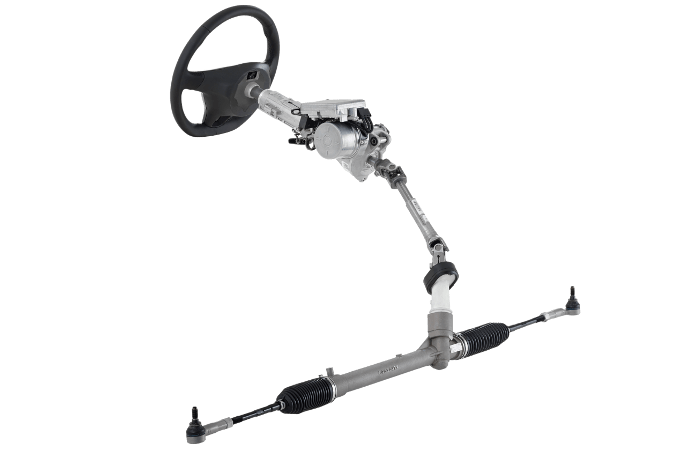
For a dated example, JLR specifies EPAS in its 2021 Range Rover technical press kit. That is evidence for the vehicle described in that release, not a year-by-year fitment guide for every Sport, Evoque or Velar. Some older Range Rovers use a steering box rather than a rack, as shown in JLR's archived owner-maintenance handbook.
| Confirmed system | What it uses | Relevant starting checks |
|---|---|---|
| Hydraulic power steering | Specified fluid, a pump and hydraulic lines supplying the steering gear | Correct level-check procedure, external leak tracing, hose and fitting condition; pressure or flow tests only when indicated by the service procedure |
| Electric power steering: EPS / EPAS | Electric assistance with control electronics and mechanical steering parts | Stored faults, electrical supply, wiring, connectors, relevant sensor data and mechanical condition; no hydraulic steering-fluid top-up or pump-pressure test |
| Older steering-box installation | A steering box and linkage rather than the rack assumed by this article's title | The correct steering-box procedure and inspection of its associated linkage and assistance system |
“Electric” and “electrohydraulic” are not interchangeable terms. An electrohydraulic steering system, as described by ZF, uses an electric motor to drive a hydraulic pump and still contains fluid. It is not a claim that your Range Rover has that arrangement; identify the actual installation first.
Which symptoms suggest inspection, and what can they mean?
A puddle, heavy steering or a turning noise is a reason to investigate. None identifies a failed rack by itself. Record when the symptom started, whether it occurs cold or warm, while parking or at road speed, and whether it followed an impact or recent repair. Do not deliberately repeat a maneuver that makes control difficult.
| Observation | Possible explanations | Evidence needed |
|---|---|---|
| Wet area near the rack or front subframe | A hydraulic steering leak where fitted, or fluid migrating from another component | Identify the fluid circuit and trace fresh leakage to its origin after appropriate cleaning |
| Heavy or inconsistent steering | Loss of hydraulic assistance, an EPS electrical fault, mechanical binding or tire-related issues | System-specific assistance tests and mechanical inspection; stop if control is unsafe |
| Whine while turning | On hydraulic systems, a fluid supply or pump concern; other rotating components may also make noise | Locate the sound and assess the applicable fluid circuit, rather than ordering a rack from the noise |
| Clunk, pulling or uneven tire wear | Steering joints, suspension, tires, alignment, mounting movement or other faults | Inspect for damage and play, check tires and measure alignment when appropriate |
| Steering warning message | A detected assistance or related control-system problem | Exact message, stored diagnostic report and guided tests; a code alone does not authorize replacement |
A warning-free dashboard does not rule out a leak, worn joint or mechanical defect. Equally, a steering warning does not prove the rack itself has failed. Several symptoms can share a cause, but they can also be separate faults that require separate evidence.
How a hydraulic leak should be traced
Start with the origin, not the lowest drip
Fluid can travel along a hose, subframe or undertray before reaching the ground. The workshop should inspect the reservoir and connections, relevant hoses and fittings, pump and steering gear, following the layout fitted to the vehicle. A wet rack housing may simply be below a leaking connection. Repairing the rack will not fix a leak elsewhere.
Suitable cleaning and a controlled reinspection can distinguish old residue from an active leak. Any cleaning product, leak-detection additive or test method must be compatible with the system and its service instructions. Adding generic dye or repeatedly holding the wheel against full lock is not an owner diagnostic routine.
Check fluid specification and condition without guessing
Color alone cannot reliably identify a fluid or establish why a component failed. Different products, aging, contamination and lighting can change its appearance. Dark fluid does not prove rack damage, and cloudy fluid does not identify the source of contamination without investigation. Debris needs evaluation in the context of the complete hydraulic circuit.
If the handbook provides an owner-accessible fluid check, use its exact temperature, engine-state and level instructions. Do not open an unidentified reservoir or select fluid by color. Repeatedly topping up a falling level is not a repair, and additives sold as a universal leak cure should not replace a diagnosis.
Interpret rack-boot findings carefully
A damaged bellows boot can admit dirt or moisture, but its appearance alone does not establish internal hydraulic seal failure. Fluid found inside a boot on a confirmed hydraulic rack is an important finding; the technician still needs to identify the substance, its source and the condition of the parts. Water, grease and fluid arriving from outside need different explanations.
What pressure and flow tests establish
These are controlled workshop tests on a confirmed hydraulic system. Pressure describes the hydraulic load; flow measures the volume delivered over time. Readings must be compared with the vehicle procedure at the specified fluid temperature, engine speed and test conditions. A technician uses compatible, pressure-rated adapters and calibrated equipment to assess pump delivery, restrictions or internal leakage. One low reading does not identify the rack as the failed part.
These tests do not apply to pure EPS. Do not loosen pressurized lines, search for a leak with your hands or improvise a blocked-line test. The approved procedure determines how and for how long a hydraulic circuit may be loaded.
What changes when the Range Rover has EPS?
On an EPS-equipped vehicle, a puddle beside the steering gear is not a hydraulic power-steering leak. The workshop should establish which component is leaking and separately diagnose any steering complaint. An electric rack can still suffer mechanical damage, water ingress or an electrical problem; the absence of steering fluid does not mean the assembly is maintenance-free or incapable of failure.
The useful diagnostic record begins with the exact warning and a saved scan report before codes are cleared. Appropriate checks may include the electrical supply under the specified conditions, grounds, connections, wiring damage and the live data required by the fault-finding procedure. Sensor location and test values depend on the particular system.
Mechanical resistance must also be assessed safely. A fault code naming steering assistance is not proof of a defective motor or rack. Nor does a restart that temporarily removes the message prove the vehicle is safe. Diagnosis should explain the observed fault and the evidence supporting the proposed repair.
Why pulling and clunks need a wider inspection
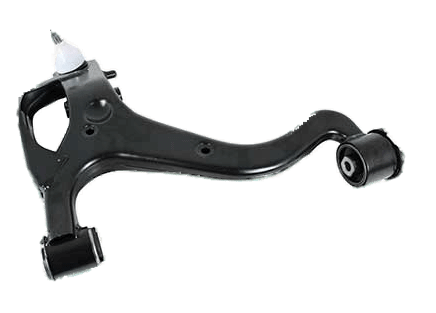
A steering complaint should not exclude the tires and suspension. If play or damage is confirmed outside the steering gear, the quote for suspension repairs should identify those parts separately. A technician may need to assess tire condition and pressure, steering joints, column or shaft joints, rack mountings, control-arm bushes and ball joints. The relevant checks depend on whether the complaint is noise, looseness, uneven effort or directional instability.
Alignment measurements can help explain tire wear or an off-center steering wheel, but alignment will not seal a leak or restore a worn joint. Repair identified damage or excessive play before treating alignment as the solution. Likewise, replacing a rack does not automatically correct an unrelated suspension fault.
Never crawl beneath a vehicle supported only by a jack or rely on air-suspension ride height as support. Underbody inspection requires the approved lifting and support procedure. Keep hands clear of moving steering parts, belts and fans, and leave access to high-voltage components on hybrid vehicles to qualified personnel.
Can a leaking rack be repaired, or must it be replaced?
The answer depends on the diagnosed fault, measured condition and an available, appropriate repair process. “Only the seals” is not enough evidence for a durable repair. Conversely, an internal leak does not justify a universal claim that every unit must be replaced without considering the permitted repair options.
- A hose, fitting or pump leak: repair the confirmed source. A rack replacement needs separate supporting evidence.
- A hydraulic rack considered for repair: assess sealing surfaces, shaft condition, corrosion, wear, housing integrity and contamination against the applicable repair limits. Confirm suitable parts, assembly procedures and a meaningful post-repair test.
- A unit outside repair limits: compare a compatible replacement or properly specified remanufactured unit, with its test standard, warranty and installation requirements stated.
- An EPS fault: establish whether the cause is external electrical supply, wiring, a serviceable component or the steering assembly itself. Confirm the supported repair route and any required configuration or calibration.
No label guarantees a longer life. A new genuine part, an aftermarket assembly and a remanufactured unit should be compared using exact compatibility, supplier traceability, scope of refurbishment where relevant and written warranty terms. Ask what is included and what conditions could invalidate the warranty.
After the work, the workshop should verify the original complaint, recheck for leaks where applicable and complete the specified setup. Alignment, steering-angle procedures or electronic initialization may be required by the particular repair. These are not interchangeable, and none should be promised as universally necessary or universally unnecessary.
Why calibrated tightening matters
A calibrated torque tool helps the technician apply the specified tightening value; a digital display alone does not guarantee correct assembly. The repair procedure must also specify the fastener, thread condition, tightening sequence and any angle stage. Replace one-time-use fasteners when required. Do not apply a universal later re-torque to them. Correct tightening reduces the risk of insecure connections or damaged threads, but does not repair worn sealing surfaces or prove that a leak is resolved. Norbar explains why torque-tool calibration matters; the vehicle's repair instructions supply the actual fastener requirements.
What should a steering repair quote include?
A useful quote starts with an identified fault. There is no verified, scoped AED example in this article, so it would be misleading to advertise a replacement cost that could refer to a hose, a hydraulic rack or an electric assembly. Use the following checklist to compare written estimates for the same work.
- Vehicle and diagnosis: VIN-based specification, installed steering system, confirmed leak or fault location, and the evidence behind the recommendation.
- Part and repair scope: exact component, part number where available, new or remanufactured status, supplier and any separate hose, joint or mounting work.
- Labor and materials: removal and installation, seals and required fasteners, and the specified fluid and bleeding procedure only where a hydraulic system requires them.
- Setup and verification: applicable alignment, calibration or programming, leak checks, fault-report review and safe post-repair checks.
- Total and terms: diagnostic charge, itemized AED amounts, whether VAT is included, any refundable exchange-unit deposit, exclusions and written warranty coverage.
If additional damage is discovered after removal, ask for the findings and a revised estimate before approving extra work. This makes a repair quote useful without presenting an unverified price band as a promise.
What can an owner record before inspection?
From a safe position, photograph the puddle location and any dashboard message while parked. Note whether the steering became heavy, whether the symptom was sudden or gradual, and any recent impact, tire change or steering repair. Existing service invoices can help establish what parts and fluid were previously used.
Do not drive to reproduce a dangerous symptom, touch or taste leaking fluid, or climb underneath to find its source. Do not use routine code clearing, a battery disconnect or a fluid top-up to decide that a steering warning has been resolved.
There is no universal 30,000–40,000-mile steering-fluid replacement rule for every Range Rover. Use the maintenance instructions for the installed system and exact vehicle. EPS has no hydraulic steering fluid to change. Dubai operating conditions may be relevant to the inspection history, but they do not establish a separate rack replacement interval or prove a heat-related failure.
Range Rover steering rack leak FAQs
Can an electric Range Rover steering rack leak power-steering fluid?
Pure EPS has no hydraulic steering-fluid circuit. Wetness near its rack must be traced to the actual source. The rack may still have a mechanical or electrical fault, but a puddle alone does not establish one.
How do I know which steering system my Range Rover has?
Use the VIN, exact model year and market specification with the appropriate handbook, parts information and physical inspection. Do not assume every Range Rover, Sport, Evoque or Velar uses the same arrangement or identify a reservoir by appearance alone.
Can I drive with a steering rack leak?
Do not continue if steering becomes heavy, binds, loses assistance intermittently or no longer responds safely. Follow dashboard stop instructions and arrange recovery. A significant hydraulic fluid loss also requires professional assessment before further operation; topping up does not establish that driving is safe.
Does red or brown fluid prove a steering rack leak?
No. Color is not a reliable component diagnosis. A technician must identify the fluid circuit and trace the fresh leak to its origin. Fluid can travel across an undertray or subframe before it drips below the rack.
Does fluid inside a rack boot mean the whole rack needs replacing?
It is a significant finding on a hydraulic rack, but the substance, source and internal condition still need assessment. Repair or replacement depends on measured damage, the supported repair procedure and the ability to test the finished unit.
Will wheel alignment fix heavy steering or a leak?
Alignment cannot seal a hydraulic leak or repair lost electrical assistance. It may be relevant to pulling or tire wear after mechanical faults have been assessed. The required checks should follow the complaint and the installed system.
How much does Range Rover steering rack repair cost in Dubai?
A reliable amount requires the vehicle specification and confirmed repair scope. Ask for an itemized AED quote covering the part, labor, applicable fluid, setup, testing, VAT and warranty. This article does not publish an unverified price range.
Should I replace the rack when a steering fault code appears?
Not from the code alone. Preserve the report and follow the correct diagnostic procedure, including relevant electrical and mechanical checks. The repair recommendation should explain the test results, not simply repeat the fault-code description.
Arrange a steering inspection
For steering fault diagnosis, share your model year, warning messages and symptoms so the workshop can plan the right checks. Arrange recovery if steering is unsafe.