

Range Rover maintenance guide
Been told your Range Rover needs a major service, but not what the extra work includes? The important difference is between the parts being replaced, the items being inspected and any repairs that need a separate decision.
A Range Rover major service normally combines engine oil and oil-filter replacement with an agreed vehicle inspection and additional scheduled filters, spark plugs or fluid changes that are due. The exact list depends on the fitted engine, vehicle age, mileage and previous maintenance.
The checklist below explains those inclusions for full-size Range Rover, Sport, Evoque and Velar models with petrol, diesel or hybrid powertrains. It helps you understand an itemised estimate without assuming every vehicle needs the same package.
The major-service checklist
A useful estimate names the work beside each item. An inspection, fluid top-up and replacement are different jobs; the list should make that distinction clear.
| Item | Work to identify | What needs confirmation |
|---|---|---|
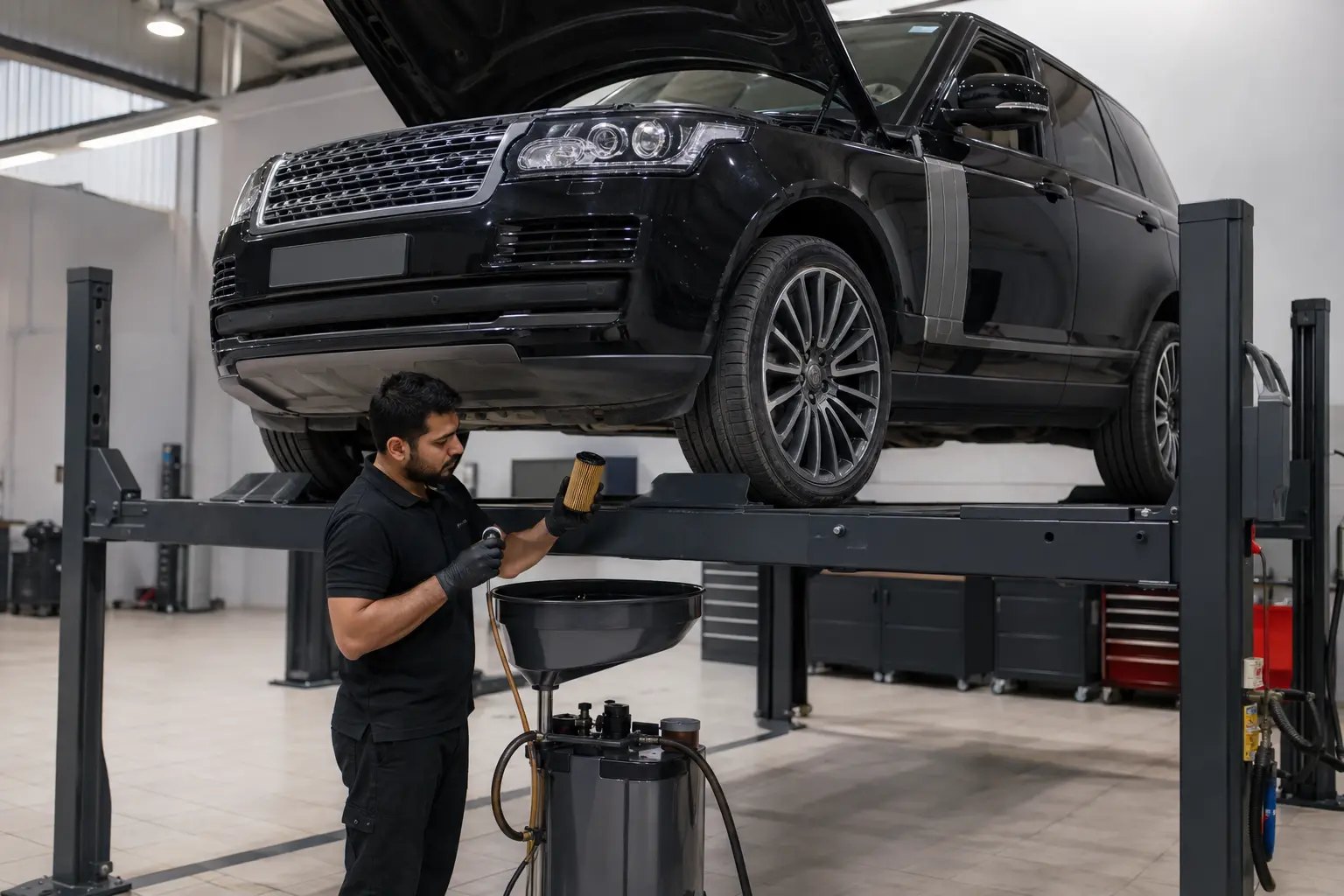
| Engine oil and oil filter | Correct oil, filter and required seals, followed by level and leak checks. | Oil specification and quantity for the fitted engine. |
| Engine-air and cabin filters | Inspection or replacement of each filter, stated separately. | Which filters are due and their previous replacement record. |
| Spark plugs | Replacement on an applicable petrol engine when scheduled. | Correct plug type, quantity and previous replacement. |
| Fuel filter | Replacement where specified, particularly on applicable diesel engines. | The engine's filter arrangement and maintenance requirement. |
| Brake fluid | A level check, condition assessment or fluid replacement. | Whether a fluid change is due and included. |
| Coolant | Level and visible-leak checks; replacement when required and agreed. | The correct fluid and cooling circuit. |
| Gearbox and driveline fluids | Separately identified transmission, transfer-box or differential work. | The unit being serviced, applicable requirement and previous fluid work. |
| Vehicle inspection | Agreed checks of brakes, tyres, steering, suspension, lights, wipers, accessible belts, hoses and leaks. | Inspection depth and the findings that will be reported. |
| Completion and records | Checks after the work, an itemised invoice and the appropriate service-indicator reset. | Completed work, outstanding recommendations and service documentation. |
Oil and filter replacement is normally the starting point. The additional rows belong in your service only when they are applicable, due and included in the agreed work.
Oil, filters and fluid changes
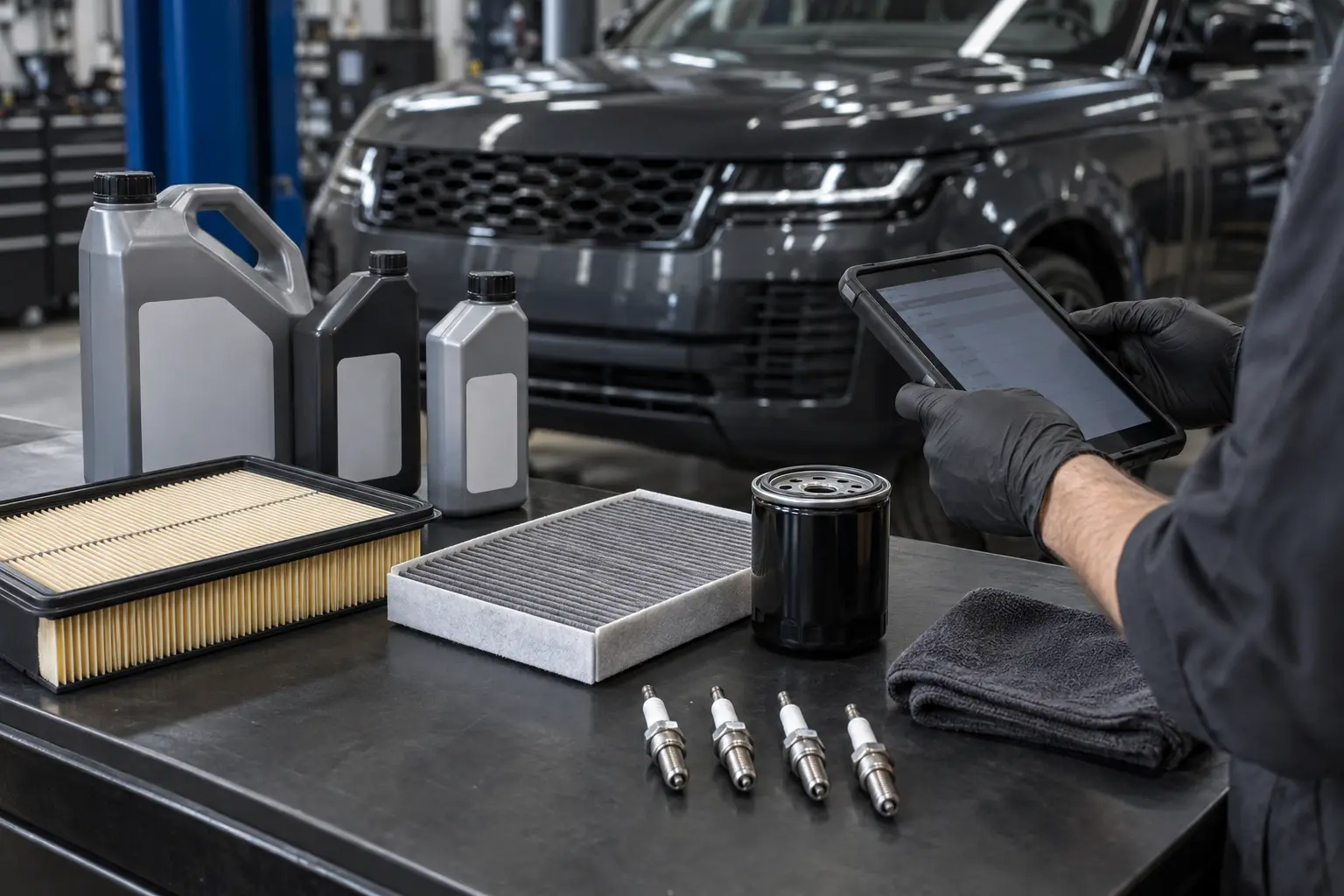
A major service brings together maintenance items with different jobs. Renewing engine oil does not renew the cabin filter or brake fluid, so each replacement should have its own line on the estimate.
For engine oil, the product must meet the requirement for the identified engine. A familiar brand or a viscosity such as 5W-30 is not enough on its own. The invoice should identify the oil specification, quantity and replacement filter.
The engine-air filter cleans air entering the engine; the cabin filter cleans air entering the passenger compartment. A cabin-filter replacement is not an air-conditioning refrigerant service and will not repair a compressor fault or refrigerant leak.
For fluids, check the verb: “inspect”, “top up” and “replace” describe different work. In particular, a brake-fluid level check does not mean the fluid has been changed.
What changes by powertrain
The engine changes the parts list even when two vehicles share the same model badge. These are the differences most useful when reading an estimate.
| Powertrain | What changes the work | Important distinction |
|---|---|---|
| Petrol | Spark plugs can be a scheduled addition to oil and filtration work. | New plugs do not automatically require new ignition coils. |
| Diesel | A scheduled fuel-filter change can apply, depending on the engine. | Diesels do not use petrol-engine spark plugs. Glow plugs are not a routine substitute on the estimate. |
| Mild hybrid (MHEV) | The fitted petrol or diesel engine still determines oil, filter and ignition requirements. | A routine battery check does not establish the condition of the entire hybrid system. |
| Plug-in hybrid (PHEV) | Engine maintenance remains relevant alongside specified charging and cooling-system checks. | Mostly electric driving does not remove engine servicing. A traction-battery capacity report is not automatically included. |
The VIN helps the workshop match parts and maintenance information to the actual vehicle. Hybrid-system repairs, especially work on high-voltage equipment, require appropriately trained personnel and the relevant procedures.
Know what your service needs
Not sure which items your Range Rover needs? Send our Dubai team your model, year and approximate mileage to request an itemised major-service estimate.
Add a dashboard photograph, VIN or previous invoice when available. You do not need a complete service history to start the conversation.
Our Range Rover servicing team will review the scheduled work and explain anything that needs inspection before the estimate can be confirmed. Additional repairs will be quoted separately for approval.
What the inspection tells you
A service inspection should leave you knowing what is satisfactory, what needs monitoring and what needs attention. Useful findings identify the component and its condition, rather than simply saying “brakes” or “suspension”.
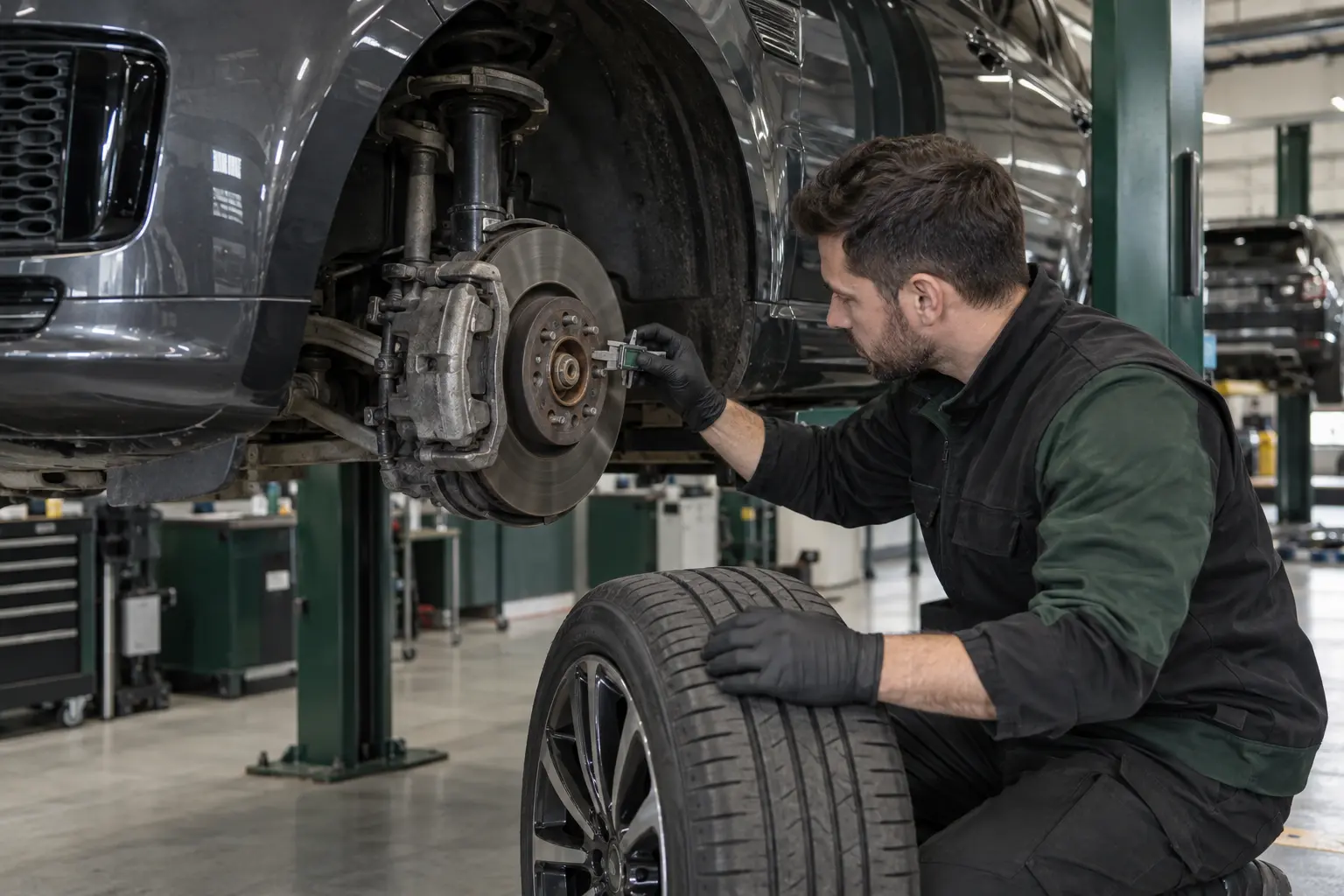
Brake findings can include pad thickness and disc measurements where taken. Tyre findings should distinguish low pressure from tread wear, damage or an uneven wear pattern. Steering and suspension recommendations should explain the specific concern.
A visual inspection has limits. Checking accessible belts, hoses and visible leaks does not establish the internal condition of a gearbox or hidden timing components. Similarly, a fault-code scan can identify a system needing investigation but does not prove which part has failed.
Report an existing warning, leak, unusual noise or driving problem before the visit. The workshop can then allow for the relevant diagnosis instead of treating it as routine maintenance.
Work agreed separately
Wear-related replacements. Brake pads, discs, tyres, wipers and batteries are replaced according to their condition and the agreed work, not automatically at every major service. Their inspection and replacement should be distinguished on the estimate.
Timing work. An accessible auxiliary-belt inspection is not a timing-belt replacement. Where a timing belt is due, that job should be named explicitly and matched to the fitted engine. Timing-chain engines need their own applicable maintenance information.
Driveline servicing. Transmission, transfer-box and differential fluids serve separate units. The estimate should identify which fluid service is included rather than use “gearbox service” to imply all three.
Cleaning and other treatments. Engine flushes, injector cleaning, diesel particulate filter cleaning and air-conditioning regassing need their own reason. Establish whether each is a scheduled requirement, a response to a measured condition or an optional extra.
Major versus minor service
A Range Rover minor service is the more focused routine visit. A major service adds the further scheduled replacements due for the vehicle. The distinction is the work completed, not simply the number of advertised inspection points.
The service reminder and maintenance records help determine the next visit. Recently completed items should be taken into account, so a wider service does not simply repeat work because it appears in a package.
Before approving the work
Read the itemised estimate with these five questions in mind:
- Is this for my vehicle? Check the model, year, engine and mileage, with registration or VIN used to confirm the application.
- What is being replaced? Look for individual filters, plugs and fluids with the correct specification or part description.
- Why is each item included? Distinguish scheduled work from a condition finding or an unresolved gap in the records.
- Which checks are included? Identify the inspection, measurements and any separately booked fault diagnosis.
- How are extras approved? Confirm that additional findings will be explained and quoted before further work is authorised.
For example, a recent invoice for the correct spark plugs is useful when preparing the next service list. It may show that replacement is not yet due; a separate fault would need its own explanation.
Mention regular dusty or off-road use, towing and repeated short trips. This helps the workshop apply the relevant operating-condition guidance without treating every vehicle in the UAE as needing identical extra work.
What to collect afterwards
Keep the dated invoice with the mileage, oil specification, fitted parts and completed fluid changes. Retain the inspection report and any recommendations not carried out. These details make the next maintenance decision easier.
Ask how the work will appear in the vehicle's history. Online Service History is available for eligible vehicles, but the workshop's ability to add an entry should be confirmed. Keep the itemised invoice regardless.
A reset reminder is not proof of parts replacement. At handover, you should know what was completed, what remains outstanding and whether any specific follow-up is needed.
Major-service questions
Does a major service include every filter?
No. The oil filter is normally part of the engine oil service. Engine-air, cabin and fuel-filter work depends on the vehicle and what is due. The estimate should identify each filter and say whether it will be inspected or replaced.
Are spark plugs included on every Range Rover?
No. Spark plugs are petrol-engine components and are replaced when required for that engine. Diesel engines do not use petrol-engine spark plugs. A petrol or plug-in-hybrid service should still check the previous replacement record before including a new set.
Does a major service include gearbox oil?
Not automatically. The estimate should name the transmission-fluid work when it is included. Transfer-box and differential fluids are separate again, and each needs the correct application and procedure.
Does checking brake fluid mean it is changed?
No. Checking the level or assessing the fluid is different from replacing it. Ask whether the service includes a brake-fluid change when that maintenance is due.
Is timing-belt replacement part of a major service?
Only when it is required for the fitted engine and explicitly included. Checking an accessible auxiliary belt does not mean the timing belt has been replaced, and a timing-chain engine should not receive another engine's belt package.
Will a major service fix a warning light?
Not necessarily. A service-due reminder can be reset after the relevant maintenance, but a fault warning needs its cause assessed. A routine service or code scan alone should not be presented as a repair for an unidentified problem.
Written by Range Rover Specialist Team
Range Rover Specialist Team publishes practical maintenance and ownership guidance for UAE drivers. This article explains scheduled replacements, inspections and the separate decisions that can arise during a major service.
Manufacturer references. Land Rover servicing information explains engine-specific oil servicing, health checks and service records. Land Rover iGuide provides vehicle-specific owner information. The checklist above explains possible inclusions; the maintenance requirements for the exact vehicle determine the final work.