

A new grille, retrimmed cabin or different wheel design can make a Range Rover feel more personal. The expensive mistakes usually happen before fitting, when a part is chosen from appearance alone or an installer promises that approval, electronics and warranty will take care of themselves.
Plan Range Rover modifications in Dubai around one clear goal, the exact vehicle specification, confirmed compatibility and any required approval. Record the existing condition, compare the complete fitted cost and agree how the result will be checked. Keep cosmetic changes separate from performance engineering and desert equipment, because each needs a different assessment.
Repair unsafe faults before considering upgrades. A soft or sinking brake pedal, reduced stopping ability, unsafe steering, severe overheating or an unstable suspension condition needs diagnosis. Stop safely and arrange recovery when continued driving is unsafe. A bigger brake kit, lift or tune is not a substitute for repairing the fault.
Start with a one-page Range Rover modification plan
Write down the outcome you want before choosing a product. “Restore worn seats while keeping ventilation” is a useful brief. “Make it look newer” needs more detail: which parts, which functions must remain and what changes are you prepared to accept?
Include model year, VIN where needed, powertrain, wheel and tire specification, suspension type, factory audio and relevant options. Registration year and a Sport, Velar or Evoque badge do not establish the exact configuration. Record previous changes and replacement parts too.
| Planning question | What to record | Reason to pause |
|---|---|---|
| What problem or preference does it address? | A specific comfort, appearance or use requirement | The proposal mainly promises vague reliability, resale or performance gains |
| Does it fit this vehicle? | Exact part, application information and affected equipment | The only fitment claim is “fits all Range Rovers” |
| What else changes? | Weight, clearance, wiring, software, maintenance and visibility | The installer cannot explain consequences beyond the new part |
| What permission is needed? | Licensing requirements and relevant insurer, warranty or lease conditions | A seller's approval claim has no vehicle-specific support |
| What is the complete price? | Parts, fitting, setup, checks, VAT and removal or restoration costs | The advertised amount covers only the visible component |
| How will success be checked? | Function checks, applicable measurements and a written handover record | Success means only that no dashboard warning is visible |
Choose changes you can explain and assess. If the current part works well and the proposed benefit is unclear, postponing the purchase is a valid outcome. A staged plan also makes it easier to identify the source of a new noise, warning or fit problem.
Confirm Dubai approval requirements before buying parts
The UAE's Federal Decree-Law No. 14 of 2024 on traffic regulation requires licensing-authority approval for substantial changes to vehicle shape, chassis, body, engine power or color. The applicable authority's conditions also matter. A product being sold in Dubai does not establish approval for your vehicle.
Ask the licensing authority about the proposed change using its exact description. A color-changing wrap, revised suspension height and additional lighting are different requests. Obtain the relevant requirements before committing to nonreturnable parts, and confirm any required inspection or registration update. Do not assume that waiting until annual renewal resolves an unapproved modification.
RTA's official customer information provides its inquiry route, including 800 9090. Keep the response and any applicable approval with the estimate. A workshop can help prepare the specification, but its invoice is not authority approval.
Do not rely on a universal lift, tint or lighting allowance
- Suspension lifts: this guide does not treat a 1-inch lift as automatically legal or safe on stock control arms. Approval and compatibility need assessment for the actual kit and vehicle.
- Window tint: the former “50% rear and 30% front” rule is not a reliable instruction. Official police guidance published in July 2017 describes up to 50% tinting on side and rear glass and excludes the front windshield. Confirm current application to the vehicle. Film labels and finished-glass VLT are not interchangeable.
- Lighting: fitting below the roofline, adding a separate switch or choosing an IP rating does not prove road-use approval. Confirm the exact lamp, location, function and required installation standard.
Do not accept a generic “RTA-approved brand” or “approved wiring” claim without documentation for the relevant product and installation. An overseas approval mark can be useful technical information, but it should not be presented as automatic UAE permission.
Exterior styling without losing useful functions
Body kits, grilles, mirror covers and trim finishes are primarily appearance decisions unless a specific performance benefit has been demonstrated. An OEM-style shape does not prove original-equipment quality, correct fit or improved aerodynamics. A spoiler or diffuser should not be sold as guaranteed downforce or drag reduction without applicable testing.
Before approving a bumper or grille change, check parking sensors, cameras, radar areas where fitted, cooling openings, pedestrian-safety features and access to towing attachments. Sensor brackets and surface materials can matter as much as whether the panel bolts on. Calibration is required when the exact vehicle procedure calls for it, not automatically after every cosmetic task.
- Inspect panel gaps, edges, fasteners and mounting support before painting or final assembly.
- Check clearance at normal and permitted suspension heights, including ramps and parking access.
- Keep lamps, number plates and required reflectors visible and correctly positioned.
- Confirm that service panels, drains and approved recovery access remain usable.
Paint protection film, vinyl wrap and ceramic coating serve different purposes. Ask which surface condition must be corrected first, what the chosen material protects against and what remains excluded. Neither a coating nor a wrap makes paint immune to damage or guarantees a cooler cabin.
Inspect previous paint repairs before wrapping. Removal may affect weak or poorly bonded paint, so do not promise that every wrap can be removed without consequence. Record the existing finish, the agreed coverage, edge treatment and the local material and workmanship warranty.
Interior retrimming and lighting need a safety plan
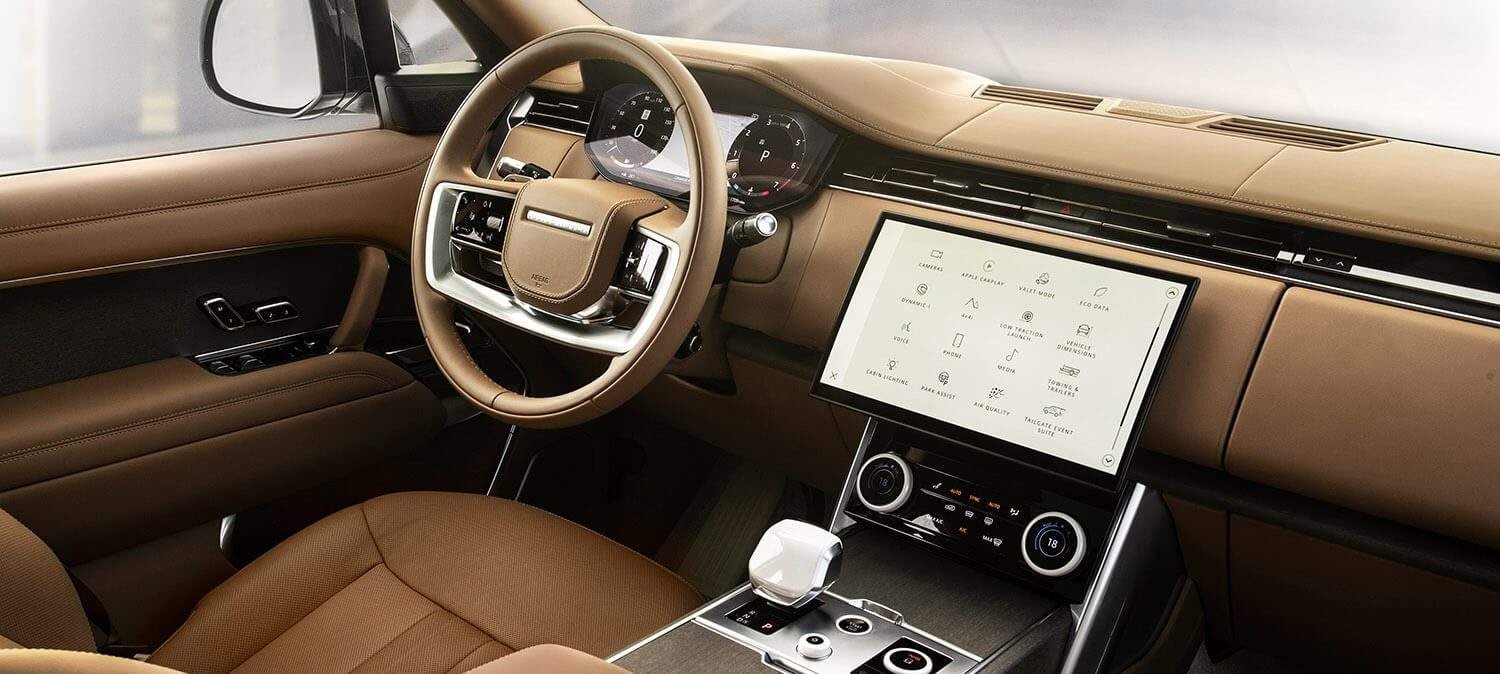
Seat retrimming should start with the actual seat construction and functions. Preserve the correct operation of seat-mounted airbags, occupancy sensing where fitted, seat-belt equipment, heating, ventilation and adjustment. Decorative stitching or thicker padding must not be chosen without considering those systems.
Land Rover's archived owner guidance warns about accessories obstructing airbag areas and unsuitable seat covers. It is a useful reason to check the current vehicle-specific instructions, not a universal retrimming procedure for every generation.
A starlight headliner or ambient-lighting installation needs similar care around curtain-airbag deployment areas, roof wiring, microphones, sensors and trim retention. Keep wiring and equipment away from airbag paths. Do not accept a plan that cuts or bypasses safety equipment to make the accessory fit.
Ask for a material sample and discuss cleaning, finish matching and wear expectations. For lighting, assess brightness and reflections from the driver's position in darkness. More brightness is not necessarily more comfortable. An interior feature should not distract the driver or make the instruments harder to read.
Infotainment and electrical accessories must match the platform
Identify the installed infotainment unit and factory audio configuration before ordering a screen, phone-integration module or amplifier. “CarPlay compatible” does not prove that a retrofit preserves cameras, parking displays, warning chimes, microphone quality or steering-wheel controls.
A fitting plan should identify the correct harness, supported software, mounting space, ventilation and service access. New electrical loads need suitable wiring, circuit protection, grounding and power management. The installer must follow the relevant isolation and reconnection procedure rather than keeping every circuit live for convenience.
- Confirm continuous and startup current demands, not just the accessory's advertised wattage.
- Protect wiring from heat, moving parts, sharp edges and water exposure.
- Check whether the accessory can keep modules awake or create an unwanted parked drain.
- Keep hybrid high-voltage systems outside ordinary accessory work and use qualified personnel where those systems are involved.
Record the original functions before installation, then check them again afterward. A working screen is only one result. A warning message, lost camera view, missing chime or battery problem requires investigation, not routine code clearing.
Wheels, tires, suspension and brakes need one compatibility review
These systems interact. A wheel that fits the hub may still have unsuitable load capacity, offset, fasteners, tire fitment or brake clearance. A lift that creates space at rest may still cause interference during steering or suspension movement.
| Proposed change | Vehicle-specific checks | Avoid this shortcut |
|---|---|---|
| Wheels and tires | Approved dimensions, wheel load capacity, tire load/speed ratings, offset, fastener seats, brake clearance, spare and TPMS compatibility | Assuming wider wheels always improve grip or reinforced sidewalls prevent blowouts |
| Suspension height or hardware | Installed suspension, travel, alignment, driveline angles, hose/wiring clearance and applicable sensor or calibration procedures | Treating a small lift as harmless or using coding to hide a fault |
| Brake components | Correct axle application, discs, calipers, pads, hydraulic specification, wheel clearance, parking brake and control-system compatibility | Promising shorter stops from rotor shape or pad material alone |
| Additional mounted weight | Payload, axle limits, mounting limits and any effect on usable equipment or access | Assuming air suspension increases rated carrying capacity |
Use the specified road tire pressures for the approved setup and load. Do not copy a dune-pressure figure or disable TPMS warnings. Changes to tire rolling dimensions can affect vehicle behavior and readings; determine the permitted fitment and required setup rather than promising universal speedometer or TPMS recalibration.
For brakes, a soft pedal is a fault to diagnose before changing materials or hoses. Use the exact approved fluid specification and service schedule. There is no blanket annual fluid interval or universal DOT 4-to-DOT 5.1 “upgrade” in this guide.
After chassis work, complete the applicable geometry, clearance and function checks. Never work beneath a vehicle supported only by a jack, and never rely on air-suspension height as a support. Installation and test procedures belong with appropriately equipped technicians.
Keep tuning and cooling decisions separate from cosmetic changes
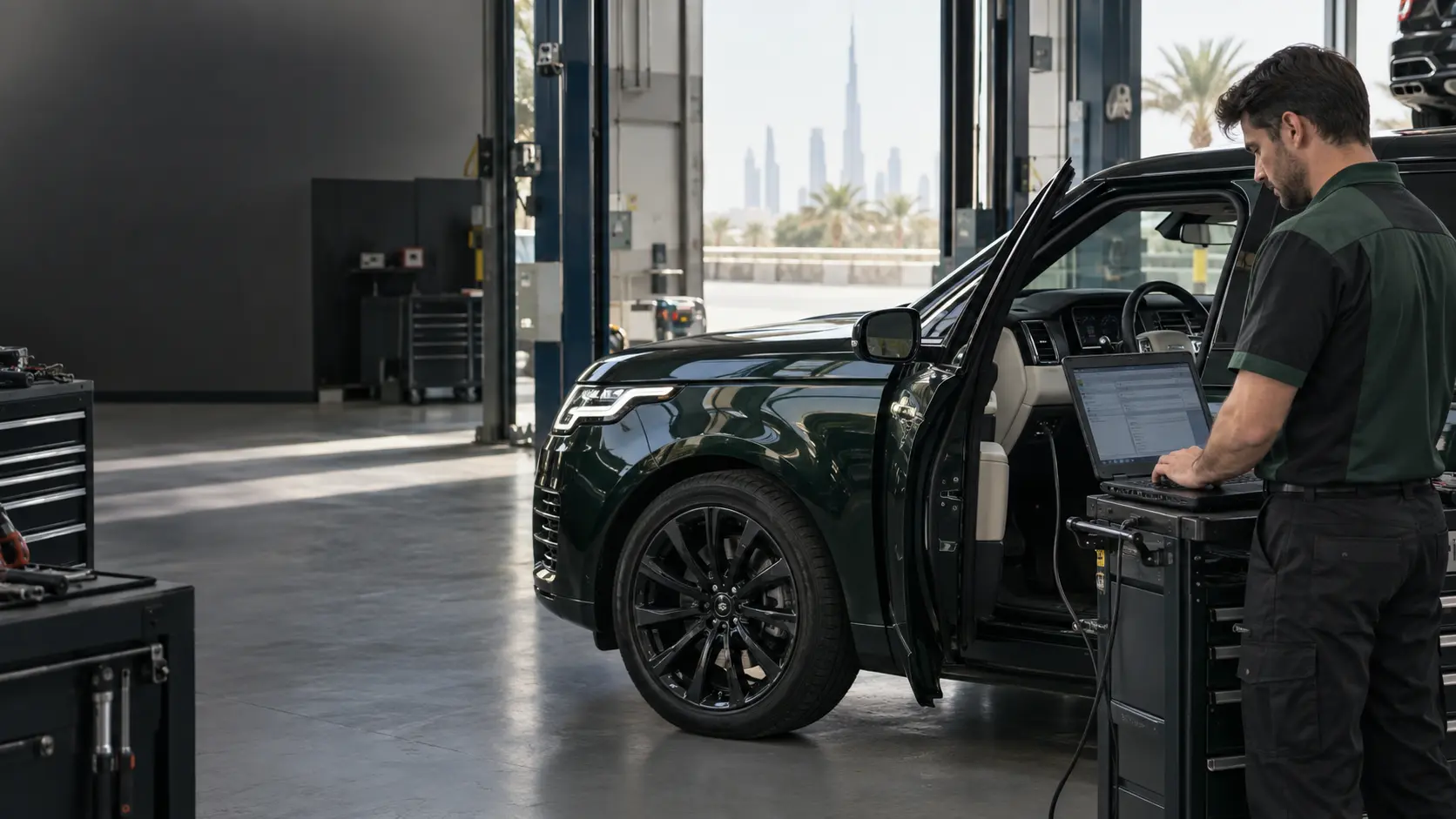
If the vehicle has lost power, overheats or changes gear abnormally, find the cause first. Optional tuning should not be sold as a cure for an undiagnosed fault. A larger intercooler, freer-flowing exhaust or altered calibration can introduce trade-offs as well as possible benefits.
A performance proposal needs the exact engine, transmission, software, fuel requirement and emissions configuration. Claims require a defined baseline and comparable testing. A dyno result does not by itself prove long-term reliability, hot-weather durability or legal compliance.
Do not expect a universal 40–60 hp gain, a 30–40°F temperature reduction or a 10% shorter stopping distance. “Stage 1” and “Stage 2” are seller labels, not universal engineering specifications. Ask what hardware and calibration actually change and which operating limits must still be respected.
Keep performance selection as a separate decision covering engine calibration, exhaust, suspension, brakes and turbo/intercooler work. Do not bundle these items into a cosmetic project simply because the vehicle is already in the workshop.
Desert protection and recovery equipment require rated systems
Skid plates, roof equipment, winch mounts and recovery attachments need approval for the exact vehicle and intended use. Added protection can affect weight, cooling, drainage, service access and clearance. A material label such as aluminum does not prove adequate protection or mounting strength.
A side step or rock slider is not automatically a jacking point. Use only vehicle-approved jacking locations, or an accessory explicitly rated and approved for that purpose on the installation. Likewise, a tow ball, cargo tie-down or generic towing eye must not be assumed suitable for kinetic recovery.
Recovery involves the complete system: vehicle attachment, supporting structure, connectors, rope or winch and trained operator. Ratings for individual parts are not interchangeable, and a high breaking-strength number does not establish a safe combination. Confirm the intended recovery method and keep people outside the planned exclusion zone.
Use the exact handbook and accessory instructions, with training before attempting recovery. Do not improvise if suitable points cannot be established. Desert packing, tire equipment, roof loads and communication deserve their own trip-specific checklist rather than a list of permanent modifications.
Reverting a tune does not guarantee warranty protection
Returning factory software or removing a plug-in module does not guarantee restored warranty coverage or erase the effects of previous modifications. Keep an honest record of what changed and when. Do not use reversion as a strategy to conceal modifications from the warranty provider, inspector or insurer.
Land Rover's UK warranty explanation identifies repairs resulting from unauthorized modifications among its exclusions. It illustrates why the applicable terms matter; it is not the warranty contract for a UAE vehicle. Ask the local provider how the proposed work affects the actual cover and obtain the answer in writing.
Notify the insurer as required by the policy and ask about the proposed configuration. Do not assume every modification voids every claim or that disclosure guarantees acceptance. For a leased or financed vehicle, review the agreement and obtain any required consent before fitting parts, even if a seller calls them reversible.
Approve the full scope and check the result at handover
Ask for an itemized estimate in AED identifying the exact products, removal work, fitting, wiring, consumables and any applicable alignment, calibration or inspection. State whether VAT is included. Separate confirmed charges from work that depends on the initial assessment.
Record lead time, return conditions, responsibility for incompatible parts and warranty coverage for both components and workmanship. If removal later requires repainting, replacement trim, software work or another setup procedure, include that in the ownership decision. Keeping the original parts may be useful, but storage alone does not guarantee inexpensive restoration.
- Before work: record existing damage, warnings and relevant functions, and agree the modification and any required permissions.
- During fitting: obtain approval before additional changes, retain part identities and follow the correct vehicle procedures.
- At handover: review fit, clearances, functions, applicable measurements and the written list of completed work.
- Afterward: follow product-specific care and inspection instructions, including any specified fastener recheck. Report new symptoms promptly.
The buying decision: proceed when the purpose, fitment, permissions, complete cost and acceptance checks are clear. Delay the job when it relies on hidden faults, unsupported gains or assurances that cannot be documented.
Plan Range Rover modifications in Al Quoz 4
Contact our Al Quoz 4 workshop with the model year, current setup and changes you are considering. Share the product information before ordering so compatibility, inspection needs and the work scope can be assessed. The assessment does not replace licensing-authority approval or your insurer's terms.
Range Rover modification planning FAQs
Which Range Rover modification should I do first?
Start with the specific outcome you want and the vehicle's condition. Repair faults first, then choose one compatible change with a clear benefit, complete fitted price and agreed checks. You do not need a package of upgrades simply because the car is used in Dubai.
Is a 1-inch suspension lift automatically legal in Dubai?
No automatic allowance is established here. Check the actual kit and vehicle with the licensing authority and a qualified installer. A small height change can still affect geometry, travel, clearance and other systems.
Does a light bar become road legal if I add a switch?
A switch alone does not establish approval. The lamp, mounting, function, wiring and applicable road-use requirements must be checked. An IP rating describes ingress protection, not legal permission.
Will restoring the stock tune protect my warranty?
Not automatically. Reversion does not guarantee that previous modifications or resulting damage are irrelevant to a claim. Disclose the work and check the applicable written warranty, insurance and lease terms.
Can I use rock sliders to jack up my Range Rover?
Only if the exact installed accessory is explicitly rated and approved for that purpose on the vehicle. Otherwise use the approved jacking points and support procedure. A side step or a strong-looking rail is not proof of suitability.
Can a body kit affect parking sensors or driver assistance?
Yes, depending on the affected equipment, materials and mounting. Confirm sensor positions, fields of view and the applicable inspection or calibration procedure. The absence of a warning message is not a complete function check.
Are seat retrims and starlight headliners only cosmetic?
They can interact with airbags, wiring, sensors and seat functions. The installer must preserve those systems and follow the relevant vehicle instructions. Do not approve changes that obstruct airbag deployment areas.
Will modifications increase the resale value?
There is no guaranteed increase. A buyer may prefer the original specification, and removal can cost money. Choose changes for a defined use or preference, keep accurate records and avoid budgeting on an assumed resale premium.
Workshop support
Need help with your Range Rover?
Tell us your model, year and what you have noticed. Speak with the workshop about maintenance, an inspection or a repair.