
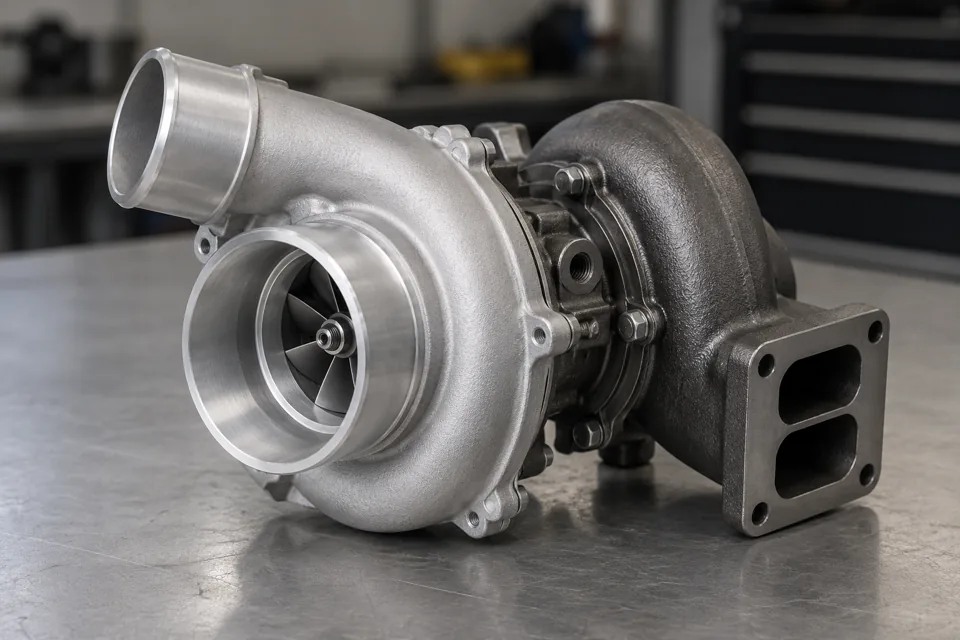
A dropping boost gauge does not automatically mean your Range Rover's turbocharger is failing. Boost normally changes with engine demand, so a fall after easing off the accelerator can be expected. A new loss of acceleration, repeated warning or pressure shortfall under comparable load needs diagnosis. The useful comparison is requested versus actual boost, recorded together with engine speed, gear, load and temperature.
Remapping cannot repair worn turbo components, seal a charge-air leak or fix a leaking actuator vacuum circuit. Establish whether the pressure reading is valid and why the engine is requesting that amount of boost before approving software changes or expensive parts.
When to stop driving and arrange recovery
Do not keep accelerating to reproduce a fault if the vehicle develops severe smoke, an oil-pressure warning, overheating or sudden major power loss. Move to a safe place, stop the engine when safe and arrange recovery. Do not restart after an oil-pressure warning or suspected serious engine damage just to check the gauge.
| What happens | Next step |
|---|---|
| Heavy persistent smoke, rapid oil loss, severe mechanical noise or uncontrolled engine speed | Stop safely and seek recovery. If the engine does not stop normally, keep people clear and seek emergency assistance. Do not attempt underhood intervention. |
| Oil-pressure warning, overheating warning, steam or a sudden large loss of power | Stop safely and follow the vehicle's warning instructions. Do not continue a load test or open a hot cooling system. |
| Repeated restricted-performance warning or a new, repeatable loss of acceleration | Arrange diagnosis promptly. Avoid towing, dunes and hard acceleration; obtain advice on whether the vehicle should be recovered. |
| Gauge falls only as you ease off, with unchanged performance and no warning | Record the circumstances if concerned. The movement alone does not justify a turbo repair or a remap. |
Garrett's diagnostic guidance requires a vehicle to be fit for testing and says to discontinue trials when serious engine symptoms appear. The exact dashboard instruction remains important. Land Rover iGuide helps identify the handbook for your vehicle.
Why boost can fall during normal driving
A turbocharged engine is not supposed to hold its highest boost pressure all the time. When the driver asks for less torque, the control system can reduce boost demand. Engine speed, a gear change and the operating strategy can also change the pressure target. The expected behavior depends on the engine and calibration.
A drop after lifting off the accelerator is therefore different from actual pressure falling behind an unchanged request during a repeatable loaded condition. A brief gap while demand changes also needs to be interpreted against the manufacturer's expected response. Requested and actual values do not have to match perfectly at every instant.
There is another important distinction: the engine may deliberately reduce requested boost because another system is limiting torque. That can explain a low gauge reading without proving the vehicle is healthy. If performance has changed, the workshop needs to establish why the request dropped, not simply demand more pressure from the turbo.
| Recorded pattern | What it may mean | Useful next question |
|---|---|---|
| Demand decreases and actual pressure follows | Expected response to lower demand, depending on conditions | Did the driver ease off or did another control request reduce torque? |
| Requested pressure stays higher, but actual pressure repeatedly falls short | A delivery, control, measurement or underlying engine problem needs investigation | Is the shortfall real, repeatable and outside the applicable test criteria? |
| The displayed gauge falls while suitable scan data and vehicle response remain consistent | A display, adapter, sensor source or data interpretation issue is possible | Do both readings measure the same pressure, location and time? |
Do not use another owner's peak reading as a specification. Range Rover, Sport, Velar and Evoque badges cover different engines and forced-induction layouts. A supercharged engine needs a different diagnosis from a turbocharged engine, and a hybrid's total vehicle response may include electric assistance.
Check what the gauge is actually showing
First identify whether the reading comes from a factory display, an aftermarket gauge or an OBD app. Confirm the data label, units, sensor location and whether the value is measured or calculated. Some apps offer a generic boost display without exposing the manufacturer's requested-pressure parameter.
Absolute pressure and gauge pressure are not interchangeable. Absolute pressure includes atmospheric pressure; gauge pressure expresses the difference from the surrounding atmosphere. Garrett's pressure explanation describes this distinction.
Example for understanding units: if a sensor reports 180 kPa absolute while local atmospheric pressure is 100 kPa, the corresponding gauge pressure is 80 kPa. This arithmetic example is not a target for any Range Rover. The actual atmospheric reading, measurement location and vehicle specification must be used.
Comparing an absolute scan value with a gauge-pressure app can create an apparent discrepancy where none exists. Conversely, two displays can agree because they use the same faulty sensor. Agreement between screens is not an independent sensor check.
Compare requested and actual boost under recorded conditions
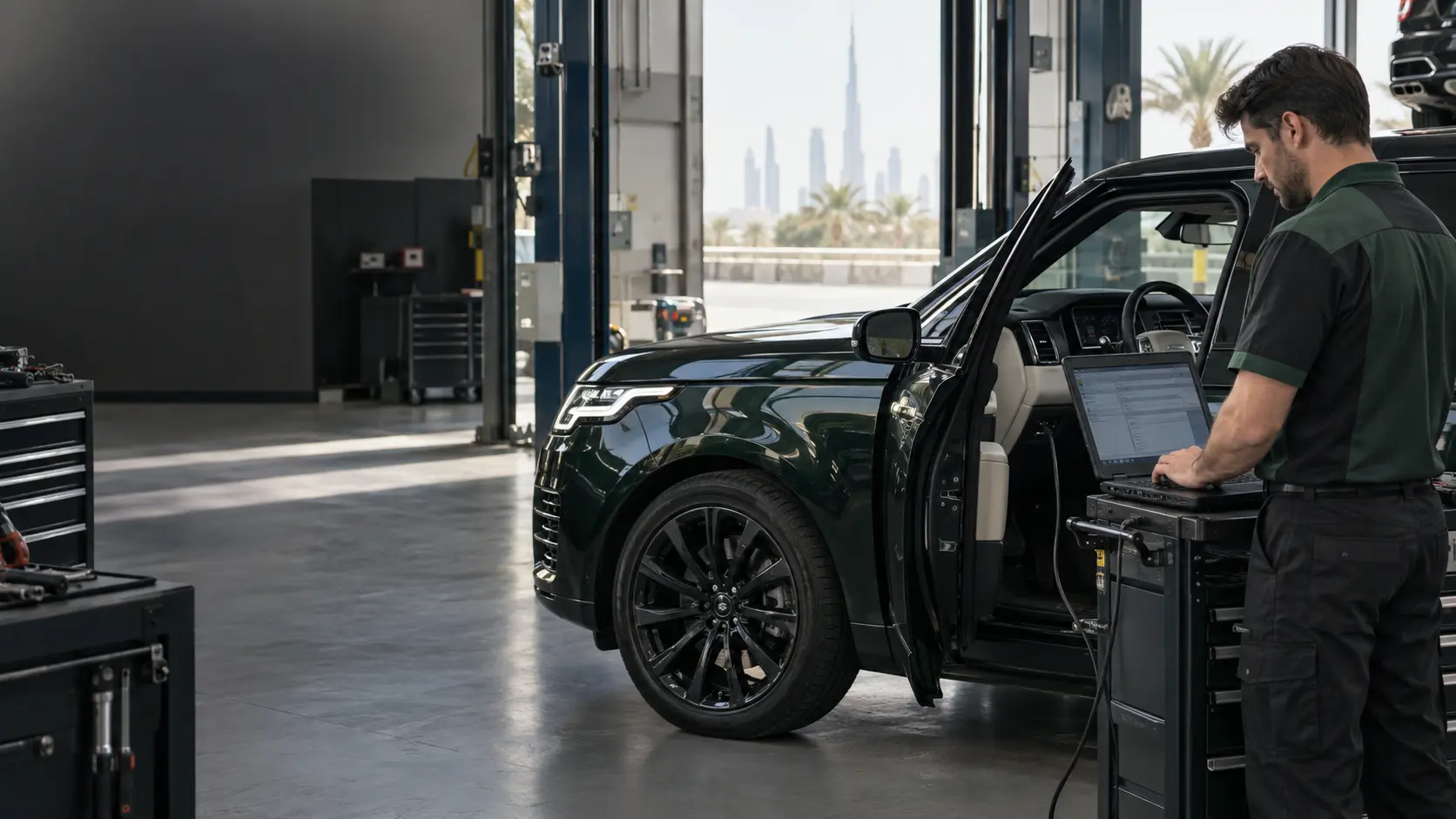
A workshop should use equipment with appropriate JLR data coverage and the correct procedure for the exact engine. Generic OBD access may show some pressure information without the full set of requested values, actuator feedback or limiting conditions needed for diagnosis.
The technician first saves the fault report and assesses whether testing under load is safe. If suitable, the test should capture related values on the same timeline. Stationary free-revving does not reproduce every on-road load condition, and a single maximum-pressure screenshot cannot describe the response through an event.
| Record | Why it matters |
|---|---|
| Vehicle identity and software history | Model year, engine, turbo arrangement and any existing tune establish the correct reference |
| Requested and actual pressure together | Shows whether pressure delivery follows the command over time; units and sensor locations must be comparable |
| Engine speed, gear, vehicle speed and accelerator/load information | Separates different operating points instead of comparing unrelated peak readings |
| Ambient, intake/charge-air and relevant engine temperatures | Helps distinguish a hot-condition complaint from a different-load comparison |
| Available actuator command and feedback, airflow and related limiting information | Helps identify whether the control, air path or another engine condition needs testing |
| Full fault codes, suffixes, status and recorded fault conditions | Preserves the context before codes are cleared and guides the applicable test route |
The test record should identify unavailable data rather than substitute a guess. An actuator percentage may represent a command or a position, depending on the parameter; it is not automatically a direct measurement of turbo output. The exact definitions matter.
Pico's published diagnostic case demonstrates comparing target and actual boost alongside other engine data, then checking alternative causes. It concerns a different vehicle and is useful as a method example, not as a Range Rover pressure specification.
Owners should not make repeated full-throttle runs, log a phone while driving or attempt a high-speed overtake to demonstrate the complaint. Tell the workshop when it occurs and leave controlled testing to the technician.
Separate the air path, actuator control and measurement
The word “leak” is not a complete diagnosis. A charge-air leak lets compressed intake air escape. A vacuum leak in an actuator control circuit can prevent the turbo mechanism from receiving the intended control force. They occur in different circuits and need different tests.
Charge-air leaks and restrictions
Charge-air hoses, joints, seals and the intercooler path can leak or restrict flow. A hiss or oily residue can help direct inspection, but neither alone proves the location or severity of a leak. A hose may also deteriorate internally without an obvious external split.
The workshop should use the manufacturer's appropriate leak or pressure-test method and limits. A smoke test can reveal some leaks, but a negative test does not prove every hose will behave correctly when hot or under operating pressure. Do not connect an unrestricted workshop airline, spray cleaner into the intake or dismantle hot pipework yourself.
Vacuum-operated and electronic actuator faults
Where vacuum control is fitted, the technician checks the relevant supply, hoses, control valve and actuator response. On an electronically controlled arrangement, electrical supply, wiring, command, feedback and mechanical movement may be relevant. Do not assume every Range Rover uses vacuum control or the same wastegate or variable-vane arrangement.
Snap-on's vacuum-actuator explanation shows why electrical command and pneumatic response are separate questions. Its example is not a Range Rover procedure, so its pressure values and connection details should not be copied to another engine.
Do not adjust an actuator rod, force a linkage or bypass a control valve to increase boost. A component may require a specific service or calibration procedure, and some assemblies are not separately serviceable.
Pressure sensor, wiring and gauge errors
A pressure sensor can report an implausible value because of the sensor itself, contamination, its electrical supply or a wiring problem. The technician checks plausibility against the applicable reference conditions and, where appropriate, a suitable independent measurement.
A manifold pressure sensor measures pressure; a mass airflow sensor measures airflow. They are related inputs but do not answer the same question. Replacing either solely because a boost reading is low can leave the original fault untouched.
Turbo damage and problems elsewhere in the engine
Turbo mechanical damage remains possible, but intake restrictions, exhaust leaks or restrictions, fuel/combustion problems and lubrication concerns can also affect performance. BorgWarner's troubleshooting guide lists several such causes and cautions against assuming the turbocharger is responsible.
Check the oil supply and return, relevant engine condition and cause of any contamination before a replacement unit is approved. An unresolved problem can damage the replacement too. A shaft check, noise or smoke observation needs the correct interpretation for that unit; none should become an improvised owner test.
What an underboost code does and does not prove
An underboost code indicates that the control system detected a pressure-related condition meeting its criteria. It does not automatically mean “replace the turbo.” Keep the full code and suffix, the module that stored it and the conditions recorded at the time. Include those details when interpreting underboost and related fault codes.
A useful manufacturer example is JLR bulletin LTB01254NAS1. It addresses P0299-77 on specified North American TDV6 3.0-liter vehicles, including certain Range Rover and Range Rover Sport vehicles. The bulletin describes an internally collapsing charge-air cooler hose and requires other checks before replacement.
That is an example of why a code needs testing, not proof that a UAE vehicle has that hose fault. Market, engine, VIN range and current service information must match. The suffix and engine can change the diagnostic route even when the first five code characters look familiar.
How Dubai heat changes the investigation
Record whether the complaint appears after sitting in traffic, a hot restart, towing or sustained load. Those are different conditions. The technician should compare the relevant temperature and pressure data rather than assume every afternoon power change is caused by turbo wear.
Cooling performance, intake temperature and the engine's protective control strategy may affect available torque. If both requested and actual boost fall, investigate the reason for the request reduction. If the request stays high but delivery falls behind, follow the control, air-path and engine tests. These observations guide the investigation; neither pattern identifies a failed part by itself.
There is no universal heat-loss percentage suitable for all Range Rover engines and operating conditions. A gauge also measures pressure, not air density or vehicle power directly. A comparable test needs more than the outside temperature and a peak number.
Choose the confirmed repair and verify it
A proven hose or seal fault calls for the appropriate air-path repair. A confirmed control fault may require wiring, vacuum-circuit, control-valve or actuator work, depending on the application. Internal turbo damage may justify specialist repair, remanufacture or replacement after the failure cause and part compatibility are understood.
The estimate should identify the confirmed fault, parts route, access work, related oil or pipework checks and any required setup. Diagnostic time, repair labor, fluids and VAT treatment should be clear. This article does not assign a universal turbo-repair price to a symptom that can have several very different causes.
A remap changes control instructions. It cannot restore a worn bearing, seal a split hose or repair damaged vacuum plumbing. A relevant manufacturer software correction may be appropriate when the vehicle and confirmed fault match its procedure, but it is different from selling a performance tune as a mechanical repair.
After repair, repeat the relevant comparison under suitably matched gear, load and temperature conditions, if safe. Confirm that the original symptom has been addressed and review related fault records. If the event cannot be reproduced, the report should explain that limit. Clearing a warning or seeing a higher peak reading is not, by itself, verification.
The decision to make: establish whether the gauge is reporting a real shortfall, whether the engine requested that pressure, and which test identifies the cause. Approve the repair that addresses that finding before considering any performance modification.
Questions about a falling Range Rover boost reading
Should the boost gauge stay high whenever the engine is running?
No. Boost follows the engine's operating needs and is not expected to remain at its maximum during idle, light demand or deceleration. A concern is a new symptom or a repeatable mismatch under the applicable test conditions, not simply a moving gauge.
Is there one correct boost pressure for all Range Rovers?
No. Engine, turbo arrangement, operating conditions, calibration and the way pressure is displayed matter. Use the exact vehicle's test information and compare requested and actual values with consistent units.
Can a restart prove it was only a harmless glitch?
No. A restart can change the current operating state without repairing the cause. Preserve the warning and fault report, particularly when restricted performance or a loss of acceleration returns.
Does a normal actuator position prove the turbo is healthy?
No. Position feedback describes one part of the control system. Air-path, exhaust, engine and measurement problems can still prevent the expected boost. The finding needs to agree with the rest of the test results.
Should I clean the intercooler before paying for diagnosis?
Do not assume cleaning will fix the complaint. External airflow restriction, an internal charge-air leak and contamination after a component failure are different problems. The workshop should identify the issue and use the correct cleaning or repair procedure where justified.
Can I keep towing if the vehicle still moves normally at low speed?
Low-speed behavior does not establish safe towing capability after a boost or power-loss complaint. Stop towing and ask the workshop about assessment or recovery. Severe smoke, oil-pressure warnings, overheating or sudden major power loss require a safe stop.
What should I bring if an aftermarket app shows the problem?
Bring the app and adapter names, data labels, units and any safely captured records. Explain whether the vehicle also hesitates or displays a warning. Do not make another loaded run merely to obtain a screenshot.
Book a boost-system diagnosis in Al Quoz 4
Share the model year, engine if known, mileage, warning photos and when the loss of response occurs. Include previous turbo work, software changes and the source of the gauge reading. Our Al Quoz 4, Dubai workshop can assess the concern and confirm the appropriate inspection or recovery next step.