
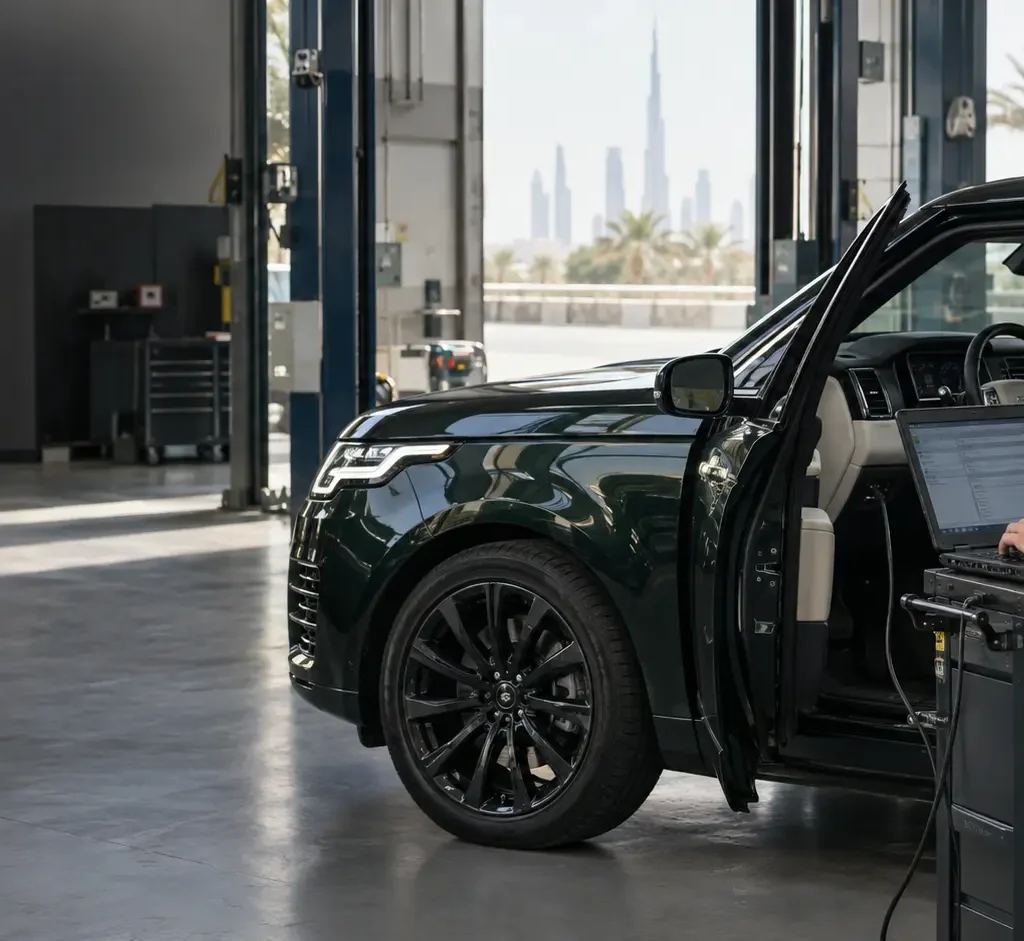
A whining sound near the fuel tank and a loss of power can be related, but noise alone does not prove that a Range Rover fuel pump has failed. The workshop needs to identify the engine, locate the sound, measure fuel delivery and check the electrical supply. A restriction, wiring fault, controller problem or a separate engine fault can produce similar symptoms.
Stop driving if the vehicle stalls, loses power unpredictably or cannot maintain speed safely. Pull over safely, switch off and arrange recovery. If you smell strong unexplained fuel odor or see a suspected fuel leak, do not restart, attempt a road test or operate the pump for diagnosis. Keep ignition sources away. Leave the immediate area and call emergency services if there is fire, smoke or an immediate danger.
Which fuel-system component does the workshop mean?
The phrase “fuel pressure module” is too vague for a diagnosis or quotation. Ask for the exact component name and part number. An in-tank pump assembly, its electronic controller, a pressure sensor and an engine-mounted high-pressure pump perform different jobs.
| Component | What it does | What does not prove failure |
|---|---|---|
| In-tank fuel pump assembly | Provides the low-pressure fuel supply; the assembly may include a reservoir, strainer or level-sender parts depending on specification | A rear whine without locating the sound and testing delivery |
| Fuel pump controller, where fitted | Controls electrical output to the supply pump according to system demand | A low pressure reading without checking its power, ground and command |
| Fuel rail pressure sensor | Reports rail pressure to the engine control system | A pressure-related code without checking the signal and the actual system condition |
| High-pressure fuel pump, where fitted | Raises pressure for the engine's direct-injection or common-rail system | Low rail pressure before the upstream supply and other relevant causes are checked |
Gasoline direct injection and diesel common-rail systems have different requirements. Older gasoline port-injection arrangements do not share the same high-pressure architecture. A plug-in hybrid still has an engine fuel system, but engine start behavior and electrical isolation require additional care. The model badge or engine capacity alone is not enough to select a procedure.
What the sound and driving symptoms can tell you
An electric pump can make an audible operating sound. A new, persistent or substantially louder sound deserves investigation, especially with starting or performance trouble. However, sound heard from the rear may come from another electric device or a mechanical component. Whether it changes with road speed, engine operation or another system's activation helps locate it.
A sound that occurs only while the vehicle moves should not automatically be labeled pump whine. Tire, wheel-bearing and driveline noise can travel through the body. The technician should reproduce the relevant condition safely and establish the source before ordering a tank-mounted part.
| Symptom | Possible explanations | Useful next evidence |
|---|---|---|
| Whine with normal starting and power | Normal operation, mounting or acoustic changes, restriction, pump wear, or another noise source | Sound location and delivery measurements against the correct specification |
| Hesitation when demand rises | Fuel delivery, ignition, air or boost control, or another torque limitation | Relevant live data captured during a safe controlled test |
| Extended cranking | Pressure buildup, leakage, electrical supply, engine-speed signal or starting-system issues | Cranking voltage, speed, pressure and authorization data |
| Stalling or unsafe loss of power | A fuel fault is possible, but not confirmed | Recovery and diagnosis before further driving |
These symptoms do not follow a guaranteed progression from a faint whine to eventual failure. A pump can fail without a useful warning, and a noisy pump can remain within specification. Neither “it still starts” nor “there are no fault codes” establishes that the complaint is harmless.
Safe observations to give the workshop
Record what happened during ordinary use without deliberately recreating an unsafe event. Helpful details include:
- Model, year, VIN and engine or fuel type, including hybrid equipment.
- Whether the sound appears at start-up, idle, after a hot stop or only while moving.
- Fuel level when the event occurred and whether it followed a recent refill.
- Whether starting takes longer and which warning messages appeared.
- Recent tank, filter, wiring, engine or battery work and any modifications.
- A recording made while safely parked, if the sound is already present.
Do not accelerate hard to provoke a pressure drop, crawl under an unsupported vehicle, open a tank access cover, bridge a relay or feed a pump directly from a battery. Do not loosen fuel pipes to check whether fuel comes out. Fuel can remain pressurized after shutdown, and high-pressure systems require specific depressurization and protective procedures.
How pressure, flow and electrical tests separate the causes
1. Identify the fitted system and preserve the fault record
The technician should confirm the engine and fuel-system arrangement from the VIN and applicable workshop information. The initial scan should retain fault status, relevant subcodes, freeze-frame conditions and associated faults before clearing anything. Tool coverage must include the relevant systems and data for that vehicle.
A pressure code describes a monitored condition; it does not name a replacement part. Record the complete fuel-pressure fault code and its status before selecting tests. A generic reader may omit manufacturer-specific detail needed to interpret the result.
2. Test the low-pressure supply
Measure low-side pressure and delivery volume using the correct connections, equipment and test conditions. Compare results with the specification for that engine. An acceptable idle reading does not necessarily demonstrate sufficient delivery when demand increases. Any dynamic test must be controlled and safe; an unsafe vehicle should not be road-tested just to obtain a graph.
Inspect relevant filter and line restrictions, fuel condition, pickup arrangements and supply integrity. Do not assume a filter is separately serviceable or that every tank has the same transfer arrangement. A low reading is the start of diagnosis, not automatic authorization for a pump.
3. Check the supply and ground connection under load
Low voltage or resistance in a connection can make a working pump underperform. Check the power supply and ground connection with the circuit operating under the specified conditions. A continuity check alone can miss a connection that fails when current flows. Use suitable test adapters rather than damaging terminals with oversized probes.
On controlled pumps, the measured signal must be interpreted against the controller's design and commanded output. A changing or averaged voltage is not, by itself, a defective controller. The technician should compare command, electrical response and fuel-delivery response together.
4. Compare commanded and actual pressure
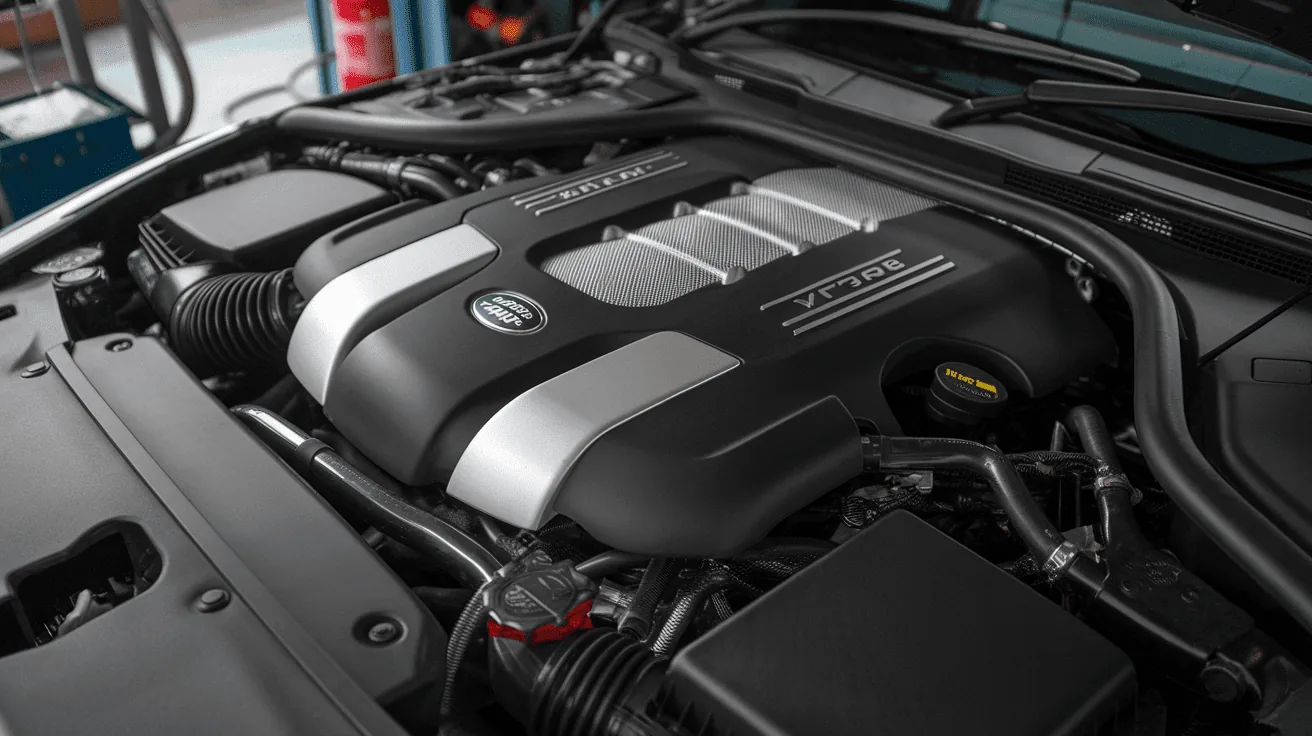
Where supported, log requested and actual rail pressure alongside the relevant operating conditions. Confirm which data channel represents the low-pressure supply and which represents the high-pressure rail. Check units and whether the readings are plausible. A sensor or wiring problem can distort the reported result.
If low-side delivery is correct but rail pressure remains below demand, investigate the high-pressure circuit using the applicable procedure. Depending on the engine, this may include pump control, pressure regulation, injector leakage or another internal leak. Pressure decay after shutdown is also only a clue until the leaking path is isolated. Do not condemn the high-pressure pump from one graph.
Repair the confirmed fault rather than replacing everything
A confirmed connection or wiring fault may need a specified terminal, connector or harness repair. A controller requires diagnosis of its own supply, ground and command before replacement. A restricted serviceable filter should be addressed according to the vehicle schedule and findings, not offered as a guaranteed cure for whine.
If testing confirms an in-tank pump failure, establish whether the approved repair uses a complete assembly or a separately serviceable part. Compatibility includes the engine, tank arrangement, pressure and flow requirements, electrical control and part supersession. A generic “higher-output upgrade” is not a substitute for a correctly matched repair.
Contamination changes the scope. Confirm the type and extent before deciding which tank, line, pump or injection components require cleaning, specialist assessment or replacement. Do not assume that new fuel or an additive will reverse component damage. A high-pressure pump repair or remanufactured option must have an applicable specialist process, traceable test results and clear terms.
After repair, check for leakage and repeat the relevant pressure, electrical and functional checks. Perform only the programming or initialization required for the fitted component. A battery reset is not a general fuel-system repair. Record whether the original symptom was reproduced and resolved, including limitations if an intermittent event did not recur.
What affects the fuel-pump repair quote in Dubai?
A useful price needs an engine, a named component and a defined labor scope. No verified vehicle-specific price schedule is available for this guide. Request a dated estimate for the actual vehicle and confirmed fault.
The quotation should identify the component and part number, new or remanufactured status, access work, seals and required single-use items. Ask whether diagnostic labor, fuel handling, contamination work, programming and final tests are included. Confirm the VAT-inclusive total and how extra work will be authorized.
Tank removal requirements and access vary by model. A motor-only price cannot be compared fairly with an assembly replacement including diagnosis and access. Likewise, a wiring repair and a high-pressure injection-system repair answer different findings. Warranty terms should be written and specific to the supplied part and work, not a blanket promise that every future fuel problem is covered.
Maintenance boundaries that make sense
Use the fuel specification in the correct handbook and follow the vehicle's market-specific maintenance schedule. Replace a separately serviceable fuel filter when required, rather than applying one interval across gasoline, diesel and hybrid models. Avoid running out of fuel. If incorrect fuel has been added, seek qualified assistance before starting the engine.
Keep refill and service records when a problem follows fueling. Dubai heat and traffic are useful conditions to report, but they do not prove pump damage or justify an automatic replacement interval. There is no universal mileage in this guide at which every Range Rover fuel pump must be replaced.
Frequently asked questions
Does a loud fuel pump always need replacement?
No. First locate the sound and check delivery, restrictions, electrical supply and control. Noise alone cannot distinguish a worn pump from another cause.
Can a bad ground cause low fuel pressure?
Yes. An inadequate electrical supply or ground connection can reduce pump performance. A loaded electrical test helps distinguish that fault from a defective pump.
Is the fuel pump controller the same as the rail pressure sensor?
No. The controller operates the supply pump where fitted; the sensor reports rail pressure. Neither is the same component as the pump assembly or the high-pressure pump.
Can I drive if the engine stalls and then restarts?
A restart does not establish safety. Repeated stalling or unpredictable power loss requires recovery and diagnosis before further driving.
Will a new fuel filter cure hesitation?
Only if a relevant filter restriction is confirmed and addressed. Ignition, air, boost, wiring and other faults can produce similar hesitation. Follow the fitted system's service procedure.
What a useful diagnosis should give you
Keep the sound-location finding, pressure and delivery results, loaded electrical checks and the reason for the recommended part. For assessment in Al Quoz 4, Dubai, prepare the vehicle details, warning photographs and symptom history. Arrange recovery when the vehicle cannot be driven safely.
Owner and technical references
- Land Rover owner information for vehicle-specific warnings and fuel guidance.
- Land Rover archived fuel safety guidance. Supports the no-start and recovery boundary for fuel leaks; its model-specific reset and fuel specifications are not universal instructions.
- Delphi on pressure, flow and electrical checks and loaded voltage-drop testing. General diagnostic principles, not Range Rover pressure specifications.
- Bosch on direct-injection rail and pressure-sensor roles and port-injection architecture. Confirm the actual fitted system.
Editorial review September 26, 2026. Images are general examples, not a record of a completed customer repair.
Workshop support
Need help with your Range Rover?
Tell us your model, year and what you have noticed. Speak with the workshop about maintenance, an inspection or a repair.