
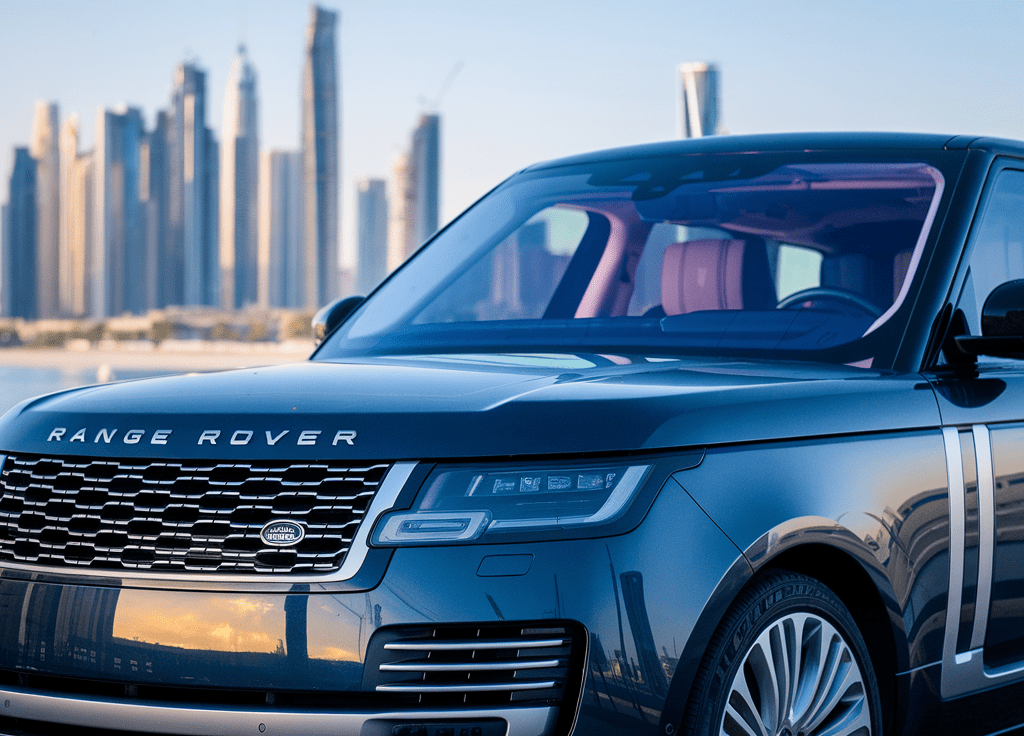
If your Range Rover feels uncomfortable in the Dubai sun, darker windows are not automatically the best answer. Choose Range Rover window tint by the finished glass visibility, measured solar performance, compatibility with the exact window and written local warranty. Ceramic and multilayer optical films are worth comparing, but a technology label alone does not prove performance or legal suitability.
Start with the windows you want treated and the problem you want to improve: direct sun on passengers, glare, privacy or damaged existing film. Then compare named products at similar visible light transmission, using the same test conditions.
Visibility comes first. Do not drive if existing film, severe haze, distortion or darkness prevents a clear view of traffic, pedestrians or mirrors. Arrange assessment and removal or replacement as appropriate. Tint is not a reason to leave children or pets in a parked vehicle, and it does not make a hot parked cabin safe.
Dubai window tint rules and the windshield distinction
Abu Dhabi Police's published explanation of the federal tinting rule, dated July 2, 2017, describes black tinting up to 50% on side and rear glass only, excluding the front windshield. Emirates News Agency's report of the federal amendments also excludes the windshield. These official sources were checked for this guide on September 26, 2026.
A product called Crystalline, ceramic or nearly clear does not create an exception to that rule. This guide does not recommend aftermarket windshield tint or 5% or 20% VLT rear film. Do not treat an installer advertisement as official permission. For a proposed installation, confirm the current requirements for the vehicle category and affected windows with Dubai's licensing authority before work begins.
The official wording about “50% tinting” must not be presented as permission to fit any roll marked “50.” Establish what the product number measures and how the completed glass will be checked. Any claimed special permission needs confirmation from the competent authority; a medical explanation or seller's assurance is not itself an approval.
The cited police announcement also distinguishes heavy vehicles and taxis. Do not generalize its passenger-car guidance to every commercial vehicle. Do not assume panoramic roofs can be tinted freely or that a particular film is automatically “RTA-approved.”
Film VLT is different from the finished window VLT
Visible light transmission, or VLT, is the proportion of visible light passing through a material or tested glass-and-film assembly. Higher VLT means more visible light passes through. Lower VLT means less light passes through. It does not directly tell you how much solar heat is rejected.

Your Range Rover's original glass already transmits less than all incoming visible light. Rear privacy glass, replacement glass and any existing film can change the starting point. A film described as 70% VLT does not necessarily leave 70% transmission after installation.
As a simplified teaching example, glass transmitting 80% of visible light combined with a film transmitting 70% would give approximately 0.80 × 0.70 = 0.56, or 56% transmission. This approximation is not a compliance certificate. Real product data may already include the test glass, and spectral properties affect the result. Do not multiply a published glass-plus-film result by the glass value again.
Ask whether each number is film-only, film with its liner, film on clear test glass or film on automotive green glass. An installer should record the existing glass condition and establish the appropriate finished-window measurement. A shade name, a photograph or a heat-lamp demonstration cannot replace that information.
Compare TSER, VLT and the test conditions together
A useful comparison answers two questions at once: how much light will pass through, and how much solar energy will the tested assembly reject? Comparing the darkest version of one range with a nearly clear version of another can make a misleading sales chart.
| Measurement | What it tells you | What to check |
|---|---|---|
| VLT | Visible light transmission | Whether the value is film-only or includes specified glass; confirm the finished window separately |
| TSER | Total solar energy rejected by the tested glass-and-film assembly | Compare at similar VLT on the same test glass and under the same procedure |
| IRR or infrared rejection | Rejection over the manufacturer's stated infrared wavelength range | Check wavelength range and whether the measurement includes glass, liner or film alone |
| IRER | A broader infrared energy measure under the stated method | Read the definition; it is not interchangeable with a narrow-band IRR claim |
| UV rejection | Ultraviolet performance under the published test | Check the exact product; do not translate the value into an SPF rating or a medical guarantee |
| Reflectance and optical quality | Reflections and the quality of the view | Inspect a sample for internal reflections, haze and distortion in relevant lighting |
For example, 3M's published definitions distinguish IRR over 900–1,000 nm from IRER over 780–2,500 nm. A high narrow-band IR number is not the same as rejecting that percentage of all solar energy. TSER is useful for the wider comparison, but it still does not promise a particular cabin temperature or fuel saving.
An exact-product comparison with a shared test method
The following examples come from 3M's Crystalline technical data sheet, Revision F, August 2025. They compare three named grades on the same 6 mm automotive green glass with 73% starting VLT, using ANSI/NFRC 200. Values are manufacturer reference data, not measurements on a Range Rover or confirmation of UAE stock.
| Exact grade | Glass plus film VLT | TSER | IRER |
|---|---|---|---|
| CR BLK 60 | 57% | 54% | 67% |
| CR BLK 70 | 64% | 51% | 65% |
| CR BLK 80 | 72% | 45% | 59% |
The trade-off is visible: the lighter assembly transmits more light, while the darker of these three rejects more total solar energy under this test. None is automatically the right choice for your glass. These figures do not authorize windshield installation or certify a legal result. Ask for the current regional data sheet and exact product code being supplied.
How the main film types fit different priorities
Ceramic and multilayer optical films
These are useful candidates when you want solar control while retaining relatively high light transmission. Compare a specific ceramic product with a specific optical film at similar VLT. Do not assume that every ceramic film has identical ingredients, optical quality or thermal performance.
Crystalline is a 3M product family, not a generic legal category. Different grades and revisions have different performance figures. The same care applies to any quoted LLumar, SunTek or other branded range: obtain its exact regional product sheet rather than borrowing the highest number from the brand's entire catalog.
Dyed, carbon, metalized and hybrid films
These descriptions help identify construction, but they do not create a universal quality ranking. A lower-cost film may be adequate for a modest appearance or glare objective if its visibility, performance and warranty meet the requirement. A more expensive label is not a reason to replace satisfactory existing film.
Metalized construction can raise radio-frequency compatibility questions, depending on the product and antenna arrangement. Non-metalized film is often marketed to address that concern. Neither statement proves that every vehicle function will work normally after installation. Product selection, coverage areas, workmanship and the vehicle's existing condition still need consideration.
Reject claims that all dyed films fail within months, all carbon films reject the same percentage of heat, or every ceramic product is automatically safe for every pane. Ask for measurable properties and written terms instead of a category-wide promise.
Range Rover glass, panoramic roof and electronics checks
Provide the model, model year and VIN where needed to identify glazing equipment. An Evoque, Velar, Sport or full-size Range Rover can have different glass specifications, and trim names alone do not identify every option. Check the actual vehicle, particularly if a window has been replaced.
- Factory privacy glass: establish its current transmission before adding film. A dark appearance does not identify its complete solar-control performance.
- Panoramic roof: confirm the glass construction, coatings, condition and film manufacturer's application restrictions. Added solar absorption and thermal stress need consideration. “Ceramic” alone is not approval.
- Head-up display: do not assume any film preserves image clarity. Windshield legality is a separate issue from optical compatibility.
- Cameras and sensors: identify relevant viewing or sensing areas and follow vehicle instructions. Radio-friendly marketing does not certify optical sensor performance.
- Antennas and heated rear glass: protect the elements during preparation and removal. Assess relevant reception and defroster functions before and after the work.
A film installer should be able to explain which panes are suitable and which should remain untreated. If compatibility cannot be established, leave that pane out of the job. A signed invoice does not substitute for the correct application information.
Questions to ask the installer before approving work

- Which exact film will you install? Get the brand, series, grade and product identification on the estimate. A generic “premium ceramic” description is not enough.
- Which windows are included? List side windows and rear glass individually where needed. Do not accept an ambiguous “full car” package that silently includes the windshield or roof.
- How will you establish visibility and compliance? Request the starting-glass assessment and a clear explanation of the final measurement and applicable requirements.
- What supports the heat-rejection claim? Ask for VLT and TSER together, with the test glass and procedure. A lamp demonstration alone is not a full-solar comparison.
- How will you protect the vehicle? Discuss old-film removal, cleaning, controlled fitting, solution management and protection of trim and electronics.
- What happens if a defect appears? Obtain the local warranty issuer, claim route, covered defects, exclusions and written remedy.
Computer-cut patterns can help an installer prepare a consistent shape, but they do not guarantee fit or eliminate every risk. The final result still depends on the correct pattern, glass preparation and workmanship. Do not equate “computer-cut” with laser cutting or assume that a tool label proves the quality of the installation.
Local warranty terms and a comparable written quote
3M's UAE warranty FAQ refers to endorsed installers and warranty backing, but the page does not specify a fixed term for every product. A US or overseas “limited lifetime” offer should not be copied into a Dubai quote as an automatic entitlement. This guide therefore makes no blanket lifetime warranty promise for 3M, LLumar or SunTek.
Before payment, request the warranty document applicable to the supplied film and local installation. Check duration, registration requirements, proof of purchase, transferability, workmanship coverage and whether removal and replacement labor are included. Ask separately about glass breakage, existing defects, scratches, accidental damage and damage to heating elements.
Compare quotes only when they cover the same windows, film grade and removal work. The written AED amount should state VAT treatment and identify any additional charge for old adhesive removal or difficult access. Confirm whether the roof is excluded and why. A low initial price can represent a smaller scope rather than equivalent work.
Request a current written estimate for your vehicle and chosen film. Keep the accepted estimate and product details so a later warranty request can be linked to what was actually installed.
Handover checks and aftercare
Before accepting the vehicle, review the film coverage and product identification against the estimate. Inspect visibility from the driver's position, including mirrors, side views and rearward observation. Ask about visible contamination, edge lifting, creases or distortion. Do not accept impaired driving visibility as normal.
Some moisture appearance can be part of curing, but the acceptable appearance and cure time depend on the film and conditions. Get written instructions for window operation and cleaning rather than relying on a universal number of days. Return to the installer if the appearance does not improve as described or if an edge lifts.
Use the film manufacturer's approved cleaners and cleaning materials. Avoid abrasive tools and do not scrape a treated window or pull away old film yourself, particularly over heating or antenna elements. The removal method should suit the film, adhesive and glass equipment.
Check any relevant functions affected by the work, such as window movement, heated rear glass and reception. New warning messages or unusual operation need assessment. Film is not shatter-proof glass, theft-proof protection or a crash-safety upgrade unless a specifically tested system supports the exact claim.
When a new tint is not the first thing to buy
If the air conditioning is weak even without strong sunlight, diagnose that complaint separately. Film cannot repair a cooling-system or HVAC fault. Likewise, scratches, chips, delamination or a failed window mechanism need their own assessment before covering the glass.
If your existing installation has good visibility, suitable performance and no defects, a new technology name alone may not justify replacement. Ask what measurable improvement the proposed film offers at a comparable finished VLT. Use existing sunshades as intended and seek shaded parking where practical, without obstructing the driver's view.
The useful decision: choose the exact product and permitted windows first, then confirm final visibility, documented solar performance, compatibility and the written local warranty. Darkness by itself is not a quality measure.
Discuss Range Rover window tint options in Al Quoz 4
For an installation assessment in Dubai, contact our Al Quoz 4 workshop with the model year, existing film condition and windows you want assessed. Ask for the exact film specification, suitability checks and an itemized estimate before approving work.
Range Rover window tint FAQs
Is ceramic tint always the best choice for a Range Rover?
No. Compare exact products at similar VLT using TSER, optical quality, application restrictions and local warranty terms. A ceramic label alone does not establish compatibility or better value than a suitable alternative.
Can I put clear Crystalline film on the windshield in Dubai?
Do not assume so. The official guidance cited above excludes the front windshield from permitted tinting. A clear appearance or product name does not establish an exception. Obtain official confirmation before considering any claimed special permission.
Does 50% film mean my finished window will transmit 50%?
Not necessarily. The glass already affects transmission, and the published figure may be film-only or may include test glass. Confirm what the number means and assess the completed window, rather than selecting from a roll label alone.
Can I use 5% or 20% film on the rear windows?
This guide does not recommend those grades as a legal rear-window option. They describe very low light transmission when used as VLT values. The proposed installation needs current official requirements and the actual glass considered, not the claim that other drivers use it.
Does 99% infrared rejection mean 99% less heat?
No. The infrared claim may cover only a limited wavelength range. Read its test method and compare TSER at a similar VLT. Neither number directly predicts the temperature inside a parked Range Rover.
Is panoramic roof film safe for every Range Rover?
No universal approval applies. Confirm the roof glass, existing coatings, condition and film application guidance. If the installer cannot establish compatibility and warranty implications, leave the roof untreated.
Will non-metalized tint preserve every electronic function?
It may address concerns about metallic film and radio reception, but it does not certify cameras, sensors, HUD visibility or installation quality. Check relevant vehicle instructions and functions before and after the work.
Does premium tint include a lifetime warranty in the UAE?
Only the applicable written local terms can establish the coverage. Obtain the product-specific warranty, issuer, duration, exclusions and claim procedure. Do not assume that an overseas warranty applies to a Dubai installation.
Workshop support
Need help with your Range Rover?
Tell us your model, year and what you have noticed. Speak with the workshop about maintenance, an inspection or a repair.