

A Range Rover Evoque warning light needs to be read with its message, whether it is steady or flashing, and what the vehicle is doing. Stop safely for a persistent red brake fault, low oil pressure, overheating or a change in braking or steering. A red parking-brake indicator can simply show that the brake is applied. The correct next step depends on the exact Evoque generation, model year and powertrain, not the color alone.
When an Evoque warning means stop and arrange recovery
Stop safely and do not continue driving with a persistent red brake-system warning, a low-brake-fluid message, a soft or sinking brake pedal, reduced stopping ability, or ABS and brake warning lamps together. Arrange qualified assistance and suitable recovery. Avoiding highways or braking more gently is not an adequate response to these conditions.
For a low-oil-pressure warning while driving, stop safely and switch off the engine immediately. Also stop for overheating, severe shaking with a flashing engine warning, heavy smoke, fuel smell, major fluid loss, loss of drive or impaired steering. Follow the displayed shutdown instructions. Do not repeatedly restart or conduct a test drive to see whether the warning returns.
Move out of traffic only as far as safely necessary. Once stopped, prioritize a safe waiting position and roadside assistance. Do not open a hot coolant cap, touch a hot exhaust, inspect beneath an unsupported vehicle or disconnect hybrid components. Tell the recovery operator the exact Evoque model and powertrain so loading and transport follow the appropriate procedure.
Choose the right Evoque handbook first
L538 identifies the first-generation Evoque; L551 identifies the second generation. Registration year alone can be misleading around a model change, particularly with imported vehicles. The official handbook selector also distinguishes “Range Rover Evoque” from “New Range Rover Evoque.” Confirm the VIN and model year before using a symbol chart.
The comparison below uses the first-generation Evoque handbook LRL 10 02 60 153, Issue 3, especially pages 46–48, and the 2021 New Range Rover Evoque iGuide, viewed with UAE/English selected. These are identified reference editions, not a claim that every year has identical equipment or instructions.
For your vehicle, open Land Rover iGuide and enter the VIN, or select the correct model, year, language and market. Open the warning-lamp entry and any linked system instructions. If a deep link returns to the selection screen, make those selections first. Older editions are available through TOPIx.
- Gasoline or diesel: diesel glow-plug and diesel particulate-filter instructions do not apply automatically to gasoline engines.
- Mild hybrid or plug-in hybrid: identify which system is fitted. A 12-volt charging warning is different from a plug-in charging-status warning.
- Market and equipment: symbols, messages, driver-assistance functions and emissions equipment can differ.
- Operating state: lamps during the startup check need a different interpretation from lamps that appear while driving.
Brake, parking-brake and restraint lights by generation
These lamps are not interchangeable. The table summarizes the two reference editions above. Read the matching handbook entry for other years, and use the stop-driving boundary whenever braking changes or warnings occur together.
| Indicator | L538 reference | L551 2021 reference | Owner action |
|---|---|---|---|
| Red brake-system warning | Low fluid or electronic brake-distribution fault is suspected. | Low fluid or a braking-system fault is suspected. | Stop safely. A persistent warning or low-fluid message requires assistance before continuing. |
| Red parking-brake indicator | Steady when correctly applied; flashing indicates a fault. | Same distinction for the electric parking brake. | A steady light while parked can be normal. Do not drive against an applied brake; get urgent help for a flashing fault or failed release. |
| Amber brake warning | Possible pad wear or emergency brake-assist fault. | Possible pad wear or a braking-system fault. | Urgent assessment. Limited careful driving in the handbook is not permission to continue with changed braking, a red warning or combined ABS/brake warnings. |
| Amber ABS warning | Anti-lock braking fault; urgent assistance. | Anti-lock braking fault. The handbook explicitly prohibits driving when ABS and brake warnings appear together. | An isolated ABS warning differs from a hydraulic brake fault. Seek urgent advice and do not assume full braking assistance remains available. |
| Amber airbag warning | Indicates an airbag-system fault outside the normal lamp check. | Also indicates a fault if it reappears after the check or during driving. | Arrange prompt restraint-system diagnosis. Buckling a belt is not a repair for this warning. |
| Red seatbelt reminder | Warns of an unbuckled occupied front seat; objects may trigger it. | Warns of an unbuckled occupied seat while moving. | Stop safely to correct belt use and secure loose items. Investigate a reminder that persists with belts correctly fastened. |
The L551 ABS handbook entry makes the combined-warning restriction explicit. Do not reduce that instruction to “avoid heavy braking.” If you cannot confidently identify which brake symbol is present, stop and get assistance rather than choosing the less urgent interpretation.
A brake warning is not a pad-replacement instruction
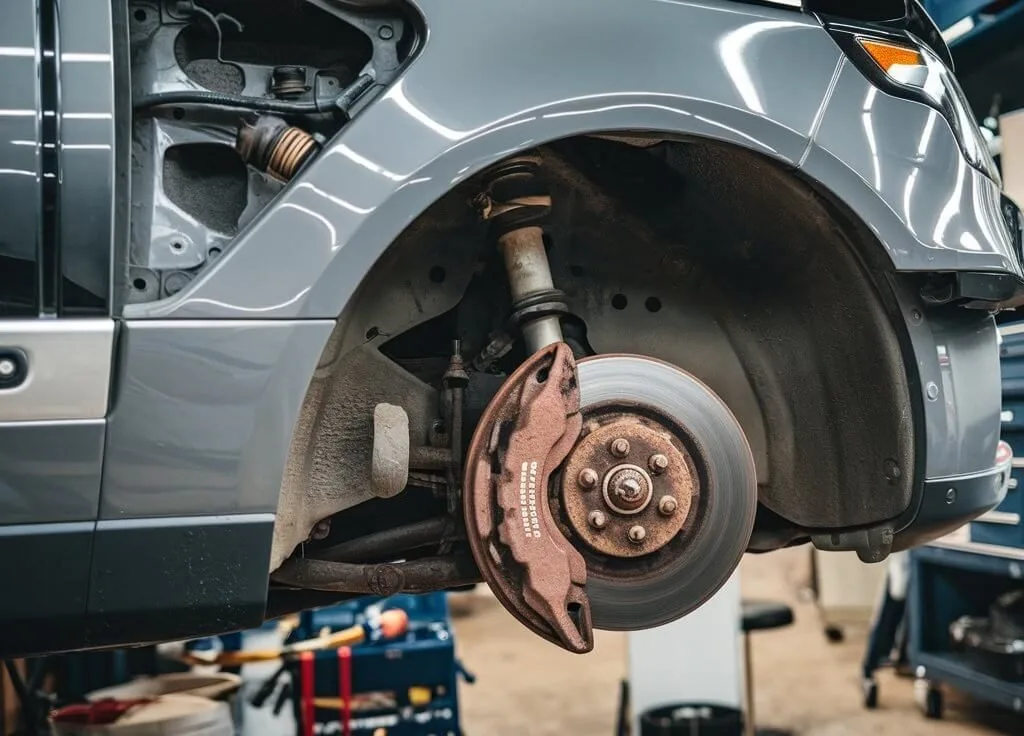
A low-fluid message needs the cause investigated. A top-up does not establish that a leak, hydraulic fault or other braking problem has been repaired. Owners should not remove wheels, probe ABS wiring or open hydraulic circuits at the roadside to diagnose the warning.
When safely parked, record the complete message and whether the parking brake is applied. Tell the workshop about pedal travel, stopping changes, visible leakage and recent brake work. Do not deliberately make a hard stop to test the system. Brake faults should be assessed before deciding that the vehicle can be driven to an appointment.
Engine, oil-pressure and charging warnings
The two reference editions identify low oil pressure as a red warning requiring a safe stop and immediate engine shutdown. Oil pressure and oil level are different measurements. A normal level does not prove that lubrication pressure is adequate. If the warning persists or returns, keep the engine off and arrange recovery; do not keep restarting to clear the lamp.
The 2021 L551 engine-temperature entry requires a safe stop and qualified assistance before continuing. Older vehicles may present temperature information differently. Treat an overheating message, steam or abnormal temperature seriously regardless of whether your display matches a newer icon.
A battery-shaped lamp during the startup check is different from a warning that remains after starting or appears while driving. The latter concerns the charging system; it does not prove that the battery or alternator alone needs replacement. On electrified variants, the charging arrangement also changes the diagnostic route. Follow the message and seek urgent assistance rather than assuming a predictable remaining driving distance.
For the check-engine lamp, distinguish steady from flashing. The L551 handbook allows continued driving for a steady emissions-related warning in the stated circumstances, but symptoms and companion warnings still control the safety decision. A flashing lamp requires reducing speed safely and immediate assistance. If it accompanies severe shaking, substantial power loss, smoke or overheating, stop and arrange recovery.
A warning does not identify a replacement part. The engine computer, braking controller, restraint system and other modules monitor different functions. The dashboard displays their information; one engine ECU does not directly measure every aspect of vehicle health.
Exhaust-filter warnings need the exact powertrain and message
Do not treat every exhaust-filter symbol as a diesel DPF warning. The 2021 L551 handbook contains separate diesel and gasoline filter-cleaning instructions. It also separates diesel exhaust fluid, often called AdBlue or DEF, from the particulate filter. A fluid-level or emissions-system warning is not fixed by taking an arbitrary highway drive.
| Vehicle and warning | What the reference says | Safe next step |
|---|---|---|
| L538 diesel, amber DPF message | The referenced handbook describes regeneration after the engine reaches normal temperature and suitable driving conditions are met. | Use the instructions for that exact vehicle and message. First exclude stop-driving symptoms and other critical warnings. |
| L538 diesel, red DPF message | Contact a qualified repairer promptly. | Do not repeat the amber-warning driving routine. Obtain advice on diagnosis and transport. |
| L551 diesel, amber exhaust-filter warning | Cleaning has not completed and the filter is filling. The lamp entry directs the owner to follow the displayed instructions when safe. | Check the diesel section of the matching handbook and follow its conditions only when the vehicle and route are safe. |
| L551 diesel, red exhaust-filter warning | The filter is full or the filter system has a fault; qualified assistance is required. | Contact the workshop or roadside assistance. Reduced power or other severe symptoms can require recovery. |
| L551 gasoline with a particulate filter | The 2021 handbook gives a separate gasoline cleaning strategy, including different driving conditions. | Use the gasoline instructions and exact message. Do not copy the diesel routine. Seek qualified advice for restricted performance. |
| Diesel DEF/AdBlue message, where fitted | Fluid replenishment and emissions-system warnings are separate from DPF cleaning. | Read the exact refill, system-fault or restart-countdown instruction. Do not assume a regeneration drive will resolve it. |
The applicable sources are the L538 handbook's DPF section on page 205 and the 2021 L551 exhaust-filter instructions. No universal speed, journey length or parked-revving method is prescribed here. The L551 gasoline and diesel procedures differ, so copying one routine across both would be misleading.
If the required drive cannot be completed safely or legally, seek advice instead. Never attempt a regeneration drive with overheating, low oil pressure, major smoke, unsafe braking or severe loss of power. Do not initiate a forced regeneration with an aftermarket scanner as an owner reset. That is a workshop decision with prerequisites and thermal risks.
L551 hybrid and plug-in charging messages
A plug-in charging-status fault is different from the 12-volt battery-charge warning shown during vehicle operation. In the 2021 L551 entry, a flashing red charging-status lamp indicates a charging fault. The handbook directs the owner to check the cable connection and seek help if the problem persists.
Only make the owner's permitted connection checks if the cable, connector and surroundings are safe. Do not handle damaged, unusually hot or visibly affected charging equipment. Follow shutdown or evacuation instructions for an electrical safety warning. Smoke, burning smell or a suspected battery fire requires moving away and contacting emergency assistance.
Do not remove covers, touch orange high-voltage cables or disconnect batteries to clear a warning. A mild hybrid and a plug-in hybrid have different systems. Provide the VIN and exact charging or drive message rather than requesting a generic “hybrid battery reset.”
Colors, startup checks and driver-assistance status
Color is a useful clue, not a diagnosis. In the L538 reference, an amber rear-fog indicator and an amber glow-plug indicator can show normal operation. A red seatbelt reminder or applied-parking-brake lamp does not mean the same thing as a red oil-pressure warning. Amber warnings do not inevitably progress to red.
Some lamps illuminate during a startup check. Check the vehicle's normal sequence instead of applying one timer to every lamp. If a lamp that should appear never does, or it remains when the check should have ended, investigate it. A dashboard without warning lamps does not certify the mechanical or electrical condition of the vehicle.
- DSC: flashing can indicate active stability intervention. A steady fault warning and a deliberately selected DSC-off state are different. Do not assume a restart repairs either condition.
- Tire-pressure warning: stop somewhere safe and assess tire condition and pressures according to the vehicle placard. A system fault can also affect monitoring. Do not blame Dubai heat or rely on appearance alone.
- High beam and turn signals: these normally indicate a selected lighting function. They still require appropriate driver use.
- Driver assistance: distinguish active, unavailable, switched off and collision-alert messages. A collision warning is not simply a notice that automatic braking is disabled.
- Door, hood or tailgate open: secure the opening before driving. These should not be dismissed as harmless comfort notifications.
A blocked camera or sensor may affect assistance, but dirt is only one possible cause. With the vehicle parked, use only the cleaning method described in the handbook. A persistent message needs diagnosis. Do not presume calibration is required or rely on a camera, parking sensor or cruise system that reports it is unavailable.
Record the warning before any reset
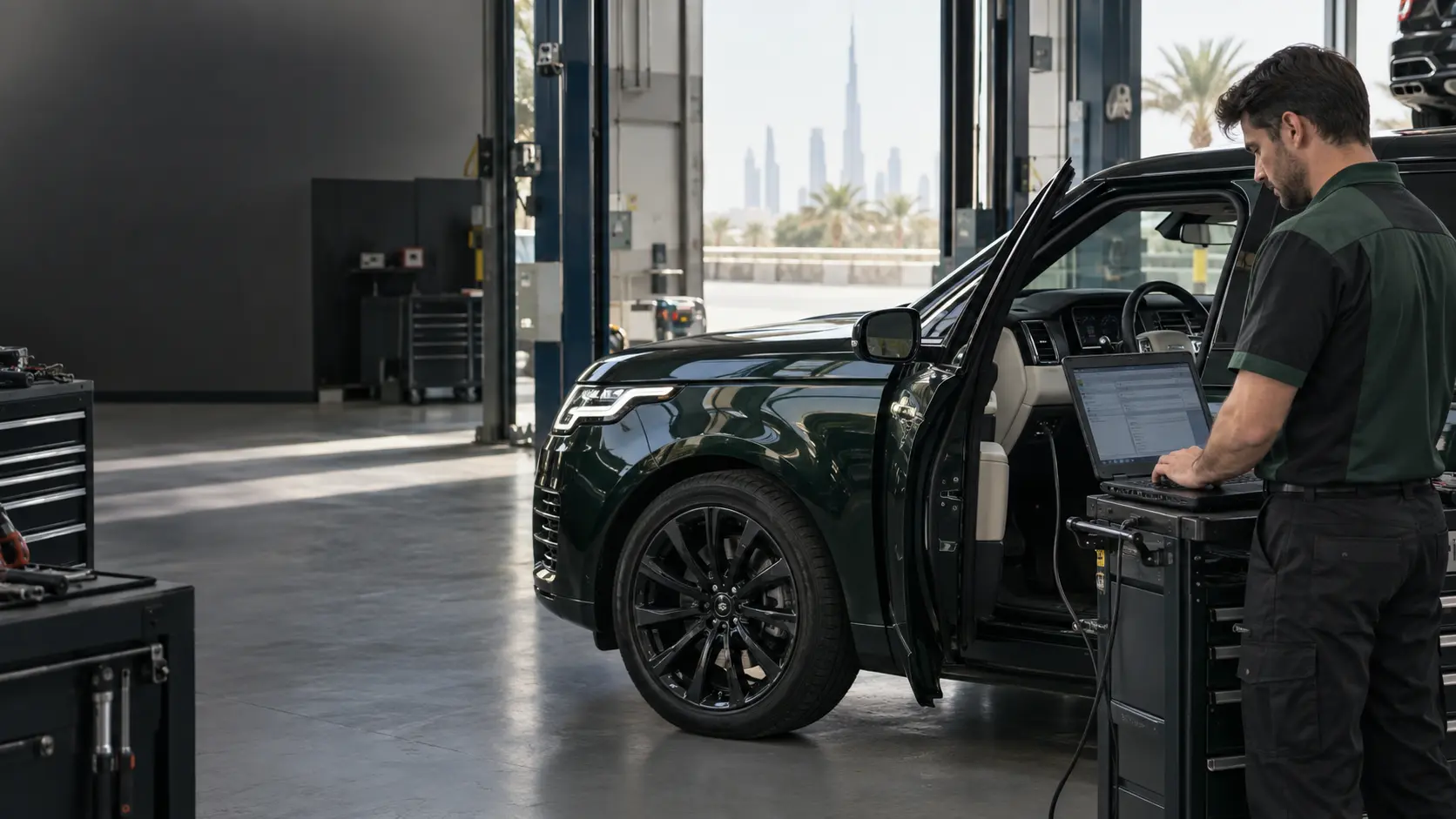
Photograph the whole display only once safely stopped. Include companion lamps, the full message and mileage. Note whether it happened at startup, while braking, after charging, in traffic, after rain or washing, or following recent repairs. State whether the engine was running, the parking brake was applied and the warning was steady or flashing.
Ask the workshop to preserve the complete scan report, relevant module names, code status and available freeze-frame or event information. A basic emissions-code reader may not access the ABS, restraint, body or hybrid systems. An empty result from that tool does not establish that those systems are fault-free.
Where symptoms justify it, diagnosis should assess power supply, grounds and communication alongside the affected mechanical or electrical system. Low voltage can contribute to multiple warnings, but it is not proof that every message is false or that replacing a battery will resolve them all.
There is no universal ten-second ignition reset for Evoque warning lights. Routine code clearing is not preventive maintenance. Clearing can remove useful history, while a restart can change the display without fixing the cause. Any software update, adaptation or reset should have a reason tied to the vehicle and repair procedure.
Before approving work, ask which finding supports the proposed part, what the quote includes, and how the original warning will be checked afterward. A written AED quote should make diagnostic scope, parts, labor and VAT clear. A cleared dashboard alone is not proof of a completed repair.
Range Rover Evoque warning-light FAQs
Can I drive with an amber Evoque warning light?
The symbol, message and symptoms decide that. An isolated amber warning can permit careful driving under its handbook instructions, but combined brake warnings, abnormal braking, overheating or severe engine symptoms change the decision. If the instruction or symbol is unclear, stop safely and seek assistance.
Why is the parking-brake light red when nothing is wrong?
A steady parking-brake lamp can confirm that the brake is applied. That differs from the red brake-system warning. Flashing, failure to release or an associated fault message requires attention. Do not try to overcome an applied parking brake with more accelerator input.
Is the airbag warning the same as the seatbelt reminder?
No. The referenced Evoque handbooks list an amber airbag fault lamp separately from the red seatbelt reminder. Correctly fastening the belt addresses a normal reminder, but it does not repair an airbag-system fault. Have a persistent restraint warning assessed promptly.
What if a warning disappears after I restart the Evoque?
Keep the photo and event details. A warning can stop displaying while the fault remains intermittent or stored. Previous braking, oil-pressure, overheating or electrical safety symptoms still matter. Do not use the disappearance as permission to ignore the original instruction.
Does every Evoque exhaust-filter warning need a highway drive?
No. The engine type, warning stage and exact handbook determine the response. Diesel and gasoline filter strategies differ, and a red diesel filter warning needs qualified assistance. A regeneration drive is inappropriate when another fault makes driving unsafe.
Can a weak 12-volt battery cause several warnings?
It can contribute to supply and communication faults, but the pattern needs testing. Do not dismiss brake or restraint warnings as battery effects without establishing the cause. On electrified Evoques, identify the affected electrical system before recommending a battery or charging component.
Should a used Evoque have no warning lights at all?
Normal startup checks and selected-function indicators can illuminate. Some warning lamps are expected before the engine starts. A proper inspection considers the startup sequence, stored faults, operating condition and service history. A clear display during one viewing is not a health certificate.
What should I send the workshop with a warning photo?
Send the model year, VIN if available, engine or hybrid type, mileage and full message. Include when it appeared, whether it flashed, recent work and any braking, steering, temperature, sound, smell or power change. Say first if the vehicle cannot be moved safely.
The takeaway before you continue driving
Identify the exact warning, match it to the correct Evoque handbook and act on the most serious symptom. Keep brake-system, parking-brake, ABS and restraint warnings separate. Preserve diagnostic information, and never treat a blank dashboard or a successful reset as proof of safety.
For help with an Evoque L538 or Evoque L551, share the warning photo and vehicle details before arranging a visit. If the stop-driving conditions above apply, arrange recovery rather than driving to the workshop.
Workshop support
Need help with your Range Rover?
Tell us your model, year and what you have noticed. Speak with the workshop about maintenance, an inspection or a repair.