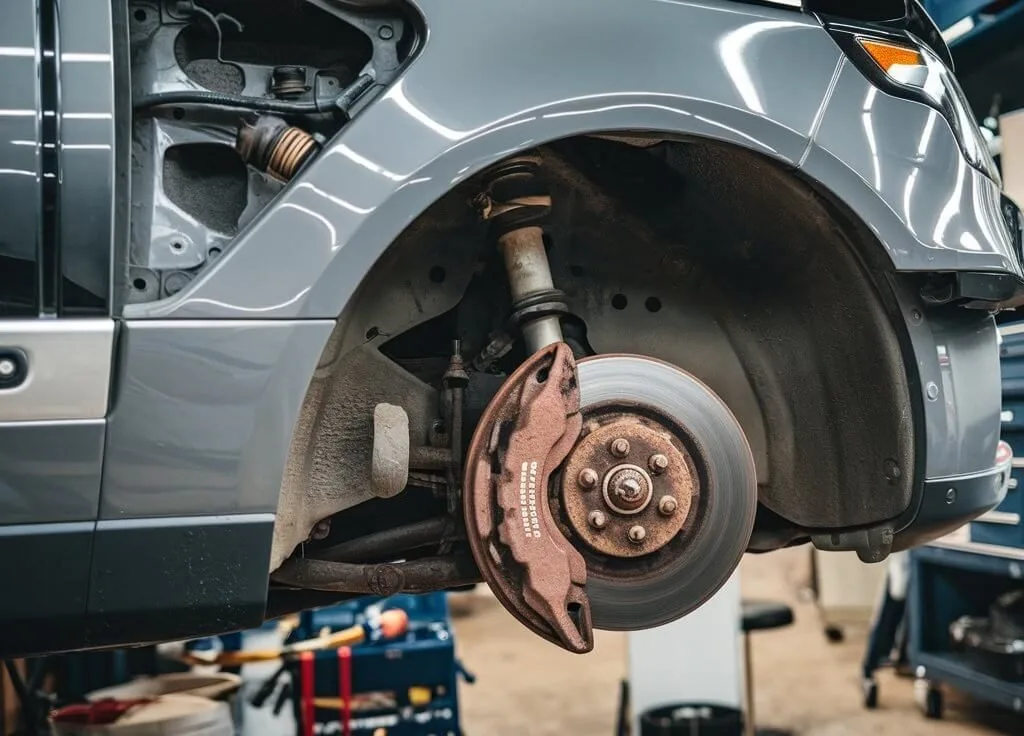
A soft or sinking brake pedal, reduced stopping ability, fluid leakage, or a red brake-system warning that remains after the parking brake is released needs urgent assessment. Stop safely and arrange recovery rather than driving to a pad-replacement appointment. Ordinary pad wear should not be used to explain away a change in braking control.
For a Range Rover brake pad replacement quote, first identify the front or rear axle and the exact brake specification. Then ask for inner and outer pad measurements, disc condition, sensor requirements, and the applicable parking-brake procedure. These findings determine whether the job needs pads only, pads and discs, or a separate brake-system repair.
Separate urgent brake faults from ordinary pad wear
A wear message, a noise, and an abnormal pedal are different complaints. Record the exact dashboard wording and what the vehicle is doing. A red parking-brake indicator while the parking brake is applied is not the same as a persistent brake-system fault warning after release.
| What you notice | What it may involve | Next step |
|---|---|---|
| Soft, sinking, or unusually long pedal travel; reduced stopping | Hydraulic pressure loss, air, a mechanical fault, or another brake-system problem | Stop safely and arrange recovery. Do not assume that new pads will restore control. |
| Persistent red brake-system warning, low-fluid message, or visible fluid leakage | A fault requiring urgent investigation, beyond a routine wear reminder | Do not continue the journey. Seek qualified assistance and recovery. |
| Severe grinding, smoke, a locked wheel, or a strong pull | Major friction damage, binding, overheating, or uneven braking | Stop safely. Keep clear of hot components and arrange recovery. |
| Pad-wear message with normal pedal feel and stopping | Worn friction material or a sensor/circuit concern | Arrange prompt inspection and ask whether the vehicle can be moved. No fixed remaining distance can be promised. |
| Repeatable squeal or vibration without loss of control | Pad, disc, hardware, mounting, or another wheel-end concern | Have the cause inspected. Noise alone does not identify which parts need replacement. |
Land Rover's brake safety guidance directs drivers to stop safely and seek assistance for a red brake warning. Warning symbols and operating instructions vary, so use the handbook for the actual vehicle. Do not treat a warning reset or a temporary improvement as confirmation that the fault is repaired.
Tell the recovery operator if a wheel is locked or the parking brake will not release. Loading and transport must suit the drivetrain and brake condition. Do not force the vehicle to move or improvise a parking-brake release.
What a Range Rover brake pad replacement quote should include
A single price without an axle, part number, and inspection findings is difficult to compare. A front pad set is not the same purchase as front and rear pads, and neither is equivalent to pads plus two discs. Always ask which of those jobs an estimate covers.
Ask for the total in AED with VAT clearly identified as included or added. Compare the same repair scope and parts specification. A low headline amount may exclude sensors or labor, while a larger total may include discs that another quote has not assessed.
| Quote item | What should be stated | Why it matters |
|---|---|---|
| Vehicle and axle | VIN, model year, fitted brake package, and front or rear axle | One model can have several incompatible brake configurations. |
| Pad set | Manufacturer, exact part number, and complete axle-set scope | A material label or brand name alone does not confirm fitment. |
| Disc decision | Measured thickness, applicable limit, surface findings, and retain or replace | Disc replacement needs a documented reason. |
| Wear sensing and hardware | Sensor quantity, condition, replacement requirements, clips, shims, and specified fasteners | Items may be separate or supplied with the pad kit. |
| Rear-brake procedure | Required service mode, adjustment, or initialization for the installed parking brake | Rear pad work is not identical across generations. |
| Labor and verification | Inspection, fitting, required electronic procedures, and final checks | Parts supply alone is not a completed brake service. |
| Separate work | Any caliper, hydraulic, fluid, hose, or other repair, with its supporting finding | Additional work should be explained and authorized. |
Before approving Range Rover brake repairs, ask for the inspection findings and an itemized estimate. The cost should reflect the pads, discs and other work your vehicle actually needs.
Use measurements instead of a mileage replacement rule
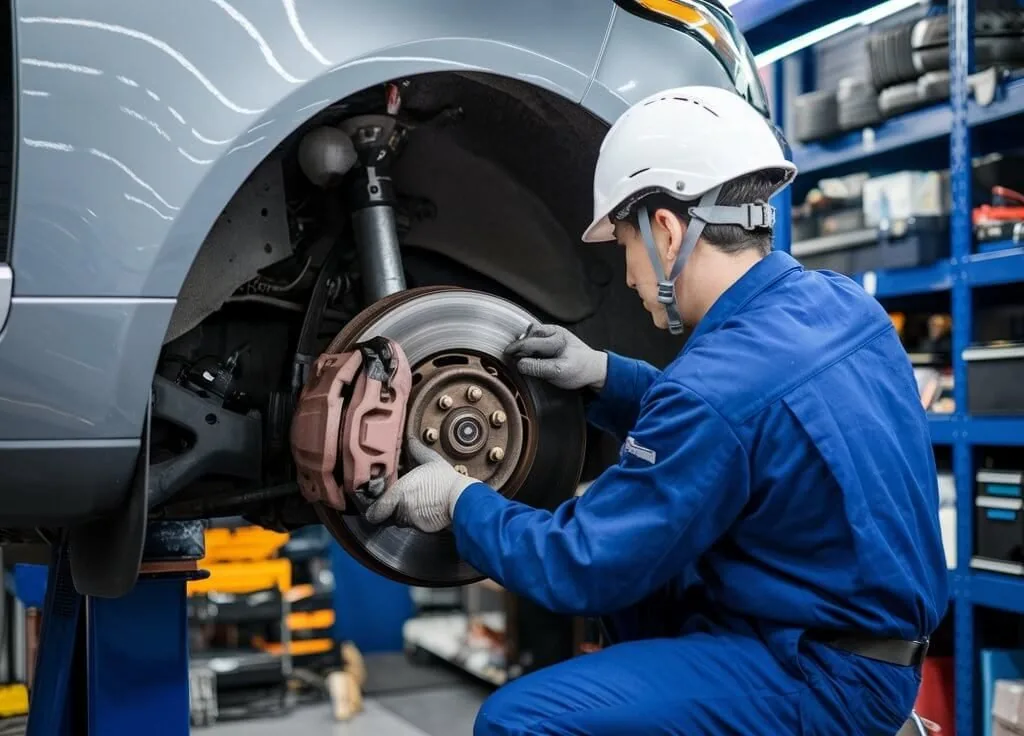
Pad life changes with the axle, friction specification, load, braking pattern, and mechanical condition. Urban driving, towing, or repeated descents can change wear, but none creates a reliable replacement interval for all vehicles. Use the maintenance schedule for inspection planning and actual condition for the replacement decision.
The inspection should record the remaining friction material in millimeters on the inner and outer pads at both wheels. The backing plate must not be counted as usable friction material. Compare the findings with the applicable service criteria, including uneven wear, damage, contamination, and sensor status.
A glance through the wheel can miss the inner pad or obscure its edge. It cannot substitute for a complete inspection, and a quarter-inch visual estimate is not a universal Range Rover replacement limit. A pad that looks thick from outside does not clear the whole axle.
Ask whether the reading is a measured minimum or an estimate. If wear is uneven, ask what caused the difference before approving another set. A report showing the location and condition of each pad is more useful than “the brakes are low.”
Confirm whether the discs can stay
Brake discs, also called rotors, need their own assessment. The technician should check both working faces and measure thickness using the correct equipment and procedure. The result must be compared with the exact disc specification, rather than a limit copied from another model.
Brembo's disc-thickness guidance explains comparison with the marked minimum thickness and assessment at multiple positions. Surface condition also matters. Cracking, serious scoring, corrosion damage, heat effects, or a vibration complaint can require additional investigation even when a single thickness reading appears acceptable.
Do not approve disc replacement simply because pads are being changed, and do not assume every disc can accept another set. Ask whether the retained discs meet the relevant criteria for new pads. Resurfacing is not an automatic cheaper option; it depends on the disc design, manufacturer instructions, damage, and remaining material.
Vibration does not prove that a disc is “warped.” The inspection may need disc variation and runout measurements, mounting checks, and assessment of connected wheel-end parts. The quote should identify the finding that the proposed work is expected to correct.
Choose between pads only and a wider repair
Pads only
This can be appropriate when pad wear is confirmed, the discs remain suitable, and the calipers and associated hardware operate correctly. The work may still require wear sensors or specified fitting parts. Confirm that the price covers a matched pad set for the axle.
Pads and discs
This is appropriate when inspection supports disc replacement as well as pads. The proposal should identify the measured limit or condition concern and the parts for both sides of the axle. A complete axle repair is different from replacing one visibly damaged pad or disc in isolation.
Diagnosis or repair beyond friction parts
A binding caliper, hydraulic fault, damaged hose, or parking-brake problem changes the job. Replacing pads without correcting the underlying cause can leave the complaint unresolved. Whether a component can be serviced, professionally rebuilt, or replaced depends on its design and the confirmed damage.
For example, one unusually thin inner pad calls for movement and release checks, not just a fresh pad. Ferodo's pad-condition reference shows how abnormal wear can accompany caliper problems. It also notes that some pad taper is intentional, so shape must be judged against the application.
Match pad material to the approved brake application
“Ceramic,” “semi-metallic,” and “organic” describe broad material groups. They do not prove that a pad fits the caliper, works with the fitted disc, accepts the sensor, or meets the intended road-use specification. Dubai weather alone is not a reason to choose one group.
Start with the exact part application. Ask for the manufacturer's part number and compatibility information for the brake package. Then discuss relevant trade-offs such as noise, dust, cold response, operating temperature, and disc compatibility. Avoid promises that every ceramic pad lasts longer or every semi-metallic pad stops better.
Genuine-branded parts and alternative suppliers should be compared by the specific product and documented application. A familiar manufacturer name is not proof that every pad in its catalog is suitable. Do not choose track-focused friction material for normal road use without confirming its intended operating conditions.
Range Rover, Sport, Evoque, and Velar badges cover different generations and brake packages. Model year and wheel appearance may not resolve the choice. The VIN, installed equipment, and any previous brake modifications should be checked before ordering.
What the replacement process should cover
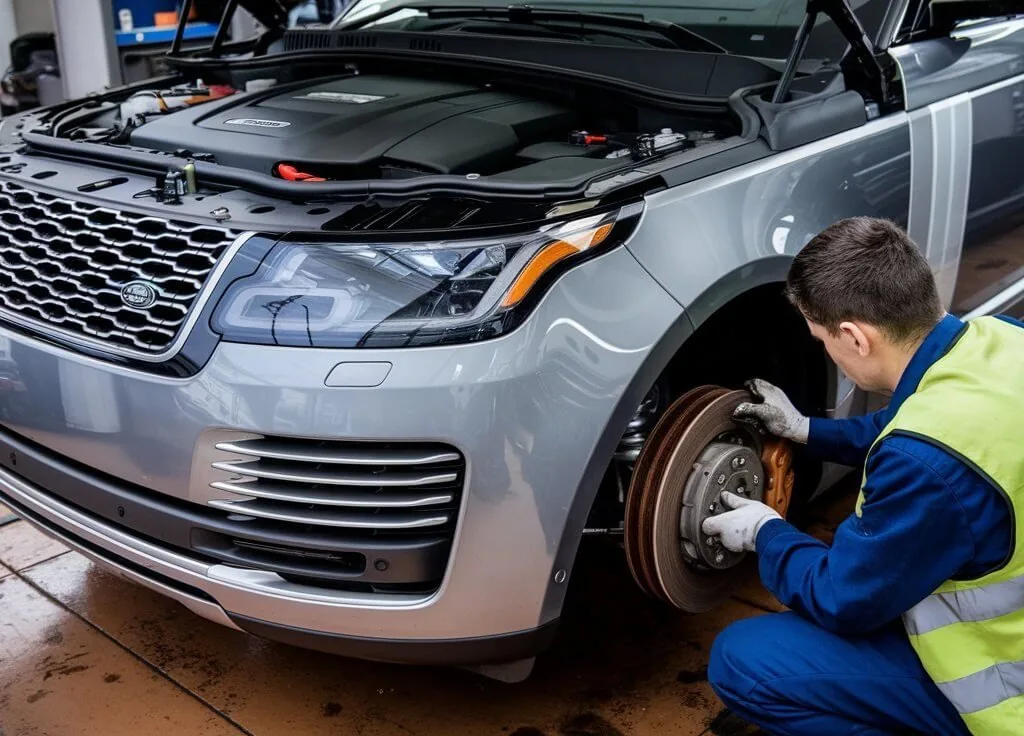
This is an owner checklist, not a workshop repair procedure. Brake work requires suitable lifting and support, correct equipment, and the applicable service information. Never work under a vehicle supported only by its jack or air suspension.
- Confirm the complaint. Record the warning, pedal behavior, noise, vibration, and recent work. Urgent hydraulic or control concerns take priority over pad replacement.
- Identify and inspect the axle. Confirm fitment, measure pads and discs, and check caliper movement, hoses, sensors, and hardware.
- Agree the scope. Separate required parts from optional work and state how further findings will be authorized.
- Prepare the installed system. Follow the correct lifting, caliper, hydraulic, and parking-brake instructions.
- Fit the specified parts. Use the required hardware, fastening procedures, and compatible materials while protecting friction surfaces from contamination.
- Verify before release. Confirm pedal consistency, leak-free operation, brake release, warning status, and controlled braking performance.
Rear parking-brake designs vary. Some procedures involve electronic service mode; others involve different mechanisms or adjustments. The workshop must identify the system before retracting a piston or operating an actuator. A generic internet reset sequence should not replace the vehicle's instructions.
Wear-sensor treatment also varies. Ask whether the sensor has worn through, is damaged, or must be renewed under the fitting instructions. Do not bypass it to extinguish a message. A warning that remains after replacement needs an explanation, not repeated clearing.
What to check at handover
The invoice should identify the axle, pad and disc part numbers, sensors and hardware supplied, and any separate repairs. Ask for the recorded findings and the reason retained discs were considered suitable. If another axle needs monitoring, request its measurements and an inspection plan.
Get bedding-in instructions for the actual pads and discs. Do not invent a sequence of hard stops in traffic to accelerate the process. Bedding-in is not an explanation for a sinking pedal, fluid loss, severe pull, or markedly reduced stopping ability.
Allow enough time for inspection and verification. Parts availability, seized hardware, disc damage, or a parking-brake fault can change the completion time. A standard appointment duration is not a promise that every brake concern will be resolved within it.
For ongoing care, follow the applicable inspection and fluid-service schedule, avoid resting your foot on the brake pedal, and report recurring noise or changes in control. Do not apply sprays or lubricants to friction surfaces. A returning warning or uneven wear deserves investigation rather than another routine pad change.
Range Rover Brake Pad Replacement FAQs
Does a soft brake pedal mean I only need new pads?
No. A soft or sinking pedal requires urgent brake-system assessment. Pad wear should not be assumed to explain it. Stop safely and arrange recovery if pedal feel or stopping control is abnormal.
Can I drive a set distance after a pad-wear warning?
No reliable distance can be promised. Remaining material, sensor design, wear pattern, and driving conditions vary. Arrange prompt inspection and describe any pedal, noise, or stopping changes before moving the vehicle.
Do front and rear pads have to be replaced together?
Not automatically. Each axle needs assessment, and pads should be replaced as the specified axle set. Ask for separate findings if both front and rear sets are recommended.
Why are two brake replacement quotes different?
They may cover different axles, pad specifications, discs, sensors, labor, parking-brake procedures, or VAT treatment. Compare the itemized scope before comparing the total.
Should brake fluid be changed whenever pads are replaced?
Not solely because new pads are fitted. Fluid service follows the vehicle's requirements and inspection findings. A leak or hydraulic fault is a separate repair concern and must not be dismissed as routine servicing.
Can new pads fix brake squeal?
Sometimes, but squeal alone does not prove wear. Hardware, contact condition, disc surfaces, contamination, and other wheel-end sources may need attention. The repair should address the identified cause.
Why is the wear warning still showing after replacement?
The sensor, wiring, connector, another monitored location, or the required completion procedure may need checking. Confirm the physical brake condition before clearing the warning; do not bridge the sensor circuit.
Approve a defined brake repair
A useful brake pad quote connects the exact axle and parts to measured condition. Confirm the disc decision, sensors, parking-brake procedure, labor, and VAT before approval. Safety comes first: a soft pedal, reduced stopping, fluid leakage, or persistent red brake-system warning needs urgent assessment rather than routine pad shopping.
Workshop support
Need help with your Range Rover?
Tell us your model, year and what you have noticed. Speak with the workshop about maintenance, an inspection or a repair.