
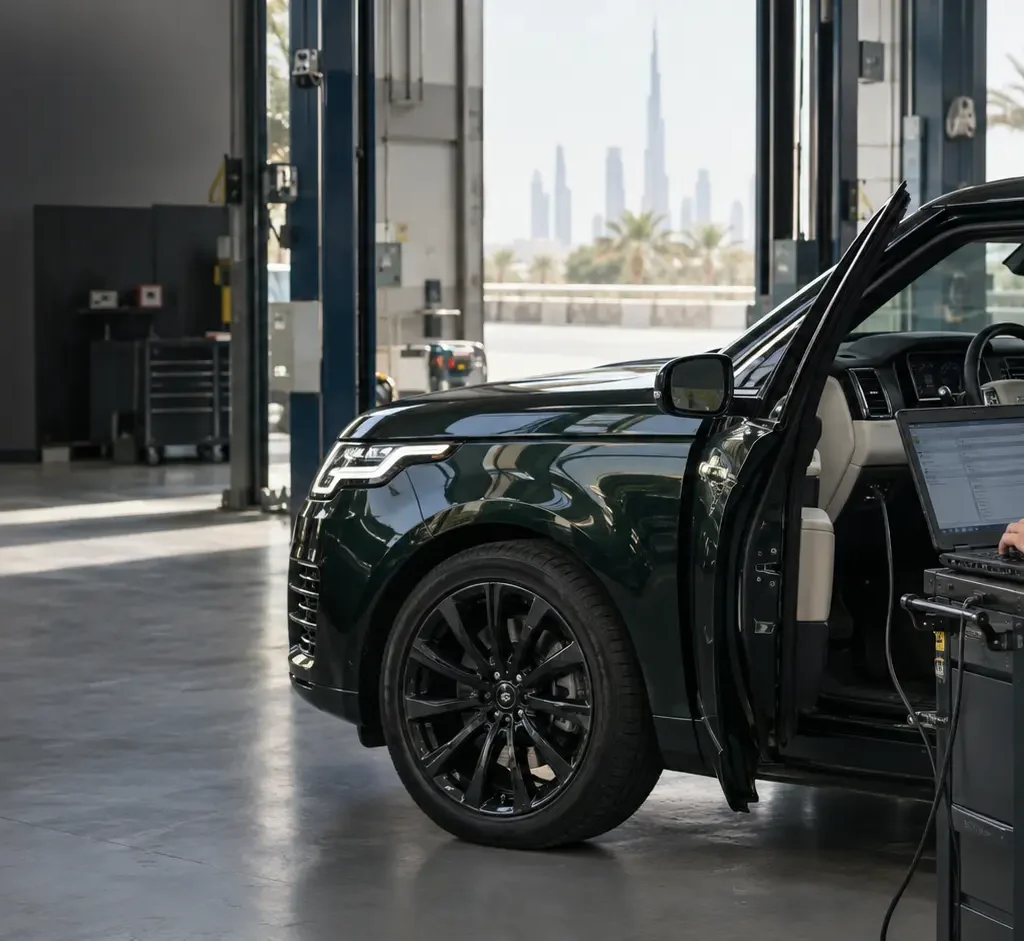
A Range Rover warning that appears intermittently needs a safety decision and a recorded fault history, not an instant ECU reset. Stop for severe symptoms or a message that tells you to stop. If the vehicle is safely parked and there are no urgent symptoms, record the exact warning and arrange diagnosis before clearing codes. A warning that disappears after restarting does not prove that the fault was harmless, that a sensor failed, or that the ECU needs replacement.
When an ECU warning means stop driving
Do not keep the engine running to collect clues when serious symptoms are present. Pull over as soon as it is safe for low oil pressure, overheating, severe shaking, repeated stalling, major loss of power, loss of drive, or a significant braking or steering problem. Switch off once safely stopped when engine damage, a fuel leak, smoke, or fire is suspected. Do not restart to see whether an urgent warning returns. Arrange recovery or qualified assistance.
A flashing engine warning can accompany a serious misfire. If it flashes persistently or appears with rough running, loss of power, or other severe symptoms, stop safely and arrange assistance. Do not drive an acceleration test to decide whether it is “just a sensor.” A warning color alone cannot describe every situation; read the complete message and follow your vehicle's handbook.
If smoke, a burning smell, or a strong fuel smell is present, move to safety and keep people away from the vehicle. Do not open or touch hot components to investigate. Never open a hot cooling-system cap. Safety takes priority over photographs, scanner readings, or keeping the engine running for a workshop.
Land Rover's warning-lamp guidance includes immediate action for low oil pressure and stopping for overheating. The wording and response for your exact warning must be checked in the VIN-specific Land Rover owner information.
If the warning is amber and the vehicle feels normal
A steady amber warning without unusual behavior still needs attention. Read the message, record it once safely parked, and seek advice on whether driving to a workshop is appropriate for that warning and vehicle. There is no universal safe distance. Avoid unnecessary journeys until the next step is clear.
If a new symptom develops, reassess immediately. Advice based on normal operation no longer applies when the engine starts shaking, the temperature rises, power drops sharply, or braking or steering changes. When uncertain, use recovery instead of treating a restart as permission to continue.
Why a warning that disappears is not a diagnosis
“ECU sensor glitch” is an informal description. The engine control module receives signals, commands components, and exchanges information with other modules. A warning can reflect a sensor circuit, a power supply, network communication, software behavior, or a real mechanical problem that the electronics have detected correctly.
The condition may be intermittent because it occurs only during starting, after warming up, under a particular load, or when a connection moves. A restart changes the operating state. It can change which warning is displayed without repairing the underlying cause.
| Observation | What it can help investigate | What it does not prove |
|---|---|---|
| Several warnings appear during starting | Shared supply, starting conditions, and the timing of module events. | That the battery or every named module has failed. |
| The warning clears after a restart | Whether the condition depends on temperature, load, or operating state. | That the fault is harmless or repaired. |
| Reduced power returns when accelerating | Engine, transmission, pressure, signal, or mechanical checks guided by the report. | That the ECU itself is defective. |
| A fault appears after rain or washing | Possible water entry, connector damage, and affected circuits. | That moisture is definitely the cause. |
| The engine stalls when hot | Safe controlled testing of power, signals, fuel, and mechanical operation. | That a crankshaft sensor or an internal ECU circuit must be replaced. |
These patterns help select tests. They should not be used as a roadside method for separating “software” from “mechanical” faults. The same driver complaint can have more than one cause.
Keep an event log after you are safely parked
A useful event log records what happened without guessing the cause. Write it once the vehicle and occupants are safe. Do not recreate a dangerous event to make a video, and do not ask a driver to use a phone or scanner while driving.
| Record | Useful detail |
|---|---|
| Vehicle | Model, model year, engine or powertrain, mileage, and VIN supplied privately to the workshop. |
| Warning | Exact wording, symbol, color, steady or flashing behavior, and a safely captured photo. |
| Event | Starting, idling, accelerating, changing gear, cruising, or stopping when it happened. |
| Conditions | Cold or warmed-up engine, recent long parking, wet conditions, or a recent wash. |
| Vehicle behavior | Shaking, stalling, loss of power, temperature change, or other functions that stopped working. |
| Recent work | Battery work, jump-start, software work, repairs, water entry, or added accessories. |
| Previous action | Whether the vehicle was restarted, codes were cleared, or a battery was disconnected. |
Separate observations from conclusions. “The message appeared during the first start after three days parked” is more useful than “the ECU needs resetting.” If you cannot remember the order of warnings, say so. An uncertain time sequence is better than an invented one.
For a recurring problem, add one short entry per event. Include whether the symptoms were identical and how long the car had been running. This can help a technician choose an appropriate monitoring plan without asking you to keep driving an unsafe vehicle.
Save the scan report before clearing codes
A scan is a record of what a module noticed, not a replacement-parts list. Preserve the complete report before anyone clears the fault memory, disconnects the battery, or performs a reset. Ask for the original file or clear screenshots rather than a cropped code number.
- The complete code, including any suffix or failure-type detail.
- The module that recorded it and its reported status.
- Available freeze-frame or event data, mileage, and timestamps.
- Relevant module identification and software information.
- The dashboard message and owner event log that accompanied the scan.
Freeze-frame data captures selected operating values around an emissions fault event. The amount of information and its availability vary. Snap-on's OBD-II service-mode guidance explains that clearing emissions-related data removes diagnostic information and resets readiness monitors. Preserve the evidence before deciding whether clearing is appropriate.
A basic OBD-II reader may not access all Range Rover modules or manufacturer-specific event detail. A “no codes” result from that tool does not prove that every system is healthy. Read Range Rover fault codes with their full suffixes, status and reporting module. A code alone does not identify a part to replace.
After the report is saved, clearing may be part of a defined diagnostic or post-repair procedure. The technician should explain why it is being done and what will be checked afterward. A lamp staying off for a short period is not enough by itself to confirm a repair.
Safe owner checks have clear limits
Useful owner actions are reading the handbook, saving the warning, collecting the service history, and arranging the right help. They do not require unplugging sensors or opening a control module. Even a simple-looking connector can be part of a sensitive or safety-related circuit.
Do not use a universal battery reset
There is no single timed battery-disconnection procedure that safely resets every Range Rover ECU without consequences. Disconnecting power can disturb stored information and learned settings, and the required shutdown and reconnection steps depend on the vehicle. Some configurations have more than one electrical energy source.
Do not disconnect the battery simply to extinguish a warning. If isolation is needed for a repair, the technician must follow the applicable workshop procedure. Hybrid and other electrified systems require their own precautions; 12-volt work does not authorize touching high-voltage cables or components.
Do not improvise a throttle relearn
A fixed period of idling is not a universal throttle or idle adaptation procedure. Requirements depend on the engine, control system, and work performed. Some jobs require a supported diagnostic routine and specific prerequisites; others do not require an adaptation reset.
Do not hold an engine running when it is shaking severely, overheating, or showing an urgent warning. A relearn cannot substitute for diagnosis of a mechanical fault, an unstable supply, or damaged wiring.
Keep hands and test tools away from unknown circuits
Do not wiggle a harness near moving parts, probe ECU pins, apply power to a sensor, bridge a fuse, or open sealed connectors as an experiment. Avoid adding grease or cleaner without the specified product and procedure. Incorrect probing can damage terminals or create a new intermittent fault.
Sensor design also changes how testing should be performed. HELLA's crankshaft-sensor guidance warns that an inappropriate resistance test can damage a Hall sensor. This is one reason circuit testing belongs with a technician using the correct specifications.
Check power and grounds before blaming the ECU
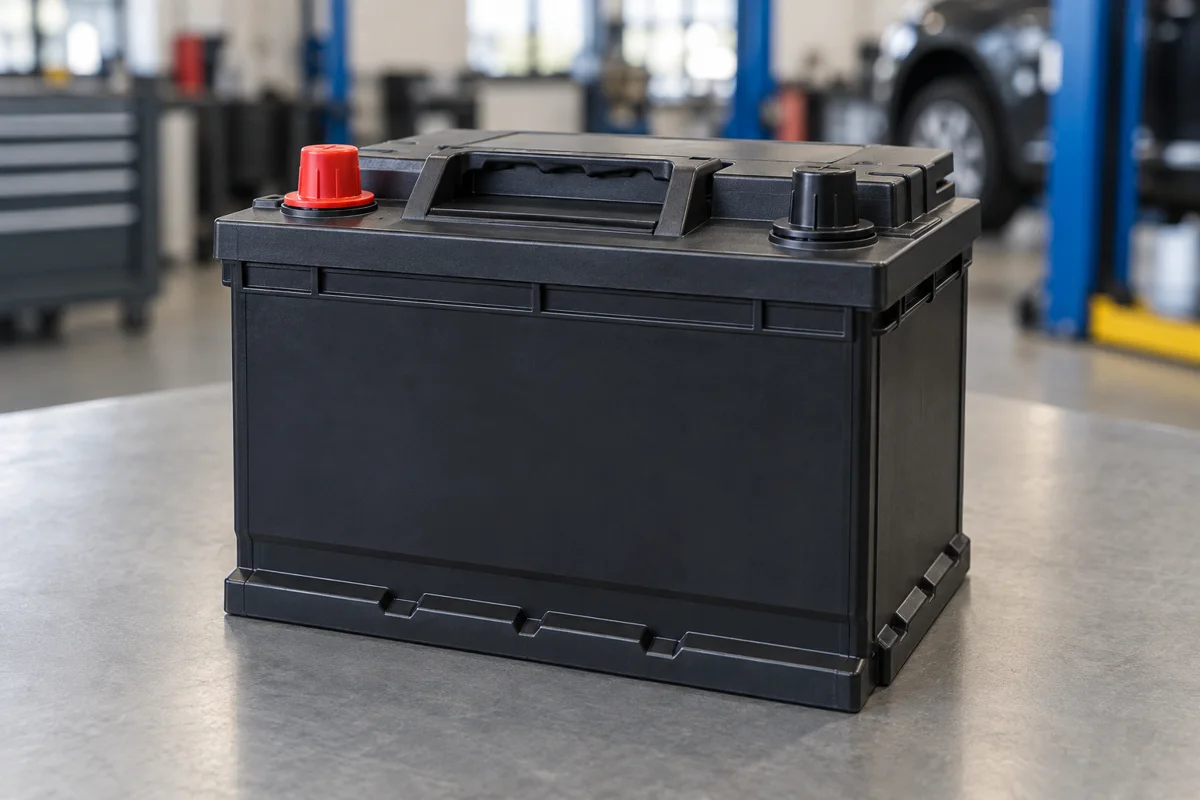
Where the fault history points toward electrical supply or communication, the workshop should establish reliable power and grounds before condemning a control unit. A module may be offline because its supply is missing. Several modules can also record secondary warnings after one shared interruption.
Ask what was measured and under which operating condition. Battery state, starting performance, charging operation, local module feeds, and ground voltage drop answer different questions. A single resting-voltage reading cannot replace the whole investigation.
Likewise, low battery voltage does not automatically mean that every sensor reference supply has fallen in direct proportion. Sensor circuits and module regulation differ. The affected supply and signal should be measured using the vehicle's wiring information and test procedure.
Look for the cause of any confirmed supply problem
A discharged battery might need charging and retesting, replacement after a failed health test, or investigation of charging or parked-drain behavior. Loose connections, damaged cables, power distribution faults, and accessory installations can also matter. Replacing the battery without explaining the test result may leave the original problem in place.
A recent jump-start is relevant history, but it does not prove that a damaging voltage spike occurred. Record the circumstances and any immediate change. The technician can then decide which supply and component checks are justified.
What testing should establish before ECU repair or replacement
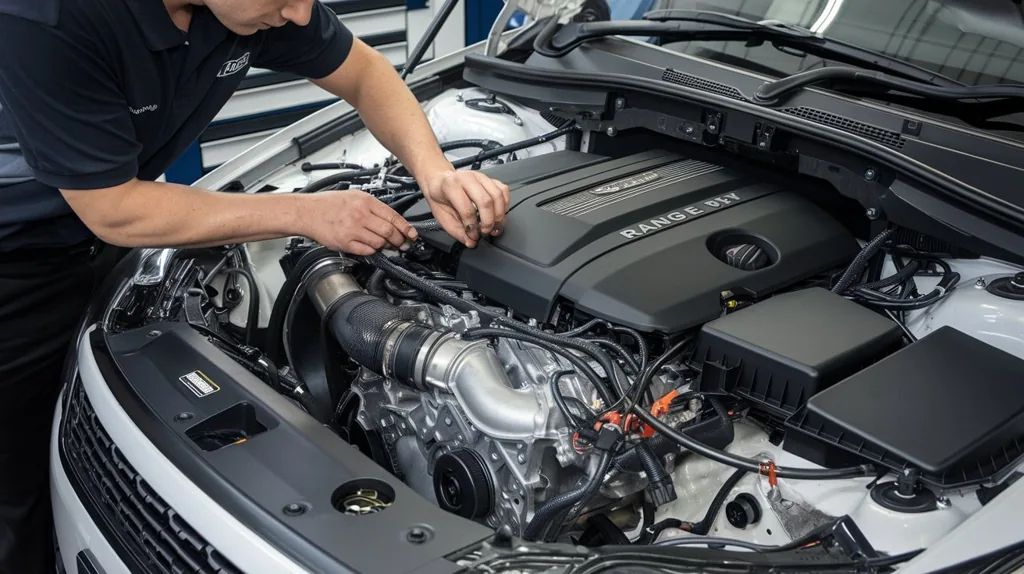
An ECU diagnosis needs more than recurring warnings or several sensor codes. The workshop should identify the relevant module and test the conditions needed for it to work. That includes appropriate supplies, grounds, connected circuits, and communication, along with any mechanical checks indicated by the symptoms.
A code naming airflow, pressure, oxygen sensing, or timing does not automatically prove a failed sensor. The input might be accurately reporting an air leak, incorrect pressure, a combustion problem, or a mechanical timing issue. The test should distinguish the sensed condition from a fault in the sensing circuit.
- Identify the vehicle and complaint. Match the VIN, engine, fitted equipment, and exact warning to the correct service information.
- Preserve and interpret the report. Separate primary findings from secondary warnings and note what was active when tested.
- Check the relevant supplies and circuits. Use appropriate loaded tests and connector inspections before blaming a module.
- Test the condition identified by the evidence. This may require signal, pressure, network, actuator, or mechanical testing.
- Confirm the repair route. Explain why wiring repair, a sensor, a software procedure, or module work is justified.
- Verify the result safely. Repeat relevant checks and the original operating condition only where safe and appropriate.
Software updates, coding, and adaptations are not mandatory cures for every warning. They should be used only when the vehicle, repair, and manufacturer procedure require them. If module replacement is proposed, ask about exact compatibility, configuration, security pairing where applicable, and the verification included.
A module repair or replacement must also address any cause of damage, such as confirmed water entry or a supply fault. Otherwise, fitting another unit may expose it to the same problem.
Agree on diagnosis and cost before approving parts
An intermittent warning cannot support a reliable repair price until the required work is defined. There is no single price for an “ECU glitch.” A written estimate should describe the actual diagnosis, repair, and any recovery required.
Ask for the initial diagnostic scope and charge, what the first assessment includes, and when further approval is required. A code read, an extended intermittent-fault investigation, a harness repair, and module programming are different jobs. Recovery also depends on the vehicle's condition and transport requirements.
- What fault has been confirmed, and what remains unproven?
- Which test supports each recommended part or repair?
- Does the AED quote include parts, labor, programming, and VAT?
- What additional work requires approval before it begins?
- What post-repair checks and written support terms are included?
If the fault does not recur during the appointment, ask what was checked and what monitoring or follow-up is appropriate. “Not reproduced today” is a useful limitation. It is not the same as proving that the vehicle has no fault.
Reduce repeat problems without unnecessary resets
Keep service records and investigate water entry, damaged wiring, or recurring battery complaints when they are identified. Follow the vehicle's maintenance and cleaning instructions. Do not pressure-wash electrical connectors or open module housings to dry them.
Have accessories installed with documented compatible connections, protected power, and correct shutdown behavior. Tell the workshop about trackers, cameras, audio equipment, tuning devices, or recent wiring work. Their presence is a reason to inspect the relevant installation, not proof that the accessory caused the warning.
There is no universal monthly scan or battery-replacement schedule that prevents ECU warnings. Use the vehicle's maintenance requirements and the actual test findings. A safe repair decision comes from understanding the fault, not repeatedly removing its dashboard message.
Range Rover intermittent ECU warning FAQs
Why does the warning disappear before the workshop appointment?
The fault may depend on temperature, load, starting conditions, or an intermittent connection. Stored information and your event log can still help. Tell the workshop what happened and whether anything was reset. A missing warning at the appointment does not invalidate the earlier symptoms.
Should I leave the engine running until a technician arrives?
Not when an urgent warning, severe shaking, overheating, smoke, fuel smell, or another serious symptom is present. Stop safely and follow the applicable shutdown guidance. Capturing a live fault is never more important than protecting people and avoiding further damage.
Can a sensor code be caused by a mechanical problem?
Yes. A sensor can report an abnormal condition correctly. Air leaks, pressure problems, combustion faults, or timing issues may require mechanical tests alongside electrical checks. The code description alone cannot separate a failed sensor from the condition it measures.
Does a new battery rule out a power-supply fault?
No. Battery charge, suitability, connections, charging operation, local feeds, and grounds still matter. A recently installed battery also does not prove that the correct setup procedure was completed. Check the relevant supply during the condition associated with the warning.
What if someone already cleared the codes?
Tell the workshop when they were cleared and provide any saved report, photos, or invoice notes. Do not deliberately recreate a dangerous fault. The technician can check remaining data and plan further testing, but some information from the original event may no longer be available.
Do several communication codes mean several ECUs have failed?
No. One shared interruption can produce reports in multiple modules. The investigation should trace power, grounds, communication, and the first relevant event. Replacing every module listed in a scan is not a sound diagnosis.
Does reduced-power mode mean it is safe to drive home?
No. Reduced power is a response to a detected condition, not a safe-distance guarantee. The warning, symptoms, available control, and handbook instructions determine the next step. Stop and arrange assistance if there is severe rough running, unsafe acceleration capability, stalling, or another urgent symptom.
What should justify an ECU replacement quote?
Ask for findings that isolate the module after relevant external circuits, supplies, communication, and mechanical causes have been assessed. The quote should identify the compatible part and any required configuration, programming, and verification. A recurring light or an unsuccessful reset is insufficient on its own.
Preserve the evidence and fix the cause
For intermittent ECU warnings, act on urgent symptoms first, record the event once safe and keep the scan report intact. A restart can change the display without repairing the cause. When arranging Range Rover electrical fault diagnosis, provide the exact warning, vehicle details and any saved report.
Workshop support
Need help with your Range Rover?
Tell us your model, year and what you have noticed. Speak with the workshop about maintenance, an inspection or a repair.