Software remapping can change how a turbocharged Range Rover requests and delivers torque. A sharper accelerator map can make the vehicle feel more responsive without making the turbocharger physically spool faster. Whether boost builds sooner depends on the engine, turbo hardware, control strategy, operating conditions, and the limits the calibration must respect.
A new hesitation, warning, or loss of power needs diagnosis before optional tuning. A remap cannot seal a charge-air leak, repair a worn turbo, restore fuel pressure, or correct inadequate cooling. This guide explains how to separate response changes from repair needs and what evidence to request before approving a modification.
Do not performance-test a vehicle with serious symptoms. Severe smoke, an oil-pressure warning, overheating, fuel leakage, or sudden major power loss calls for a safe stop and professional assistance. Switch off when safe and arrange recovery appropriate to the vehicle. Do not repeat hard acceleration to see whether the problem clears.
Pedal response and turbo spool are different
The accelerator is a request for torque. The powertrain decides how to meet that request while coordinating engine operation, gear selection, traction control, and component protection. A different pedal map may request more torque for the same amount of pedal travel. That can feel stronger in ordinary driving even when maximum available output and turbo response at an equivalent torque request are unchanged.
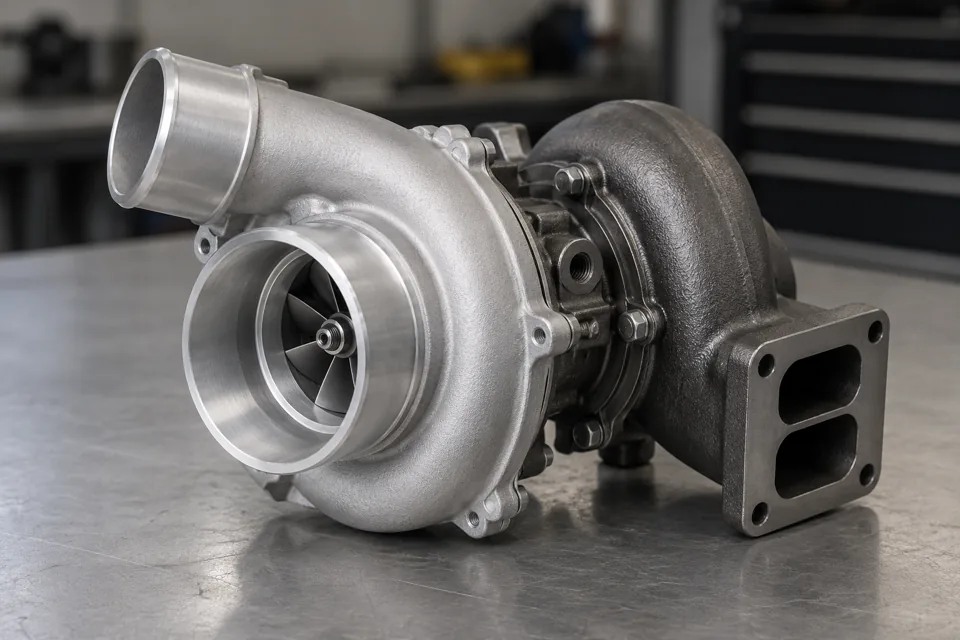
Turbo spool is the acceleration of the turbocharger's rotating assembly. Exhaust energy drives the turbine, which drives the compressor. Hardware inertia, exhaust flow, operating speed, and the fitted boost-control system affect how quickly useful boost develops. Garrett's explanation of turbo lag describes these physical and control influences. It does not establish a percentage improvement for a particular Range Rover remap.
| What changes | What the driver may notice | What would distinguish it |
|---|---|---|
| Pedal-to-torque request | More response from less pedal movement. | Compare pedal position with requested torque. Feeling stronger alone does not prove faster spool. |
| Gear selection | A pause followed by a downshift and acceleration. | Record the selected gear, engine speed, and shift event alongside boost. |
| Boost buildup | Torque increases as the turbo responds under load. | Compare requested and actual pressure over time at a defined starting speed and load. |
| Protective torque reduction | Less response after heat buildup or during traction intervention. | Review temperatures, relevant intervention data, and fault conditions before proposing calibration changes. |
Boost normally falls when demand falls. Low pressure at idle or after lifting off the accelerator is not, by itself, evidence of failure. Also establish whether the engine is turbocharged: a supercharged engine or a different hybrid configuration needs its own explanation. A model badge alone does not identify the hardware.
Establish a healthy, recorded baseline
Start with the model year, engine code, original market, transmission, existing modifications, and software identification. Preserve fault codes and their recorded operating conditions before clearing anything. The workshop should document whether the complaint began suddenly, follows a repair or software update, or has always been present.
The baseline has two purposes: finding a fault that needs repair and defining the behavior a proposed modification would actually change. A generic OBD reader may supply some engine information but should not be assumed to expose all JLR-specific torque requests, actuator data, or diagnostic routines.
- Air and boost paths: inspect the intake and charge-air system. Use the applicable controlled leak test where indicated. Distinguish a charge-air leak from a vacuum-control leak on an engine that uses vacuum actuation.
- Fuel and combustion: investigate pressure delivery, combustion irregularity, and relevant sensor readings using tests for the fitted gasoline or diesel system.
- Cooling and lubrication: investigate abnormal temperatures, oil pressure concerns, or fluid loss before load testing.
- Control and restrictions: assess sensor plausibility, actuator operation, electrical supply, and intake or exhaust restrictions when evidence points there.
Garrett's system-diagnosis guidance supports checking causes beyond the turbo itself. The exact test pressures, equipment, and acceptance limits must come from the vehicle procedure. These are trained-workshop tasks, not instructions to pressurize or dismantle the system at home.
Ask for a log that identifies starting engine speed, gear, requested and actual boost, relevant temperatures, and accelerator demand during a controlled repeatable test. Pressure channels must use compatible units and reference points; absolute pressure and pressure above atmosphere cannot be compared as identical numbers. A boost log does not directly measure turbo shaft speed unless suitable sensing is actually present.
If the baseline exposes a fault, repair and verify it before considering tuning. Restored response after fixing a leak is a repair result, not a remapping gain. Use turbo fault diagnosis to establish the cause before approving repair or replacement.
Define the modification and its limits
Ask the calibrator to describe the intended change in plain language: more torque request for a given pedal position, a different torque curve, altered boost control, or another specified adjustment. “Faster turbo response” is too vague to approve without a measurement and an operating range.
| Limit to identify | Evidence to request |
|---|---|
| Engine and turbo | Applicability to the exact engine and turbo, the proposed torque/boost targets, and the basis for component limits. There is no universal safe percentage increase. |
| Transmission and driveline | Compatibility with the fitted gearbox and torque-management strategy. Extra low-speed torque can change component loading. |
| Temperature and sustained load | How intake, coolant, oil, and relevant exhaust temperatures are assessed, including the limitations of available sensors. |
| Fuel and emissions equipment | The required fuel specification and confirmation that applicable emissions equipment and monitoring remain functional. |
| Hybrid integration | Evidence for the exact engine, motor, battery, and transmission combination. A map for a non-hybrid engine is not automatically suitable. |
Garrett's turbo-system testing checklist identifies pressure, temperature, air-fuel, and turbo-speed measurements and the risk of overspeed. It is general system guidance, not a Range Rover calibration approval or a safe boost specification.
Gasoline and diesel strategies differ. A gasoline proposal must address the applicable fuel and knock constraints; a diesel proposal must address its combustion, smoke, thermal, and aftertreatment constraints. Do not transfer fuel advice or numerical limits between them. Higher-octane gasoline cannot compensate for a mechanical fault or an unsuitable calibration.
In Dubai, a single cool run is weak evidence for repeated load after heat soak. Ask how the proposal accounts for your actual use, such as towing or sustained sand driving. A sharper pedal can also make fine control harder. More aggressive response is not necessarily more useful, and tuning does not increase the vehicle's approved payload or towing limits.
Do not accept suppressed fault codes or removed protective functions as a repair. Keep the vehicle standard if the hardware limits or validation method cannot be explained. Compare ECU remapping and piggyback tuning by compatibility, validation and the changes made to the vehicle's controls.
Validate the change against the same question
A useful comparison repeats the baseline method with the same vehicle, fuel, gear, starting conditions, and measurement channels as far as practical. Record changes in ambient and intake temperatures, cooling arrangements, and test setup rather than hiding them behind a headline gain.
If the goal is quicker boost buildup, compare the time to a defined pressure or response at an equivalent request. If the change is pedal mapping, describe it that way. If the goal is additional output, distinguish measured wheel output from an estimate of engine output. A higher peak figure alone cannot demonstrate less delay.
- Compare repeated results: examine more than the best run and note any loss of consistency as temperatures rise.
- Check drivability: review starts, idle, part-load response, shifts, warnings, and relevant logs under a controlled test plan.
- Record exceptions: identify conditions that were not tested and any channels that were unavailable or estimated.
- Keep the handover record: software identity, fuel requirements, baseline and final results, support terms, and the agreed process for restoring standard software.
Testing can expose problems and document behavior within the tested conditions. It cannot guarantee durability, emissions compliance, or safety in every future situation. Road evaluation must remain lawful and controlled; owners should not conduct acceleration comparisons in traffic.
No verified before-and-after dataset is supplied here, so no performance percentage is promised. Continuing maintenance should follow the applicable vehicle requirements. Review a tune after a relevant hardware or software change, or a new symptom, rather than following an invented monthly or seasonal retuning schedule.
Confirm approval and coverage before authorizing work
Ask the relevant UAE licensing authority what approval and inspection requirements apply to the exact proposed modification. The UAE government's road-safety guidance is the starting point; a workshop's statement that software is reversible does not establish road-use approval.
Obtain separate written answers from the vehicle warranty provider and insurer. Archived JLR warranty exclusions discuss repairs resulting from unauthorized performance modifications, including chip tuning. Check the current contract for your vehicle and market; that archived document does not decide an individual claim. Returning to standard does not guarantee coverage.
Request a written scope separating diagnosis, optional calibration, justified hardware, validation, and follow-up. Confirm VAT treatment, exclusions, and what happens after a future manufacturer software update. No universal price or guaranteed fuel saving can be established from the model name alone.
Decide whether the change solves your actual concern
If the hesitation is new, choose diagnosis. If it is a normal downshift delay, ask whether the engine map would change that behavior at all. If the vehicle is healthy and you want a sharper pedal, describe the request as pedal response. Only claim faster turbo response when comparable logs demonstrate it, with the remaining hardware, approval and coverage limits understood.
Turbo response and remapping FAQs
Can a pedal controller remove turbo lag?
A device that changes the accelerator signal can change how strongly the vehicle responds to pedal movement. That alone does not change the turbo's rotating hardware or prove faster spool at an equivalent torque request.
Should I remap a vehicle that has started hesitating?
Investigate the new symptom first. A fault in air supply, fuel delivery, cooling, controls, or another powertrain system may be responsible. Calibration changes can obscure the original complaint.
Does a successful dyno run prove the tune is safe?
No. It provides evidence for the tested setup and conditions. It is not a lifetime durability test, regulatory approval, or warranty commitment.
What is the useful takeaway before requesting a tune?
Define the behavior you want to change, establish a healthy baseline, and ask for engine-specific limits and a comparable validation method. Keep the standard calibration when those questions remain unanswered.
Does an engine remap include gearbox software?
No. Engine and transmission calibration are separate scopes. Ask which control units would change and how the fitted gearbox and torque-management strategy are supported. Do not approve an extra transmission modification simply because a normal downshift takes time.
Reviewed September 26, 2026. Sources describe general principles and published limits; exact repair and calibration decisions require vehicle-specific information.
Workshop support
Need help with your Range Rover?
Tell us your model, year and what you have noticed. Speak with the workshop about maintenance, an inspection or a repair.