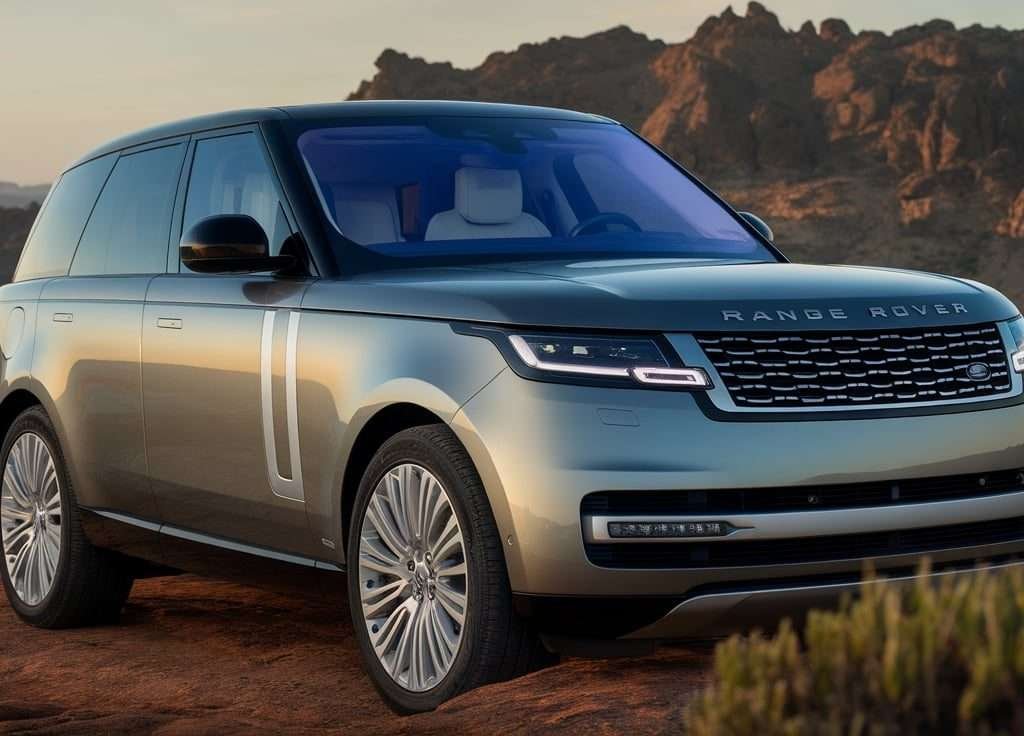
For a Range Rover used mainly on Dubai highways, start with a road-focused SUV tire that meets the vehicle's exact size, load, speed and construction requirements. For regular gravel, rocky tracks or sand trips, compare an approved all-terrain option alongside its possible road comfort and braking trade-offs. There is no single best tire for every Range Rover, Sport, Velar or Evoque. A suitable tread pattern in the wrong specification is still the wrong tire.
Compare specific tires against your driving needs before buying. A repair or a compatible replacement may be enough; a complete set is not always necessary.
Choose tires for the driving you actually do
Begin with your normal week, then consider the most demanding trip you realistically plan. A daily highway commute and an occasional maintained campsite access road create different needs from repeated dune driving or sharp rocky trails.
| Your use | Starting point | What to compare |
|---|---|---|
| City trips and Dubai to Abu Dhabi highway driving | Road-focused SUV touring or performance tire | Wet braking, ride comfort, noise and the exact approved specification. |
| Mostly paved roads with occasional maintained gravel access | Suitable road tire or mild all-terrain option, depending on the route | Actual surface and damage risk. An occasional unpaved road does not automatically justify an aggressive tread. |
| Regular gravel and rocky tracks | Compatible all-terrain tire | Construction, cut resistance claims, load and speed ratings, clearance and road compromises. |
| Soft sand and dune trips | Vehicle-approved tire and wheel combination, selected with experienced off-road guidance | Sidewall suitability, terrain, vehicle load, pressure guidance and reinflation equipment. Deep tread alone is not a sand-performance test. |
All-season and all-terrain mean different things. All-season describes a weather-oriented category; all-terrain describes mixed-surface use. A snow marking does not establish suitability for UAE dunes. Likewise, a highway tire is not automatically unsuitable for every unpaved access road. Check the actual product and the vehicle's instructions.

Confirm the full tire specification before choosing a brand
Use the vehicle's tire information label and the correct owner information, then compare the wheels and tires actually fitted. A previous owner may have changed them. Land Rover's vehicle handbook lets you select the vehicle and model year or identify it by VIN for market-specific information. Registration year alone does not establish the correct specification.
- Identify the vehicle. Record the model, model year, trim and powertrain. Include any wheel conversion or suspension modification.
- Read every tire position. Photograph the complete sidewall markings on the front and rear. Do not assume the sizes or ratings match.
- Check the complete fitment. Confirm tire dimensions, load index, speed category, required construction and any applicable manufacturer approval marking.
- Check the wheel. Rim diameter alone does not confirm suitable width, load capability or clearance. A smaller wheel also needs brake clearance.
- Check the whole set. Compare model, construction and remaining tread against the vehicle's requirements before deciding on one tire, a pair or four.
Full-size Range Rover, Range Rover Sport, Velar and Evoque specifications are not interchangeable. Nor should a Defender or Discovery all-terrain recommendation be transferred to them without checking. Land Rover's wheel and tire recommendations specifically identify Defender and Discovery in its all-terrain section; that is not blanket approval for the entire Range Rover family.
What a size such as 255/55 R20 110Y XL tells you
This is a reading example, not a universal Range Rover fitment. The 255 is nominal section width in millimeters; 55 is sidewall height as a percentage of that width; R indicates radial construction; and 20 is rim diameter in inches. The 110 is the load index and Y is the speed category. XL means extra load construction.
Michelin's load and speed rating tables list index 110 as 1,060 kg per tire under the applicable conditions. This does not mean you can multiply by four to establish the vehicle's permitted payload. Axle limits, inflation requirements and the vehicle's own weight limits still apply.
Do not downgrade a required load or speed rating because an alternative is cheaper or because you normally drive below its rated speed. An XL marking does not mean run-flat, and a manufacturer marking does not approve that tire for every vehicle from the same brand.
Specific highway and all-terrain tires to compare
The road examples below share one size; the all-terrain example shows why the same wheel diameter does not make another product interchangeable. They are manufacturer catalog examples, checked on September 26, 2026, rather than a fitment list for every Range Rover or confirmation of Dubai stock. The exact vehicle and locally supplied product must be checked before ordering.
| Product and catalog specification | Why shortlist it | Decision limit |
|---|---|---|
| Michelin Pilot Sport 4 SUV 255/55 R20 110Y XL | A road-performance candidate for an owner prioritizing paved-road driving. | The Middle East catalog confirms this specification. It does not by itself establish approval for your VIN or make this an all-terrain tire. |
| Pirelli Scorpion Zero All Season 255/55 R20 110Y XL LR | A highway-oriented all-season candidate. This listed version carries an LR marking. | The cited catalog is Australian. Confirm the exact UAE-supplied version, applicable approval and availability. Do not infer run-flat capability from the family name. |
| Pirelli Scorpion All Terrain Plus 275/55 R20 113T | An example of a mixed-surface product to investigate only if its specification is approved for the vehicle. | Pirelli's UK catalog confirms this size and rating. It is not a substitute for the 255/55 R20 road examples: width, overall diameter and speed category differ. Vehicle approval and UAE supply remain to be confirmed. |
The practical difference: all three examples use 20-inch wheels, but the all-terrain example has different dimensions and a different speed category. A higher load index does not cancel those differences. Do not fit it in place of a required 255/55 R20 110Y tire. If no compatible all-terrain tire exists for the fitted wheels, investigate an approved wheel-and-tire combination with a specialist instead of forcing a near match.
These sources establish product identity and listed specification. They do not establish a head-to-head winner for stopping distance, cabin noise, life or dune traction on your vehicle. Ask for comparable test information in the relevant size where available. Do not compare one tire's marketing claim with another tire's independent test result as if the conditions were identical.
Highway comfort, rocky trails and soft sand need different judgments
For a mostly road-driven vehicle, an aggressive tread can bring compromises that are noticeable on every commute. Noise, ride, steering response, rolling resistance and wet braking vary by product. A tougher-looking sidewall is not proof of a better daily tire, and a premium brand does not remove the need to compare the actual model.
On rough tracks, consider exposed rocks, cuts and the tire's construction. On soft sand, flotation, controlled traction, pressure, load and driving technique matter together. A tread that clears mud is not automatically the best choice for sand. Avoid a universal “best dune tire” recommendation without matching the vehicle and conditions.

There is no single reduced pressure suitable for every Range Rover wheel, tire, load and sand condition. Follow the applicable vehicle guidance and qualified off-road instruction. Excessive pressure reduction can damage a tire or unseat its bead. Plan how to reinflate before returning to paved-road travel; do not drive home at a reduced off-road pressure.
If your current tires meet the vehicle's requirements, remain serviceable and suit the intended route, a different tread may not be your first necessary purchase. Route selection, training and suitable recovery and inflation equipment may matter more. Do not use this as permission to take road-focused, low-profile tires onto unsuitable terrain.
Run-flat tires do not give unlimited permission to drive
A Pirelli badge or a Scorpion name does not establish that the fitted tire is a run-flat. Check its actual marking and specification. Run-flat operation also requires a compatible vehicle and wheel arrangement and the appropriate pressure-monitoring system.
Pirelli's run-flat operating limits describe a limited capability of up to 80 km at a maximum 80 km/h after pressure loss. That is a technology limit, not a promise that a particular damaged tire can complete that distance. Follow the more restrictive vehicle and tire instructions and account for damage and conditions.
Stop safely and arrange assistance for a bulge, exposed cords, serious cut, rapid deflation, severe vibration or unstable handling. Do not continue just because the tire is marked run-flat. If you cannot confirm the tire type or permitted operation, do not assume that driving on it is allowed. Never reinflate a visibly damaged tire to attempt the journey.
A slow leak may be repairable
Repeated pressure loss does not prove that a tire is beyond repair. A tread puncture, leaking valve, bead seal or wheel fault can produce similar symptoms. Diagnose the leak before approving a replacement set.
- Possible repair: a suitable tread-area puncture, with adequate remaining tread and no internal damage, may qualify after removal and inspection.
- Different repair route: a valve or wheel sealing problem needs attention at the actual leak source. A new tire alone may not fix it.
- Replacement or specialist assessment: sidewall, shoulder, bead or structural damage, and damage from running underinflated, cannot be treated as an ordinary tread puncture.
Michelin recommends a professional internal tire inspection before repair. A plug fitted from outside without inspecting the tire is not equivalent to that assessment. Repair limits vary by product, damage location and previous use, including run-flat operation.
Do not keep topping up a tire with a recurring leak and assume it is safe for a highway trip. Have the cause assessed promptly. If it is flat, visibly damaged or causing handling changes, stop using it and arrange suitable assistance. A pressure warning should lead to an actual pressure check before anyone concludes that only the sensor is faulty.
Tire age and pressure checks for Dubai
Do not use six years as the Dubai replacement rule. RTA's current vehicle renewal requirements state a maximum tire validity of five years from manufacture and requires damaged tires to be changed to pass inspection. This is a maximum, not a guarantee of five years of safe service. Wear, damage or the applicable manufacturer's instructions can require earlier replacement.
Read the four-digit manufacturing date code. For example, 2424 means week 24 of 2024. Purchase date does not reset the manufacturing age. When buying, check the date, storage condition and physical condition along with the specification.
Check cold pressures at least monthly and before long trips, using the vehicle label or manual for the fitted configuration and load. Pirelli's cold tire pressure recommendations describe cold tires as those stationary for at least three hours. Do not use the sidewall's maximum pressure as the normal setting or bleed a hot tire down to a cold-pressure target.
Inspect tread across its width, including the inner shoulders where safely visible, and look for cracks, cuts and bulges. Do not wait for an age deadline if the tire is already damaged. There is no guaranteed 40,000 to 60,000 km replacement interval for all Range Rovers. Pressure, alignment, loading, driving and condition affect the decision.

Compare the full quote and the right warranty
A useful quote names the exact product, dimensions, load and speed ratings, construction, approval marking where applicable, manufacturing date and quantity. Confirm whether fitting, balancing, valve or TPMS-related work, disposal and alignment are included or separate. Ask for the total in AED with the VAT basis stated explicitly.
Before approving Range Rover tire replacement, confirm the exact tire, availability and complete fitting cost. Compare quotes for the same size, construction and included services. A brand name alone does not make two offers equivalent.
| Cover | What it addresses | What to ask |
|---|---|---|
| Manufacturing defect warranty | Eligible faults in materials or tire manufacturing. | Who assesses the claim, applicable term, exclusions and whether any allowance is proportional to wear? |
| Treadwear or mileage warranty | A separate mileage-related promise, only where explicitly offered. | Does this exact product and UAE sale qualify? What records, usage conditions and exclusions apply? |
| Road-hazard protection | Specified accidental damage, only under an applicable policy. | Are punctures, impacts or off-road use covered? Is registration needed, and what charges remain? |
| Installation workmanship cover | Eligible fitting-related issues under the installer's written terms. | What is covered, for how long, and what is the inspection or correction process? |
For example, the Michelin Middle East limited tire warranty covers eligible workmanship and material defects but excludes road-hazard injury and incorrect fitting. It does not turn a puncture or impact into a manufacturing defect. Obtain the terms for your own purchase rather than assuming another country's promotion applies.
Range Rover tire questions before buying
Must I replace all four tires after one puncture?
Not automatically. First establish whether the damaged tire can be repaired. If replacement is needed, compare the other three tires and the vehicle's matching requirements. Ask for measured tread depths and the reason for recommending one, two or four. There is no universal acceptable tread-depth difference for every Range Rover.
Can smaller wheels improve off-road suitability?
An approved combination with more sidewall may be worth investigating. It still needs correct rolling dimensions, wheel load capacity, clearance and vehicle compatibility. Larger brakes can limit the options. Do not buy smaller wheels solely because another Range Rover uses them.
Will new tires cure vibration or pulling?
Only if tire condition is the cause. Balance, wheel damage, alignment or worn chassis components can also contribute. Ask for the symptom to be checked and the fault identified before approving extra suspension parts or another tire set.
Does a hybrid need a tire with an EV label?
The vehicle's required size, load, speed, construction and approvals take priority. An EV label alone does not establish suitability. Compare the exact tire specification for the hybrid version, then consider noise, efficiency and ride priorities.
Should I rotate tires at every service?
Follow the applicable vehicle guidance and tire arrangement. Directional tires, different front and rear sizes, or other configuration limits may restrict rotation. Record wear and correct its cause rather than applying a universal rotation pattern.
Your tire choice before the next trip
Confirm the complete fitment first, select the tread for your real driving, and compare exact products with their limitations. Inspect a leaking tire before buying replacements, and read warranty terms separately from mileage claims.
For workshop support in Al Quoz 4, Dubai, have your model year, powertrain if known, full sidewall photos, tire information label, intended road or off-road use and any pressure-loss history ready. Share a VIN privately only if needed for identification. Photos can help prepare the discussion, but they cannot establish internal tire condition.
Workshop support
Need help with your Range Rover?
Tell us your model, year and what you have noticed. Speak with the workshop about maintenance, an inspection or a repair.